
New research from University of Aberdeen will investigate how breast cancer develops in men and the biological differences between that and female breast cancer.
An area that remains significantly under‑researched, around 400 men are diagnosed with breast cancer every year in the UK - around 40 of them in Scotland. Despite clear biological differences between male and female breast cancer, most breast cancer research and clinical trials are focused on women. As a result, men often face delayed diagnosis, limited treatment evidence, and a lack of public awareness that the disease can affect them at all.
The issue has recently gained national attention through a current Coronation Street storyline, in which a male character is diagnosed with breast cancer prompting widespread discussion about symptoms, stigma and the misconception that breast cancer is a “women’s disease”.
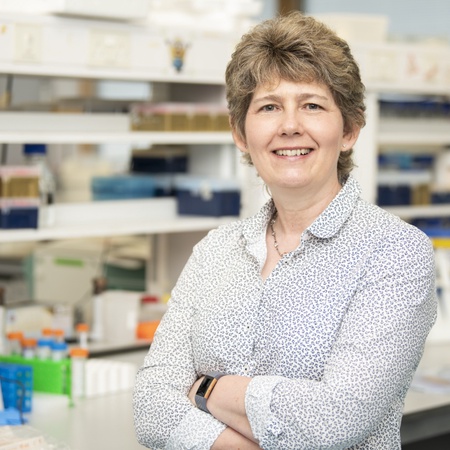
Funded by a £300,000 award from the Scottish Government’s Chief Scientist Office (CSO), Professor Valerie Speirs from the University of Aberdeen will lead the two‑year study, which will examine cancer‑associated fibroblasts (CAFs). Cancer-associated fibroblasts are support cells that surround tumours and influence how the cancer grows, spreads and responds to treatment.
Professor Speirs’ team has already generated cancer-associated fibroblasts directly from male and female breast cancer biopsies, including samples from the Breast Cancer Now Biobank.
The research will explore how these cells respond to hormones such as oestrogen and androgens, whether they act differently between male and female tumours and what triggers CAF activity in men and how this may fuel tumour growth.
Professor Speirs said: “Male breast cancer has been understudied for decades. By mapping the cells and signals that shape the disease in men, we hope to open the door to more personalised treatments and ensure men are no longer left behind in breast cancer research.”
"Our study launches during Breast Cancer Awareness Month, at a moment when male breast cancer is receiving rare national visibility. ITV's flagship soap, Coronation Street’s storyline has prompted thousands of viewers to seek information about symptoms and risk factors, with charities reporting spikes in website traffic and helpline calls.
"This research aims to build on that momentum by addressing the scientific gaps that contribute to late diagnosis and limited treatment options for men."
Simon Vincent, chief scientific officer at Breast Cancer Now, said: “While male breast cancer is rare, around 400 men are diagnosed each year in the UK. Research like this is vital to improving our understanding of the disease and could pave the way for more tailored treatments and better outcomes for men diagnosed with it.
“We’re pleased that samples from the Breast Cancer Now Biobank - the UK’s largest collection of breast cancer tissue, cells and blood samples from people with the disease - are supporting this study. That’s exactly what our biobank is for – to give scientists around the world access to the samples and data that enable them to perform world-class research and drive progress.
"We look forward to seeing the findings and how they could advance our understanding and treatment of breast cancer in men."
The project is led from Aberdeen with major international and patient‑focused collaborations, including: GEICAM, Spain’s leading breast cancer research group, the Male Breast Cancer Global Alliance and men affected by breast cancer through The Virtual Men’s Meetup.
Dave's Story
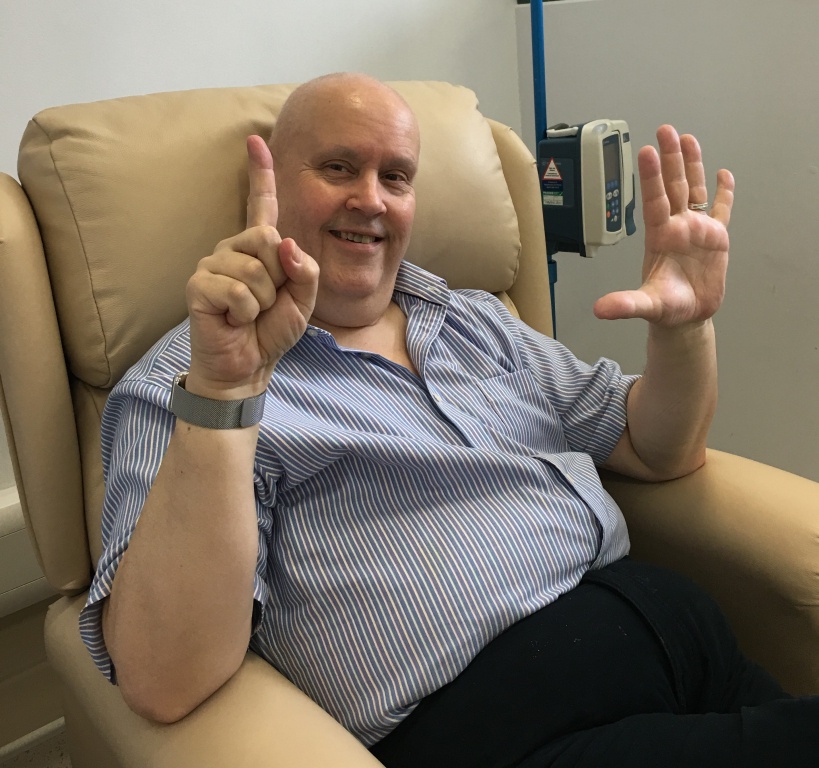
Finding a lump on holiday in 2015 changed Dave Talbot’s life – 11 years on, he is determined to see more research focused on male breast cancer.
When Dave Talbot felt a small lump in his chest while on holiday in Florida in 2015, he didn’t ignore it. Years earlier he’d had a benign lump in his other breast, the first time he learned men could get breast cancer, and with a family history of cancer, he knew he needed to act.
Within days of returning home, sitting in his GP’s office, Dave recalls: “The GP said it was probably just fatty tissue, but she sent me for more tests anyway - and I'm so grateful she did.”
At the breast unit, Dave was given the same reassurances but that changed when the doctor looked at the ultrasound. He recalls: “I could see the surgeon’s face change. He didn’t like what he was seeing.”
A biopsy confirmed the doctor's suspicions and Dave joined the around 400 men who are diagnosed with breast cancer each year in the UK.
Dave describes two immediate emotions he felt upon hearing the diagnosis, the first being fear. He explains: “Anyone who is told they have cancer thinks, ‘how long have I got?’", followed by anger. He describes that he was 'furious' that he'd 'caught this particular disease.'
In the weeks that followed, Dave underwent a mastectomy, followed by removal of his lymph nodes, six cycles of FEC chemotherapy and six weeks of radiotherapy. His cancer was grade three and aggressive, but because he acted quickly, his prognosis was good. He explains: “Had I left it a few more weeks, it might have been very different.”
Fortunately, Dave has been clear of cancer since 2016, but he continues annual check‑ups to allay his fears of it returning.
Dave’s response to cancer was immediate and determined. On the day he was diagnosed, he signed up for the MoonWalk London, a 26‑mile overnight charity walk. He had already completed the Edinburgh MoonWalk years earlier, not knowing he himself had breast cancer at the time.
He has also been involved with national campaigns including Walk the Walk and the Asda Tickled Pink campaign, where he appeared on huge posters in Asda stores. Dave kept it a secret from his family which gave his daughter a wonderful surprise when she was shopping wither her own daughter in an Asda store and she exclaimed that "Grandad’s on the wall!” as a shirtless Dave beamed down from the poster.
Ever keen to raise awareness for male breast cancer, Dave, who spent 25 years in the police force, describes how he 'stood up in front of 1,500 serving officers, bald from chemotherapy and wearing a bright pink suit, to tell them I had breast cancer'. He explains that: “It was striking how many didn’t realise men could get breast cancer.”
He uses every opportunity to raise awareness and says: “Given half a chance, I’ll drop it into conversation. Men are notoriously bad at going to the doctor and we know that early diagnosis saves lives.”
Dave’s lived experience has made him a sought‑after contributor to national discussions about the condition. He has served on the NICE Breast Cancer Committee, an NIHR funding committee, is an active member of the Male Breast Cancer Global Alliance and The Virtual Men’s Meetup.
Dave is passionate about improving treatment evidence for men. He explains that he spent five years on breast cancer medication, Tamoxifen, before unpleasant side effects forced him to stop. He said: “I was told, ‘We have to assume it works the same in men as in women.’ But the side effects can be very different. That’s why research into male breast cancer is so important - treatment is not a one size-fits all – male breast cancer is different, and we need to address that.”
Dave lives in Bristol with his wife, has three grown‑up children and six grandchildren. He continues to work as a computer specialist and runs his own business. He says cancer changed him: “My wife tells me I’m a nicer person now! When something like this happens to you it changes you - you suddenly realise what’s really important in life.”