Have you ever struggled to find an assessment brief or submission link? Have you ever been unsure about a deadline because it wasn’t clearly stated? Or did you find yourself confused because each course is structured completely differently? You’re definitely not alone.
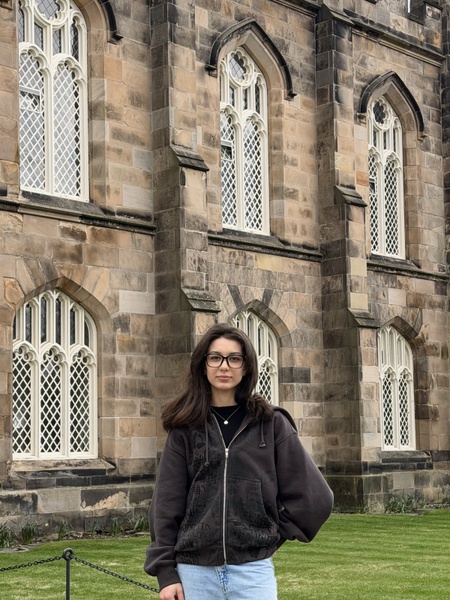
I joined Centre for Academic Development in November 2025 as an intern, and over four months I’ve been exploring how students experience using MyAberdeen. Through a survey with over 240 responses and focus groups with 23 students across different schools and study modes, I heard a lot of honest, practical feedback about what works and what doesn’t. While experiences varied, most of the feedback kept coming back to the same three themes:
Assessment visibility and clarity
If there’s one thing students consistently struggle with, it’s finding assessment information quickly and confidently. The issue isn’t that the information isn’t there; it’s that it’s not always where you expect it. Assessment briefs might be in a folder, inside weekly content, hidden within the submission link itself or even within an announcement.
This means students often end up clicking through multiple sections, double-checking with friends, or worrying they’ve missed something important. Deadlines don’t always help either, as the calendar and activity stream can show outdated or confusing information, so many students end up relying on their own notes instead. What students are looking for is one clear, reliable place to find everything related to assessments, without the stress of having to ‘hunt’ for it.
Inconsistency across courses
Another strong theme was how different each course can feel. Some are organised by weeks, others by topics, and even within the same school, layouts can vary quite a bit. While it may seem minor at first, these differences quickly become noticeable over time. Students described having to ‘relearn’ how to navigate each course, especially when similar things, like assessments or readings, are placed in completely different locations.
When a course follows a familiar structure, everything feels easier and faster. When it doesn’t, even simple tasks can take longer than they should. A standard template has been introduced, but from what students shared, it’s not always used consistently across modules.
Accessibility and resource availability
From my own experience, course resources are incredibly valuable, and it was interesting to see that many students in the survey felt the same way. Reading lists, for example, are useful in theory, but in practice they can be tricky. Links don’t always work, access can be limited, and it’s not always clear what’s essential. Because of this, many of the students tend to rely on lecture slides unless they need additional sources for assignments.
Downloadable materials are another mixed area. Being able to download content is quite important, especially for studying offline or on different devices, but formatting issues or missing options can make this frustrating.
Lecture recordings, captions and transcripts are generally highlighted; they’re especially helpful for revision and for students who need to review material more than once. Again, consistency matters. When recordings are delayed, missing, or have poor audio or captions, it affects how useful they are.
At the end of the day, students don’t see MyAberdeen as a bad system - far from it. It’s a central part of how they study, organise their work, and keep track of their courses. However, the feedback shows that small, repeated issues can significantly affect the overall experience. Addressing these wouldn’t necessarily require major changes but rather small, thoughtful improvements that make the platform feel more intuitive, predictable, and student-friendly.
What happens next?
This research is only meaningful if it leads to action. Based on these findings, I developed a report that brings together student feedback alongside practical recommendations for schools and course teams. School level feedback will be shared with each school as part of Global Accessibility Awareness Day to enable schools to make positive changes to the user experience. Alongside the report, I have also created a flyer and poster summarising the key themes and recommendations, as well as a lightning talk presented at the Annual Academic Development Symposium to share the findings with staff and encourage further discussion. The aim is to highlight small, realistic changes that could significantly improve the student experience on MyAberdeen.
Working at CAD and carrying out this research has also made me reflect on my own experience as a student. Many of the themes that emerged felt very familiar. My goal has been to ensure that student voices are not only heard but are translated into meaningful improvements in how courses are designed and delivered.