

Content Warning: This article includes information and descriptions related to Female Genital Mutilation (FGM). Please take care while reading, as some content may be upsetting or triggering.
Friday 6th February marks International Day of Zero Tolerance of Female Genital Mutilation and aims to raise awareness to end this harmful practice.
Female genital mutilation (FGM) refers to all procedures involving the partial or total removal of the female external genitalia or other injury to female genital organs for non-medical reasons (World Health Organisation, 2025).
FGM is illegal in the UK. You can find out more information about FGM on the NHS website.
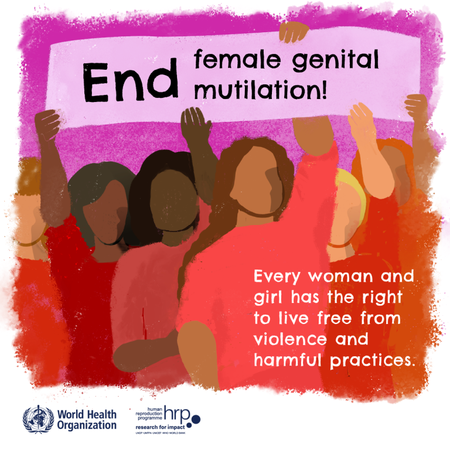
Every woman and girl has the right to live free from violence and harmful practices.
Common Myths and Misconception
‘’FGM is a religious obligation’’
FALSE - FGM is not supported in any major religions, and may religious leaders believe that this tradition should end
‘’If FGM is performed by a health-care professional there is no risk of harm’’
FALSE – FGM is a harmful practice and lead to physical, metal and sexual health complications regardless of who performs it
‘’FGFM does not cause any pain during sexual intercourse’’
FALSE – Both woman and mean may experience pain during sexual intercourse in the most severe forms of FGM. Even in less serves forms woman can experience pain due to scar tissue or lack or arousal.
‘’FGM can improve infertility’’
FALSE – there is no evidence that FGM improves fertility. In fact, complications of FGM can negatively impact fertility.
If you have experienced FGM support is available. You can speak to your GP who can provide medical support and advice. You can also use our Online Reporting Tool or access confidential support from Student Advice and Support or the University Counselling Service.