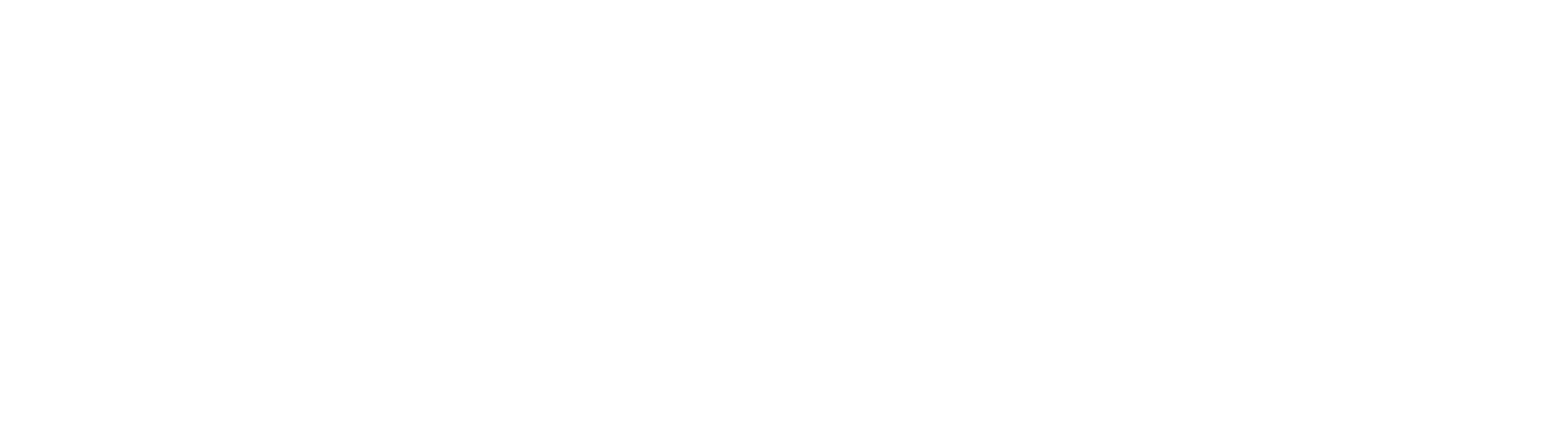
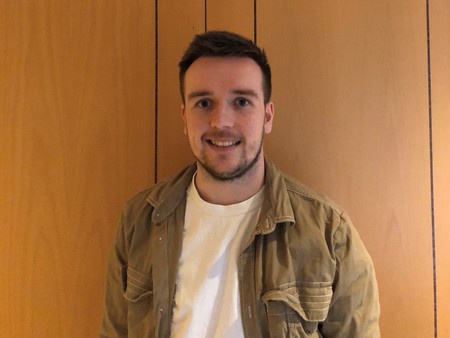
- David Grant
-
MEng Chemical Engineering
Why did you choose this degree programme at the University of Aberdeen?
As long as I can remember I have been interested in how things are produced, ranging from a bottle of wine, through medication, to electricity. From there it was a small step to discover how on earth all these were produced in huge scales required by people. After some researching on the internet, I discovered that at the very heart of nearly everything produced and consumed was a team of chemical engineers. Some more in depth reading and I was convinced that chemical engineering was the degree I wanted to pursue.
When applying for university positions, Aberdeen stood out as it offered more than just a chemical engineering degree. The first 2 years encompass all aspects of engineering, which wasn't offered at the other universities I was considering. At first glance, it may seem strange that you are covering different engineering disciplines, however no engineering problem focuses solely on a single discipline. With this approach, University of Aberdeen offered the chance to develop myself as an all-round engineer with insights into each disciple, while still achieving a fully accredited chemical engineering degree. This made my choice to study at the University of Aberdeen an easy one.
What skills, knowledge or experience have you gained or developed on this degree programme?
Studying engineering at the University of Aberdeen develops more than just the skills required to complete a calculation. Soft skills such as teamwork, organisation and time management are taught from the minute your degree starts, thanks to excellently designed courses and facilities that allow you to make the best use of individual and group work.
I have gained skills in computer programming in languages such as MATLAB, Python and C++, 3D modelling and printing, and printed circuit board design. Currently I am also developing skills in acoustic levitation to complete another project that I am undertaking.
What part of the degree programme have you enjoyed the most or found most interesting?
From the start at Aberdeen, it has been an engaging and fun journey. All courses that I have completed have always had interesting learning outcomes. A standout for me in this case being the Process Safety course (EX402A), taught by Dr Euan Bain. This course takes all previous knowledge of engineering learning and shows how it is important from a process safety perspective. I really enjoyed the combination of taking previous knowledge and applying it to new ideas, and how your decisions always affect safety of people, property and the environment.
There are always new opportunities which arise while studying engineering at the University of Aberdeen. I have taken part in an Erasmus project, which allowed me to travel to Spain and Italy to undertake several small chemical engineering research projects. I have also been recently developing e-noses for my fourth-year undergraduate project with Dr Marcus Campbell Bannerman. These are small gas sensing devices used for rapid analysis of gas samples. This project has perfectly captured why studying at the University of Aberdeen gives a big advantage in real world projects, as I have utilised the electrical, mechanical and, of course, my chemical engineering skills, to design and build a fully functioning device.
What advice would you give another student who is considering applying to this programme?
Ensuring you carefully consider what Aberdeen offers is important. The opportunity to learn about all disciplines at the start of your degree, while still receiving a fully accredited degree in your chosen discipline, ensures that you are not only an excellent engineer within your discipline, but have an all-round knowledge of engineering. Even a little knowledge in each discipline goes a long way. This is a standout feature for Aberdeen, and the reason I would recommend studying here over anywhere else. All disciplines also offer a range of hands-on labs that let you physically see concepts being taught, which is only beneficial.
Also, Aberdeen offers so much more extracurricular opportunities while you're studying, such as the TAU Racing team and the Engineering society, and all the other different societies and sports clubs available to join. As the current President of the Engineering Society, I would look forward to welcoming you to our events in the future.
- Kate Kostick
-
BEng Mechanical Engineering
Why did you choose Mechanical Engineering at the University of Aberdeen?

As a mature student making the decision to return to academia, my journey back to the classroom was largely influenced by my professional background in the Oil and Gas Industry. Throughout my career, I've always been connected to the field of engineering, finding myself increasingly fascinated by the complexities of processes and equipment. Despite my experience, I realised there were layers of understanding and technical knowledge that remained out of reach, answers to questions that couldn't be satisfied through experience alone. This gap in my understanding fuelled my curiosity and pushed me to pursue a formal education in engineering.
Choosing the engineering program at the University of Aberdeen was a strategic decision beyond just fulfilling my academic curiosity. Given the university's proximity to the heart of the industry, it holds strong connections that are invaluable for my re-employment back into the Oil and Gas sector. Aberdeen, being the Oil and Gas capital of Europe, presents a unique advantage, offering networking opportunities and access to an array of potential employers.
What part of your degree programme have you enjoyed the most or find most interesting so far?
As someone who thrives on challenges and seeks continuous growth, I found the Mechanical Engineering degree program to be particularly apt. The courses offered a balance of complexity and diversity, yet they incorporated fundamental concepts effectively. Among the various aspects of the program, the Individual Project in the fourth year stood out as the most rewarding for me. It provided an opportunity to integrate and apply the knowledge and skills I had accumulated throughout my studies.
Additionally, my involvement with ProtoTAU, the engineering society that designs, builds, and races a hydrogen-powered vehicle for the Shell Eco-Marathon, has been immensely satisfying. Being part of this project allowed me to choose a subject related to the car for my Individual Project, offering a level of independence and flexibility that greatly enhanced my engagement with the work. This unique combination of applying theoretical knowledge to a practical, tangible project not only solidified my understanding of engineering principles but also provided a highly motivational and rewarding experience.
What knowledge, skills or experience have you gained or developed on your programme?
The journey through my engineering degree has been transformative, with resilience emerging as the most significant trait I've developed. Initially unprepared for the challenges the program presented, I've since learned to navigate obstacles with a determination that has only grown stronger over time. This resilience is complemented by a suite of technical and professional skills such as critical thinking and problem-solving with a deep understanding of engineering principles and practices.
Additionally, my experience at the University was enriched by my roles as a student representative for my year group and as the elected School of Engineering Convenor. These positions afforded me a unique opportunity to develop a broad range of skills beyond the technical aspects of my degree. Leadership, communication, organisation, and negotiation skills were refined through these roles, as I worked to represent my peers effectively and contribute to the improvement of our academic environment.
Beyond the core engineering competencies, this experience has opened avenues for developing interpersonal, management, and leadership skills, emphasising the holistic development of its students. This comprehensive skill set does not only equip for specific demands of the engineering field but also offers the versatility needed to adapt and excel in various professional contexts.
Have you taken part in any work placement, internship, or other type of research or professional experience during your studies?
I have been actively involved with the ProtoTAU society, which is a student led society dedicated to designing, building, and racing a hydrogen-powered vehicle in the Shell Eco-Marathon. I joined the society in my third year, looking for a meaningful and enjoyable way to spend my time at university. Within ProtoTAU, I held the roles of Committee Member Industry Liaison and I was the PR and Marketing team team lead.
As the Industry Liaison, I developed key skills in networking, communication, and project management by fostering relationships between our society and industry partners. This not only offered me a glimpse into the professional world of engineering but also helped me understand the importance of collaboration between academia and industry. In my PR and Marketing team lead role, I refined my abilities in public speaking, digital marketing, and team coordination, skills that are crucial for any engineer looking to make an impact beyond technical work.
Participation in ProtoTAU often extended beyond the workshop and into the professional world through attendance at industry-related events. These events served as an excellent networking platform, providing opportunities to connect with professionals and companies within the engineering sector. Such interactions have been invaluable, offering a glimpse into future career paths and establishing connections that could benefit my professional life after university.
ProtoTAU's open environment, where members are encouraged to explore different sub-teams, allowed me to gain a broad understanding of various aspects of engineering projects. This flexibility and the supportive team culture enhanced my learning experience, making it richer and more diverse. Additionally, my involvement in designing and dynamically modelling a suspension system for the vehicle as my individual project topic provided a hands-on experience that bridged the gap between theoretical concepts and real-world application. Engaging with the team's expertise made this project not only more informative but also thoroughly enjoyable.
Participating in the Shell Eco-Marathon as part of ProtoTAU stands out as a highlight of my university experience. The opportunity to compete in a Europe-wide event, which brings together universities from across the continent to vie for the most efficient vehicle, is incredibly rewarding. This year's event in the south of France not only promises a competitive atmosphere but also a welcome dose of sunshine. Collaborating with other UK universities participating in the event opens avenues for learning and problem-solving, allowing us to share insights and solutions to common challenges. This spirit of collaboration and competition has been invaluable, making my time with ProtoTAU a defining feature of my engineering education at the University of Aberdeen.
What are your plans for the future?
I have accepted a graduate engineering position with a leading oil and gas company based in Aberdeen. These graduate programs are highly advantageous for several reasons. First, they offer an immersive experience in real-world engineering challenges, allowing me to apply and expand upon the knowledge and skills I've acquired during my time at the University of Aberdeen. Additionally, these programs provide structured development opportunities, including mentorship, on-the-job training, and exposure to various aspects of the industry, which align perfectly with my academic background and personal career goals.
While my immediate aim has always been to re-enter the oil and gas industry as an engineer, I am also keenly aware of the versatility and broad opportunities that a degree in engineering offers. The field of engineering is uniquely expansive, opening doors to myriad career paths beyond traditional roles. Should I ever decide to explore beyond the oil and gas sector, one of my greatest aspirations is to work within the movie industry, specifically in designing and executing movie stunts. The creative challenge and technical precision required in stunt work appeal to my engineering sensibilities and passion for problem-solving. This potential shift underscores the beauty of an engineering career; its ability to pivot and adapt to diverse interests and industries, ensuring a dynamic and fulfilling professional journey
- Phoebe Lipp
-
BEng Civil and Environmental Engineering

I joined the Civil and Environmental Engineering course at the University of Aberdeen in 2016. I enjoyed modules Geotechnics 1 and 2 (EA3027 & EA40JE) and Stress Analysis A (EM3015) and I made the most of my electives selecting Mathematics and Computations Through Programming MATLAB (MA1516) and Remote Sensing and Geographical Information Systems (GG3069) which have both been invaluable to my career. Outside of studying, I was president of the ski club and a member of the Mountain biking club.
Throughout the course, my interests lay firmly in renewable energy and during my 2nd year, Ternan Energy, an offshore geoscience consultancy experienced in offshore wind, were invited to present to us. I was inspired, and I during the summer of 2019, I completed a fourteen-week internship with them where I was able to gain a practical understanding of what I had learned on the course.
I completed the course in the middle of lockdown in 2020 and applied to an MSc in Soil Mechanics and Business Management at Imperial College London. I was accepted and I attended remotely from Scotland due to COVID restrictions. I built on knowledge and skills learned in my previous geotechnical modules and was able to apply this to more complex theories. My dissertation was sponsored by Vattenfall where I investigated factors of safety against punch-through for offshore windfarm jack-up spudcan foundations and since then, my paper has been used by the ISO19905-1 committee to aid their work on the new standard.
I returned to Aberdeen in October 2021 to rejoin Ternan Energy. My day-to-day roles included desk studies, offshore foundation design, geotechnical data interpretation and geo-hazard risk mitigation. I worked closely with my team to ensure delivery and present work to clients. I have gained experience in a variety of projects including windfarm ground modelling, pipeline and cable burial risk assessment studies, monopile driveability and pile run studies and foundation capacity checks. Along with my colleagues, I was a co-author in a paper written for the OSIG 2023 conference where I integrated publicly available data to assess optimum anchoring solutions for future floating wind developments in support of early engineering, installation analyses, and cost modelling.
I joined Arup in August 2023 as an Offshore Geotechnical Engineer in the Energy Geotechnics team. Our team focus is on offshore wind (fixed/floating), interconnectors / pipelines / cables, geothermal, hydrogen and CCUS facilities, nuclear new build/SMR and urban Energy (cities and industrial decarbonisation). Arup has committed to not take on any new energy commissions involving the extraction, refinement, or transportation of hydrocarbon-based fuels. I have recently begun work on an integrated ground model and a geotechnical interpretative report for the Nederwiek Zuid Wind Farm Zone on behalf of Netherlands Enterprise Agency (RVO). I also hope to participate in Invest in Arup where I can apply for funding to develop a research project in an industry challenge I may be interested in tackling.
I have recently joined the committee of the Early Careers Offshore Site Investigation and Geotechnics Group (ECOSIGG) and my role will involve organising networking events for students and professionals in the first 10 years of their careers.
My advice to students currently on the Civil Engineering course:
- Be open every opportunity that comes your way.
- Attend networking events, industry talks/webinars and get involved in early career groups.
- A work/life balance is essential to success. If something does not make sense, go outside for a walk and attack it with a fresh mind.
Useful Links:
Early Careers Offshore Site Investigation and Geotechnics Group (ECOSIGG): https://www.linkedin.com/groups/13677635/
Further information on NWZ: Arup Wins Nederwiek Zuid Integrated Ground Model Tender | Offshore Wind
- Mary Griffiths
-
MEng Civil and Structural Engineering
Why did you choose this degree programme at the University of Aberdeen?
I chose to study Civil and Structural Engineering at Aberdeen University because of the wide range of courses that were offered across the 5 years of studying. The University is a beautiful campus, which shows the care and dedication that Aberdeen delivers. I became interested in this discipline of Engineering, because I was intrigued by how buildings and structures "survive" the long constant loading and what happens behind the scenes of creating useful infrastructure in the society.
What skills, knowledge or experience did you gain or develop on this degree programme?
I developed a wide variety of skills, knowledge and experience over my 5 years at the University. Within this was lots of technical knowledge covering foundation designs to offshore jacket structure designs. On the aspect of skills, we had opportunities to work in several group projects to develop team work skills as well as the important communication skills that are vital in any professional workplace.
Tell us about your career since graduating
In September I will start a Graduate Structural Engineering role at Mott MacDonald in Aberdeen. I am ecstatic to be given this opportunity and I am excited to work with the rest of the Aberdeen team on their projects and see where this will lead me along my career path.
What advice would you give another student who is considering applying to this programme?
To someone considering to study Engineering, I would recommend them to just go for it! Don't let stereotypes and people's opinions hold you back in something you enjoy and believe is the career path for you. Even though it can be hard work, it is truly worth every minute spent because at the end it is a big achievement to complete any degree.
Is there anything else about your time at the University of Aberdeen that you would like to share?
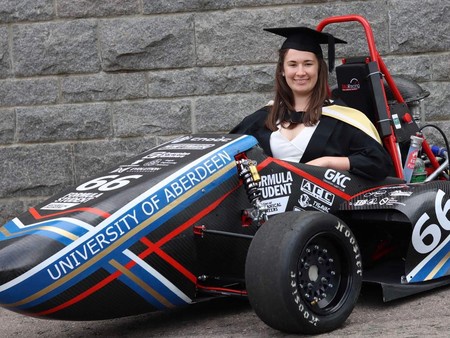
Over the last 5 years, I have been a committed member of the engineering society, TAU Racing Formula Student team. Each year we are challenged to design, build and market a single seat race car to compete in the annual IMechE Formula Student competition. Contributing to this society alongside my university studies has meant I have developed my communication, teamwork and leadership skills. This last academic year I have had the honour of leading the team as their Project Manager, where I have had the direct opportunity to network with the local businesses to create professional partnerships between the team and the community.
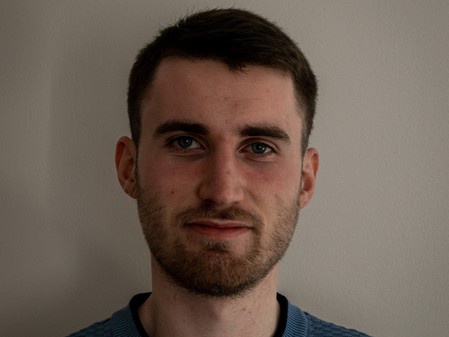
- Simon Allen
-
MEng Mechanical Engineering
Why did you choose this degree programme at the University of Aberdeen?
I originally applied to the MEng General Engineering programme as the University of Aberdeen was one of the only Universities in Scotland to offer a completely generalised first two years for an undergraduate engineering masters. After my second year, I chose the Mechanical Engineering programme as I am more interested in systems with moving components than the more statics based Civil Engineering.
What skills, knowledge or experience have you gained or developed on this degree programme?
I had no real modelling or programming experience before starting my degree, however these skills have been developed throughout my time at University. This includes working with software such as MATLAB, Ansys, Abaqus CAE, Solidworks and Wolfram Mathematica, among others. There has been group work involved in every year of my degree which has allowed me to continually develop my teamworking skills across a variety of tasks.
What part of the degree programme have you enjoyed the most or found most interesting?
Both my individual Master's project and my Master's group project have been the most fulfilling aspects of my degree. It has allowed me to combine and apply a number of topics and skills I have developed throughout my degree into one substantial piece of work. This applied aspect of the work was a good way of showing myself how the topics can seem separate while studying them however, when applied are really interconnected.
The opportunity to go to NESCO for six sessions in 2nd year to learn new skills such as arc welding, surveying and soldering where a nice change of pace from the usual University routine. This chance to get hands-on experience definitely contributed to my overall education within my degree.
What advice would you give another student who is considering applying to this programme?
From my experience, Mechanical Engineering can be very fulfilling however you only really get out what you are willing to put in. Mechanical engineering is fundamentally about applying logic and maths to understand how real-world systems work. The maths is inevitable so if that is a deal breaker just be aware.
Although first and second year do not directly contribute to your degree classification, they are the foundational knowledge for the later years. At the time, it often felt like the modules were completely separate however in the later years it really ties everything together and you need that knowledge from the earlier years.
- Umama Bendaoud
-
BEng Chemical Engineering
Why did you choose this degree programme at the University of Aberdeen?

I chose this degree as it involved all the STEM subject that I was interested to study with a combination of theoretical and practical knowledge.
What skills, knowledge or experience have you gained or developed on this degree programme?
A Chemical Engineering degree allows students to learn a multitude of skills that are highly sought in industry. The most important skills that I have developed throughout my degree are problem solving, time management, the ability to learn complex software and programmes in a very short period of time and the ability to work as part of a team.
What part of the degree programme have you enjoyed the most or found most interesting?
The professors at the university of Aberdeen have made my degree not only enjoyable but full of support and opportunities. The lecturers in the Engineering schools in particular are not only knowledgeable people but individuals who really value and care about their students' wellbeing and development. I would also like to highlight the various opportunities that the University of Aberdeen offers such as summer projects and extracurricular activities.
Have you undertaken a work placement or internship during your degree?
Last summer, I managed to secure an internship with Centrica PLC as a commercial analyst. I was responsible to analyse the viability of using green hydrogen as alternative fuel in UK. The position have helped me to acknowledge the importance of commercial awareness in a technical/engineering role.
Have you been offered a job for when after you complete your degree? If yes, what is the position and organisation?
Yes. I was offered a position at ExxonMobil as a graduate Chemical Engineer.
What advice would you give another student who is considering applying to this programme?
Studying Chemical Engineering degree will provide with critical tools to excel not only in industry but also in academia.
- Casimir de Bonneval
-
BEng Civil and Structural Engineering
Why did you choose this degree programme at the University of Aberdeen?
I started off studying Mathematics and Physics. However, after a year and a very bad time with Set Theory I decided I would rather do something more practical. After looking at the different engineering options I chose Civil because I liked bridges and big things in general. The Viaduc de Millau and the Roman aqueducts were always fascinating to me. The other disciplines never had anything to offer that I was fascinated by as much. Looking back maybe the structural part was not the best specialization I could have chosen, one always has regrets but the fact that I really struggled with some elements did not stop me from loving the other elements.
What skills, knowledge or experience have you gained or developed on this degree programme?
The main outcome of this degree is the confidence it gave me generally when approaching problems, while I know I don't know very much, the various tools and methods as well as a solid grounding in mathematics, physics and the various foundations of first and second year engineering give me the confidence to square up to problems and chip away at them by using what I know and researching what I don't.
The ability to start from a single question and dig things up in the library and on the internet in an extremely valuable skill.
Finally, the understanding of the transfer of load in a structure and to the foundation system has proven, while tedious whenever actually using the Eurocodes and digging into the details, the governing principles were some of the most fascinating things I have learned and have given me a new way to look at the world.
What part of the degree programme have you enjoyed the most or found most interesting?
I deeply enjoyed both of the geotechnics courses. The topic approached, and the methods used I found fascinating, the mathematics while challenging was not impossible, and I almost wished some more partial differential had been explained and used more.
First and second year are too far away, but I would like to give an honourable mention to Dr Hepworth whom I remember being very good at teaching, and Dr Grant whose quality of notes almost made the course too easy. He was great!
Have you undertaken a work placement or internship during your degree?
Yes, as a worksite manager assistant and works director assistant at NGE. This gave me a very real and complete appreciation of what the field of construction is, of what it entails, of who works there, of how people work, of how hard it is, both physically for the people with boots on the ground and for the people in the offices with enormous projects, tight schedules, big penalties and a tremendous amount of things to deal with at the same time.
What advice would you give another student who is considering applying to this programme?
I would recommend it. More than the other engineering disciplines if like me, you like big things, bridges, huge ships, the field of energy is going to need a lot of very competent engineers in the future and civil engineers are definitely going to be needed. If everyone tells you that you should do mechanical or electrical, don't listen to them based on money or, the fact that 'civil is the easy engineering'. While it might seem easier on the surface, you will be dealing with real life problems a lot, you will probably never (unless you become a researcher) be stuck in a lab but will be out in the wild facing the extreme conditions imposing on the outside world the design that grew in the heart and brain of man. Go and have fun is the most important bit
- Chiara Ferdynus
-
MEng Electrical and Electronics Engineering
Why did you choose this degree programme at the University of Aberdeen?

I only decided to study Electrical Engineering halfway through my second year at university. Like most high school students, I did not know exactly what I wanted to study. I really enjoyed maths, physics and problem solving but didn't know which engineering discipline would suit me best. That is why General Engineering seemed like the optimal choice as it gave me a chance to explore multiple degree programs and make a decision based on my experience and not on a course guide I had read online. Throughout the first two years I quickly realised that Electrical and Electronics Engineering spoke to me the most because it - in my opinion - is the most versatile engineering discipline covering a wide range of topics from designing hardware components, coding, power electronics, control… The list is long, so it certainly doesn't get boring and there's definitely something in it for everyone!
What skills, knowledge or experience have you gained or developed on this degree programme?
Besides gaining a much better understanding of the diverse fields within Electrical Engineering and technical knowledge, the skill I developed the most is how to approach and solve problems. I especially enjoyed learning how to code, which is an interest I only discovered through my degree. What may be even more important however is that I gained the confidence that I can learn new skills and overcome challenges, even when I only have limited knowledge at the start. … And the importance of good time management :)
What part of the degree programme have you enjoyed the most or found most interesting?
What I appreciate the most are the projects I got to work on in the honours years because that is when I see that all the theory I studied can actually be applied. I especially enjoyed working on my thesis in fourth year for which I developed a machine learning algorithm for image classification. This was a chance for me to take a deep dive into my interest in programming and artificial intelligence beyond the curriculum. I also had the opportunity to study abroad in Hong Kong in my second year - an experience that I'd not want to give away!
Have you undertaken a work placement or internship during your degree?
Yes, at BP. I worked as an Electrical Engineering intern in the instrumentation and controls team. What was exciting is that I had my own projects, one of them being the development of a catalogue for subsea electrical equipment for which I closely worked with suppliers, getting an insight into other companies as well.
Have you been offered a job for when after you complete your degree? If yes, what is the position and organisation?
Yes. I was offered a position at BP - Electrical Engineering Graduate
What advice would you give another student who is considering applying to this programme?
Electrical Engineering definitely is a discipline that is so broad so even though you may not like every single course I would bet that everyone finds an area they enjoy. I would lie if I said it is a walk in the park, but it is very manageable with some effort and certainly worth it. If I had to apply to uni again, I would choose Electrical Engineering again without hesitation. Not just because of the degree itself but also because the skills you learn are truly transferable and allow you to easily change paths into so many other fields (e.g. data analyst, software engineer, technical consultant, financial analyst and many more) if you want to.