

Psychology of Mental Health, MSc
Introduction
The MSc Psychology of Mental Health provides an in-depth study of the psychological principles underlying mental health and wellbeing.
Study Information
At a Glance
- Learning Mode
- On Campus Learning
- Degree Qualification
- MSc
- Duration
- 12 months or 24 months
- Study Mode
- Full Time or Part Time
- Start Month
- September
- Location of Study
- Aberdeen

The MSc Psychology of Mental Health combines theoretical knowledge with practical skills in assessment, research, and professional development. This programme has established partnerships with key organisations including NHS Grampian and VSA, offering potential opportunities for practical experience.
This programme is structured to provide comprehensive training in mental health and illness, behavioural and clinical assessment, research methods, and professional skills. You will develop a fundamental understanding of mental health assessment, explore the complexities of mental health and illness, and learn clinical assessment techniques. As you progress through your studies you will deepen your understanding of specialised topics, such as addiction and advanced psychological health.
You will also gain comprehensive research methodology skills, studying both quantitative and qualitative research methods and engaging in critical reviews of current research. Your studies will culminate in a thesis project, where you will apply your research skills and theoretical knowledge to conduct an independent research study in an area of mental health psychology that interests you. Your research project will be supervised by an academic from the School of Psychology, and may also be co-supervised by a community partner.
What You'll Study
- Stage 1
-
Compulsory Courses
- Mental Health Assessment (PS5065)
-
15 Credit Points
In this course, students will examine principles and methods of assessment to evaluate psychological functioning. Students will learn techniques such as observation, psychological testing, and interviews, and understand their role in formulation and/or diagnosis and treatment. Students will explore how assessment outcomes are used in professional, research, and/or clinical settings.
- Principles of Mental Health (PS5063)
-
15 Credit Points
This course will explore the principles of various approaches to mental health, and the various treatment and therapies that can develop from these approaches. This course provides a foundation for psychology of mental health through a series of lectures covering a range of classic and contemporary perspectives and their application.
- Professional Skills (PS5064)
-
15 Credit Points
This course aims to introduce students to, and support them in developing, the professional skills necessary for competent and compassionate psychology practitioners in applied domains. The course will cover a range of relevant topics including professional ethics, legal and professional obligations, management of workplace issues, interacting with stakeholders and developing professional relationships.
- Advanced Quantitative Methods and Analysis for Psychology (PU5054)
-
15 Credit Points
This course teaches students in the field of health psychology how to conduct high quality quantitative research and how to think and operate within a professional, ethical framework. The structure of the course reflects the logical flow of the research process itself, moving week on week from the planning of research (generating and refining research questions, evaluating evidence, designing studies), through study conduct (ethical practice, quantitative methods, measurement issues, data handling, research governance) to the statistical analysis, interpretation, reporting and dissemination of research findings (to academic, policy, public, and media audiences).
- Stage 2
-
Compulsory Courses
- Psychology of Addiction (PS5558)
-
15 Credit Points
Delve into the psychology of addictive behaviours, taking a close look at disorders surrounding alcohol, various other psychoactive drugs and gambling. Examine theories explaining the cause and maintenance of addictive behaviours, such as the role played by biology, cognition, learning and the social world, and how these all pose a challenge to treatment and recovery.
- Advanced Topics in Psychological Health (PS5562)
-
15 Credit Points
In this course, students will examine current and emerging research topics in mental health. This seminar-based course encourages discussion and engagement with contemporary issues and trends in the field. Topics will vary each year, reflecting developments in research and practice, and offering opportunities to explore diverse perspectives in mental health.
- Applied Project Development (PS5563)
-
15 Credit Points
This course aims to support students in developing the necessary skills to undertake an applied project. Students will be encouraged to undertake independent study, research, and project planning in the topic area of their thesis. To support this process, the course will include interactive sessions aimed to build their skills and confidence with critically reviewing the literature, developing an applied research question, time and project management, together with written and verbal communication. Students will also receive and provide peer support and feedback.
- What can Qualitative Psychology Tell US About People? (PS5566)
-
15 Credit Points
You will learn how different qualitative methodologies can enhance our understanding of people. This course will cover a wide range of methodologies and their different applications, including discursive analysis, grounded theory, interpretative phenomenological analysis, ethnography but also theory-based analysis and framework analysis. Lectures will be semi-flipped, in that you will be asked to do some reading beforehand, which will be the basis for interactive elements within the lecture.Note that some of the research articles included are on topics that may be sensitive, e.g., grief, suicide and eating disorders.
- Stage 3
-
Compulsory Courses
- Psychology of Mental Health Thesis (PS5906)
-
60 Credit Points
An important aspect of working in applied psychology, particularly in mental health, is the ability to integrate and present knowledge in meaningful ways. This course allows students to conduct a psychology project addressing a specific problem or question, which may include a review of the literature, quantitative or qualitative research, or a community-based project. Projects could range from traditional theses to practical evaluations, such as exploring the therapeutic role of crafts for children with adverse childhood experiences. Students will be supervised by an academic from the School of Psychology and may also be co-supervised by a community partner (such as Camphill School).
We will endeavour to make all course options available. However, these may be subject to change - see our Student Terms and Conditions page. In exceptional circumstances there may be additional fees associated with specialist courses, for example field trips.
| Fee category | Cost |
|---|---|
| UK | |
| Tuition Fees for 2025/26 Academic Year (University of Aberdeen Graduates *) | £7,000 |
| Tuition Fees for 2026/27 Academic Year (University of Aberdeen Graduates *) | £7,000 |
| EU / International students | |
| Tuition Fees for 2025/26 Academic Year | £26,250 |
| Tuition Fees for 2026/27 Academic Year | £26,250 |
| Tuition Fees for 2025/26 Academic Year (Self-funded Students *) | £18,250 |
| Tuition Fees for 2026/27 Academic Year (Self-funded Students *) | £18,250 |
| Home Students | |
| Tuition Fees for 2025/26 Academic Year | £11,100 |
| Tuition Fees for 2026/27 Academic Year | £11,100 |
Fee Information
Scholarships
All eligible self-funded international Postgraduate Masters students will receive an £8,000 scholarship. Learn more about this Aberdeen Global Scholarship here.
To see our full range of scholarships, visit our Funding Database.
How You'll Study
Learning Methods
- Individual Projects
- Lectures
- Research
- Seminars
Why Study Psychology of Mental Health?
- Practical Experience Opportunities: Benefit from our partnerships with external bodies, offering potential placement opportunities to gain hands-on experience.
- Expert Teaching Team: Learn from specialists including Dr Rachelle Ho, Dr Janine Cooper, Dr Helen Knight, and experienced clinical psychologists.
- Comprehensive Curriculum: Gain expertise in mental health and illness, behavioural and clinical assessment, addiction studies, and both quantitative and qualitative research methods.
- Research Opportunities: Conduct an independent research project in your area of interest, supported by our experienced academic team.
- Career Development: Prepare for careers in mental health services or further specialised training, with opportunities in areas such as mental health education, policy development, and support services.
Entry Requirements
Qualifications
The information below is provided as a guide only and does not guarantee entry to the University of Aberdeen.
Second class Psychology degree (2:2 or above) or MSc Psychology conversion programme (commendation), or equivalent for international students.
Please enter your country or territory to view relevant entry requirements.
Aberdeen Global Scholarship
Eligible self-funded Postgraduate Taught (PGT) students will receive the Aberdeen Global Scholarship. Eligibility details and further information are available on our dedicated page.
Aberdeen Global ScholarshipEnglish Language Requirements
To study for a Postgraduate Taught degree at the University of Aberdeen it is essential that you can speak, understand, read, and write English fluently. The minimum requirements for this degree are as follows:
IELTS Academic:
OVERALL - 6.5 with: Listening - 5.5; Reading - 5.5; Speaking - 5.5; Writing - 6.0
TOEFL iBT:
OVERALL - 90 with: Listening - 17; Reading - 18; Speaking - 20; Writing - 21
PTE Academic:
OVERALL - 62 with: Listening - 59; Reading - 59; Speaking - 59; Writing - 59
Cambridge English B2 First, C1 Advanced, C2 Proficiency:
OVERALL - 176 with: Listening - 162; Reading - 162; Speaking - 162; Writing - 169
Read more about specific English Language requirements here.
Document Requirements
You will be required to supply the following documentation with your application as proof you meet the entry requirements of this degree programme. If you have not yet completed your current programme of study, then you can still apply and you can provide your Degree Certificate at a later date.
- Degree Transcript
- a full transcript showing all the subjects you studied and the marks you have achieved in your degree(s) (original & official English translation)
- Personal Statement
- a detailed personal statement explaining your motivation for this particular programme
Careers
This programme will be of particular interest to those who intend to pursue a career where mental health is relevant, or who wish to strengthen their CV before pursuing further education in fields such as clinical psychology, clinical research, or as a cognitive behavioural therapy practitioner.
This programme will also provide excellent fundamental knowledge for roles which may require additional training or certifications, such as psychological wellbeing practitioner (PWP), clinical psychologist or counsellor, assistant psychologist, or clinical researcher
Career Opportunities
- Mental Health Educator
- Mental Health Support Worker
- NGO Worker (Charity Worker)
- Policy Advisor
- Public Advocacy
- Social Researcher
- Support Worker
Our Experts
Our programme is delivered by experts combining academic excellence with professional experience in mental health and psychology. The teaching team includes specialists in cognitive behaviour, addiction studies, and clinical psychology.
Key areas of expertise include:
- Cognitive biases and motivational behaviour
- Addiction studies and behavioural assessment
- Clinical psychology practice
- Mental health research
- Programme Coordinator
- Dr Heather Branigan
- Other Experts
- Dr Helen Knight
- Dr Janine Cooper
Information About Staff Changes
You will be taught by a range of experts including professors, lecturers, teaching fellows and postgraduate tutors. However, these may be subject to change - see our Student Terms and Conditions page.
Facilities
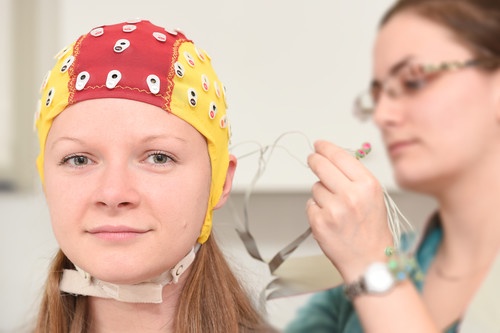
Psychophysiology Centre
This facility consists of several spacious rooms that house electroencephalographic (EEG) equipment and sound-attenuated, shielded testing booths.

Eye Tracking Facilities
The School of Psychology has four in-house eye trackers. The Eyelink 1000 system allows the recording of eye gaze at a sampling rate of 1000 Hz.
Get in Touch
Contact Details
- Address
-
Student Recruitment & Admissions
University of Aberdeen
University Office
Regent Walk
Aberdeen
AB24 3FX