
English and German (MA)
Introduction
English and German at Aberdeen gives you all the advantages of the UK’s second most highly-rated research hub for English literature, language and creative writing. You will study this programme within a European, historical and contemporary context through top-rated study of the German language and literature, history and culture. This subject combination is ideal preparation for a career across the creative arts and media, and with the international dimension opening other options too.
Study Information
At a Glance
- Learning Mode
- On Campus Learning
- Degree Qualification
- MA
- Duration
- 48 months
- Study Mode
- Full Time
- Start Month
- September
- UCAS Code
- RQ32
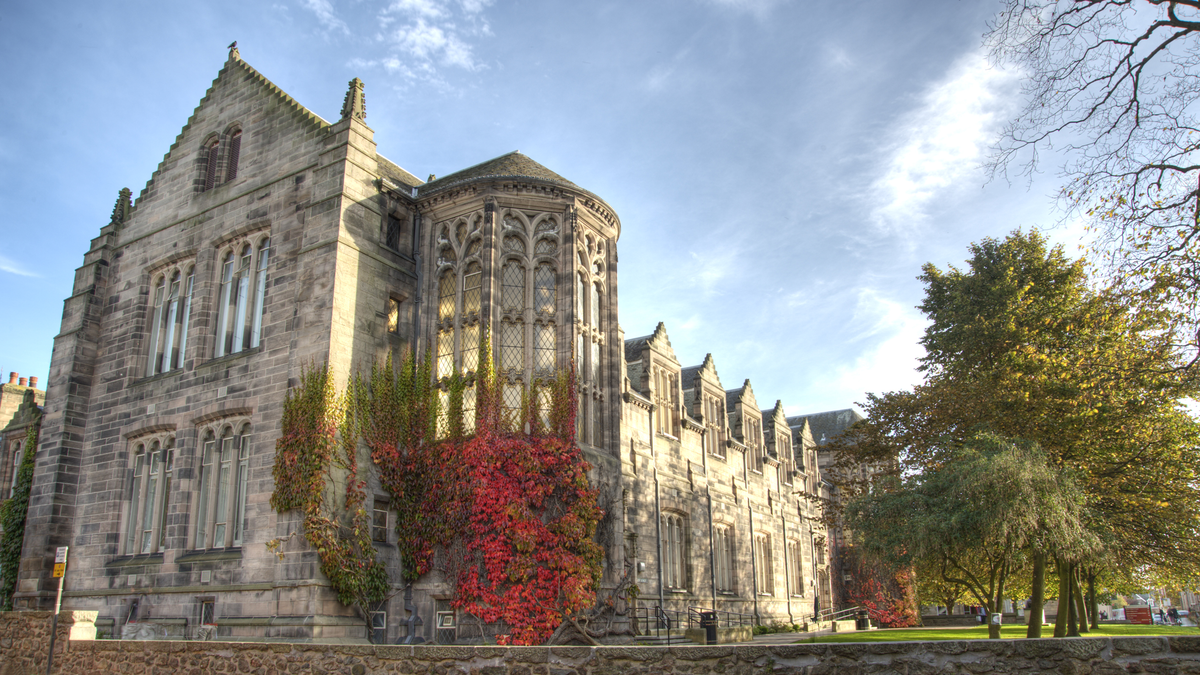
Aberdeen is a leading centre for the study of literature, language and creative writing, rated second in the UK for its research output. You will study poetry and prose through the dynamic relationship between author, reader and literary text, covering every period from Chaucer to contemporary English, Scottish, Irish, European and American writing and the cultural and critical impact of powerful and controversial modern works. You will be inspired by enthusiastic teachers and researchers, themselves acclaimed authors and poets and will be encouraged to develop your own creative writing skills.
German at Aberdeen has an outstanding reputation with the highest possible rating of ‘Excellent’ in the last national Teaching Quality Assessment. You will gain a broad understanding of Germany’s complex history and culture in today’s German-speaking world and enjoy many opportunities to practice your developing language skills informally through the German Society and Drama Group.
As an integral part of your 4-year programme, you will spend half of year three developing your language skills as a teaching assistant or visiting student in a German-speaking country.
You will graduate prepared for careers across the arts, publishing, or media, with the international dimension opening opportunities in business, international organisations, tourism and many other options.
What You'll Study
- Year 1
-
Year 1: Compulsory Courses
- Academic Writing for Language & Literature (AW1008)
-
This compulsory evaluation is designed to find out if your academic writing is of a sufficient standard to enable you to succeed at university and, if you need it, to provide support to improve. It is completed on-line via MyAberdeen with clear instructions to guide you through it. If you pass the evaluation at the first assessment it will not take much of your time. If you do not, you will be provided with resources to help you improve. This evaluation does not carry credits but if you do not complete it this will be recorded on your degree transcript.
- Getting Started at the University of Aberdeen (PD1002)
-
This course, which is prescribed for level 1 undergraduate students (and articulating students who are in their first year at the University), is studied entirely online, takes approximately 5-6 hours to complete and can be taken in one sitting, or spread across a number of weeks.
Topics include orientation overview, equality and diversity, health, safety and cyber security and how to make the most of your time at university in relation to careers and employability.
Successful completion of this course will be recorded on your Enhanced Transcript as ‘Achieved’.
- Acts of Reading (EL1009)
-
15 Credit Points
This course introduces students to the study of English by exploring the dynamic relationship between author, reader and text in a series of classic works of fiction and poetry. It covers a broad historical range (from Folk Tales and ballads to 21st century postmodernity) and offers a basic grounding in key elements of literary theory, literary history and the varieties of literary form.
Year 1: Optional Courses
Controversial Classics (EL1513) AND/OR Rethinking Reading (EL1536)
Plus select one of the following options:
Beginner - for absolute beginners and those who have studied German for up to 3 years
- German for Beginners 1 (GM1054)
- German for Beginners 2 (GM1554)
- Background to German Beginners 1 (GM1049) AND/OR Background to German Beginners 2 (GM1549)
Advanced - for post-Higher candidates and those who have studied German for more than 4 years
- German Language 1 (GM1050)
- German Language 2 (GM1550)
- Modern German Culture 1 (GM1052) AND/OR Modern German Culture 2 (GM1556)
Plus further credit points from courses of choice to reach 120 credit points.
- German for Beginners 1 (GM1054)
-
15 Credit Points
This language course provides students with a sound foundation in German (grammar and vocabulary). It enables students to understand the gist of authentic written and spoken German and to speak and write about familiar topics with a degree of accuracy and fluency.
No previous knowledge of German is required, but this course is also for students which took German at school before, on any level lower than Higher or A-level.
With 3 Language Classes and 1 Language Practical per week this course encourages and supports students to develop their personal self-study strategies.
- German for Beginners 2 (GM1554)
-
15 Credit Points
This language course provides students with a sound foundation in German (grammar and vocabulary). It enables students to understand the gist of authentic written and spoken German and to speak and write about familiar topics with a degree of accuracy and fluency.
No previous knowledge of German is required, but this course is also for students which took German at school before, on any level lower than Higher or A-level.
With 3 Language Classes and 1 Language Practical per week this course encourages and supports students to develop their personal self-study strategies.
- Background to German for Beginners 1 (GM1049)
-
15 Credit Points
Students will gain detailed knowledge and understanding of the fascinating political and cultural developments and historical events in 20th century Germany.
They will be introduced in weekly lectures and tutorials to a variety of texts and contemporary films.
This course is taught in English and normally taken in conjunction with GM1054 German for Beginners 1. It is specifically recommended to students with the intention to proceed with German Studies beyond level one.
No pre-requisites are required.
- Background to German for Beginners 2 (GM1549)
-
15 Credit Points
This course is intended for beginners, wishing to proceed with German Studies beyond level 1. It provides an introduction to selected German Short Stories from the 20th-century, with a particular focus on relating these to their cultural, historical and social context.
- German Language 1 (GM1050)
-
15 Credit Points
This module is designed for students with an SCE H in German or equivalent. The course develops receptive and productive oral and written German language skills. Students who are considering applying for entry to German Honours must take this course.
- German Language 2 (GM1550)
-
15 Credit Points
This module is designed for students with an SCE H in German or equivalent. The course develops receptive and productive oral and written German language skills. Students who are considering applying for entry to German Honours must take this course. The course builds on GM1050.
- Modern German Culture 1 (GM1052)
-
15 Credit Points
Learn more about German 20th-century literature, dealing with the events that shaped German and European history. As in all good literature, we will discuss universal themes and topics covering all of the most important aspects of modern life.
- Modern German Culture 2 (GM1556)
-
15 Credit Points
Learn more about modern German history, culture and literature while also extending your skills in reading German texts.
- Rethinking Reading (EL1536)
-
15 Credit Points
Rethinking Reading invites you to consider what we do when we study literature. What shapes the idea of literature as we know it? How, and why, might we want to change the ways in which we think about texts? Who gets to decide, and why does it matter? Designed as an introduction to critical theory for students of literature, Rethinking Reading introduces several key topics in critical studies: literature, authorship, genre, sexuality, and posthumanism.
- Controversial Classics (EL1513)
-
15 Credit Points
Literature can provoke, offend and disturb as well as entertain. This course considers some of the most powerful and controversial works of modern literature. It examines the circumstances of publication, the nature of the controversy, and the cultural and critical impact of each work. The course shows how poems, plays and novels can raise searching questions about national, racial and personal identity, and looks at the methods used by writers to challenge their readers, as well the responses of readers to such challenges.
- Year 2
-
Year 2: Compulsory Courses
- Encounters with Shakespeare (EL2011)
-
30 Credit Points
So you think you know Shakespeare? This course invites you to think again. Studying a range of plays we get behind the mythology of Shakespeare, and rediscover the dynamic inventiveness of the Elizabethan theatre. Shakespeare and his contemporaries were the principal players in a period of literary experimentation that reinvented the possibilities of literature. Encounters with Shakespeare is your chance to find out more.
- Modern German Culture 3 (GM2043)
-
15 Credit Points
Learn more about modern German history and culture while also extending your skills in reading German texts.
- Modern German Culture 4 (GM2543)
-
15 Credit Points
This course consists of the study of selected aspects of German culture and involves the close analysis of German texts.
Year 2: Optional Courses
Select one of the following options:
Beginner
- German Language (Advanced Introductory) 1 (GM2040)
- German Language (Advanced Introductory) 2 (GM2540)
Advanced
- German Language 3 (GM2042)
- German Language 4 (GM2542)
Plus further credit points from courses of choice to gain a total of 120 credits.
- German Language (Advanced Introductory) 1 (GM2040)
-
15 Credit Points
The course consists of language classes leading to advanced communicative competence in German and it will include the analysis of contemporary texts drawn from a variety of contexts. This course may be taken only by students who have completed the German for Beginners courses.
- German Language (Advanced Introductory) 2 (GM2540)
-
15 Credit Points
The intention of the course is to extend and reinforce further students' command of German grammar, vocabulary and syntactic structures, and to introduce various styles of written and spoken German. The course builds on the work done in GM2040 and is intended only for continuing beginners.
- German Language 3 (GM2042)
-
15 Credit Points
This level two language course will build on and extend students' fluency and written skills in German.
- German Language 4 (GM2542)
-
15 Credit Points
Building on work done in GM 2042, the course will develop further language skills.
- Year 3
-
Year 3: Compulsory Courses
This degree is offered as a 5-year option with an integrated year abroad consisting of study or work abroad (Mode A), or a 4-year option, in which students spend their fourth semester on a university exchange abroad (Mode B).
- German Junior Honours Language Study (GM3069)
-
15 Credit Points
This junior honours language course will build on and extend students' written skills and fluency in German.
Year 3: Optional Courses
Select a total of two courses from the following groups, each from a different group:
Medieval/Renaissance
- EL30DQ: Knights, Virgins and Viragos, Chaucer and Medieval Writing
- EL30CP: Page and Stage: Renaissance Writings 1500-1640
- EL35EJ: Writing Revolt: Literature and Politics in the 17th Century
Romantic/Victorian
- EL3009: American Innovation
- EL35XR: Romanticism
- EL30QA Sympathy for the Devil: Scottish Short Stories
- EL35SB: Britain and the 19th Century World
- EL35VB: Bildungsroman to Alien Invasion
Contemporary/Modern
- EL35KN Haunted Texts
- EL30FF: Modernism: Make it New
- EL30UT: Art and Atrocity: Representations of Violence and Trauma
- EL35UT: Art and Atrocity: Representations of Violence and Trauma
Plus one course from the following:
- EL35WC: Queer Times
- EL35YB: Creative Writing: Creativity and Craft
- EL30EH: Classical Epic
- CE3594: Dangerous Liaisons: Love, Sex and Romance in the Celtic West and Old North
- EL30VC: Fallen Women and Self-Made Men
Plus, select a further 45 credits of level 3 German courses.
- Page and Stage: Renaissance Writings 1500 - 1640 (EL30CP)
-
30 Credit Points
This course explores the poetry, drama and prose of a period often referred to as the golden age of English literature. A period which saw Shakespeare and his contemporaries produce innovative new literary works in which the language of desire took centre stage.
- Writing Revolt: Literature and Politics in the Seventeenth Century (EL35EJ)
-
30 Credit Points
Literature has the power to reimagine society. The course will explore how poetry, drama and other literary forms across the century sought new literary approaches to meet the challenges of these times. We will examine different literary strategies adopted by authors to engage with their times, from those who drew upon classical precedent to others who brought new voices, and new publics, into the forum of literature. Texts on the course will vary each year, but will feature such authors as Ben Jonson, John Donne, Katharine Philips, John Milton, Lucy Hutchinson and Samuel Daniel.
- Romanticism (EL35XR)
-
30 Credit Points
The Romantic movement swept Europe in the late eighteenth and early nineteenth centuries and produced some of the most innovative and exciting literature that has ever been seen. This rule breaking art helped shape the way that we consider art today and underpins many of our ideas about imagination, originality, creativity and self-expression. This course will explore the ways in which the Romantic movement manifested itself across Britain and Ireland and will consider writers such as Blake, Wordsworth, Coleridge, Scott, Austen and Byron.
- Sympathy for the Devil: Scottish Short Stories (EL30QA)
-
30 Credit Points
While the short story is often said to have developed in America, nineteenth-century Scottish writing is in fact instrumental in the emergence of the form. Often drawing on oral and folk traditions Scottish writers in the nineteenth and early twentieth centuries employ the supernatural, or our fear of it, to explore subjects such as guilt, fear, remorse and the extent to which we can control our own destinies. This course will explore the ways in which the short story in Scotland develops from the early nineteenth century until the beginning of the twentieth. It will include writers such as Walter Scott, James Hogg, John Galt, Margaret Oliphant, Robert Louis Stevenson, Arthur Conan Doyle, Jane Findlater and Lewis Grassic Gibbon
- Britain and the Nineteenth - Century World (EL35SB)
-
30 Credit Points
The Romantic (1782-1832) and Victorian (1832-1901) periods were ones of remarkable activity for British citizens abroad. Imperial expansion, increasing international trade, major conflicts and growing mass migration all drew more British citizens than ever into contact with the wider world. This course explores the footprints left by these interactions in nineteenth-century literature: critically examining how Britain saw the world and how the English-speaking world saw Britain during a century of unprecedented international activity. This course will combine canonical writers of empire and migration with less well-known accounts of the period. Writers covered may include Mary Shelley, Henry Derozio, Fergus Hume, Cornelia Sorabji, Robert Louis Stevenson and Arthur Conan Doyle. The course will apply a range of critical lenses to this material offering students an introduction to key concepts and debates from nation theory, settler studies and postcolonial studies.
- Bildungsroman to Alien Invasion (EL35VB)
-
30 Credit Points
This module covers some of the most prominent and popular genres of the Victorian period, including realism, detective fiction, sensation fiction, the ghost story and the social problem novel. We will learn how to identify a genre’s distinctive features, but also how it may overlap with other forms of fiction. By reading authors such as George Eliot, Charlotte Brontë, Mary Elizabeth Braddon and H. G. Wells, we will think about how writers help to create and challenge generic boundaries.
- Haunted Texts (EL35KN)
-
30 Credit Points
This course offers an overview of a wide range of twentieth-century Scottish literature, focusing on themes of haunting, death, and place. Including novels, short stories, poetry, and drama, the course explores questions of the relationship between self and society, the legacy of the past, and the formation of gendered and regional identities. There are lots of ghosts.
- Modernism: Make IT New (EL30FF)
-
30 Credit Points
The early twentieth century was a time of great literary experimentation as literary modernists rose to the challenge to make it new. We will explore modernism’s stylistic experimentation while also considering the social contexts and changes that shaped this literature. The course will examine a range of writers, genres, movements and locations which prompt us to consider what, when and where was modernism.
- Art and Atrocity: Representations of Violence and Trauma (EL30UT)
-
30 Credit Points
How is the artist to respond when the virtual becomes the real and when words cannot carry the weight of trauma? How can an author avoid the accusations of voyeuristic prurience or crass opportunism when he or she attempts to re-present events of public violence? This multi-disciplinary course examines work from a wide range of modes, including fiction, poetry, film and graphic art, and looks at the difficulties of inscribing trauma and the ethics and praxis of remembrance. Key events covered include the Holocaust, the Sabra and Shatila massacre, 9-11, the Gulf War and the conflict in the Balkans.
- Queer Times (EL35WC)
-
30 Credit Points
This course adopts a cross-period approach, bringing contemporary and premodern texts into conversation in exploring representations of queer experiences and themes in diverse forms. Divided into three sections, queer presents, queer pasts, and queer futures, the course will introduce a selection of theoretical and critical readings in thinking about how representation is shaped by temporal and cultural context. We will consider the relationship between representation of queer experience and formal experimentation, and how queer forms impact on our sense of queer possibilities.
- Creative Writing: Creativity and Craft (EL35YB)
-
30 Credit Points
This course offers students the opportunity, through lectures and interactive workshops, to develop their understanding of, and practical skills in, the writing of prose fiction, poetry and creative non-fiction. Taught by widely published, award-winning writers, it provides a thorough, practice-based understanding of creative process and of the technical challenges involved in developing an original idea into a completed literary artefact, presented to a professional standard. It also contributes to students' future career potential, whether as ‘creative’ or other kinds of professional writers/communicators.
- Classical Epic (EL30EH)
-
30 Credit Points
This course is your opportunity to study four of the most influential and gripping texts of world literature. We begin in the oral culture of ancient Greece, with the Iliad's stark meditation on war and death, and the Odyssey's consolatory reflections on divine justice, poetry and love. In imperial Rome, we see the genre transformed into a monument to political power in Virgil's Aeneid, then thrown into disarray by Ovid's irreverent anti-epic, the Metamorphoses. We end by considering some of the ways these texts have been exploited and adapted across the intervening centuries, in poetry and prose, art and film.
- Fallen Women and Self - Made Men (EL30VC)
-
30 Credit Points
The Victorian period is often seen as a time of sexual repression and rigid gender roles, in which men and women were expected to perform in accordance with established codes of behaviour that were based on assumptions about innate masculinity and femininity. While this perception of Victorian attitudes may be true to some extent, many Victorians were well aware of the dangers of gender stereotyping, and wrote fiction in order to interrogate and challenge these expectations. Focussing mainly on the novel, but including some poetry and drama, this module explores how Victorian writers engaged with gender stereotypes, and considers the literary tactics that authors used to re-examine, overthrow and sometimes reaffirm them. We will also consider how these stereotypes changed during the nineteenth century in response to public controversies and campaigns that kept questions of gender at the forefront of public consciousness. Figures such as the Fallen Woman, the Self-Made man and the Angel in the House will be explored in texts by authors including Emily Brontë, Christina Rossetti, Robert Louis Stevenson and Thomas Hardy.
- Year 4
-
Year 4: Optional Courses
Select one of the following dissertation options:
- English Dissertation (EL4502)
- Dissertation in German (GM4052)
Plus further course(s) of Level 4 English and German to gain 60 credits in each discipline.
- English Dissertation (EL4502)
-
30 Credit Points
Students will have the opportunity to write a dissertation on a topic of their choosing within English literature.
- Dissertation in German (GM4052)
-
30 Credit Points
Students engage in their first larger project of independent research. The dissertation is to be written in German and followed by a 20 minute Viva.
- German Language Study for Senior Honours (GM4099)
-
30 Credit Points
Building on the skills gained during the Junior Honours language course and before, this module expands and refines German language expertise in writing, reading, speaking and listening, to an advanced level, for their final exit written and oral exam in German.
We will endeavour to make all course options available. However, these may be subject to change - see our Student Terms and Conditions page. In exceptional circumstances there may be additional fees associated with specialist courses, for example field trips.
How You'll Study
Learning Methods
- Individual Projects
- Lectures
- Research
- Tutorials
Assessment Methods
Students are assessed by any combination of three assessment methods:
- coursework such as essays and reports completed throughout the course;
- practical assessments of the skills and competencies they learn on the course; and
- written examinations at the end of each course.
The exact mix of these methods differs between subject areas, years of study and individual courses.
Honours projects are typically assessed on the basis of a written dissertation.
Why Study English and German?
Why English
- An international profile through major literary projects such as the Cambridge Edition of the Works of Jane Austen and the Edinburgh Edition of the Waverley Novels of Sir Walter Scott.
- The WORD Centre for Creative Writing, promoting creative projects in fiction, non-fiction and collaborative mixed-media in all the languages of northeast Scotland (from Doric to Polish).
- The spectacular, award-winning Sir Duncan Rice Library, home to literary treasures collected over 500 years, charting the power of the written word from ancient papyri and medieval manuscripts to contemporary e-books and other media.
- Historic collections including rare printed books, the 12th century Aberdeen Bestiary, MacBean Stuart and Jacobite Collection, the novels of Sir Walter Scott, and an exceptional collection of Charles Dickens' first editions.
- A packed campus programme of student and public events, exhibitions, seminars, invited speakers and the annual WayWORD Festival, welcoming internationally acclaimed authors to discuss literature, including European writers.
- Research centres include the nationally recognised Centre for the Novel, the Centre for Modern Thought, and the Research Institute of Irish and Scottish Studies.
Why German
- A vibrant international community on campus and across the region, with many German-speaking students, staff and activities to get involved in and practise your language skills.
- German Society open to all students interested in German and the German-speaking countries, organising drama performances and other events such as Kaffee and Kuchen, a German Stammtisch, film showings, and visits by German speakers and writers.
- German Drama Group providing a great opportunity to produce an annual play, widen your language skills and meet other German students studying in Aberdeen. Previous years included works of 20th century dramatists Dürrenmatt, Borchert and Horvath.
- Opportunities to study the rich literature and culture of Austria and Switzerland in addition to Germany.
- A packed campus programme of events, exhibitions, seminars, invited speakers and the popular annual WayWORD festival, welcoming international figures, experts, authors and scientists to campus.
- Your period abroad as a language assistant or visiting student - we have exchange scholarships with the Universities of Zurich, Kiel and Greifswald, and Erasmus partners including Leipzig, Cologne, Bonn, Trier and Graz in Austria.
- The spectacular, award-winning Sir Duncan Rice Library, with fabulous study facilities, state-of-the-art technology, and an extensive German collection to inspire your studies.
Interested in this programme?
Entry Requirements
Qualifications
The information below is provided as a guide only and does not guarantee entry to the University of Aberdeen.
General Entry Requirements
- 2026 Entry
-
SQA Highers
Standard: BBBB
Applicants that present with BBBB will usually receive an unconditional offer.
Where we have more applicants than places we may need to ask for more than the minimum so continued engagement in school is recommended.
Widening Access: BBC
Applicants who meet one or more of our widening access metrics and present with BBC, are guaranteed an unconditional offer.
Foundation Apprenticeship: One FA is equivalent to a Higher at A. It cannot replace any required subjects.
Note: We do not double count a Higher and Advanced Higher in the same subject, but we do consider that a B grade at Advanced Higher is equivalent to an A grade at Higher.
National 5 English (or equivalent) is required at Grade C or above.
A LEVELS
Standard: BBC
Widening Access: CCC
GCSE English (or equivalent) is required at Grade C/4 or above.
BTEC LEVEL 3 EXTENDED DIPLOMA
DMM in related subjects.
Note: BTEC Level 3 Extended Certificate (Subsidiary Diploma) achieved at Distinction level, is normally acceptable in lieu of one A Level at grade B.)
GCSE English (or equivalent) is required at Grade C/4 or above. GCSE Mathematics at Grade C/4 is also required for Accountancy, Economics and Finance programmes.
IRISH LEAVING CERTIFICATE
Five subjects at Higher at H3.
INTERNATIONAL BACCALAUREATE
32 points including 5, 5, 5 at HL.
SL in English is also required.
- 2027 Entry
-
SQA Highers
Standard: BBBB
Applicants that present with BBBB will usually receive an unconditional offer.
Where we have more applicants than places we may need to ask for more than the minimum so continued engagement in school is recommended.
Widening Access: BBC
Applicants who meet one or more of our widening access metrics and present with BBC, are guaranteed an unconditional offer.
Foundation Apprenticeship: One FA is equivalent to a Higher at A. It cannot replace any required subjects.
Note: We do not double count a Higher and Advanced Higher in the same subject, but we do consider that a B grade at Advanced Higher is equivalent to an A grade at Higher.
National 5 English (or equivalent) is required at Grade C or above.
A LEVELS
Standard: BBC
Widening Access: CCC
GCSE English (or equivalent) is required at Grade C/4 or above.
BTEC LEVEL 3 EXTENDED DIPLOMA
DMM in related subjects.
Note: BTEC Level 3 Extended Certificate (Subsidiary Diploma) achieved at Distinction level, is normally acceptable in lieu of one A Level at grade B.)
GCSE English (or equivalent) is required at Grade C/4 or above. GCSE Mathematics at Grade C/4 is also required for Accountancy, Economics and Finance programmes.
IRISH LEAVING CERTIFICATE
Five subjects at Higher at H3.
INTERNATIONAL BACCALAUREATE
32 points including 5, 5, 5 at HL.
SL in English is also required.
The information displayed in this section shows a shortened summary of our entry requirements. For more information, or for full entry requirements for Arts and Social Sciences degrees, see our detailed entry requirements section.
Fees and Funding
You will be classified as one of the fee categories below.
- EU / International students
-
- Tuition Fees for 2026/27 Academic Year
- £20,800
- Tuition Fees for 2026/27 Academic Year (Self-funded Students *)
- £14,800
-
The above fee includes the £6,000 Aberdeen Global Scholarship provided to self-funded international students. Full terms and conditions apply.
- Home Students
-
- Tuition Fees for 2026/27 Academic Year
- £1,820
- England, Wales, Northern Ireland, and Republic of Ireland
-
- Tuition Fees for 2026/27 Academic Year
- £9,790
-
The UK Government has confirmed that the RUK fee cap will continue to increase each year to reflect inflation. Tuition fees will increase in line with the Government fee cap each year, and this should be taken into account when budgeting.
Scholarships and Funding
UK Scholarship
Students from England, Wales and Northern Ireland, who pay tuition fees may be eligible for specific scholarships allowing them to receive additional funding. These are designed to provide assistance to help students support themselves during their time at Aberdeen.
Aberdeen Global Scholarship
The University of Aberdeen is delighted to offer eligible self-funded international on-campus undergraduate students a £6,000 scholarship for every year of their programme. More about this funding opportunity.
Funding Database
View all funding options in our Funding Database.
Careers
There are many opportunities at the University of Aberdeen to develop your knowledge, gain experience and build a competitive set of skills to enhance your employability. This is essential for your future career success. The Careers and Employability Service can help you to plan your career and support your choices throughout your time with us, from first to final year – and beyond.
- More information on employability at the University of Aberdeen
- More information on the Careers and Employability Service
What our Alumni Say
Our Experts
Information About Staff Changes
You will be taught by a range of experts including professors, lecturers, teaching fellows and postgraduate tutors. However, these may be subject to change - see our Student Terms and Conditions page.
Discover Uni
Discover Uni draws together comparable information in areas students have identified as important in making decisions about what and where to study. You can compare these and other data for different degree programmes in which you are interested.
Get in Touch
Contact Details
- Address
-
Student Recruitment & Admissions
University of Aberdeen
University Office
Regent Walk
Aberdeen
AB24 3FX