
Introduction
The degree of Philosophy, Politics and Economics (PPE) is a springboard to a career in politics, finance or the media. The three complementary subjects have deep historical connections yet have developed as independent disciplines with distinctive methods. PPE students will leave the programme with an understanding not just of modern societies and their political institutions, but how rigorous critical evaluation can bring about significant social and political change.
Study Information
At a Glance
- Learning Mode
- On Campus Learning
- Degree Qualification
- MA
- Duration
- 48 months
- Study Mode
- Full Time
- Start Month
- September
- UCAS Code
- VL51
- Pathway Programme Available
- Undergraduate Foundation Programme
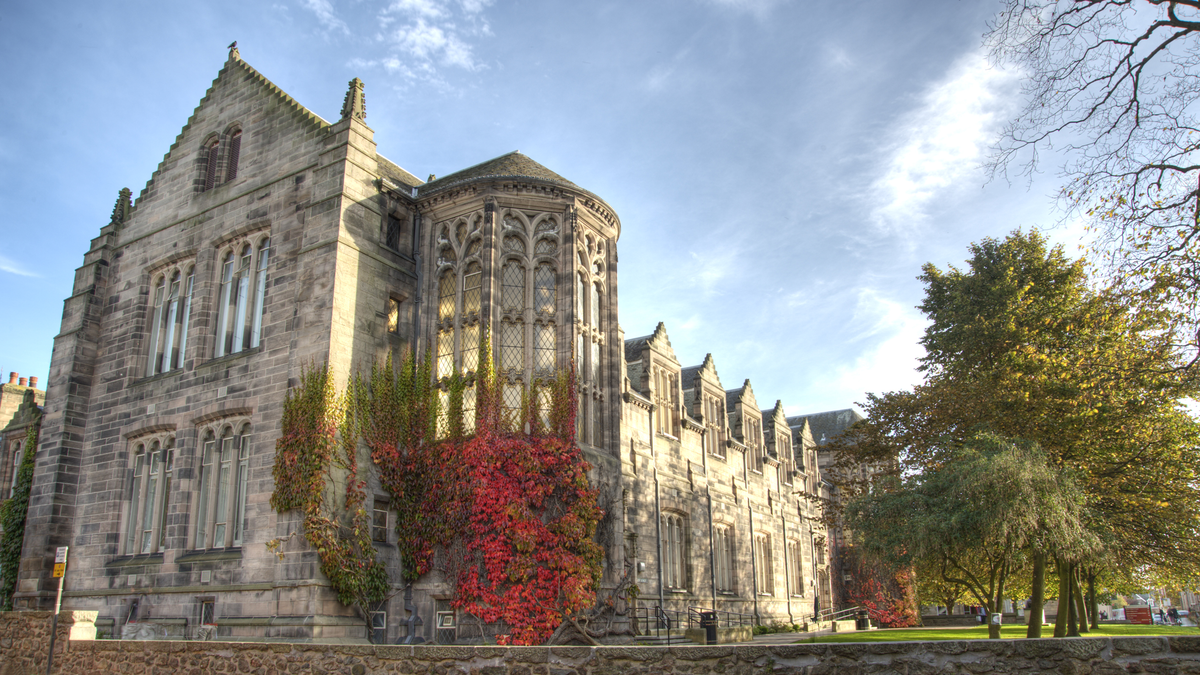
PPE is a joint honours degree for students who have broad horizons and are interested in social and political studies and the humanities. The varied yet supporting nature of the three parts (containing courses from mathematical statistics to Aristotelian ethics) make it an interesting and dynamic programme. The variety provides students with three foundations from which to move forward. And, due to the intellectual connections that can be drawn between the disciplines, the knowledge and skills gained from each lends support to the others.
PPE students have a broad knowledge base:
- An understanding of modern societies and their political institutions.
- An understanding of the choices that political systems must make.
- An understanding of how consumers, businesses and government make decisions and how these decisions collectively determine the allocation of resources.
- An understanding of how rigorous critical evaluation can bring about significant social and political change.
And an impressive skills set:
- Numeracy and data analysis skills
- Reasoning and critical thinking skills
- The ability to evaluate the concepts and values employed in political analysis
- The ability to develop and express their views clearly
What You'll Study
- Year 1
-
Students will be required to take the courses below, plus 15 credit points from a level 2 Philosophy option.
Year 1: Compulsory Courses
- The Economics of Business and Society (EC1006)
-
15 Credit Points
This course is an introductory course in microeconomics where we study the decision making of individual actors (consumers, employees, firms, governments, etc.) in an economy. Actors must make decisions about behaviours because they face scarce resources, but often they find that trading with other actors in markets can increase the wellbeing of all parties. This course models and examines the nature of these interactions, highlighting when they work well and when they fail to increase wellbeing and what might be the solution to these failures.
- The Global Economy (EC1506)
-
15 Credit Points
This course is an introductory course in macroeconomics where we study the behaviour of the economy as a whole. Whereas microeconomics focuses on individual markets, macroeconomics addresses the “big issues” such as unemployment, inflation, economic growth, and financial crises. Macroeconomics is a lively subject, full of discussion and debate, as economists and policymakers take different views on macroeconomic issues, their causes and appropriate policy responses. Issues such as: Is the economy growing? What causes unemployment and how can we reduce it? How can we avoid recessions? When is inflation a problem? Are banks lending too much?
- Academic Writing for Social Sciences (AW1006)
-
This compulsory evaluation is designed to find out if your academic writing is of a sufficient standard to enable you to succeed at university and, if you need it, to provide support to improve. It is completed on-line via MyAberdeen with clear instructions to guide you through it. If you pass the evaluation at the first assessment it will not take much of your time. If you do not, you will be provided with resources to help you improve. This evaluation does not carry credits but if you do not complete it this will be recorded on your degree transcript.
- Getting Started at the University of Aberdeen (PD1002)
-
This course, which is prescribed for level 1 undergraduate students and articulating students who are in their first year at the University, is studied entirely online, takes approximately 2-3 hours to complete and can be taken in one sitting, or spread across the first 4 weeks of term.
Topics include University orientation overview, equality & diversity, MySkills, health, safety and cyber security, and academic integrity.
Successful completion of this course will be recorded on your Transcript as ‘Achieved’.
- Politics & International Relations 1: Democracy and Governance (PI1018)
-
15 Credit Points
Politics and International Relations impacts on all parts of our lives, with more specifically it being the study of ideas, events, institutions and choice. Studying these provides us with both knowledge of the world and also how it operates and functions. It also changes our perception of our surroundings and makes us aware of an ever changing global context. This course will introduce students to concepts and ideas that form the basis for the study of these disciplines while simultaneously also helping us understand our own place within a global context.
- Experience, Knowledge and Reality (PH1523)
-
15 Credit Points
How “real” is reality? How does the mind relate to the world? This course introduces two approaches to answering these questions: rationalism and empiricism. By reading Rene Descartes’ Meditations on First Philosophy, we learn about Descartes’ rationalist approach to knowledge, reality, mind-body dualism, and God’s necessary existence. Through David Hume’s Enquiry Concerning Human Understanding, we see how Hume grounds knowledge in experience. We read Hume on impressions and ideas, induction, causality, miracles and critically compare and examine Descartes’ and Hume’s arguments by drawing on readers and critics.
- Politics & International Relations 2: Power and Conflict (PI1518)
-
15 Credit Points
Politics is the study of multiple forms of power that impacts our lives and the world we live in. It shapes how people and groups cooperate or clash with each other. In this course, we will explore the ideas, institutions, complex histories, global dynamics, and systems that shape politics and international relations. Students will learn key concepts and theories of the discipline, and develop their skills in understanding and analysing global politics.
Year 1: Optional Courses
Plus 30 credit points from the following courses:
PH1027 Controversial Questions
PH1522 How Should One Live?
PH1034 Logic and ArgumentPlus 15 credit points from a level 2 Philosophy option.
- Controversial Questions (PH1027)
-
15 Credit Points
We examine questions such as: Is eating animals immoral? Is being a good or bad person a matter of luck? If so, are we justified in punishing bad people? Should anyone be able to set limits on what you can do with your own body, even if it's ‘for your own good’? Should everyone be allowed to state their mind, even if their views are harmful or offensive? Is censorship ever justifiable? Do you have a moral obligation to help those worse-off? Are you unknowingly biased against underprivileged groups?
- How Should One Live? (PH1522)
-
15 Credit Points
What does it mean to live a good life? How do we determine what is good or bad, right or wrong? Are some ways of living better or worse for us? In this course we will look at some central philosophical approaches to answering these questions. Traditions we may engage with include virtue ethics, Chinese ethics, deontology, consequentialism, and feminist ethics. Along the way, we will read the original work of some of the most important scholars in the history of moral philosophy. Students will be encouraged to think deeply, and to explore their own views about what it means to live a (morally) good life.
- Logic and Argument (PH1034)
-
15 Credit Points
What makes an argument a good argument? What are the correct rules for reasoning? How should we revise our beliefs in the light of new evidence? What should we think about paradoxes?
This course provides an introduction to logic and tools for successfully evaluating arguments. Some of the topics covered include validity, soundness, consistency, entailment, provability, belief revision and paradoxes. The language of propositional logic and key ideas in Bayesian epistemology are introduced. The course develops the ability to symbolise English sentences into formal languages and to construct truth tables, truth trees and natural deduction proofs. Logical concepts are applied to everyday thinking as well as to philosophical puzzles and paradoxes.
- Year 2
-
Year 2: Compulsory Courses
- Ideas and Ideologies in Politics and International Relations (PI2009)
-
30 Credit Points
Ideas and ideologies are core to teaching, learning and research in Politics and International Relations. Theoretical developments are at the forefront of academic debates within the discipline, demonstrated by the appearance of a number of new approaches as more traditional theories have struggled to account for an ever changing world. This course will introduce students to these with profound questions and struggles over identity, belonging, justice and rights underpinning these theoretical debates.
- Intermediate Microeconomics (EC2003)
-
30 Credit Points
This course builds on and is a natural extension of EC 1006. By examining in a more rigorous way concepts introduced in EC 1006 students will develop further their analytical skills and they will obtain a better understanding of consumers and producers behaviour, market structure as well as the effectiveness of economic policy. The course is designed to appeal to all students interested in economics. This includes students who may wish not to enter into any further studies of economics, as well as students who may wish to continue studying economics at the honours level.
- Global Politics: Equality and Inequality (PI2508)
-
30 Credit Points
Equality and inequality are at the forefront of many debates within contemporary Politics and International Relations. This course will examine the historical context, theoretical underpinnings, and also key concepts which continue to uphold equality and inequality on a global scale.
- Intermediate Macroeconomics (EC2503)
-
30 Credit Points
This course focuses on macroeconomic policy in a global economy. The first part builds an open-economy Keynesian model to investigate what determines the effectiveness of fiscal and monetary policies, and how exchange rate regimes and capital mobility impact on policy effectiveness. The second part investigates what determines the level of macroeconomic activity and its growth over time. The final part looks at what determines inflation and unemployment. This intermediate level course uses live lectures to develop your analytical skills evaluating economic policy in a rigorous and technical way to equip you with the skills needed for honours level study.
- Building Skills and Experience for Career Success (PD2002)
-
This course, which is designed for level 2 students and above, is studied entirely online. Topics include career planning, finding work experience and articulating your skills and experiences in applications and interviews. Successful completion of this course will be recorded on your Enhanced Transcript as ‘Achieved’. The course takes approximately 5-6 hours to complete and can be taken in one sitting, or spread across a number of weeks.
- Year 3
-
Year 3: Optional Courses
60 credit points from level 3 courses in Philosophy and 30 credit points from level 3 courses in Economics, plus 30 credit points from level 3 courses in Politics & International Relations.
- Year 4
-
Year 4: Optional Courses
30 credit points from level 4 courses in each of Economics, Philosophy and Politics & International Relations plus a dissertation in either Economics or Philosophy.
We will endeavour to make all course options available. However, these may be subject to change - see our Student Terms and Conditions page. In exceptional circumstances there may be additional fees associated with specialist courses, for example field trips.
How You'll Study
Learning Methods
- Individual Projects
- Lectures
- Research
Assessment Methods
Students are assessed by any combination of three assessment methods:
- coursework such as essays and reports completed throughout the course;
- practical assessments of the skills and competencies they learn on the course; and
- written examinations at the end of each course.
The exact mix of these methods differs between subject areas, years of study and individual courses.
Honours projects are typically assessed on the basis of a written dissertation.
Why Study Philosophy, Politics and Economics?
Why Philosophy
- Famous philosophers who worked at the University include Thomas Reid, founder of the 18th century Scottish School of Common Sense Philosophy, and Alexander Bain, who helped lay the foundations for modern scientific psychology.
- The Aberdeen Philosophy in Education Group (APEG), which is unique in Scotland, trains students to discuss philosophical questions with local primary and secondary school pupils.
- Café Philosophique brings philosophers and the local community together, using popular films and novels to explore philosophical puzzles in an informal atmosphere.
- The Centre for the History and Philosophy of Science, Technology and Medicine acts as the focus for research, teaching and engagement in the history, philosophy, ethics, literature and museology of science, technology and medicine.
- The spectacular, award-winning Sir Duncan Rice Library offers superb collections, including early printed works of natural philosophy and medicine, the archives of Thomas Reid, and records of the Aberdeen Philosophical Society.
- We offer a packed programme of public events, lectures and debates, including the annual WayWORD literary festival, which attracts high-profile scientists, scholars, authors, actors and broadcasters to discuss and debate the big issues of today.
- The skills you learn in Philosophy—for example, to think and write clearly, to explain complex ideas, to challenge orthodoxy—lend themselves to many careers.
- Studying Philosophy will change how you think about things and how you approach life's challenges.
- Philosophy is interesting! Students from all disciplines often report that studying Philosophy was the most rewarding experience of their studies.
Interested in this programme?
Entry Requirements
Qualifications
The information below is provided as a guide only and does not guarantee entry to the University of Aberdeen.
General Entry Requirements
- 2026 Entry
-
SQA Highers
Standard: BBBB
Applicants that present with BBBB will usually receive an unconditional offer.
Where we have more applicants than places we may need to ask for more than the minimum so continued engagement in school is recommended.
Widening Access: BBC
Applicants who meet one or more of our widening access metrics and present with BBC, are guaranteed an unconditional offer.
Foundation Apprenticeship: One FA is equivalent to a Higher at A. It cannot replace any required subjects.
Note: We do not double count a Higher and Advanced Higher in the same subject, but we do consider that a B grade at Advanced Higher is equivalent to an A grade at Higher.
National 5 English (or equivalent) is required at Grade C or above. National 5 Mathematics or Applications of Mathematics (or equivalent) is also required for Accountancy, Economics and Finance programmes.
A LEVELS
Standard: BBC
Widening Access: CCC
GCSE English (or equivalent) is required at Grade C/4 or above. GCSE Mathematics at Grade C/4 is also required for Accountancy, Economics and Finance programmes.
BTEC LEVEL 3 EXTENDED DIPLOMA
DMM in related subjects.
Note: BTEC Level 3 Extended Certificate (Subsidiary Diploma) achieved at Distinction level, is normally acceptable in lieu of one A Level at grade B.)
GCSE English (or equivalent) is required at Grade C/4 or above. GCSE Mathematics at Grade C/4 is also required for Accountancy, Economics and Finance programmes.
IRISH LEAVING CERTIFICATE
Five subjects at Higher at H3.
O4 in Mathematics is also required.
INTERNATIONAL BACCALAUREATE
32 points including 5, 5, 5 at HL.
SL in English and SL in Mathematics are also required.
- 2027 Entry
-
SQA Highers
Standard: BBBB
Applicants that present with BBBB will usually receive an unconditional offer.
Where we have more applicants than places we may need to ask for more than the minimum so continued engagement in school is recommended.
Widening Access: BBC
Applicants who meet one or more of our widening access metrics and present with BBC, are guaranteed an unconditional offer.
Foundation Apprenticeship: One FA is equivalent to a Higher at A. It cannot replace any required subjects.
Note: We do not double count a Higher and Advanced Higher in the same subject, but we do consider that a B grade at Advanced Higher is equivalent to an A grade at Higher.
National 5 English (or equivalent) is required at Grade C or above. National 5 Mathematics or Applications of Mathematics (or equivalent) is also required for Accountancy, Economics and Finance programmes.
A LEVELS
Standard: BBC
Widening Access: CCC
GCSE English (or equivalent) is required at Grade C/4 or above. GCSE Mathematics at Grade C/4 is also required for Accountancy, Economics and Finance programmes.
BTEC LEVEL 3 EXTENDED DIPLOMA
DMM in related subjects.
Note: BTEC Level 3 Extended Certificate (Subsidiary Diploma) achieved at Distinction level, is normally acceptable in lieu of one A Level at grade B.)
GCSE English (or equivalent) is required at Grade C/4 or above. GCSE Mathematics at Grade C/4 is also required for Accountancy, Economics and Finance programmes.
IRISH LEAVING CERTIFICATE
Five subjects at Higher at H3.
O4 in Mathematics is also required.
INTERNATIONAL BACCALAUREATE
32 points including 5, 5, 5 at HL.
SL in English and SL in Mathematics are also required.
The information displayed in this section shows a shortened summary of our entry requirements. For more information, or for full entry requirements for Arts and Social Sciences degrees, see our detailed entry requirements section.
Fees and Funding
You will be classified as one of the fee categories below.
- EU / International students
-
- Tuition Fees for 2026/27 Academic Year
- £20,800
- Tuition Fees for 2026/27 Academic Year (Self-funded Students *)
- £14,800
-
The above fee includes the £6,000 Aberdeen Global Scholarship provided to self-funded international students. Full terms and conditions apply.
- Home Students
-
- Tuition Fees for 2026/27 Academic Year
- £1,820
- England, Wales, Northern Ireland, and Republic of Ireland
-
- Tuition Fees for 2026/27 Academic Year
- £9,790
-
The UK Government has confirmed that the RUK fee cap will continue to increase each year to reflect inflation. Tuition fees will increase in line with the Government fee cap each year, and this should be taken into account when budgeting.
Scholarships and Funding
UK Scholarship
Students from England, Wales and Northern Ireland, who pay tuition fees may be eligible for specific scholarships allowing them to receive additional funding. These are designed to provide assistance to help students support themselves during their time at Aberdeen.
Aberdeen Global Scholarship
The University of Aberdeen is delighted to offer eligible self-funded international on-campus undergraduate students a £6,000 scholarship for every year of their programme. More about this funding opportunity.
Funding Database
View all funding options in our Funding Database.
Careers
There are many opportunities at the University of Aberdeen to develop your knowledge, gain experience and build a competitive set of skills to enhance your employability. This is essential for your future career success. The Careers and Employability Service can help you to plan your career and support your choices throughout your time with us, from first to final year – and beyond.
- More information on employability at the University of Aberdeen
- More information on the Careers and Employability Service
Our Experts
- Other Experts
- Professor David McCausland
- Prof Mervyn Bain
Information About Staff Changes
You will be taught by a range of experts including professors, lecturers, teaching fellows and postgraduate tutors. However, these may be subject to change - see our Student Terms and Conditions page.
Discover Uni
Discover Uni draws together comparable information in areas students have identified as important in making decisions about what and where to study. You can compare these and other data for different degree programmes in which you are interested.
Get in Touch
Contact Details
- Address
-
Student Recruitment & Admissions
University of Aberdeen
University Office
Regent Walk
Aberdeen
AB24 3FX