
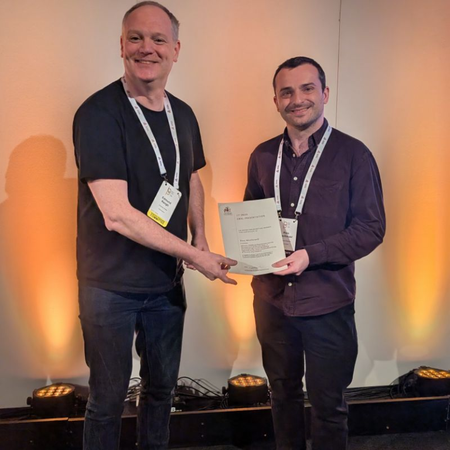

Dr MacDonald wins this year's prestigious award for presenting his work on the link between adverse childhood experiences and later onset of chronic pain from the Consortium Against Pain inEquality (CAPE) study.
Epidemiology Group Research Fellow Dr Ross MacDonald has been awarded the prize for Best Abstract and Oral Presentation at this year’s British Pain Society's Annual Scientific Meeting, which was held at the Harrogate Convention Centre from 21–23 April 2026.
Dr MacDonald's presentation drew on findings from the Consortium Against Pain inEquality (CAPE) study, using data analysis to examine the relationship between adverse childhood experiences (ACEs) and the development of chronic pain in adulthood. The work used data from the Avon Longitudinal Study of Parents and Children (ALSPAC), analysing nearly 15,000 participants across four developmental periods from early childhood to late adolescence.
Rather than asking simply whether exposure to adversity in childhood increases the risk of chronic pain, the study examined how the timing and pattern of that exposure matters. Using a Structured Life Course Modelling Approach, the research formally compared several competing explanations, including whether certain periods of childhood carry greater risk, whether more recent exposures are more harmful, and whether it is the accumulation of adversity over time that matters most.
Dr MacDonald’s analysis found that, across the majority of adversity types examined, the accumulation of adverse experiences across multiple developmental periods — rather than any single event or early exposure alone —most strongly predicts the development of chronic multi-site pain by age 26. Certain adversities, including household substance misuse and poor parent-child bonding, showed stronger associations when experienced later in childhood. A distinct period of vulnerability was identified in early adolescence (ages 10–13) in relation to lack of social support in males.
Professor Gary Macfarlane, Principal Investigator of CAPE said, “These findings have important implications for prevention and clinical practice, suggesting that interventions focused exclusively on early childhood may not be sufficient. Trauma-informed approaches to pain management should therefore consider the cumulative and ongoing nature of adversity across the whole of childhood and adolescence.”
The British Pain Society Annual Scientific Meeting is the principal national gathering for those involved in pain research and management in the UK. This year's meeting was the 59th, and brought together researchers, clinicians, and other professionals from across the field.