
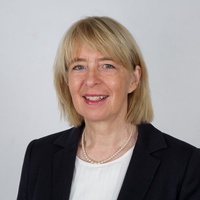

A pioneering geneticist, a clinical chair in surgery, an industrial psychologist and a forensic soil scientist have been recognised in the King's 2026 New Year Honours.
Professor Zosia Miedzybrodzka, Professor of Medical Genetics at University of Aberdeen, Service Clinical Director of Genetics at NHS Grampian and NHS Clinical Lead for Huntington’s Disease in North of Scotland (covering Grampian, Highland, Orkney, Shetland, and the Western Isles), based in NHS Grampian, has been appointed an Officer of the Order of the British Empire (OBE).
Professor Angus Watson, Clinical Chair in Surgery at the University of Aberdeen and Vice President of the Royal College of Surgeons of Edinburgh (RCSEd) has also been awarded an OBE for his contributions to surgery and surgical research.
Professor Rhona Flin, Professor of industrial psychology at Robert Gordon University and Emeritus Professor of applied psychology at the University of Aberdeen, was awarded a CBE (Commander of the Order of the British Empire) for services to research.
Professor Dame Lorna Dawson, University alumna and Head of the Centre for Forensic Soil Science at the James Hutton Institute, was awarded the honour of Dame Commander of the Order of the British Empire (DBE) for her services to innovations in soil and forensic science.
Recognised for her services to genetics medicine and research and for her role as an Honorary Consultant Clinical Geneticist and Service Clinical Director of Genetics at NHS Grampian, Professor Miedzybrodzka’s inclusion in the New Year Honour’s comes 75 years after her RAF test pilot father Leslaw Miedzybrodzki was awarded the King's Commendation for Valuable Service (KCVS) in the Air on 29 December 1950.
“I'm so blown away and really moved to get this recognition for all the years I've been trying to just do my best for people with genetics conditions and realise now it’s been noticed,” she said.
"Half my work is for the University doing research and teaching medical genetics and the other half is practicing as a doctor specialising in genetics but also leading an NHS team including labs, genetic doctors, nurses and admin staff.
"It's a long established clinic and I've been very pleased to lead it all these years. Our team look after people who live in NHS Highland, Orkney, Shetland and the Northern half of the Western Isles.
"None of this would be possible without my team who all pull together and all really care about patients. Whether that's the receptionists and clinic admin staff, our super dedicated nurses, genetic counsellors or medical and university colleagues, it's also the lab team who make individual test results available to patients with huge dedication and I totally want to thank them all for what they do."
Professor Miedzybrodzka’s work ensures that advances in genetic research - for rare diseases, cancer risk, and inherited disorders - translates into real diagnostic services, testing programmes and preventive screening for communities in Scotland.
She led a research team which identified a specific variant of the gene BRCA1 linked to a historic origin on the island of Westray in the Orkney archipelago. This variant is associated with significantly increased risk of breast and ovarian cancer among carriers and is believed to be the first time within the UK that such a geographic ancestral link to a cancer-risk gene variant has been established.
This led to a pilot genetic testing programme offering screening to Westray residents with appropriate ancestry, regardless of personal or family history of cancer.
She is also Clinical Lead for Huntington’s Disease (HD) in the North of Scotland and has co-authored recent important epidemiological research mapping the prevalence of the HD gene expansion in Northern Scotland.
Professor Miedzybrodzka leads clinical research for HD treatments and has contributed to research on the needs of children and young people growing up in families affected by HD. This work helped shape support and services to address the psychosocial impact of inheritable neurodegenerative conditions.
Early in her career, she led major studies on conditions such as Clubfoot including a large study involving over 1,000 families across the UK, the Netherlands and even Vanuatu which suggested that variations in a gene involved in folate metabolism might contribute to clubfoot risk.
NHS Grampian Deputy Chief Executive June Brown commented: "Huge congratulations to Zosia whose contributions to patient care and research are outstanding. Her work will positively impact families for generations to come and we are extremely proud of all that she has and continues to achieve. Zosia leads a valued NHS service at the same time as contributing to ground-breaking discoveries in the field of genetics."
Professor Watson’s research portfolio meanwhile is centred on colon capsule endoscopy (CCE), early detection of colorectal cancer and the use of AI to assist image interpretation.
Over the last decade he has led research into CCE, which provides a less invasive way to detect bowel problems, including cancer. Patients swallow a pill-sized camera that captures thousands of images of the bowel lining, reducing reliance on traditional colonoscopies and improving patient access and comfort. His team’s work has led to the widescale adoption of CCE across the NHS.
Professor Watson assumed the role of Vice President at the Royal College of Surgeons of Edinburgh in November 2025, after initially joining its Council in 2018. He also chairs RCSEd's Research Committee and Global Care Group and the NHS Scotland Colon Capsule (ScotCap) programme.
During his time with RCSEd, Professor Watson has also led a range of initiatives, such as the Scottish Surgical Boot Camp which has trained over 600 Resident Surgeons over the last 15 years.
He runs the UK RCSEd Medical Student Surgical Skills competition which has seen over 6,000 aspiring surgeons enter the and he volunteers for UK-Med and has recently returned from his second mission to Gaza where he works in the Field Hospital looking after the war-injured. Professor Watson has been a consultant for over 20 years and works as an honorary colorectal surgeon at Raigmore Hospital, Inverness.
He said: “I am honoured that the work we have done has been recognised. Delivering improved outcomes for patients and empowering the surgeons of the future is a team effort and I am grateful to all my collaborators and mentors who have helped me on this journey.”
Professor Flin's research examines human performance in high-risk work settings, such as the energy sector, healthcare, aviation, and emergency services, focusing on non-technical skills, safety and emergency response.
She led the Scottish Patient Safety Research Network, was a Trustee of the Clinical Human Factors Group and a member of the Military Aviation Safety Committee at the Ministry of Defence. Professor Flin holds Fellowships (ad hom.) from the Royal College of Surgeons Edinburgh and the Royal College of Physicians and Surgeons Glasgow for her research on non-technical skills in surgeons and anaesthetists.
Commenting on her award, Professor Flin said: "I feel very privileged to be given this honour, especially as all my research has been accomplished with considerable help from colleagues and doctoral students, as well as our collaborators who have allowed us access to their workplaces."
Professor Dame Lorna Dawson was awarded the honour of Dame Commander of the Order of the British Empire (DBE) for her services to innovations in soil and forensic science.
Dame Dawson graduated from the University of Aberdeen with a PhD in Soil Science in 1984. She has remained in Aberdeen at the James Hutton Institute where she is Head of the Centre for Forensic Soil Science. Her research is at the forefront of developing and applying environmental tools in search and trace evidence in the Criminal Justice System.
An internationally renowned soil scientist, Professor Dawson has over 35 years of experience in managing and conducting research in soil and plant interactions, particularly their application in the criminal justice system.
She has reported and advised on over 200 criminal cases and written over 150 Expert Witness reports, both in the UK and abroad. Additionally, she has presented evidence in more than 25 cases, including the World’s End murders and the Sheku Bayoh Public Inquiry.
Professor Dawson has previously been awarded a Commander of the British Empire, having been named in the Queen’s Birthday Honours list in June 2018. She has also received a Special Recognition award at the 2017 Pride of Britain awards ceremony and is a fellow of the Royal Society of Arts, the Royal Society of Edinburgh, the Royal Royal Scottish Geographical Society, the British Society of Soil Science and the Royal Society of Biology.
Professor Dawson said: “I am deeply honoured and immensely humbled to be recognised with a Damehood in His Majesty the King’s New Year 2026 Honours List. This award reflects the extraordinary contributions of the Centre for Forensic Soil Science at the James Hutton Institute and the many dedicated collaborators who work with us.
“Soil science may seem an unsung discipline, but its applications — from underpinning sustainable land management, producing safe, nutritious food, to providing robust scientific evidence that supports the criminal justice system — make a real difference to society in the UK and across the world. I am grateful for the support of my family, my professional networks, and the wider scientific, policy, policing and legal communities, whose collective passion and expertise have made this pioneering work possible.”
University Principal and Vice-Chancellor, Professor Peter Edwards, said: “These honours are a fitting tribute to the outstanding work and commitment to their respective fields as shown by Professor Miedzybrodzka, Professor Watson and Dame Dawson over many years.
“I am delighted that Professor Miedzybrodzka’s pioneering work at the University of Aberdeen and NHS Grampian has been recognised with an OBE. Her combination of scientific research, clinical practice, public health planning, and policy advising has made her a leader in the development of modern genomic medicine in Scotland.
“Over the last decade Professor Angus Watson has combined frontline colorectal surgical practice with high-impact research - notably leading Scotland’s national colon capsule (ScotCap) programme which has pioneered routine capsule endoscopy in the NHS and has driven research into AI-assisted image interpretation.
“Professor Rhona Flin’s work in human factors has had a profound influence on safety‑critical industries, transforming approaches to leadership, decision‑making, and organisational performance. Her CBE is a fitting recognition of contributions that have strengthened professional practice and advanced the field globally.”
“Dame Lorna Dawson’s contribution to forensic soil science is nothing short of transformative. Her pioneering work has shaped modern investigative practice, strengthened the criminal justice system, and inspired generations of scientists. We are immensely proud to see her achievements recognised at the highest level, and delighted that a University of Aberdeen alumna continues to have such profound impact both nationally and internationally.
"I would also like to extend my warmest congratulations to all our alumni and the wider Aberdeen family who have been recognised in the King’s New Year Honours List. Their achievements exemplify the spirit of innovation and public service that has defined the University of Aberdeen for centuries, and they carry forward a legacy of excellence that continues to shape communities across Scotland and beyond.”
ENDS