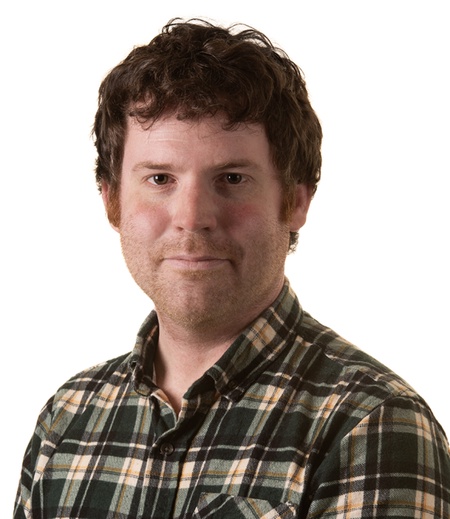

Stuart joins the group with a background in medical history, and will be working to provide a range of qualitative research support across a number of our studies.
Tell us a bit about yourself:
I am originally from Newcastle upon Tyne, but I’ve lived in various parts of Scotland since I first moved up here for university as a teenager. My last few jobs have all been in public health, but my PhD was in the history of medicine – it certainly wasn’t scientific! I have type 1 diabetes, so that has always been a particular interest, and I’ve published a book on the history of insulin therapy (Insulin: A Hundred-Year History), which also goes into current controversies around access to healthcare, particularly in the USA. I have always used transferable methodologies such as interviewing, so the lateral move to applied qualitative health research made sense, and I really enjoy the way this field lets me see the more direct impact of my work.
What will you be investigating while you are in Aberdeen?
I will be working on the qualitative research components of several different mixed methods projects, for example the ‘PrIOritising early detection of KNEE osteoaRthritis’ study, or PIOKNEER for short. My role in this will be to map currently available resources and support for people with early-stage knee osteoarthritis, and to use semi-structured interviews and focus groups to help understand the experience and priorities of people living with the condition. Doing this means that we will be able to identify perceived gaps in care, produce appropriate guidance, and assess the feasibility and acceptability of novel healthcare technologies and approaches. I will also be working on the British Society for Rheumatology Psoriatic Arthritis Register (BSR-PsA) project, and on research to support people with long-term conditions to remain in employment as part of the Scottish Centre for Work and Health.
Why did you choose Aberdeen?
I was interested in the Epidemiology Group because of the fascinating and genuinely important work that it does, and I’m really happy to be able to contribute to the delivery of that. As far as the city goes, I had only been to Aberdeen a handful of times before getting the job here, but I am enjoying it so far! I know the granite architecture sometimes gets a mixed reception, but I personally love it, and the Aberdeenshire coastline is up there with the best in the country. There’s also the statue of John Macleod, who was involved in the discovery of insulin, and it’s quite strange knowing that I now work in the hometown of someone I’ve written so much about, and for the same institution!
Are you involved in any other research?
I’m not actively involved in other research at the moment, but I try to keep up with what is going on in the medical humanities, and I am open to doing more work in that field in the future if the opportunity presents itself.
What do you enjoy doing outside of work?
I recently went to the Dundead film festival at the DCA in Dundee and watched what was probably an unhealthy number of horror films over a couple of days! I’m also quite into food, though more the eating of it than the making. That said, I have become quite decent at cooking the kind of British Chinese takeaway staples that would mystify most people in China for my coeliac partner, who rarely gets the chance to have the real deal. I do occasionally switch on my brain outside of working hours too, and it probably wouldn’t surprise anyone to know that I am still a historian at heart. A trip to Surgeon’s Hall in Edinburgh to see some intimidating Victorian medical implements and macabre things floating around in jars sounds like a great day out to me!