

Funder: Arthritis UK
Chief investigator: Professor Gary Macfarlane
Co-chief investigator: Dr Rosemary Hollick
Study Co-ordinators: Marcus Beasley
Fibromyalgia is a common condition with symptoms of pain, fatigue and sleep disturbance. There is not much evidence on the best way to organise health services for fibromyalgia. Patients are dissatisfied with current services and believe no-one takes responsibility.
PACFiND aimed to improve healthcare services for people living with fibromyalgia by understanding existing provision, patient experiences, and preferences for care, and using this evidence to shape more supportive health and work systems.
To achieve this, we reviewed existing literature, conducted surveys, interviews with people living with fibromyalgia, and case studies of current services, and analysed administrative health data. We also held workshops with patients, public representatives, clinicians, commissioners, and policymakers.
Across existing services, we found no consistent or whole-system model of care. Diagnosis was often delayed or inconsistent, particularly among men, and post-diagnosis support was limited. Many professionals questioned the diagnosis itself. Patients described a “revolving door” of referrals between pain, gastroenterology, and surgical specialties, with high personal costs, difficulty navigating care, and poor work outcomes.
Healthcare professionals reported uncertainty about diagnosis and management, with variable understanding of fibromyalgia as a central sensitisation condition. While medication remained the default approach, patients consistently preferred personalised, holistic, and non-drug support delivered with empathy and continuity. Community groups played a vital role but lacked formal recognition within care pathways.
PACFiND also showed how healthcare systems themselves can perpetuate barriers to care, underscoring the need for system-level rather than simply individual solutions. Drawing these insights together, we co-designed guiding principles for care and a practical toolkit for patients, professionals, and policymakers, providing the first evidence-based recommendations for organising coordinated, person-centred fibromyalgia care.

Further information
- Key lessons and outputs
-
Below are summaries and links to the PACFiND outputs, illustrating how each element informs understanding and shapes evidence-based, person-centered solutions for fibromyalgia care.
Understanding existing services
No one wants to look after the fibro patient”. Understanding models, and patient perspectives, of care for fibromyalgia: reviews of current evidence
Two narrative systematic reviews examined existing models of care and patients’ experiences. No evidence-based, whole-system model was found. Limited benefits were seen from ongoing secondary care follow-up. Patients described delayed diagnosis, inconsistent care, and not being believed. Positive experiences such as being listened to and involved in decisions, improved satisfaction and confidence.
Read the full paper at:
- Doebl et al. No one wants to look after the fibro patient”. Understanding models, and patient perspectives, of care for fibromyalgia: reviews of current evidence , PAIN: August 2020, 161 (8) p 1716-1725
UK surveys of healthcare services for fibromyalgia
Two UK-wide online surveys gathered responses from 1,701 healthcare professionals and 549 people with fibromyalgia. Services were highly variable, with few clear pathways. About one-third of GPs said they did not diagnose fibromyalgia, citing lack of confidence or uncertainty about its validity. Non-drug therapies were limited, leaving education and medication as mainstays. Those GPs who did develop services in primary care felt that there was a lack of support from secondary care when they did need help or advice, such as around diagnostic uncertainty.
Patients identified lack of available services as their greatest unmet need and frequently turned to private or community-based support. Three themes summarised experiences: “a troublesome label,” “a heavy burden,” and “a low priority.”
Watch the following animation which explains a bit more about these surveys, or read the research paper below:
- Wilson, Beasley et al. UK healthcare services for people with fibromyalgia: results from two web-based national surveys (the PACFiND study) . BMC Health Services Research, 22, 989 (2022).
A Plain Language Summary for this paper is also available here .
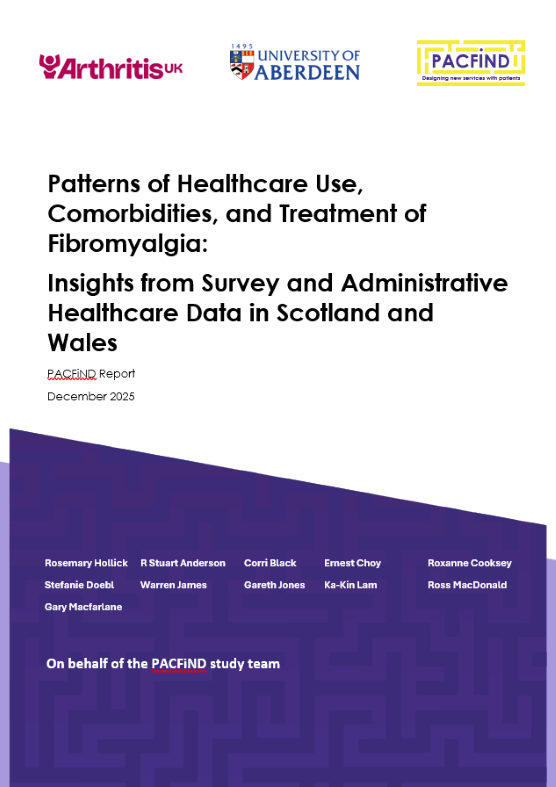
Patterns of healthcare use, comorbidities, and management of fibromyalgia: Insights from survey and administrative healthcare data in Scotland and Wales
Analysis of linked health data from people in Scotland and Wales with a diagnosis of fibromyalgia revealed consistent patterns across both systems: multiple referrals, repeated investigations, and reliance on pharmacological management. People meeting fibromyalgia criteria but undiagnosed had the highest healthcare use: two to three times higher than those with chronic pain or confirmed diagnosis. Co-existing conditions increased complexity and risk of both over- and under-investigation and potential for harm. These system-level challenges point to the need for coordinated, multidisciplinary care.
The full report is available here.
Understanding experiences, needs and preferences for care
Comparing the impact of symptoms and health care experiences of people who have and have not received a diagnosis of fibromyalgia: A cross-sectional survey within the PACFiND study
We compared people with fibromyalgia, those with similar symptoms but no diagnosis, and those with chronic pain. People with fibromyalgia were more likely to be women, took an average of three years to be diagnosed, most often in outpatient services such as Rheumatology, and reported poorer GP experiences than those with chronic pain. The impact on daily life and work was substantial.
Read the full paper at:
- Doebl et al. Comparing the Impact of Symptoms and Health Care Experiences of People Who Have and Have Not Received a Diagnosis of Fibromyalgia: A Cross-Sectional Survey Within the PACFiND Study . Arthritis Care & Research (2021),74: 1894-1902
A Plain Language Summary for this paper is also available here .
Hexi online resources

Thirty-one people from across the UK shared their experiences through interviews, now available on the Health Experiences Insight (HEXI) website. Videos and audio clips explore early symptoms, healthcare encounters, and therapies. These have been viewed over 40,000 times, helping raise awareness of patient experience.
Patient preferences for models of care for fibromyalgia: A discrete choice experiment
We conducted a Discrete Choice Experiment with 518 people which explored preferences for service design. The most valued model included early diagnosis and ongoing management by a Rheumatologist, delivered face-to-face or virtually. Shorter waiting times and access to physical therapy were highly valued. Participants were willing to receive ongoing support from nurses or GPs if care remained timely and continuous, indicating scope for flexible, team-based models.
Read the full research paper at:
- Norwood P, Beasley M, Stevens M, Hollick R, Macfarlane G, McNamee P, Investigators PAS. Patient preferences for models of care for fibromyalgia: A discrete choice experiment . PLoS ONE. 2024;19(6):e0305030.
Shaping supportive health and work systems
Chronicity rhetoric in health and welfare systems inhibits patient recovery: a qualitative, ethnographic study of fibromyalgia care
Researchers examined how healthcare structures, not just individual behaviours, shape neglect in fibromyalgia care. When biomedical explanations are lacking, systems often shift from “nothing found” to “nothing can be done,” reframing the issue as psychological and withdrawing support. This analysis highlights how institutional logic perpetuates stigma and blame, and why improving care requires system-level change in biomedical ideology and organisation, not just better communication.
- Cupit C, Finlay T, Pope C on behalf of the PACFiND investigators. Chronicity rhetoric in health and welfare systems inhibits patient recovery: a qualitative, ethnographic study of fibromyalgia care. Social Science & Medicine, Volume 382, Oct 2025, 118313.
A Plain Language Summary for this paper is also available here.
Impact of Fibromyalgia on Work: Informing Strategies for Enablement
Interviews explored how fibromyalgia affects employment and work. Many valued employment, but struggled with fatigue, pain, poor concentration, and unpredictable symptoms. Supportive employers and flexible arrangements, such as adjusted hours, rest breaks, and home working, were highly valued but not always available. Understanding among colleagues and employers was often limited, particularly for those without a formal diagnosis. Fibromyalgia disrupted education and career development, especially for younger people, leading to grief for lost aspirations and limited advice on sustaining work. Some changed careers or became self-employed to maintain flexibility.
Viewed through the lens of biographical disruption, fibromyalgia often undermines self-esteem and identity. The impact typically begins before diagnosis and is worsened by workplace systems that fail to accommodate fluctuating symptoms. Early, tailored work support and flexible adjustments are essential to help people remain in or return to employment. Employers should recognise fibromyalgia’s invisible, variable nature and adapt systems to support continued participation.
You can also read the research paper of this work here:
- Stevens MJ, Locock L, Doebl S, Skea ZC, Dulake D, Macfarlane GJ, Hollick RJ. 'A little but of support really, that's all I was looking for' a qualitative study of the biographical disruption of fibromyalgia at work in the UK. SSM Qualitative Research in Health, Volume 8, Dec 2025, 100577.
Co-designing principles for better care
By combining data from literature reviews, surveys, interviews, and case studies, and working with patients, clinicians, commissioners, and policymakers, PACFiND co-designed multilevel principles for care aligned with patient needs and system priorities.
We used this to create a bus infographic that symbolises a patient-led journey through care: the patient as driver (autonomy), supported by a multidisciplinary “bus” team. This model promotes holistic, flexible, place-based care, reduces inappropriate referrals, and improves experience and outcomes.
A summary poster of this work was presented at the American College of Rheumatology's Convergence 2025 conference.- PACFiND: Co-Designing Principles To Inform Reconfiguration Of Fibromyalgia Care Across Health Systems
Rosemary Hollick, Marcus Beasley, Ernest Choy, Caroline Cupit, Debra Dulake, Teresa Finlay, Louise Locock, Paul McNamee, Caroline Pope, Elaine Wainwright, David Williams, Gary J Macfarlane.png)
Fibromyalgia catalyst film
Insights from people living with fibromyalgia were brought together in a short film to spark discussion about service improvement. It illustrates the importance of being believed, listened to, and taken seriously. The film is intended as a catalyst for local patients, families, and NHS staff to collaborate on improving care experiences.
- Partner locations
-
- Patient partners
-
All stages of the PACFiND were conducted with the guidance of input from patients. As well as patient collaborators on the study management team, specific tasks across the study's work packages involving patient partners were vital in ensuring this research was getting to the heart of what really matters to people with fibromyalgia. Some examples of these tasks included development of our questionnaires, helping to interpret our findings, and latterly contributing to public engagement with our key findings.
Meet Debs...
Debra Dulake is one of our fantastic PACFiND patient partners who helped shape this important research. In the below video and article, Debs tells her story of living with fibromyalgia and the challenges faced navigating the healthcare system with the condition.
"I'm not backwards at going forward, and not a lot of people have the ability to be able to stand up and make themselves understood and heard. I feel very privileged to be able to say that I can put everybody's point of view across; for me, research, for it to be relevant to people on the ground, it needs to be patient centred. It needs to have patient involvement from beginning to end, even if it's just an idea from a researcher… it needs to be run past a group of patients to say, what do you think about this? How do you think this would work? Are there any changes that you think we should be making? I've been in so many meetings in different rooms with different organisations where I've stated something that happens in my day to day, and I've had professors and scientists look at me and they had never even thought of that point of view, it hadn't even entered into their minds that that could be relevant to a patient."
"So, for me, it's all about letting them know that we are on the same team that we can fight these horrible, horrible diseases together and get our voices out there to make changes at the top where it really matters, with the NHS with government, with benefit systems. Making diseases that are really not heard of heard - and giving them time; where people are able to say you're not going mad, it is real, that it can, it can be looked at. It can be researched. Let's try and help you. You know that light when you're in a very, very dark room of feeling not well and not right, and you're in pain, that light is worth all the weight in gold."
Want to get involved?
If you have fibromyalgia (or any rheumatic or musculoskeletal condition) and would like to get involved in our group's research as a patient partner, you can find out more over on our Patient and Public Involvement pages.
- Study team
-
Chief investigators
- Professor Gary Macfarlane (Chief Investigator)
- Dr Rosemary Hollick (Co-chief Investigator)
Patient representatives
- Debra Dulake
- Des Quinn
Research team
- Dr Neil Basu
- Professor Ernest Choy
- Professor Gareth Jones
- Professor Peter Murchie
- Professor Christopher Eccleston
- Professor David Williams
- Professor Karen Walker-Bone
- Professor Louise Locock
- Dr Teresa Finlay
- Professor Catherine Pope
- Dr Caroline Cupit
- Dr Elaine Wainwright
- Professor Paul McNamee
- Adam Barnett
- Marcus Beasley (Study Coordinator)
- Latest news
-
October 2025
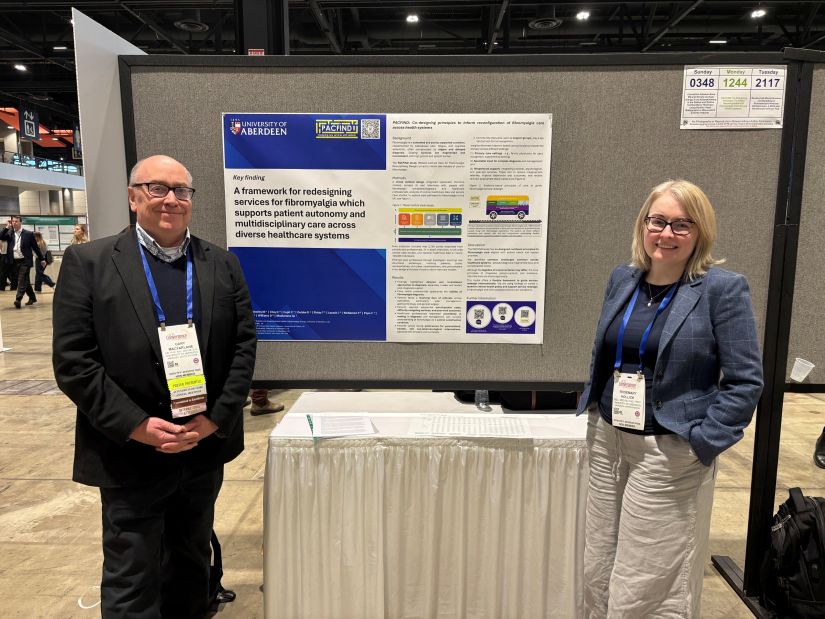
- The PACFiND team was proud to contribute to ACR Convergence 2025 in Chicago, USA, which brought together the world's leading rheumatology researchers and clinicians to showcase nearly 3,100 abstracts representing cutting-edge advances in the field. Dr Rosemary Hollick presented a poster at the event summarising the key outputs from PACFiND study, with lots of opportunity to engage with the research community and discuss what the study's output means for fibromyalgia care.
October 2024
- With data collection for the PACFiND project now completed, we are now in the process of drawing conclusions from the various studies we have conducted. To bring the project together members of the study team and patient partners will be meeting in November 2024 to collate our findings into a PACFiND toolkit. The toolkit will be aimed at people who are setting up a fibromyalgia service. The toolkit will bring together the key components that a service could use. There is no fixed model that each site will follow but our toolkit will advise as to the key components they can include.
September 2024
- Dr Martin Stevens presented the PACFiND project to Versus Arthritis on a visit to the University of Aberdeen campus.
- Dr Martin Stevens & Dr Rosemary Hollick presented the PACFiND study to the NHS Wales Managing Persistent Pain in Adults Spotlight Event. The audience of clinicians and policy makers were highly engaged and supportive of the PACFiND project which led to several further discussions about implementation of the results.
- The PACFiND team was proud to contribute to ACR Convergence 2025 in Chicago, USA, which brought together the world's leading rheumatology researchers and clinicians to showcase nearly 3,100 abstracts representing cutting-edge advances in the field. Dr Rosemary Hollick presented a poster at the event summarising the key outputs from PACFiND study, with lots of opportunity to engage with the research community and discuss what the study's output means for fibromyalgia care.
- Contact details
-
Key Contacts
- Professor Gary Macfarlane (Chief Investigator)
- Dr Rosemary Hollick (Co-chief Investigator)
Address
PACFiND Study
Health Sciences Building, Level 1
University of Aberdeen
Foresterhill
ABERDEEN
AB25 2ZDEmail
Twitter
Facebook