We offer work-based learning electives within our Masters programmes. These involve professional placements with government/public, civic or voluntary health and/or development sector organisations and small-medium enterprises/businesses. Students can undertake a ten-week term-time placement with an organisation, either in person, remotely from Aberdeen, or using a combination of both. Placements are subject to availability and are offered on a competitive basis. Please read about our recent placement students' experiences below and information about our hosts.
If you would like more information or would like to host a student please contact the team on wbl_iahs@abdn.ac.uk
Work Based Learning Hosts
- Asthma and Allergy Foundation
-
Organisation Name - Asthma and Allergy Foundation
Host Supervisor's name - Stephen Nakote
Role/Position in company - Project Coordinator
Overview of Organisation - Asthma and Allergy Foundation (AAF) is Scotland’s only dedicated asthma charity, providing evidence-based health information, confidential advice, and practical support to children, young people and adults with asthma, their families, carers, and friends across Scotland. The charity also provides targeted asthma training to schools, businesses and healthcare professionals.
Placement Student Name - Niamh Fraser
What were the role(s) and responsibilities of the Work-Based Learning Student/project deliverables, etc.? :
+ Author a range of material for variety of audiences from school children to medical students such as blog posts, press releases, social media posts, educational material etc
+ Participate in health promotion and community outreach efforts
+ Represent the foundation at community events to promote services and hand out free educational materialsHow would you describe your overall experience of hosting a Work‑Based Learning student? - My experience of hosting Niamh in our organisation was extremely positive. She integrated well into the team from the outset, demonstrated professionalism, enthusiasm and strong communication skills, and quickly became a valued contributor to our work. She was proactive, receptive to feedback and showed a clear commitment to producing high-quality, evidence-based outputs aligned with AAF’s mission. The placement ran smoothly and Niamh consistently met expectations while also bringing fresh ideas and perspectives to the organisation.
What benefits did your organisation gain from participating in the Work‑Based Learning programme? - The organisation benefited significantly from participating in the Work-Based Learning programme. The student made a meaningful contribution to our communications and community engagement work, particularly by identifying and beginning to address a gap in our allergy-related educational resources. She developed practical materials such as an allergy action plan, an anaphylaxis response resource and a school allergy card, which helped shape future service development and prompted internal discussions around expanding our allergy support provision.
In addition, the student supported health promotion and outreach activities, represented AAF at community and stakeholder events, and assisted with media planning and event preparation. Her contribution increased our capacity during a busy period and added tangible value to both our public-facing resources and our engagement with the community.What advice would you give to other organisations considering hosting a Work‑Based Learning student? - I would strongly encourage other organisations to consider hosting a Work-Based Learning student. Providing a clear structure while allowing flexibility for the student to align their work with both organisational needs and personal development goals is key to a successful placement. Regular communication, openness to new ideas, and involving the student in real-world projects enables them to make a meaningful contribution rather than purely observational work. With the right support, students can bring enthusiasm, fresh perspectives and valuable skills that genuinely benefit the organisation.
- Dr Monika Gostic Nutrition Ltd
-
Organisation Name - Dr Monika Gostic Nutrition Ltd
Host Supervisor's name - Dr Monika Gostic
Email Address - drmonikagostic@gmail.com
Role/Position in company – Director
Overview of Organisation - Dr Monika Gostic Nutrition Ltd. is an evidence-led nutrition and lifestyle medicine consultancy working at the intersection of public health, women’s health, and community health innovation. The organisation translates academic research, national nutrition frameworks, and clinical evidence into practical, accessible interventions for individuals, workplaces, and underserved communities.
Core areas of work include:
Community-based nutrition projects addressing food insecurity, health inequalities, and digital access.
Women’s health and chronic condition support, including menopause, endometriosis, metabolic health, and maternal nutrition.
Development of digital and print health toolkits, online programmes, and educational resources.
Knowledge exchange and research translation, supporting policy-relevant outputs and academic scholarship.
The organisation collaborates closely with universities, community interest companies (CICs), charities, and healthcare stakeholders and has experience hosting MSc-level placements, supervising applied research, and supporting students to produce high-quality, real-world outputs with measurable impact.What were the role(s) and responsibilities of the Work-Based Learning Student/project deliverables, etc.? - The Work-Based Learning student supported the early development of the B.A.D. Nutrition Toolkit for underserved communities in Aberdeen. Their role included background research on food insecurity and nutrition access, translation of national guidance into community-appropriate content, and development of a draft toolkit structure and initial feedback tools.
Key deliverables included a prototype Nutrition Toolkit, a situational analysis report, and supporting materials that directly informed the successful SCAF funding application.How would you describe your overall experience of hosting a Work‑Based Learning student? - Overall, the experience was highly positive. The student engaged well with the project remit, worked independently with appropriate supervision, and applied academic knowledge to a real-world public health challenge. Their contribution was meaningful and directly supported the progression of the Nutrition Toolkit from concept to a fundable project, demonstrating the value of Work-Based Learning placements for both student development and organisational impact.
What benefits did your organisation gain from participating in the Work‑Based Learning programme? - Participating in the Work-Based Learning programme provided tangible and strategic benefits. The student’s contribution strengthened the evidence base and structure of the Nutrition Toolkit, directly supporting the successful SCAF funding application. The placement enabled progression of a complex community health project that would otherwise have been delayed, while also embedding evaluation thinking, documentation, and academic rigour into the organisation’s work.
What advice would you give to other organisations considering hosting a Work‑Based Learning student? - Be clear about the project scope and deliverables from the outset, and ensure the work is meaningful and aligned with real organisational needs. Build in regular check-ins while allowing the student sufficient autonomy to apply their academic skills in practice. When well planned, Work-Based Learning placements can add genuine value, strengthen project capacity, and create outcomes that extend well beyond the placement period.
- Eat, Sleep, Ride
-
Organisation Name - Eat, Sleep, Ride
Host Supervisor's Name - Danielle Mckinnon
Email Address - Eatsleepridecic@gmail.com
Role/Position in company – CEO
Overview of Organisation - Eat Sleep Ride is a rural, equine-based social registered charity in the Scottish Borders. We combine equine rescue, community wellbeing, and youth leadership programmes that use nature and horses to support positive mental health, inclusion, and employability.
Placement Student Name - Amrita
What were the role(s) and responsibilities of the Work-Based Learning Student/project deliverables, etc.? - Amrita supported the development of an impact evaluation framework for Eat Sleep Ride. Her main responsibilities included creating an independent evaluation tracker, developing quantitative and qualitative indicators linked to our social model, and producing a summary report and survey tools to capture participant feedback. She worked collaboratively with the Director to map measurable outcomes across programmes such as Empower Her, and our youth and community sessions.
How would you describe your overall experience of hosting a Work‑Based Learning student? - The experience was extremely positive. Amrita approached the placement with professionalism, initiative, and curiosity. She managed to understand a complex community organisation quickly and brought clarity and structure to our impact measurement work. Her evaluation tools will have a lasting benefit for our reporting, funding applications, and internal reflection processes.
What benefits did your organisation gain from participating in the Work‑Based Learning programme? - Amrita’s contribution gave us a clearer framework to evidence our impact — something we had long needed as a small but growing charity. The project improved our ability to track outcomes, identify trends across participant groups, and communicate results confidently to funders and stakeholders. It also built our internal capacity to continue data-driven evaluation in future.
What advice would you give to other organisations considering hosting a Work‑Based Learning student? - Be clear about your aims but allow flexibility for the student to explore creative approaches. Providing access to real data and involving them in discussions with staff or participants helps them contextualise their work. Hosting a student is a great way to bring fresh energy and perspective into your organisation while delivering a tangible project that leaves a legacy.
- Public Health Scotland
-
Organisation Name - Public Health Scotland
Host Supervisor's name - John Mooney
Email Address - john.mooney2@phs.scot.uk
Role/Position in company - Consultant in Public Health
Overview of Organisation - Promoting Scotland's health and tackling inequalities in health outcomes.
Placement Student Name - Ayotunde
What were the role(s) and responsibilities of the Work-Based Learning Student/project deliverables, etc.? - To undertake a realist applied policy review around the feasibility of applying a drug treatment ten-standard framework (MAT Standards) to alcohol.
How would you describe your overall experience of hosting a Work‑Based Learning student? -Excellent.
What benefits did your organisation gain from participating in the Work‑Based Learning programme? - Ayotunde's report has meaningfully contributed to a Scottish Government policy and guidance position around broadening the scope of MAT standards.
What advice would you give to other organisations considering hosting a Work‑Based Learning student? - Nothing to lose - great way of injecting a fresh perspective.
- Shallion Support
-
Organisation Name - Shallion Support
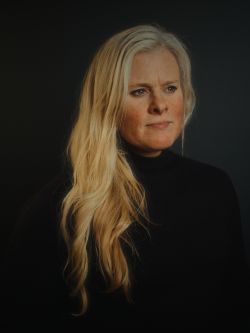
Host Supervisor's name - Sarah Hoskin
Email Address - hello@shallion.co.uk
Role/Position in company – CEO
Overview of Organisation - Shallion Support provides practical, non-medical home support for people living with a chronic illness such as; M.E/CFS, Long Covid, Fibromyalgia and PTSD. We work with universities and colleges across the UK, to offer flexible volunteer roles that fit around student schedules, helping to reduce isolation and bring steady, meaningful support into people’s homes. Twenty per cent of all income goes into our social enterprise fund so that no-one goes without help.
What were the role(s) and responsibilities of the Work-Based Learning Student/project deliverables, etc.? - The Work-Based Learning students worked within the Shallion Support Nutrition Team to research ME/CFS and Long Covid, with a particular focus on the constant fatigue experienced by clients. Building on this understanding, the students researched anti-inflammatory vegetables and ingredients, identifying foods that provide targeted benefits for the heart, kidneys, gut, or overall system support.
Their main task was to develop a full anti-inflammatory recipe collection, creating breakfasts, lunches, dinners and snacks, nutritious and suitable for people living with long-term fatigue. Each recipe includes clear health benefits, allowing clients to feel confident that what they have eaten throughout the day has supported their body in a positive way.
Over the 10-week placement, the students collaborated to design, research and refine the content for the upcoming Recipe Book. They have now reached the early compilation stage, and they have chosen to continue volunteering with Shallion Support to help finalise and complete the full publication.How would you describe your overall experience of hosting a Work‑Based Learning student? - Hosting Work-Based Learning students has been an extremely positive and rewarding experience for Shallion Support. The students brought fresh energy, strong academic insight and a genuine commitment to understanding long-term conditions such as ME/CFS and Long Covid. Their contribution to the development of our anti-inflammatory recipe book has been invaluable, and they approached every task with professionalism and compassion.
Throughout the placement, the students demonstrated excellent teamwork, consistent communication and an ability to translate research into practical, real-world solutions for the people we support. Their work has already shaped one of our core projects, and the students have chosen to remain involved as volunteers, which reflects the strength of the partnership and the meaningful nature of their work.
Overall, the experience has strengthened our organisation, accelerated key projects and confirmed how impactful student collaboration can be. We look forward to welcoming many more Work-Based Learning students in the future.What benefits did your organisation gain from participating in the Work‑Based Learning programme? - Participating in the Work-Based Learning programme has brought significant benefits to Shallion Support. The programme allowed us to build a strong and ongoing relationship with the university’s work placement team, creating a foundation for long-term collaboration. This partnership has already enhanced our organisational capacity, supported key projects such as the development of our anti-inflammatory recipe book, and brought fresh academic insight into our work.
The dual benefit has been clear: Shallion Support gained highly motivated students who contributed meaningfully to our mission, while the students gained practical experience, confidence and a deeper understanding of real-world challenges. This positive exchange has strengthened our development as a growing organisation, and we hope to continue working together each academic year to support future students and further advance Shallion Support.What advice would you give to other organisations considering hosting a Work‑Based Learning student?

My advice to other organisations considering hosting a Work-Based Learning student is simple: do it. The experience benefits everyone involved. Weekly communication is essential; stay engaged, be available and offer consistent encouragement. Remember that this isn’t just about what the student can do for your organisation; you are investing in their future. Providing support, reassurance and constructive feedback helps them grow in confidence and ability.
Approach the placement as a partnership. Be clear with expectations, create a safe space for questions and celebrate their progress. When you put in the time and care to guide a student, they will give you their best work in return. Hosting a student is not only rewarding but also an opportunity to shape the next generation of professionals while gaining valuable input for your organisation.
Meet Placement Students from our 2025-26 Courses
- Isiaka Ayotunde Abdulhakeem
-
Name - Isiaka Ayotunde Abdulhakeem
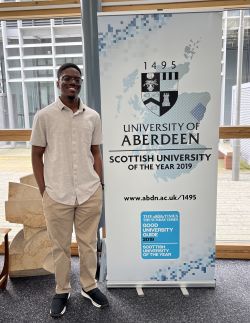
Degree programme - Master of Public Health (MPH)
Which Work Based Learning course did you do? – Extended Work-Based Placement in IAHS
Placement host organisation name - Public Health Scotland
Please add some details about your placement, for example what the organisation does, what your tasks were while on placement -Public Health Scotland is Scotland’s national public health agency that is responsible for improving the health and well-being of the Scottish people. My department (MIST team) specifically supports the implementation and benchmarking of the recently introduced Medication Assisted Treatment (MAT) standards which were designed to improve consistency, access, and quality of care for individuals affected by drug use.
Moving on to my role, I was tasked to develop a report on whether the principles of the MAT standards would be feasible to guide alcohol treatment in Scotland.Please describe what a typical day involved while on placement - Brain tasking-the project involved critically analysing researches to provide an evidence-based report. Doing this every week for ten weeks gave me a new interest within public health.
What was the greatest challenge you faced? - Initially it was difficult to organise meetings with my host due to his busy schedule. Seeing my fellow colleagues making contacts with their host made me feel like I was not working. Later on, with the help of my course coordinators, I realised that I needed to convert this challenge into skills- being flexible and learning how to work independently. These have now become part of my daily life.
What do you feel was your greatest achievement/learning point? - My greatest achievement is that I have been able to build experience and a pool of knowledge within the scope of substance use that I can use to help other organisations while growing professionally. Also, remember that your placement may not start smoothly. The beginning doesn't determine what the outcome of your placement journey will be. Learn to speak up at early stages for support while embracing the challenges.
Are there any other comments you would like to add? - I am glad I underwent this placement journey. Further details about my placement can be found at Isiaka Ayotunde Abdulhakeem's Placement .
- Williams Anike
-
Name - Williams Anike

Degree programme - Master in Public Health
Which Work Based Learning course did you do? – Extended Work-Based Placement in IAHS
Placement host organisation name - Rural Health Compass
Please add some details about your placement, for example what the organisation does, what your tasks were while on placement -During my placement with Rural Health Compass, an organisation dedicated to improving health and wellbeing outcomes in rural and remote communities across Scotland and wider Europe, I was involved in a research project focused on understanding the mental health challenges faced by farmers in rural Scotland, specifically in Huntly, Aberdeenshire. Rural Health Compass works to amplify the voices of rural communities, influence policy discussions, and connect practitioners, researchers, and local stakeholders to support equitable access to healthcare services.
Throughout my placement, my main tasks included conducting an extensive literature review using secondary data sources, gathering insights from published research, government reports, and organisational publications relating to rural mental health. I also analysed evidence gaps, explored intervention strategies and support resources, and developed potential recommendations to address identified challenges. Additionally, I prepared a research presentation, created engaging materials such as LinkedIn outreach posts to collect secondary lived experiences, and attended professional development sessions, including external mental health training. The placement strengthened my research, communication, academic writing, and professional collaboration skills, while enhancing my understanding of mental health inequalities in rural settings.Please describe what a typical day involved while on placement - A typical day during my placement involved reviewing academic literature and online resources on mental health in rural farming communities, analysing key themes, and recording findings for my report. I regularly communicated with my placement host through meetings or emails to discuss progress and guidance. I also worked on developing my presentation slides and report structure, and engaged in outreach activities (such as LinkedIn posts) to gather secondary insights. Some days included attending training sessions or webinars related to mental health.
What was the greatest challenge you faced? - The greatest challenge I faced during my placement was the limited availability of primary data and direct access to farmers, which meant I could not conduct interviews or gather first hand experiences as originally intended. This required me to rely entirely on secondary data and online literature, which sometimes lacked depth or specific information for rural areas like Huntly. To overcome this challenge, I broadened my research scope, strengthened my literature review skills, actively sought credible sources, and connected with experts such as an occupational psychologist to gain professional insights. This experience significantly improved my ability to adapt, think creatively, and work independently despite constraints.
What do you feel was your greatest achievement/learning point? - My greatest achievement and learning point during the placement was being able to produce meaningful research despite the challenge of limited primary data. I learned how to work independently, adapt my approach, and deepen my skills in conducting a comprehensive literature review using credible secondary sources. I also strengthened my confidence in communicating professionally through meetings, outreach activities, and preparing my research presentation. Connecting with professionals, such as an occupational psychologist, expanded my understanding of farmer mental health from a practical perspective. In summary, the experience significantly improved my analytical, communication, and problem-solving skills, and helped me grow both academically and professionally.
Are there any other comments you would like to add? - I am grateful for the opportunity to complete this placement with Rural Health Compass. It has been a highly valuable learning experience that strengthened my academic, professional, and communication skills. I also appreciate the continuous support and guidance provided throughout the programme. Thank you once again for this opportunity.
- Fatima Adamu Baba
-
Name - Fatima Adamu Baba
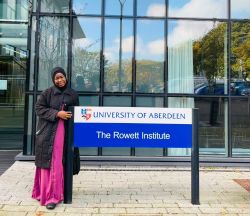
Degree programme - Masters in Public Health
Which Work Based Learning course did you do? – Extended Work-Based Placement in IAHS
Placement host organisation name - Rowett Institute
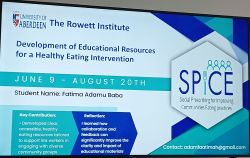
Please add some details about your placement, for example what the organisation does, what your tasks were while on placement - My work-based placement was undertaken at the Rowett Institute as part of the Social Prescribing for Improving Community Eating Practices (SPICE) Project, a five-year research project focused on improving health and wellbeing through community-based, non-clinical interventions. I worked under the supervision of Dr Oana Petre.
The Project aims to support social prescribing practice by developing evidence-based resources and approaches that help address health inequalities, particularly among individuals and households experiencing socioeconomic disadvantage.
My primary role during the placement was to contribute to the development of healthy eating resources for social prescribers to use with their clients, with a particular focus on people from low-income households. My tasks included:
- Mapping available food banks and community food support services across Aberdeen to understand local food access options.
- Reviewing the types of food items typically available through food banks and other community food providers.
- Using this information to curate practical, realistic, and affordable healthy eating resources, including recipe cards and cooking tips tailored to available foods.
- Supporting the creation of materials that social prescribers could use directly with clients to encourage healthier dietary choices despite financial constraints.
In addition, I completed a short training course on the MAP of Health Behaviour by NHS Scotland, which focuses on Motivation, Action, and Prompts as techniques for supporting behaviour change. Using the knowledge gained from this training, I designed an interview booklet intended to support structured conversations between social prescribers and clients around healthy eating. This resource incorporated motivational techniques, action planning, and prompts to facilitate meaningful, client-centred discussions.Please describe what a typical day involved while on placement - A typical day during my placement involved a mix of independent research and resource development focused on social prescribing. I spent much of my time reviewing existing resources on healthy eating, mapping food banks and community food support services across Aberdeen, reviewing the types of foods available at the food banks and researching affordable healthy meal options suitable for individuals from low-income households. I also worked on developing practical resources, including recipe cards, cooking tips, and an interview booklet designed for use by social prescribers. Drawing on training in the MAP of Health Behaviour, I incorporated motivational, action-planning, and prompt-based techniques into these materials. Regular supervision meetings with Dr Oana Petre provided guidance and feedback, helping ensure that my work aligned with the aims of the SPICE Project and met the needs of social prescribing practice.
What was the greatest challenge you faced? - The main challenge during my placement was working predominantly in a remote, online environment. This required a high level of independence and self-organisation, as well as careful consideration of how to ensure that the healthy eating resources developed accurately reflected the real-life circumstances of social prescribing clients without direct, in-person engagement.
To manage this, I maintained regular communication with my supervisor, actively sought feedback, and critically reflected on my work. As a result, I strengthened my skills in independent working, time management, and translating research and behaviour change theory into practical, user-centred public health resources.What do you feel was your greatest achievement/learning point? - My greatest achievement/ learning point was understanding how public health theory and behaviour change frameworks can be translated into simple, usable tools for real-world practice. Working on the SPICE Project at the Rowett Institute strengthened my ability to bridge the gap between research, community realities, and applied social prescribing, while reinforcing the importance of practical, client-centred approaches in addressing health inequalities.
Are there any other comments you would like to add? - I'm truly grateful for the opportunity and for the support of our wonderful and kind Course Coordinators - Emily Cleland, Toni Gibson, Dr. Heather Morgan and Usha Gimhire.
- Bianca Church
-
Name - Bianca Church
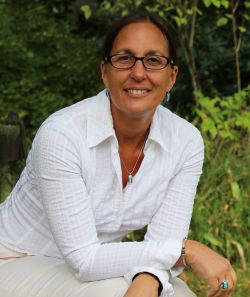
Degree Programme - MSc. Clinical Nutrition
Which Work Based Learning course did you do? – Extended Work-Based Placement in IAHS
Placement host organisation name - Centre for Academic Development, e-Learning - University of Aberdeen
Please add some details about your placement, for example what the organisation does, what your tasks were while on placement - The eLearning department within the Centre for Academic Development provides a range of eLearning services, actively supporting course delivery, design, and evaluation. They also arrange events and external speakers, deliver workshops, tailor specific events for schools and programme teams, provide evaluation advice and services, and one-to-one support to Academic Staff.
Please describe what a typical day involved while on placement - During a typical day, I contributed to team meetings on project development, carried out student-centred UX reviews of online courses, developed ideas to enhance the learning experience in Aberdeen's online courses, and researched stakeholders for the Delphi Assessment Taxonomy project.
What was the greatest challenge you faced? - The greatest challenge was developing a student UX evaluation protocol that aligned with the university’s pedagogical approach, including Salmon’s Five-Stage Model, while also completing both major projects to a standard I was satisfied with within the limited timeframe.
What do you feel was your greatest achievement/learning point? - My greatest learning point was recognizing how well established pedagogical models can deepen UX evaluation. My greatest achievement was integrating Salmon’s Five-Stage Model into my course reviews which turned out to be a particularly effective approach, and I was pleased that this contribution was valued by the Senior eLearning Team.
Are there any other comments you would like to add? - As a result of my work-based placement, I was invited to continue working on the Delphi project in 2026 in the role of Research Assistant.
- Rezanur Rahman Howlader Emu
-
Name - Rezanur Rahman Howlader Emu

Degree programme - Masters in Public health
Which Work Based Learning course did you do? – Extended Work-Based Placement in IAHS
Placement host organisation name - Instant Neighbour
Please add some details about your placement, for example what the organisation does, what your tasks were while on placement - During my placement, I worked with Instant Neighbour, a charitable organisation based in Aberdeen that supports individuals and families facing financial hardship, food insecurity and social vulnerability. Their services include operating a food bank, providing household support, emergency aid, furniture services, and wider welfare assistance for those struggling to meet basic needs. Their work plays an essential role in the community, particularly for people navigating poverty, benefit delays, mental health challenges and debt-related difficulties. My role focused primarily on supporting the food bank operations, combining hands-on experience with analytical work.
Please describe what a typical day involved while on placement - On placement at Instant Neighbour, I worked every Thursday and Friday from 8:10 am to 4:30 pm. My day began with checking the food bank database, updating records and reviewing new client entries. I analyzed usage trends, separating individual and family users, and used Excel, R and Power BI to visualize patterns.
A key part of each day involved reading client notes and identifying keywords such as debt, mental health, disability, unemployment and budgeting struggles, which I categorized using Notion. Afternoons were spent drafting my report, preparing visuals, summarizing findings and planning next steps for upcoming tasks.What was the greatest challenge you faced? - The greatest challenge was working with an unstructured database and limited programming skills. Cleaning duplicate records, identifying age and gender manually, and extracting keywords from notes required time and patience. I later improved using Excel, R and Notion, but automation would have made analysis faster and more efficient.
What do you feel was your greatest achievement/learning point? - My greatest learning achievement during this placement was developing a strong sense of professionalism. I learned how to communicate and present work in a formal setting, maintain timely updates on tasks, and work collaboratively within a team environment. This experience also taught me the importance of handling sensitive data responsibly when preparing reports, ensuring confidentiality, accuracy, and ethical use of information. These skills have strengthened my confidence and have equipped me for future public health work where professionalism, teamwork, and data responsibility are essential.
Are there any other comments you would like to add? - I would like to express my sincere appreciation for the opportunity to undertake this placement. It has been an invaluable experience that helped me grow both academically and personally. Working with Instant Neighbour gave me real insight into community needs, strengthened my practical skills, and reinforced my commitment to a future in public health.
- Preksha Shetty Belme Prem Kumar
-
Name - Preksha Shetty Belme Prem Kumar

Degree programme - MSc In Global Health and Management
Which Work Based Learning course did you do? – Extended Work-Based Placement in IAHS
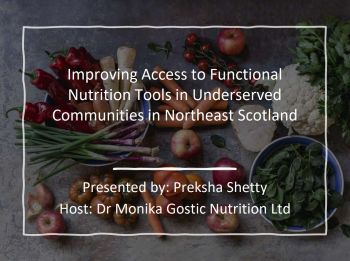
Placement host organisation name - Dr Monika Gostic Nutrition Ltd
Please add some details about your placement, for example what the organisation does, what your tasks were while on placement - During my placement with Dr. Monika Gostic Nutrition Ltd., a leading health-focused organization specializing in evidence-based nutrition and digital wellbeing solutions, I took the initiative on a project that tackled nutritional inequalities in underserved communities in Northeast Scotland. I analyzed public health data to pinpoint barriers to food access, assessed community cooking resources and dietary needs, and developed a robust framework for a low-cost, culturally adaptable nutrition toolkit.
I crafted a 7-day meal plan that strictly adheres to Scottish dietary guidelines and developed detailed recipe structures. Furthermore, I designed multilingual formats that cater to various kitchen appliances, ensuring accessibility for all. To enhance the effectiveness of the toolkit, I created a comprehensive community feedback survey to collect both quantitative and qualitative insights prior to its distribution.
My contributions significantly advanced the organization’s strategy for delivering scalable and accessible nutrition support and will inform future digital delivery models, positioning us as a leader in addressing nutritional challenges.Please describe what a typical day involved while on placement - I was actively reviewing public health literature, local data, and community reports to identify nutrition barriers and digital access challenges in Seaton, Tillydrone, and Torry with the help of Scottish Enterprise, and was effectively mapping community resources, food access points, and appliance availability, translating these findings into actionable requirements for a practical toolkit.
I also developed and refined meal plans with the help of Dr Monika, recipes, and toolkit content that fully align with Scottish dietary guidelines and low-cost criteria. Also, consistently engaged with supervisors and community contacts, whether virtually or in person, to discuss progress, gather valuable insights, and strategically plan our next steps.
Additionally, I am preparing comprehensive project documents, including surveys, strategy notes, and presentation materials, while meticulously recording reflections for weekly reporting and evaluation.What was the greatest challenge you faced? - The primary challenge during the Phase-1 was the absence of existing data specific to the three communities, which hindered our understanding of their nutritional barriers. Lacking readily available datasets or established toolkit models, I took the initiative to construct the evidence base from the ground up. By conducting thorough literature reviews, analyzing local reports, and profiling the communities, I ensured that our project was firmly rooted in accurate and relevant insights. This approach required me to invest time, exercise careful judgment, and maintain a systematic focus throughout the process.
What do you feel was your greatest achievement/learning point? - My greatest achievement was creating a practical and culturally sensitive nutrition toolkit that low-resource communities can use. This process taught me how to make decisions based on data, understand community input, and focus on health equity to develop affordable meal plans and educational materials that follow guidelines. I learned how important it is to make these resources accessible by addressing issues like digital, language, and appliance limitations. The project's progress gained credibility when it received seed funding from the Scottish Alliance for Food (SCAF), showing that others believe in its relevance and potential to grow. Overall, this experience improved my ability to connect research with the needs of the community and practical public health solutions.
Are there any other comments you would like to add? - This placement offered valuable insights into the connection between public health challenges and the specific needs of the community, as well as the design decisions that stem from them. It has inspired me to pursue future opportunities in equitable nutrition and community-driven health interventions, reinforcing my commitment to making a positive impact in these areas.
- Marharyta Leichenko
-
Name - Marharyta Leichenko
Degree programme - MSc in Clinical Nutrition
Which Work Based Learning course did you do? – Extended Work-Based Placement in IAHS
Placement host organisation name - Shallion Support
Please add some details about your placement, for example what the organisation does, what your tasks were while on placement - Shallion Support is a UK-based social enterprise that provides bespoke support services and develops practical nutrition resources for individuals with Myalgic Encephalomyelitis/Chronic Fatigue Syndrome (ME/CFS) and autoimmune-related fatigue. The placement aimed to apply evidence-based nutrition and communication strategies to produce accessible dietary tools and resources tailored to this population.
I had a variety of tasks and opportunities to try myself in many roles, including:
- Conducting research on existing international dietary approaches for ME/CFS
- Investigating which specific supplements may be beneficial for this population
- Creating a recipe book for individuals with ME/CFS
- Gaining experience in team leadership
- Developing a dietary supplement concept for the ME/CFS population
- Conducting a dietary assessment for a patient with ME/CFS
- Designing a 4-week meal plan for a patient with ME/CFS
- Creating infographics tailored to this populationPlease describe what a typical day involved while on placement - A typical day involved conducting research, developing nutrition resources, collaborating with the team, creating tasks for a team and completing personal tasks related to dietary assessment and resource creation.
What was the greatest challenge you faced? - Managing my time and finding a balance between work, studies, and personal life was the greatest challenge. Communicating with team members was also sometimes difficult, particularly in terms of understanding the direction and expectations.
What do you feel was your greatest achievement/learning point?
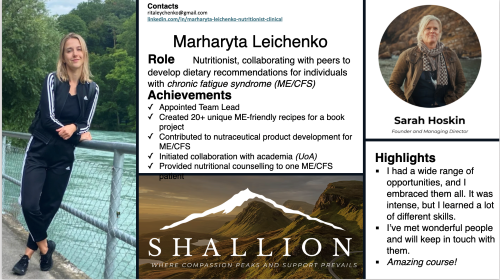
I learned a lot about my own abilities, gaining a clearer sense of both my strengths and the areas for improvement.
- Sampreetha Ranganatha
-
Name - Sampreetha Ranganatha
Degree programme - Msc Global Health and Management
Which Work Based Learning course did you do? – Extended Work-Based Placement in IAHS
Placement host organisation name - Rural Health Compass
Please add some details about your placement, for example what the organisation does, what your tasks were while on placement - Rural Health Compass, located in Wales. The organization is led by Dr. Veronika Rasic, the Founder and Director. Rural Health Compass is creating a platform for individuals and organizations to access relevant information on rural health and policy, helping them advocate for their communities. I have made a report based on evidence regarding funding strategies and infrastructure development in Powys, a small rural county in Wales.
Please describe what a typical day involved while on placement - I gathered information from various sources to produce an evidence-based report. Throughout this process, my supervisor would check in with me to ensure I was on the right track. If I felt stuck on any topics, she provided guidance to help me move forward. In the end, this support allowed me to create a detailed report that explains the healthcare needs in rural areas.
What was the greatest challenge you faced? - I usually did not encounter many challenges because my supervisor was very friendly and understanding. She provided me with clear guidelines for my work, and our weekly meetings helped me improve my communication skills and build my confidence. However, I sometimes found it difficult to obtain accurate, up-to-date data from government websites.
What do you feel was your greatest achievement/learning point?
This experience has provided me with the opportunity to gain insights into various healthcare systems and their collaborative dynamics. I have come to understand the importance of considering rural needs when planning health-related policies. Additionally, this journey has helped me realize my true potential and has contributed to my personal growth in multiple ways. I am genuinely appreciative of the placement I received and the valuable lessons it has taught me.
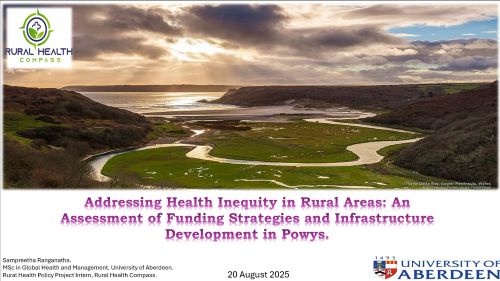
Are there any other comments you would like to add? - Overall, the placement was very helpful, and I appreciate the opportunities it provided.
- Abdul Wasay
-
Name - Abdul Wasay
Degree programme - MPH Public Health
Which Work Based Learning course did you do? – Extended Work-Based Placement in IAHS
Placement host organisation name – PANDOS
Please add some details about your placement, for example what the organisation does, what your tasks were while on placement - Pain and opioids in non cancer patients is a Delphi based study ongoing in Aberdeen university and ARI under the leadership of honorary chief anaesthesiologist. My task is to make contact with internal and external health professionals prescribing opioids to make corrections about current dosage of opioids in relation to OME.
Please describe what a typical day involved while on placement - A typical day involves reading the journals and prescription papers about OMEs in non cancer pain and then formulating a questionnaire about the dosage frequency and amount prescribed in all levels of care.
What was the greatest challenge you faced? - It is but easy to be part of a dynamic team especially under the guidance of Professor Patrice
What do you feel was your greatest achievement/learning point? - Redcap
Are there any other comments you would like to add? - This is the great resource of reference building in academic as well professional field.
Meet Placement Students from our 2022-23 Courses
- Sana Malik
-

Name - Sana Malik
Degree Programme - Master of Public Health
Placement Host Organisation - Dr. Brad Pearce (Associate Professor, Emory University Rollins School of Public Health, Epidemiology)
Details about your placement - Dr. Pearce's research focuses on the role of genetics and immune interactions in the etiology of complex disorders. The aim of the placement was to contribute to scientific literature through collaborating with team members on an important public health issue. My work involved strategic research planning and conducting a systematic review about the association of autoimmunity, atopy and 22q11.2 deletion syndrome. I gained experience in interpretation of diverse and complex information relating to 22q11.2DS and grasping a wider context of public health knowledge application.
Please describe a typical day in the life of your placement - I was able to first meet my supervisor at Emory University, Atlanta, Georgia (USA) to discuss my roles and responsibilities. This was a pleasant and encouraging experience to explore the department and learn more about the work carried out there. Most of the placement work was conducted remotely due to the nature of tasks and remote availability of resources. Weekly meetings were an important way to learn from others and discuss progress. Daily tasks involved conducting literature searches, learning to use new tools such as 'Covidence', manuscript writing and self studying to expand my knowledge of the disease. I acquired transferable skills which I believe will help me greatly in the future.
What was the greatest challenge you faced? - One of the main challenges I faced was managing two separate set of deadlines. To avoid feeling overwhelmed, it helped to modify time allocation and prioritize tasks in order to complete work strategically. Open communication with my team and supervisor helped immensely in completing my deliverable and placement successfully.
What was your greatest achievement/learning point? - The most rewarding part of my placement was being able to contribute to the group's mission to produce a systematic review and additionally, expand my knowledge on health related research concerning a complex chromosomal disorder. I am more confident in managing difficult sets of data and my ability to quickly adjust to new and unfamiliar settings.
Anything else you'd like to note? - This experience has been extremely valuable and I am grateful for the support of the Aberdeen teaching team, host supervisor and my team who encouraged me along the way.
- Ketan Bhatt
-

Name - Ketan Bhatt
Degree Programme - Master of Public Health
Placement Host Organisation - PANDOS (Pain and opioids after surgery) Research Group and SIP (Societal Impact of Pain)
Details about your placement - PANDOS is a large, Pan-European observational study with the strategic priority of improving quality & safety of post-operative pain management. Data collected from eligible hospitalized patients will be used to describe the association of opioid use with surgical complications, persistent pain and quality of life.
SIP is a multi-stakeholder advocacy platform created by European Pain Federation EFIC and Pain Alliance Europe (PAE). It aims to reduce societal impact of pain by raising awareness of pain and changing pain policies. The platform's key priority is to ensure every country in Europe has some form of national guideline and action plan for pain management and, monitor its implementation.
My tasks included preparing didactic documents, drafting letters for journal submission, writing advocacy content around position papers, maintaining consistent communication with all associated stakeholders & collaborators of SIP and PANDOS platforms, participating in PANDOS study meetings and attending focus group sessions with volunteering patients. Being exposed to these closely aligning responsibilities was critically essential in helping me understand the real-world implications of my contributions during the placement.Please describe a typical day in the life of your placement - Advocacy was the common theme among all the pursued placement tasks and hence, the primary methodology adopted was to write didactic, dissemination texts to demonstrate our position on chronic pain management and appeal for relevant policy action. Since the end goal was to get my works published in medical journals, I had to provide a sound, scientific foundation to the advocacy propositions. This was done by searching for supportive evidence in online electronic databases such as PubMed, Medline and Google Scholar. Simultaneously, the literature search was also meant to unearth recent guidelines on chronic pain management that failed to involve patient perspectives. This would help us fill the void through our advocacy propositions aimed at achieving safe and effective perioperative pain management standards across Europe.
As a PANDOS collaborator, I was given the opportunity to participate in Focus Groups and attended the sessions in the capacity of an 'Observer'. I also had the good fortune of attending a seminar on “inclusive design to widen opportunities for PPI” to acquire knowledge on ways to integrate patient views, of the disabled and people with lived pain experience, in pain research.
After thorough review by internal & external stakeholders from the SIP platform, the final works were carefully structured for submission to the shortlisted scientific journals for publications.What was the greatest challenge you faced? - The scope of the work undertaken during the placement was limited because of the stipulated timeframe of the course itself. Managing work deadlines along with course timelines in order to deliver meaningful outcomes was a challenge. However, I more than relished working under this window period since I was truly passionate about the subject itself and wanted my inputs to support and complement the activities at both the platforms as quickly as possible.
What was your greatest achievement/learning point? - Consistent engagement and proactive participation in placement activities equipped me with new-found skills that would significantly impact professional prospects besides contributing to the development of critical thinking.
There were several key milestones along my placement journey. One of them was being appointed a PANDOS research group collaborator. But the highlight was the opportunity to submit my final works in indexed scientific journals such as European Journal of Cancer. One of my submissions has already been accepted by the British Journal of Anaesthesia for publication and two other submissions are currently work-in-progress.
Being able to contribute to creation of new knowledge through research, enquiry and collaboration was hugely rewarding and gratifying.Anything else you'd like to note? - The placement course provides invaluable exposure and opportunity to learn new skill sets. The key is to identify personal aspirations prior to deciding on the specific area of interest and finalizing the placement with the host organization.
- Vijayalakshmi Ravikumar
-
Name - Vijayalakshmi Ravikumar
Degree Programme - MPH
Placement Host Organisation - Prozymi biolabs
Details about your placement - My task is to create gluten awareness among public
Please describe a typical day in the life of your placement - My work is to collect datas about people affected by gluten related disease and create awareness among them by conducting survey.
What was the greatest challenge you faced? - Getting response for survey was more challenging.
What was your greatest achievement/learning point? - I came to know more about gluten free products and its availability.
- Anusha Sultan
-

Name - Anusha Sultan
Degree Programme - Master of Public Health
Placement Host Organisation - World Health Organization
Details about your placement - The World Health Organization (WHO) is the leading health agency of the United Nations which works to promote health internationally and envisions “the attainment of the highest possible level of health by all people."
My tasks while working for the WHO focused on assessing the role and success of the organization in tackling Non-Communicable Diseases as part of the UN Sustainable Development Goals.Please describe a typical day in the life of your placement - My routine work at the WHO would be from 9 am - 3 pm, every day of the week. I would start the day with a meeting with my supervisor to discuss key health trends, past UN resolutions and policy guidelines regarding NCDs. He would then assign tasks to me which included data collection, literature review, report drafting, presentation delivery on NCDs and reviewing Excel sheets of UN mission budgets. Engaging in regional meetings in collaboration with the UNDP and Ministry of Health helped me witness commitment to national health targets whereas international WHO meetings would provide a great insight into global health affairs.
What was the greatest challenge you faced? - Travelling out of the UK was exciting but also initially challenging as it involved a time zone difference and adjusting to a new work environment. I also had to multi-task to keep up with my placement and classes of all semester courses at the university.
What was your greatest achievement/learning point? - The entire experience was a dream come true! My greatest discovery however was witnessing in person, the incredible function of the WHO in promoting health especially for the vulnerable.
Anything else you'd like to note? - A special shout out to Dr Heather, Toni and Emily and our WBP course staff for their wonderful support throughout my placement journey!
- Olorunfemi Kehinde
-

Name - Olorunfemi Kehinde
Degree Programme - Master of Public Health
Placement Host Organisation - Inclusive Care LLC
Details about your placement - During my placement at Inclusive Care LLC, I worked on a project titled "Expanding Beyond Instagram," which aimed to increase the organization's reach and reduce administrative burdens. Inclusive Care LLC is a small, LGBTQIA+ owned business specializing in evidence-based physical therapy services.
My project ran from May 22nd to July 31st, 2023, and involved tasks such as analyzing reach and impact, identifying improvement opportunities, and developing a strategy. I followed a structured work schedule over ten weeks.
My responsibilities as a student included following guidance, adhering to policies, time management, and maintaining professionalism. Inclusive Care LLC provided resources and feedback, and the University of Aberdeen supported my academic needs.
Overall, I applied academic skills and gained valuable project planning and collaboration experience.Please describe a typical day in the life of your placement - During my placement at Inclusive Care LLC, a typical day involved a structured schedule encompassing meetings, research and reports, video presentations, feedback sessions, literature reviews, branding analysis, video refinement, and final reporting in a virtual setting.
What was the greatest challenge you faced? - The greatest challenge I encountered during my placement at Inclusive Care LLC was the need to adapt to a virtual work environment and effectively collaborate with team members and mentors remotely. This required strong communication skills and the ability to stay motivated and organized while working independently.
What was your greatest achievement/learning point? - My most significant achievement and learning point during the placement at Inclusive Care LLC was mastering the art of project planning and execution. This experience allowed me to develop crucial skills in conducting situational analysis, identifying improvement opportunities, setting SMART objectives, and evaluating project effectiveness. Additionally, I learned how to apply academic skills in a real-world setting, which was invaluable for my personal and professional development.
Anything else you'd like to note? - I want to express that my placement at Inclusive Care LLC was a valuable learning experience that enhanced my project planning and collaboration skills in a virtual setting. The guidance and commitment to diversity and inclusion greatly contributed to my growth, and I'm eager to apply these skills in the future.
- Ayesha Shahid
-

Degree Programme - Master of Public Health
Placement Host Organisation - The FGM Education Project
Details about your placement - The FGM Education Project is a non-profit organization that works to educate frontline professionals about female genital mutilation (FGM). The organization was founded in 2018 by Dr. Heather Morgan, a lecturer in medical education at the University of Aberdeen.
The FGM Education Project offers a four-week online course on FGM for frontline professionals. The course covers the history, health consequences, law, and cultural aspects of FGM. It also teaches professionals how to identify and report cases of FGM.
I was placed with the FGM Education Project for 12 weeks in May 2023. During my placement, I helped to evaluate the online course. I also assisted with research on FGM and wrote articles for the organization's website.
I found my placement with the FGM Education Project to be very rewarding. I learned a lot about FGM and the challenges that frontline professionals face in preventing and responding to this practice. I am grateful for the opportunity to have worked with such a dedicated and passionate team of people.Please describe a typical day in the life of your placement - A typical day on my placement with the FGM Education Project would start with a team meeting. We would discuss our plans for the day and any challenges that we were facing. I would also spend some time each day reading research papers on FGM and writing articles for the organization's website. I would also create social media content to raise awareness of FGM. My day would usually end with some time for reflection and planning. I would also take some time to unwind and relax.
What was the greatest challenge you faced? - The greatest challenge I faced during my placement with the FGM Education Project was the cultural and religious sensitivities surrounding the issue of FGM. FGM is a deeply embedded practice in many cultures, and there is often a lot of resistance to change. This can make it difficult to raise awareness of the issue and to challenge the practice.
Another challenge I faced was the lack of data on FGM. There is not a lot of reliable data on the prevalence of FGM, the health consequences of FGM, or the effectiveness of interventions to end FGM. This makes it difficult to develop effective programs and policies to address the issue.
Despite these challenges, I am optimistic about the future of the fight against FGM. I believe that education is the key to ending this practice. By raising awareness of the issue and educating people about the harmful effects of FGM, we can create a world where all girls and women are free from this harmful practice.What was your greatest achievement/learning point? - I am proud to have played a role in creating this resource that is helping to raise awareness of FGM and to prevent this harmful practice.
Another learning point from my placement was the importance of cultural sensitivity. FGM is a deeply embedded practice in many cultures, and it is important to understand the cultural context before trying to challenge it. I learned a lot about the cultural and religious sensitivities surrounding FGM, and I am now better equipped to work with people from different cultures.
I also learned the importance of collaboration. The FGM Education Project is a team of dedicated and passionate people who are working together to end FGM. I am grateful for the opportunity to have worked with such a team, and I learned a lot about the importance of working together to achieve common goals.
Overall, I am grateful for the opportunity to have worked with the FGM Education Project. I learned a lot about FGM and the challenges that frontline professionals face in preventing and responding to this practice. I am also proud of the work that I did to raise awareness of FGM and to challenge this harmful practice.Anything else you'd like to note? - I would like to say that I am optimistic about the future of the fight against FGM. I believe that we can end this practice if we work together
Meet Placement Students from our 2021-22 Courses
- Devyani Dhakate
-
Name - Devyani Dhakate

Placement Host Organisation - Health Services Research Unit (HSRU)
Details about your placement - I was reviewing abstracts regarding qualitative studies.
Please describe a typical day in the life of your placement - It was a lot of literature review and a very knowledgeable task.
What was the greatest challenge you faced? - Reviewing the abstracts.
What was your greatest achievement/learning point? - That I was able to satisfactorily finish the given task and understand their importance.
Anything else you'd like to note? - It was a great support given by coordinator Dr. Heather and supervisor Dr. Katie.
- Haney Hamd
-
Name - Haney Hamd

Placement Host Organisation - Smart Gym
Details about your placement - Smart Gym is a fitness and well-being service tailored for parents/carers, that provides 1) Physical activity-based interventions, that are 2) low-cost or even free, including 3) free child-care, paired with 4) counselling (in some cases). These are the four main characteristics that differentiate their service from other fitness organizations.
My task was to review the scientific literature and determine how to measure the impact of physical activity on mental health in order to support their vision of identifying and addressing the root cause of Glasgow parents' poor health.
Please describe a typical day in the life of your placement - We had an online meeting every other day to review the literature to identify proof that physical exercise positively impacts the mental health of parents and their children. We collaborated with the IT team to develop an online questionnaire that clients may take before, during, and after a certain amount of time to evaluate the effectiveness of their programme on their mental health. This questionnaire will be available to clients at all three points.
What was the greatest challenge you faced? - Select a questionnaire among Nemours questionnaires that can be used to quantify the influence of physical exercise on mental health demands knowledge of how to gather important information and analyse it.
What was your greatest achievement/learning point? - I had no idea that working on a team with individuals I had never met would encourage my personal growth, but it did, and I am very grateful for the opportunity. Another advantage of teamwork is the reduction of stress due to the fact that we share the workload. The saying that "two heads are better than one" is fairly accurate, and when we collaborate, we learn new things more quickly.
- Salma Lopez Loeza
-
Name - Salma Lopez Loeza

Placement Host Organisation - Asthma and Allergy Foundation
Details about your placement - The organisation aims to inform with scientific basis the population in Aberdeen about the risks impacting people with respiratory conditions. The organisation promotes health behaviours as a measure to encourage self-management.
Please describe a typical day in the life of your placement - I travelled from the city centre to the main office in Dyce. The first time was scary because of the long distance but it became a good strength to know the width of Aberdeen city. I arrived at the office and was greeted by the employees and co-workers. Signed my entrance and started to look for resources that helped the organisation. After two hours, we usually had a meeting with the CEO and public engagement manager. Later, we could discuss between the team more of what we intended to do during the week. After that we were invited to participate asthma workshops and promotion in primary and secondary schools. As co-volunteers we came back to the office and took the bus back to Aberdeen.
What was the greatest challenge you faced? - I had to be flexible while learning more about campaign strategies and advertisement. I had to look for ways to improve my worrying for press releases. The last challenge was difficult because I had to change my academic vocabulary to a more approachable style for the population.
What was your greatest achievement/learning point? - The biggest learning point was to work as a team with my colleagues. I had an experience working for a project management learning to collaborate and communicate in regards to the project development.
Anything else you'd like to note? - The course made me explore my leadership skills that I was not aware of having them.
- Jenika Myers-Jennings
-
Name - Jenika Myers-Jennings
Placement Host Organisation - Aberdeen Centre for Health Data Science
Details about your placement - The ACHDS partners with key members and global influences involved in data science like the University of Aberdeen, NHS Grampian and NHS Research & Development North Node to pursue their vision which is to create innovative, interdisciplinary, data science solutions to the big challenges for health and health care, to improve health for individuals, local communities and internationally. During my placement, the project I was responsible for was to provide training and development resources for the IT Staff who work on teams who associate with the Grampian Data Safe Haven. To do that, I coordinated with the ACDHS Team to create a powerpoint presentation and multiple choice quiz for the IT staff audience.
Please describe a typical day in the life of your placement - As an international student in a different time zone, I was working remotely. A day in the life of my placement was scheduling and coordinating with the team to obtain the data required to build and implement what ACHDS needed as their deliverables.
What was the greatest challenge you faced? - The greatest challenge was working through these deliverables without having a true testing phase. With training material being built with new content intended for new staff within a placement that's only a couple months is challenging if no new staff are starting on the team in that time. Feedback from the audience that this was intended for could have had an impact on the end result.
What was your greatest achievement/learning point? - My greatest achievement here was strengthening my understanding about health data science and the various components (like DaSH) then using that to develop key resources for staff that require the content for their roles at the organization. Throughout this experience I was able to meet with, learn from and strategize with a great team to pursue this achievement.
Anything else you'd like to note? - Coming from a different industry and working with this team helped to show me that there are many similarities across industries. Learning in this way with this organization helped clarify questions that I did have in how that would work and I'm grateful for the experience.
- Devi Santhosh Pillai
-
Name - Devi Santhosh Pillai

Placement Host Organisation - Public Health Scotland (PHS)is the national public health body for Scotland. Fully exercising its functions from 1 April 2020 as Scotland's leading national agency for improving and protecting the health and well-being of all of Scotland's people, it is jointly sponsored by COSLA and the Scottish Government, and collaborates with third sector organisations. Its role is to increase healthy life expectancy and reduce premature mortality. Areas of focus are COVID-19, mental health and well-being, community and place, and poverty and children.
I was placed in the Drug Team and my task was to conduct a rapid evidence review assessing the current evidence base on models of service/care/support provision/intervention to reduce harm and /or to reduce the risk of drug related harms in the short term at known points of transition (police custody, hospital discharge, detox and prison release).
Please describe a typical day in the life of your placement - I was working remotely during the placement as I was studying in the University of Aberdeen and the office was situated at Edinburgh, so it was a two and half hour drive. I had to attend the team meeting once in a fortnight and I had meetings with my organisational and clinical lead once in a week. I worked independently on the evidence review. I followed the evidence review methods that were recommended by the NHS HEALTH SCOTLAND's GUIDANCE FOR UNDERTAKING EVIDENCE REVIEWS on behalf of the EfA Development Group, Updated July 2017 with support from my Team lead. I divided my work based on the timeframe and followed an organised timetable thus I really enjoyed doing the work. There were days I had to multitask but I was able to manage it well with a good planning. I framed the search strategy myself and included keywords like 'care', 'service', 'support', 'harm reduction' and transition services. I then searched four databases (Medline, Embase, Cochrane and PubMed) to identify published systemic reviews, qualitative studies and further articles providing and strengthening evidence of current practice/services in drug-related harm reduction at points of vulnerability. Articles published till date of search “20th June 2022” were included. Titles and abstracts were screened based on the inclusion and exclusion criteria, with further exclusion of articles at full-text screening. Evidence and conclusions from six articles are included in this review. Quality was appraised using CASP Systemic Review Checklist and Qualitative Study Checklist. Data extraction was done to summary statements on evidence.
What was the greatest challenge you faced? - I think the placement went very smoothly and I was able to meet the expectations of my organisation. I received very good feedback from my organisation leads. There were times where I had to manage the placement along with my other research project and thus I had to provide separate time schedules to avoid mixing up the tasks. I was passionate about my both works and thus this did not worry me much.
What was your greatest achievement/learning point? - The greatest achievement was that I was able to contribute very well into my organisation's functions. I would consider that my learning point was that I got to understand what evidence the policy makers were looking for and also how to contribute well into a public health of a country from Scotland's National Public Health body.
Anything else you'd like to note? - Overall, I am happy with my placement. I wish to make better contributions to the country in the future.
Details on the final outcome of Devi's placement can be found here .
- Henry Uro-Chukwu
-
Name - Henry Uro-Chukwu

Placement Host Organisation - National Obstetric Fistula Centre, Abakaliki, Nigeria
Details about your placement - The organization is a public health care facility committed to treating women with leakage of urine / faeces from the vagina after birth. I was tasked with supporting the nutritional care plan for the patients.
Please describe a typical day in the life of your placement - Daily I participated in clinical review of patient's nutritional status, the nutritional care plan, counselling, technical advice to management and supportive supervision for the nutritionists and patients.
What was the greatest challenge you faced? - Multitasking. Supporting poor patients in nutritional care after discharge.
What was your greatest achievement/learning point? - Establishing an evidence-based nutritional care policy for the organization; establishing a supervisory / technical monitoring committee on nutritional care for the organization; learning self-enhancing skills in areas such as finance, leadership and IT.
Anything else you'd like to note? - Continuous professional development interface with the University.