Authors: Muhammad Azizul Islam, Professor in Sustainability accounting and transparency, University of Aberdeen & Jay Kerr, Campaigner, No Sweat, London
The fall of Hasina's government in August 2024 was a seismic shift in Bangladesh. The student-led protests brought down an oppressive regime that, for the past 15 years, had overseen the systematic exploitation of garment workers and the violent suppression of their demands for a living wage. The establishment of an interim government headed by Nobel Laureate Muhammad Yunus, brought new hope as the interim administration offered many reforms, including labour reform. In April, the election of a new Bangladesh Nationalist Party government, headed by Tarique Rahman, finally saw the passing of the Bangladesh Labour (Amendment) Bill, 2026, which has been widely touted as a historic turning point for workers rights. The question now remains, will we finally see systemic change in the garment industry?
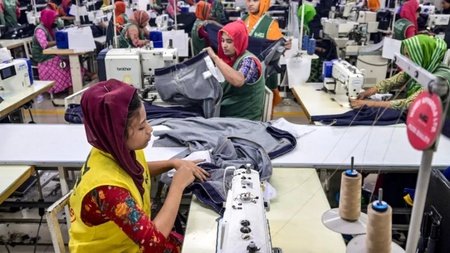
For most of the period following the 2013 Rana Plaza collapse—one of the deadliest industrial disasters in modern history—Bangladesh was governed by Sheikh Hasina. Her administration faced widespread condemnation for cultivating a climate of severe repression, where garment workers routinely faced weaponised legal charges for demanding living wages. The fall of Hasina’s government triggered an immediate, material improvement on the factory floor. In its very first weeks, the interim government issued an executive order dropping outstanding criminal charges against 48,000 garment workers—baseless cases filed by factory owners during the 2023 wage protests to freeze collective organising. This immediate act of legal relief served as a crucial precursor, dismantling the immediate threat of state-backed corporate intimidation and foreshadowing the sweeping legislative labour reforms that would follow. ().
Interim Government’s Labour Reform Commission and Bangladesh Labour (Amendment) Bill, 2026 The interim government established a Labour Reform Commission, chaired by Syed Sultan Uddin Ahmed, executive director of the Bangladesh Institute of Labour Studies. The commission produced 25 key recommendations heavily influenced by trade unions' demands targeting structural change. In April 2026, all of these recommendations became law under the landmark Bangladesh Labour (Amendment) Act. Among the most notable aspects of the new legislation is a thorough overhaul of trade union rules that significantly lowers the threshold for union registration at the factory level. It also introduces vital reforms to minimum wage review cycles, maternity leave, blacklisting, and labour dispute resolution. While the Act seeks to enhance workers’ rights to organise and clarifies provisions on layoffs and wage calculations, other fundamental labour rights, including explicit protections against forced labour and modern slavery, are not yet addressed. Ultimately, the impact of these positive reforms will depend on rigorous enforcement, which remains a major hurdle given that Bangladesh lacks a strong track record of effectively implementing its labour laws.
Unfinished Fight Against Forced Labour and Modern Slavery
In the days and weeks before it collapsed, social audits of Rana Plaza factories had been conducted by the brands, yet they gave Rana Plaza a clean bill of health. In response to the collapse, many countries in the Global North enacted Modern Slavery Acts to tackle forced labour and improve transparency in supply chains operating across the Global South. Yet these measures, which are centred on disclosure and risk management, have made only limited progress in holding retailers and suppliers accountable for their irresponsible behaviour towards victims of slavery and exploitation.
A primary reason these legislative measures have stagnated is their reliance on corporate compliance data, even though there is a growing body of evidence explaining why voluntary social audits are completely ineffective at tackling systemic exploitation. Because these frameworks are voluntary, they are fundamentally designed by corporations to protect brand reputations rather than empower workers. These audits rely on superficial, pre-announced "snapshot" checklist inspections where factory management can easily hide violations, coach workers on what to say, and falsify paperwork, which leaves them structurally blind to hidden abuses like forced labour or anti-union discrimination. Furthermore, because some government regulatory initiatives rely on corporate consensus, brands hold an effective veto over any enforceable penalties, leaving many concerned actors trapped in a loop of managing paperwork instead of driving real change. Genuine accountability requires moving away from business-as-usual compliance altogether. Independent trade unions and workers rights NGOs are best positioned to identify and tackle exploitation in ways that yield significant positive results far beyond the impact of the way present social audits are operating. This model of worker-driven accountability, where independent unions are at the table for all decisions affecting workers, as exemplified by the Dindigul Agreement in India, offers a fundamentally different approach centred on worker agency rather than on consultant- or management-driven third-party auditors.
However, the shift toward genuine transparency and worker agency is directly undermined by a second systemic issue: the unfair purchasing practices of global brands. Research since the Rana Plaza collapse has documented two interconnected failures: ineffective disclosure and transparency measures from the Global North, and systemic unfair practices by brands/retailers. Studies have highlighted precarious conditions and women workers' vulnerabilities in economic, job, food and housing security within Bangladeshi garment factories and documented how global fashion brands' unfair practices—including sudden order cancellation, price reduction, refusal to pay for goods in production, and delayed invoice payment—drive exploitation and forced labour. To stop unfair purchasing practices particularly by British retailers, these studies recommend the UK government to introduce Fashion Watchdog.
Moving forward
If systemic change—especially a higher minimum wage amid rising living costs and action on forced labour—is not achieved, the new government is likely to face major worker protests in the garment sector and beyond. Its response will be crucial as to whether it prioritises low costs for brands or workers' dignity.
Important regulatory developments are emerging in the Global North. The EU's Corporate Sustainability Due Diligence Directive (CSDDD) is in force, whilst in the US, the proposed Fashion Sustainability and Social Accountability Act remains in the legislative process. In the UK, MPs and civil society organisations are calling for a Fashion Watchdog to mandate the elimination of unfair purchasing practices. All of these frameworks address human rights concerns (and a few also cover environmental/climate issues) in global supply chains. Bangladesh must align with these developments to protect workers and maintain trading relationships. Yet the Bangladesh government’s current labour reform [Bangladesh Labour (Amendment) Bill, 2026] is not substantive enough to address long‑standing problems in the garment industry identified by research and NGOs. The amendments lack punitive measures or binding compliance mechanisms and treat modern slavery only lightly, with no concrete control strategies. The amendment does not have any mention of unfair purchasing practices by buyers (brands and retailers) and solid pathways to eliminate modern slavery and forced labour from Bangladeshi garment factories.
We are dealing with long‑standing violations of workers’ rights and persistent oppression, and successive governments in Bangladesh have failed to take labour rights and workers’ living conditions seriously. As a result, the path ahead is fraught with difficulty. We argue that if both the Bangladesh government and the governments of brand countries fail to establish an effective watchdog to curb brands and retailers’ unfair practices, these practices will persist. We therefore support the creation of a Fashion Watchdog, mandated to eliminate unfair purchasing practices by brands.
Voluntary social audits, widely used by brands and retailers, are not fit for purpose. Research shows that without external pressure, particularly from labour rights organisations and independent trade unions, audits lack transparency and fail to detect exploitation. Independent trade unions leading accountability through binding agreements, rather than voluntary audits, are essential to tackle modern slavery. This is essential not only to uphold workers' rights and freedom of association but also to advance decent work, combat forced labour, and secure living wages. Simultaneously, regulators in brand countries must develop specific guidelines on unfair purchasing practices. Without effective cross-border collaboration between regulators in supplier and buyer countries, the unfair purchasing practices and systemic conditions enabling modern slavery will not be meaningfully eliminated.
About the authors:
Muhammad Azizul (Aziz) Islam, PhD, FAcSS, is Professor of Sustainability Accounting & Transparency, and Director of the Centre for Governance, Accountability and Sustainability (GAS) at the University of Aberdeen. A Fellow of the Academy of Social Sciences, he has been recognised by the Academy as a leading social scientist for his outstanding research impact. Internationally renowned as a leading sustainability accounting scholar, he investigates corporate accountability in relation to human rights and modern slavery disclosures, social audits, and anti-bribery measures.
Jay Kerr is a Campaigner with the UK-based anti-sweatshop campaign, No Sweat, as well as lead for No Sweat’s B2B clothing project, a not-for-profit solidarity business that advocates for worker-centred garment industry
The original piece has been published by Sourcing Journal