
Introduction
Gaelic Studies and Politics at Aberdeen combines all the advantages of the in-depth study of the language, literature and culture of Scotland’s oldest language – as a native speaker or complete beginner. The programme adds an in-depth focus on the role of politics, different political systems, and how democracy interacts and influences economies. You will be ideally suited to a career in politics, media or business and with skills transferable to many other sectors of employment.
Study Information
At a Glance
- Learning Mode
- On Campus Learning
- Degree Qualification
- MA
- Duration
- 48 months
- Study Mode
- Full Time
- Start Month
- September
- UCAS Code
- QL52
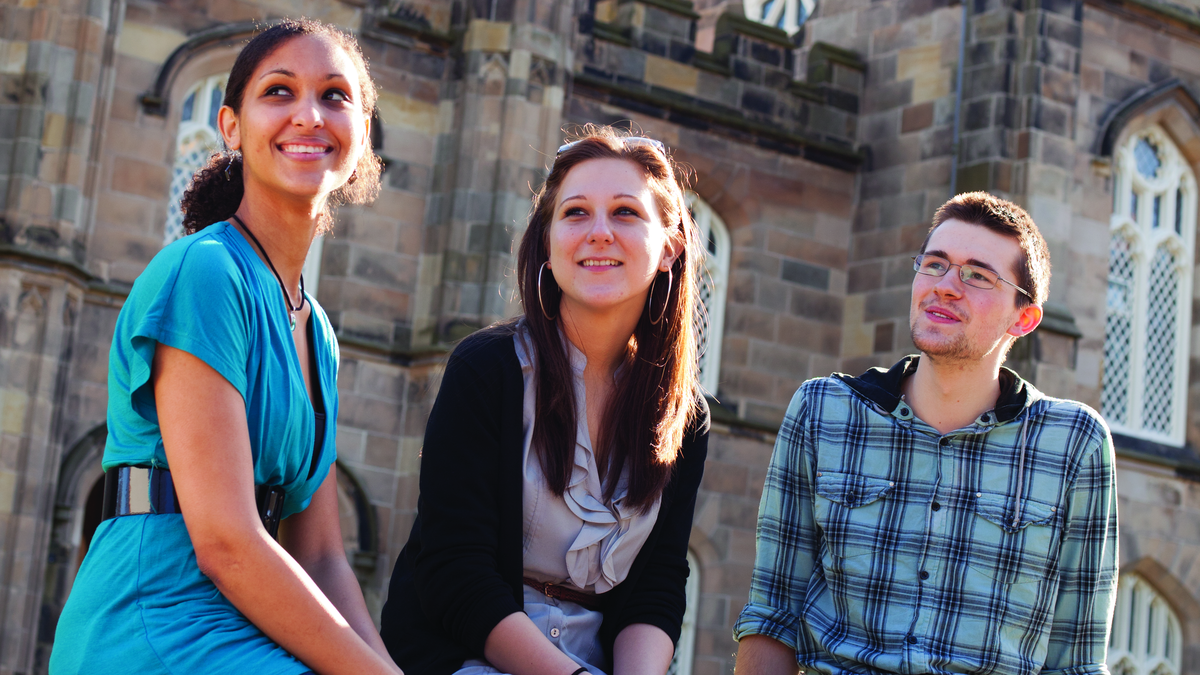
We have been teaching Scottish Gaelic (Gàidhlig) and culture for a hundred years, led by teachers and researchers passionate about Gaelic and whose work directly influences Scottish policy on keeping Gaelic alive, healthy and important in Scotland today.
You will learn more about Scotland's oldest living language and develop your Gaelic skills in a friendly and supportive environment, with opportunities to get involved with northern Scotland’s Gaelic-interest community through clubs, activities, networks and organisations.
In Politics, you will explore different political systems, making and implementing policy, nationalism and concepts of democracy and how we vote.
You will be taught by experts in political parties and elections, energy politics, European integration, regionalism and politics, human rights and development issues and conflict and security and who appear regularly as experts in the media commenting on national, European and international issues and events as they unfold.
You will graduate with many options for careers in international business, local and national government, politics, NGOs, media, and many other possibilities. Many Aberdeen graduates are today household names in politics and journalism, senior figures in global business, international affairs and diplomacy and leading thinkers, authors and experts in their fields.
What You'll Study
- Year 1
-
Year 1: Compulsory Courses
- Academic Writing for Language & Literature (AW1008)
-
This compulsory evaluation is designed to find out if your academic writing is of a sufficient standard to enable you to succeed at university and, if you need it, to provide support to improve. It is completed on-line via MyAberdeen with clear instructions to guide you through it. If you pass the evaluation at the first assessment it will not take much of your time. If you do not, you will be provided with resources to help you improve. This evaluation does not carry credits but if you do not complete it this will be recorded on your degree transcript.
- Getting Started at the University of Aberdeen (PD1002)
-
This course, which is prescribed for level 1 undergraduate students and articulating students who are in their first year at the University, is studied entirely online, takes approximately 2-3 hours to complete and can be taken in one sitting, or spread across the first 4 weeks of term.
Topics include University orientation overview, equality & diversity, MySkills, health, safety and cyber security, and academic integrity.
Successful completion of this course will be recorded on your Transcript as ‘Achieved’.
- Gaelic Scotland (GH1015)
-
15 Credit Points
Gaelic is Scotland's oldest living language. In this introductory course you will learn about the Gaels, their history and their role in the shaping modern Scotland. You will also learn about how Gaelic language and culture became minoritised in its own country. Students will learn learn about various contemporary initiatives that are aimed at saving and promoting this indigenous language and culture and this will be compared to minority languages and cultures elsewhere in the world.
- Politics & International Relations 1: Democracy and Governance (PI1018)
-
15 Credit Points
Politics and International Relations impacts on all parts of our lives, with more specifically it being the study of ideas, events, institutions and choice. Studying these provides us with both knowledge of the world and also how it operates and functions. It also changes our perception of our surroundings and makes us aware of an ever changing global context. This course will introduce students to concepts and ideas that form the basis for the study of these disciplines while simultaneously also helping us understand our own place within a global context.
- Politics & International Relations 2: Power and Conflict (PI1518)
-
15 Credit Points
Politics is the study of multiple forms of power that impacts our lives and the world we live in. It shapes how people and groups cooperate or clash with each other. In this course, we will explore the ideas, institutions, complex histories, global dynamics, and systems that shape politics and international relations. Students will learn key concepts and theories of the discipline, and develop their skills in understanding and analysing global politics.
- Gaelic for Beginners 1a (GH1007)
-
15 Credit Points
This is an 11-week course in the modern Scottish Gaelic language for students who have little or no prior experience of the language, or for students with no formal qualifications in Gaelic.
You will learn Gaelic through a mixture of interactive language classes, a class which focuses on conversational skills, and a programme of homework exercises, together with self-directed learning.
By the end of the course, you will be able to speak, read, write and understand Gaelic at a basic level and you will have mastered a large working vocabulary.
- Gaelic for Beginners 1b (GH1507)
-
15 Credit Points
This is an 11-week course in the modern Scottish Gaelic language for students who have completed GH1007 Gaelic for Beginners 1A.
You will attend three interactive language classes and one conversation class each week, as well as undertaking self-directed learning.
By the end of the course you will be expected to have mastered a large working vocabulary and to be competent in understanding and using most of the major structures of the language.
- Gaelic Language 1a (GH1013)
-
15 Credit Points
This is a Gaelic language course for students who are relatively fluent in the language already and have studied it to at least Higher in school (Higher Gaelic or Gàidhlig) or have studied it to a similar level elsewhere.
- Gaelic Language 1b (GH1513)
-
15 Credit Points
This is the second-half of the first year Gaelic language course for students who are relatively fluent in the language already and have studied it to at least Higher in school (Higher Gaelic or Gàidhlig) or have studied it to a similar level elsewhere.
Year 1: Optional Courses
Plus further credit points from courses of choice to gain a total of 120 credits.
- Year 2
-
Year 2: Compulsory Courses
- GH2006 Gaelic Folklore
- Ideas and Ideologies in Politics and International Relations (PI2009)
-
30 Credit Points
Ideas and ideologies are core to teaching, learning and research in Politics and International Relations. Theoretical developments are at the forefront of academic debates within the discipline, demonstrated by the appearance of a number of new approaches as more traditional theories have struggled to account for an ever changing world. This course will introduce students to these with profound questions and struggles over identity, belonging, justice and rights underpinning these theoretical debates.
- Global Politics: Equality and Inequality (PI2508)
-
30 Credit Points
Equality and inequality are at the forefront of many debates within contemporary Politics and International Relations. This course will examine the historical context, theoretical underpinnings, and also key concepts which continue to uphold equality and inequality on a global scale.
- Otherworld: Lost Gods and Hidden Monsters of Medieval Scotland (GH2510)
-
15 Credit Points
Godlike ‘immortals’, elves, fairies, the walking dead, the Loch Ness Monster: uncanny Otherworldly beings feature widely in the literature and folklore of medieval Scotland. This course will explore the nature and significance of Gaelic Otherworld-traditions in their wider North Atlantic context. We investigate how Germanic and Celtic beliefs merged in Gaelic Otherworld-lore, how these related to pre-Christian myth and religion, and why they continued to be significant in Scotland many centuries after Christianization. All texts will be studied in translation.
- Gaelic for Advanced Beginners 2b (GH2509)
-
15 Credit Points
This course follows on from GH2009 and is for people who started learning in their first year. It continues to develop a range of linguistic competencies in written and oral language.
- Triumph and Tragedy: A Literary and Historic Tour of Gaelic Scotland (GH2015)
-
15 Credit Points
This course uses selected texts from one of Europe's oldest secular literatures to introduce key moments in the history of Scottish Gaelic society. It is taught using translated texts and originals for those whose Gaelic language is good enough. Students will gain new perspectives on key areas such as Jacobitism, the Clearances, the Highland Land Wars, the Celtic Twilight Movement and the modern Gaelic renaissance. It is suitable for anyone in Programme Year 2 or above with an interest in Scottish society.
- Gaelic Language 2b (GH2513)
-
15 Credit Points
This is the second half of the second year Gaelic language course for students who are relatively fluent in the language already and have studied it to at least Higher in school (Higher Gaelic or Gàidhlig) or similar level. It follows on from GH2013.
- Year 3
-
Year 3: Compulsory Courses
- Gaelic Language A (GH3022)
-
30 Credit Points
A level three Gaelic language course for students taking honours Gaelic. The course runs over both semesters and is topic based, enabling students to develop their ability to deal with a large range of subjects in Gaelic. The course also develops students' generic writing and oral skills.
- Research Methods in Politics and International Relations (PI3084)
-
30 Credit Points
This course provides you with an understanding of the research process, research design, and a variety of popular research methods to enable you to systematically conduct scientific research on the phenomena concerning Politics and/or International Relations (PIR). You will gain practical skills to apply these methods independently, especially looking forward to your final undergraduate dissertation.
Year 3: Optional Courses
Plus one Term 2 level 3 Politics and International Relations course:
- Year 4
-
Year 4: Compulsory Courses
- Gaelic Language B (GH4022)
-
30 Credit Points
A level four Gaelic language course for students taking honours Gaelic. The course runs over both semesters and is topic based, enabling students to develop their ability to deal with a large range of subjects in Gaelic. The course also develops students' generic writing and oral skills.
Year 4: Optional Courses
EITHER:
Dissertation (PI4071)
Plus one Term 2 level 4 Politics and International Relations course:
Comparative Constitutional Systems (AT4557)
Extreme Right in Western Europe (PI4560)
Maritime Security (IR4535)
Political Islam: Islamist Ideologies and Practices (PI4573)
International Migration and Europe (PI4579)
Gender and Politics (PI4584)
Northern Ireland: Small, Dirty War (PI4588)
Corruption and Good Governance (PI4589)
US Presidents (PI4590)OR
One Term 1 level 4 Politics and International Relations course:
Contemporary French Politics: Race, Religion and Social Change B (LA401G)
Science, Technology and International Relations (IR4034)
War and Peace in International Relations (IR4036)
International Political Psychology (PI4086)
Scottish Politics (PI4091)Plus one Term 2 level 4 Politics and International Relations course
Plus a further 15 credit points from level 4 course(s) in Gaelic to gain a total of 60 credits in the discipline
- Dissertation (PI4071)
-
30 Credit Points
This course affords students the opportunity to apply their knowledge and research skills in the broad field of Politics & International Relations to an individual piece of research, focusing on a topic selected by the student and approved by the Dissertation supervisor. Over the course of the project, with guidance from a supervising member of staff, the student will conduct a literature review of relevant material, select appropriate research methods, gather data where necessary, analyse data, and write a final analysis in the form of the Dissertation. Particular emphasis will be given to helping students develop their own skills.
- Dissertation in Gaelic Studies (GH4507)
-
15 Credit Points
The dissertation course for honours Gaelic students is student-led. Students decide in consultation with academic staff what topic they would like to research and write about for their final dissertation. Students can chose any topic from the broad field that is Gaelic studies, including topics related to: Gaelic literature (a writer or a theme), Gaelic sociolinguistics, language planning, Gaelic cultural practices, etc.
We will endeavour to make all course options available. However, these may be subject to change - see our Student Terms and Conditions page. In exceptional circumstances there may be additional fees associated with specialist courses, for example field trips.
How You'll Study
Learning Methods
- Individual Projects
- Lectures
- Research
- Tutorials
Assessment Methods
Students are assessed by any combination of three assessment methods:
- Coursework such as essays and reports completed throughout the course.
- Practical assessments of the skills and competencies they learn on the course.
- Written examinations at the end of each course.
The exact mix of these methods differs between subject areas, years of study and individual courses.
Honours projects are typically assessed on the basis of a written dissertation.
Why Study Gaelic Studies and Politics?
Why Gaelic Studies
- A warm welcome for students whatever your level of Gaelic, and long-standing experience in teaching this fascinating language to complete beginners.
- Student-run Celtic Society famous for its musical events, ceilidhs and trips, and a great opportunity to use Gaelic in an informal, social context.
- Strong tradition of commitment to Gaelic, and a University Gaelic Language Plan to promote and develop Gaelic in the University in line with the Gaelic Language (Scotland) Act 2005.
- The spectacular, award-winning Sir Duncan Rice Library, with an extensive Gaelic collection and treasures.
- An opportunity to study abroad at the University College Cork.
Why Politics and International Relations
- A core curriculum with topical themes of conflict and security, representation and democracy, comparative politics and policy.
- Special focus on the Middle-East, Latin America, North and South Asia, the Nordic Countries, Central and Eastern Europe – as well as Scotland, the UK and the EU.
- Staff with specialist expertise in political parties and elections, democracy, energy politics, European integration and regionalism, human rights and development issues, interest groups, nationalism, conflict resolution and more.
- Opportunities to take advantage of spending your second year studying abroad, in Europe, Japan, Hong Kong or North America.
- The spectacular, award-winning Sir Duncan Rice Library, combining a top-class study environment with state-of-the-art technology, and extensive reference collections for your studies.
- A packed campus programme of events, seminars, invited speakers and the annual May festival, engaging prominent influencers, interest groups and public in debating major political issues such as Scottish independence and EU membership.
- All the history and legacy of being part of a university developed over 500 years of national and international political turbulence, social change, and emerging democracy.
Interested in this programme?
Entry Requirements
Qualifications
The information below is provided as a guide only and does not guarantee entry to the University of Aberdeen.
General Entry Requirements
- 2027 Entry
-
SQA Highers
Standard: BBBB
Applicants that present with BBBB will usually receive an unconditional offer.
Where we have more applicants than places we may need to ask for more than the minimum so continued engagement in school is recommended.
Widening Access: BBC
Applicants who meet one or more of our widening access metrics and present with BBC, are guaranteed an unconditional offer.
Foundation Apprenticeship: One FA is equivalent to a Higher at A. It cannot replace any required subjects.
Note: We do not double count a Higher and Advanced Higher in the same subject, but we do consider that a B grade at Advanced Higher is equivalent to an A grade at Higher.
National 5 English (or equivalent) is required at Grade C or above.
A LEVELS
Standard: BBC
Widening Access: CCC
GCSE English (or equivalent) is required at Grade C/4 or above.
BTEC LEVEL 3 EXTENDED DIPLOMA
DMM in related subjects.
Note: BTEC Level 3 Extended Certificate (Subsidiary Diploma) achieved at Distinction level, is normally acceptable in lieu of one A Level at grade B.)
GCSE English (or equivalent) is required at Grade C/4 or above. GCSE Mathematics at Grade C/4 is also required for Accountancy, Economics and Finance programmes.
IRISH LEAVING CERTIFICATE
Five subjects at Higher at H3.
INTERNATIONAL BACCALAUREATE
30 points including 5, 4, 4 at HL.
SL in English is also required.
The information displayed in this section shows a shortened summary of our entry requirements. For more information, or for full entry requirements for Arts and Social Sciences degrees, see our detailed entry requirements section.
Fees and Funding
You will be classified as one of the fee categories below.
- EU / International students
-
- Tuition Fees for 2027/28 Academic Year
- £20,800
- Tuition Fees for 2026/27 Academic Year
- £20,800
- Tuition Fees for 2026/27 Academic Year (Self-funded Students *)
- £14,800
-
The above fee includes the £6,000 Aberdeen Global Scholarship provided to self-funded international students. Full terms and conditions apply.
- Tuition Fees for 2027/28 Academic Year (Self-funded Students *)
- £14,800
-
The above fee includes the £6,000 Aberdeen Global Scholarship provided to self-funded international students. Full terms and conditions apply.
- Home Students
-
- Tuition Fees for 2026/27 Academic Year
- £1,820
- Tuition Fees for 2027/28 Academic Year
- £1,820
- England, Wales, Northern Ireland, and Republic of Ireland
-
- Tuition Fees for 2027/28 Academic Year
- £10,050
-
The UK Government has confirmed that the RUK fee cap will continue to increase each year to reflect inflation. Tuition fees will increase in line with the Government fee cap each year, and this should be taken into account when budgeting.
- Tuition Fees for 2026/27 Academic Year
- £9,790
-
The UK Government has confirmed that the RUK fee cap will continue to increase each year to reflect inflation. Tuition fees will increase in line with the Government fee cap each year, and this should be taken into account when budgeting.
Scholarships and Funding
UK Scholarship
Students from England, Wales and Northern Ireland, who pay tuition fees may be eligible for specific scholarships allowing them to receive additional funding. These are designed to provide assistance to help students support themselves during their time at Aberdeen.
Aberdeen Global Scholarship
The University of Aberdeen is delighted to offer eligible self-funded international on-campus undergraduate students a £6,000 scholarship for every year of their programme. More about this funding opportunity.
Funding Database
View all funding options in our Funding Database.
Careers
There are many opportunities at the University of Aberdeen to develop your knowledge, gain experience and build a competitive set of skills to enhance your employability. This is essential for your future career success. The Careers and Employability Service can help you to plan your career and support your choices throughout your time with us, from first to final year – and beyond.
- More information on employability at the University of Aberdeen
- More information on the Careers and Employability Service
Our Experts
Information About Staff Changes
You will be taught by a range of experts including professors, lecturers, teaching fellows and postgraduate tutors. However, these may be subject to change - see our Student Terms and Conditions page.
Discover Uni
Discover Uni draws together comparable information in areas students have identified as important in making decisions about what and where to study. You can compare these and other data for different degree programmes in which you are interested.
Get in Touch
Contact Details
- Address
-
Student Recruitment & Admissions
University of Aberdeen
University Office
Regent Walk
Aberdeen
AB24 3FX