Introduction
Our MSc Strategic Studies and International Law provides you with the opportunity to explore the interaction between strategy and international law wherever it occurs.
This course has January and September start dates. Apply Now.
Study Information
Study Options
- Learning Mode
- On Campus Learning
- Degree Qualification
- MSc
- Duration
- 12 months or 24 months
- Study Mode
- Full Time or Part Time
- Start Month
- September or January
- Location of Study
- Aberdeen
This programme explains how the use of force and power interface with the requirements and expectations of the body of international law, which addresses the conduct of conflict at international and sub-national levels.
An understanding of the theory and practice of the uses of power and force by states to achieve national and international security objectives will be combined with an appreciation of the development and implementation of international law as it attempts to control coercion and to limit violence in the international arena.
This programme, conducted jointly by the School of Law and the School of Social Science, provides you with an advanced understanding of the interaction of Strategic Studies and International Law and how this impacts upon the prevention, control and conduct of the use of state and non-state coercion in conflicts in the modern word.
Drawing on the expertise of staff from the two schools, this innovative programme combines Strategic Studies courses in the theory and practice of the use of force by international and transnational actors to achieve political and security objectives. International Law courses allow a focused appreciation of the legal considerations which frame many contemporary conflicts.
You will develop key skills regarding critical legal and political analysis of current international issues. With the option to attend research seminars organised by the Centre for Global Development and Centre for Global Security and Governance, you are able to learn about the latest research in the field.
Available Programmes of Study
- MSc
-
Strategic Studies and International Law
Qualification Duration Learning Mode Study Mode Start Month LocationMSc 12 months or 24 months On Campus Learning Full Time or Part Time September Aberdeen MoreProgramme Fees
Fee information Fee category Cost UK Tuition Fees for 2025/26 Academic Year £11,100 Tuition Fees for 2026/27 Academic Year £11,100 Tuition Fees for 2025/26 Academic Year (University of Aberdeen Graduates *) £7,000 Tuition Fees for 2026/27 Academic Year (University of Aberdeen Graduates *) £7,000 EU / International students Tuition Fees for 2025/26 Academic Year £23,000 Tuition Fees for 2026/27 Academic Year £23,000 Tuition Fees for 2025/26 Academic Year (Self-funded Students *) £15,000 Tuition Fees for 2026/27 Academic Year (Self-funded Students *) £15,000 Stage 1
PART TIME ROUTE: this route will run over two years. Students can take up to 120 credit points in a single year. PD5006 and LS501T must be taken in Year 1 and PI5901 must be taken in Year 2.
The following courses are compulsory and can be taken in either Year 1 or Year 2:
- PI5001 Strategic Theory (30 credit points)
- LS501U International Law: A Time of Challenges (30 credit points)
- LS501T Critical Legal Thinking and Scholarship (0 credit points)
Students are also required to take one law (LS) course and one strategic studies (PI) course from the following:
- LS5549 The Use of Force in International Law (30 credit points)
- LS5590 International Human Rights Law (30 credit points)
- PI5541 Political Psychology of Climate Change (30 credit points)
- PI5520 Terrorism and Counter Terrorism (30 credit points)
- PI5521 Chinese Security Issues (30 credit points)
Compulsory Courses
- Strategic Theory (PI5001)
-
30 Credit Points
This core module considers the contribution of strategy, as the mechanism for the application of power and force, to national, regional, and international security. It explores what strategy is (the pursuit of continuing advantage) and how to think clearly about it. Topics addressed include the nature of strategy, deterrence, arms control, strategic stability, nuclear policy, and emerging technology and future warfare.
- Critical Legal Thinking and Scholarship (LS501T)
-
This course provides students from diverse legal and educational backgrounds with a common understanding of the core research, analytical, and writing skills which will be required for LLM-Taught courses. The course is delivered as a series of five interactive lectures with two individual assessments designed to encourage critical thinking and provide opportunities for early feedback. It also incorporates a library workshop to provide students with hands-on experience with the resources available for course and dissertation work.
- International Law: A Time of Challenges (LS501U)
-
30 Credit Points
The course analyses recent developments in public international law. It first considers the sources of public international law. The question is then asked whether traditional public international law can regulate pressing issues on the international plane. Examples of these problems are: international terrorism, nuclear weapons proliferation, protection of human rights, ethnic conflicts, climate change. The course encourages the participant-student to think creatively as an international lawyer to resolve contemporary international dilemmas.
- Getting Started at the University of Aberdeen (PD5006)
-
This course, which is prescribed for all taught postgraduate students, is studied entirely online, is studied entirely online, takes approximately 2-3 hours to complete and can be taken in one sitting, or spread across the first 4 weeks of term.
Topics include University orientation overview, equality & diversity, MySkills, health, safety and cyber security, and academic integrity.
Successful completion of this course will be recorded on your Transcript as ‘Achieved’.
Stage 2
Optional Courses
Students are required to take one law (LS) course and one strategic studies (PI) course from the following:
- LS5549 The Use of Force in International Law (30 credit points)
- LS5590 International Human Rights Law (30 credit points)
- PI5520 Terrorism and Counter Terrorism (30 credit points)
- PI5521 Chinese Security Issues (30 credit points)
- PI5541 Political Psychology of Climate Change (30 credit points)
- International Humanitarian Law (LS551G)
-
30 Credit Points
The course explores the history, nature and salient features of the principles of ‘the laws and customs of war’, also called IHL; they are enshrined, inter alia, in the Geneva Conventions of 1949 and their Additional Protocols of 1977. The principles of distinction, humanity, necessity and proportionality as applied to contemporary armed conflicts are examined. The course emphasises the rules and challenges pertaining to civilian immunity, occupation, legal controls on weapons and how IHL is implemented and enforced. It also clarifies the differences/similarities between IHL and international human rights law and the law on the use of force.
- The use of Force in International Law (LS5549)
-
30 Credit Points
The course aims to develop an in-depth and critical appreciation of current issues in the area of the use of armed force in International Law. The course is of interest to students who want to understand the legal considerations which frame contemporary conflicts.
The course will first analyse the fundamental principle of the prohibition of the use of force between States. It will then examine the current exceptions to this principle (e.g., right to self-defence, authorisation to use force given by the UN Security Council); further, what types of arguments States tend to use to justify the resort to force. Consequently, the course will study the most recent recourses to force on the international plane (in particular, in Afghanistan, Iraq, Kosovo, Libya, Palestine, Syria, and Ukraine).
- International Human Rights Law (LS5590)
-
30 Credit Points
The course was designed to help students build competence in dealing with the doctrinal issues about international human rights. It involves understanding the place of human rights in public international law, finding one’s way around the foundational human rights documents and the jurisprudence of human rights bodies. The course delivery puts heavy emphasis on classroom discussion on the controversial issues on contemporary human rights law that shape doctrinal development in this field: the justifiability of torture, the limits of freedom of religion, the justiciability of social rights, etc.
- Terrorism and Counter - Terrorism (PI5520)
-
30 Credit Points
International terrorism and counterterrorism dominate both contemporary scholarly debates in International Relations (IR) and policy discussions. This course examines these debates by focusing, on the one hand, on the (individual and/or structural) causes and different manifestations of terrorism and, on the other hand, on debates on how to respond to terrorism not only effectively but also without violating humanitarian principles and international law. Overall, the course aims to provide students with an overview of current research on international terrorism and counterterrorism in IR and its neighbouring disciplines and to enable them to develop an in-depth knowledge and understanding of core aspects of the issue.
- Chinese Security Issues (PI5521)
-
30 Credit Points
The focus of this module is the key approaches, institutions, and contemporary issues in global security relating to the rise of China. Set in the context of broader global security issues, this module offers students an introduction to Chinese security policy and approaches to international relations. It lifts the vale on a very misunderstood, controversial, and increasingly critical feature of global security and world affairs. It will explore debates on China's rise, China's growing involvement in international politics, and global security.
Stage 3
Compulsory Courses
- Dissertation in Strategic Studies (PI5901)
-
60 Credit Points
The Strategic Studies dissertation is a compulsory element of the MSc Strategic Studies, Strategic Studies & International Law and Strategic Studies & Management degree programmes.
MSc 12 months or 24 months On Campus Learning Full Time or Part Time January Aberdeen MoreProgramme Fees
Fee information Fee category Cost UK Tuition Fees for 2025/26 Academic Year £11,100 Tuition Fees for 2026/27 Academic Year £11,100 Tuition Fees for 2025/26 Academic Year (University of Aberdeen Graduates *) £7,000 Tuition Fees for 2026/27 Academic Year (University of Aberdeen Graduates *) £7,000 EU / International students Tuition Fees for 2025/26 Academic Year £23,000 Tuition Fees for 2026/27 Academic Year £23,000 Tuition Fees for 2025/26 Academic Year (Self-funded Students *) £15,000 Tuition Fees for 2026/27 Academic Year (Self-funded Students *) £15,000
We will endeavour to make all course options available. However, these may be subject to change - see our Student Terms and Conditions page. In exceptional circumstances there may be additional fees associated with specialist courses, for example field trips.
Fee Information
Scholarships
All eligible self-funded international Postgraduate Masters students will receive an £8,000 scholarship. Learn more about this Aberdeen Global Scholarship here.
To see our full range of scholarships, visit our Funding Database.
How You'll Study
Teaching includes a range of interactive methods and approaches to learning in order to enhance students’ critical thinking, presentation and interpersonal skills. Courses are assessed through essays, presentations, examinations, group and project work.
The variety of assessment in the programme ensures that students apply theory to practice and become expert communicators and team players.
Learning Methods
- Group Projects
- Lectures
- Seminars
Assessment Methods
By written examination, essay work and class presentation, as prescribed for each course, and by submission of a dissertation. The degree of MSc shall not be awarded to a candidate who fails to achieve a CGS result of D3 or above in PI5901, irrespective of their performance in other courses.
Why Study Strategic Studies and International Law?
- You will be taught by experts from the School of Social Science and the School of Law, gaining a truly interdisciplinary perspective on the fields of strategic studies and international law, where they intersect, and how they interact with one another to affect global governance
- The School of Law is a Top 15 UK University for Law, per the Guardian University Guide 2026 and Times and Sunday Times Good University Guide 2026
- You have the opportunity to attend the research seminars of the Law School, the research seminars of the School of Social Science, events organised by the Centre for Sustainable International Development as well as by the Centre for Global Security and Governance. Students can also take part in a language course in the Language Centre
- Scrutinise salient, real-world strategic and legal issues that affect a range of sectors around the world while developing the methodology and knowledge needed to interpret strategic situations that present in these areas
- Gain a clear understanding of the contemporary nexus between the various uses of coercion by states and non-state actors, and the complex international legal framework which has emerged in modern times
- The unique combination of specialisms this programme focuses on provides you with specialist expertise in strategy and legal systems
- Develop the capability to analyse and research situations before they present with an ability to interpret legal, diplomatic, and strategic frameworks
- Learn from experts actively involved in research. The University of Aberdeen is home to several research centres and institutes, including the Centre for Energy Transition; Centre for Global Development; the Centre for Global Security and Governance; the Institute for Conflict, Transition, and Peace Research; and more
- Take part in the Wargaming Club, a group convened by the Strategic Studies programme leaders, to sharpen your skills in strategic thinking, tactics, diplomacy, communication, and teamwork
Entry Requirements
Qualifications
The information below is provided as a guide only and does not guarantee entry to the University of Aberdeen.
Applicants for admission will normally be expected to hold a relevant Honours degree with a 2:2 standard from a recognised university or body.
Applicants without this qualification may be admitted subject to having an alternative qualification, or an approved level of work experience appropriate to the field of study.
Please enter your country or territory to view relevant entry requirements.
Aberdeen Global Scholarship
Eligible self-funded Postgraduate Taught (PGT) students will receive the Aberdeen Global Scholarship. Eligibility details and further information are available on our dedicated page.
Aberdeen Global ScholarshipEnglish Language Requirements
To study for a Postgraduate Taught degree at the University of Aberdeen it is essential that you can speak, understand, read, and write English fluently. The minimum requirements for this degree are as follows:
IELTS Academic:
OVERALL - 6.5 with: Listening - 5.5; Reading - 6.0; Speaking - 5.5; Writing - 6.0
TOEFL iBT:
OVERALL - 90 with: Listening - 17; Reading - 21; Speaking - 20; Writing - 21
PTE Academic:
OVERALL - 62 with: Listening - 59; Reading - 59; Speaking - 59; Writing - 59
Cambridge English B2 First, C1 Advanced or C2 Proficiency:
OVERALL - 176 with: Listening - 162; Reading - 169; Speaking - 162; Writing - 169
Read more about specific English Language requirements here.
Document Requirements
You will be required to supply the following documentation with your application as proof you meet the entry requirements of this degree programme. If you have not yet completed your current programme of study, then you can still apply and you can provide your Degree Certificate at a later date.
- Degree Certificate
- a degree certificate showing your qualifications
- Degree Transcript
- a full transcript showing all the subjects you studied and the marks you have achieved in your degree(s) (original & official English translation)
- Personal Statement
- a detailed personal statement explaining your motivation for this particular programme
- Reference x 2
- two reference letters, one of which should be from your university discussing your academic ability. If you have been out of education for a long time you may wish to use your current or most recent employers, or other professional individuals
Careers
This programme’s unique combination of specialisms provides you with specialist expertise in strategy and legal systems.
Graduates will be well-placed to pursue a career in government departments, foreign and security policies, international organisations, international non-governmental organisations (NGOs), commercial risk assessment companies and the armed forces.
Graduates may also forge careers in the international media, international risk management, and international corporations. The programme may also serve to engage in an academic career and prepare a PhD.
Career Opportunities
- Government Officer
- Intelligence Analyst
- Journalist
- Law Enforcement Officer
- Lecturer
- Military Sector
- Policy Advisor
- Political Analyst
- Research Associate
What our Alumni Say
Jenny Jarrett

Our Experts
Who teaches on the programme?
- Strategic Theory: Dr Jim Johnson
- International Human Rights Law: Prof Matyas Bodig
- Chinese Security Issues: Dr Jim Johnson
- Terrorism and Counter - Terrorism: Dr Eva Herschinger
- Use of Force in International Law: Prof Irene Couzigou
- International Humanitarian Law: Prof Zeray Yihdego
- Summer dissertation coordinator: Dr Jim Johnson
- Programme Coordinator
- Dr James Johnson
- Other Experts
- Prof Mervyn Bain
- Prof Irène Couzigou
- Prof Zeray Yihdego
Information About Staff Changes
You will be taught by a range of experts including professors, lecturers, teaching fellows and postgraduate tutors. However, these may be subject to change - see our Student Terms and Conditions page.
Features
We provide a wide range of related research centres including the Centre for Global Development; the Centre for Global Security and Governance; the Institute for Conflict, Transition, and Peace Research; and more.

Politics & International Relations Society
The student-led Politics and International Relations Society is one of the largest societies on campus. It's a place for students to come together and explore their curiosities with like-minded people, whilst having lots of fun!
Find out more
Cutting Edge Research-led Teaching
PIR focuses on topics such as energy policy, environmental policy, health policy, and identity politics (gender and ethnicity), all of which span the traditional division between domestic/comparative and international politics.
Find out more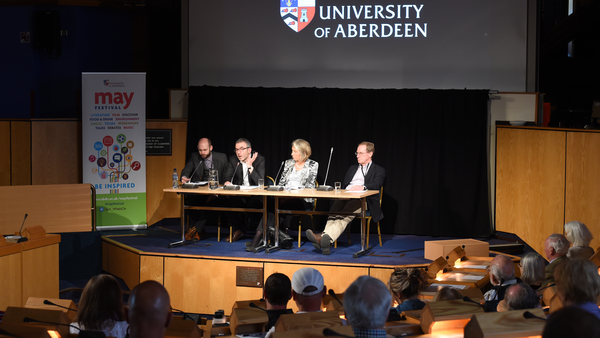
Regular Seminar Series and Guest Speakers
We have regular seminar series hosted by the department of Politics and International Relations along with guest speakers throughout the year.
Find out moreGet in Touch
Contact Details
- Address
-
Student Recruitment & Admissions
University of Aberdeen
University Office
Regent Walk
Aberdeen
AB24 3FX