Museum Studies (MLitt)
Introduction
The University’s extensive collections are at the heart of the Museum Studies programme. Co-taught by academics and University Collections professional staff, and with input from museum practitioners worldwide, you will develop the skills to launch a successful career in the museum and heritage sector. You will learn about exhibitions and interpretation, digitisation, decolonial practice, museum policy, professionalism and ethics, collections-based research skills, sustainability, activism, and much more.
The University has been collecting for over 500 years. You can read about the collections of art, natural sciences, archaeology, and human culture it cares for, and the venues that can be visited here.
Study Information
Study Options
- Learning Mode
- On Campus Learning
- Degree Qualification
- MLitt
- Duration
- 12 months or 24 months
- Study Mode
- Full Time or Part Time
- Start Month
- September or January
- Location of Study
- Aberdeen
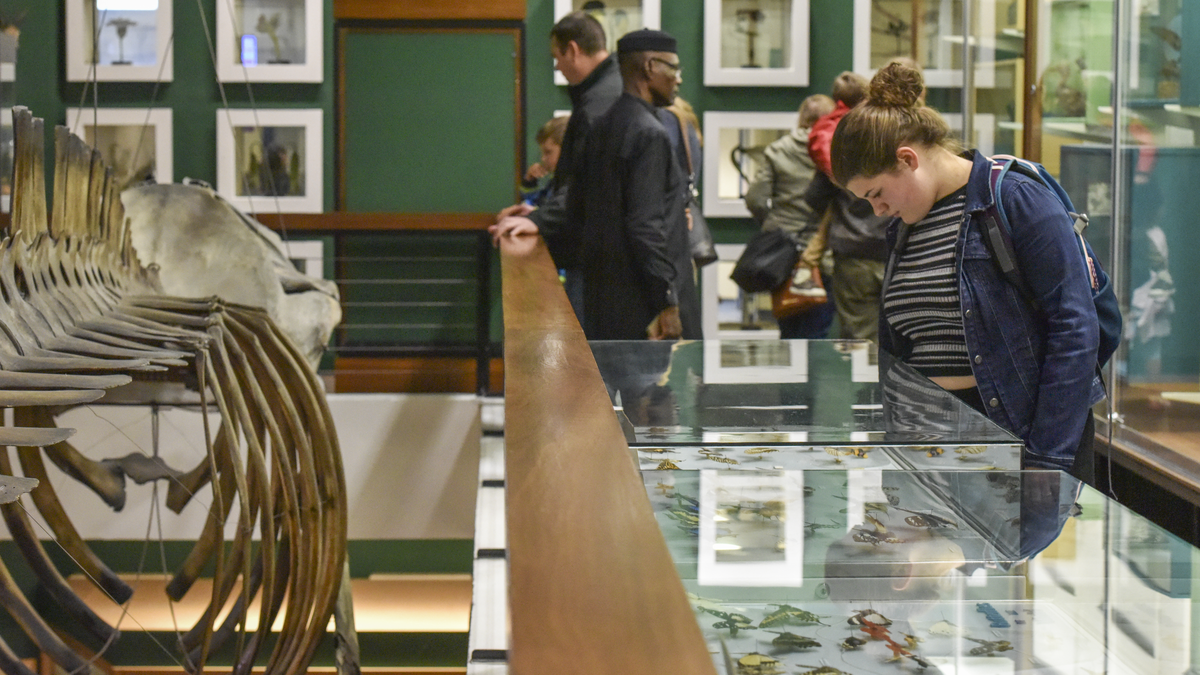
In Museum Studies we explore the historical and contemporary roles of museums in society. Our teaching focuses on skills-based learning and the practical application of current theories and professional approaches in the museum sector. We will help you:
- Understand the social and cultural importance of museums
- Develop foundational skills in the research, care, management and interpretation of collections
- Gain awareness of potential career options and heritage sector and plan your next steps
- Embed accessibility and decolonial practice into your own professional museum practice
- Develop transferable skills through assessments such as grant-writing and creating zines and podcasts, while developing your academic research and writing.
Highlights include:
- Curating a small, public-facing exhibition and associated online or other interpretation with guidance from the University Collections team
- Completing an optional work-based placement in a museum normally in the northeast of Scotland or bringing your skills to an optional dissertation project ·
- Undertaking original object-centred research, using the University Collections human culture and natural science museum collections
- Fieldtrips to critically evaluate exhibitions and museum spaces, while hearing from staff about current challenges and opportunities in the sector
The programme is based within Anthropology but has input from teaching staff in other disciplines. Teaching is delivered through seminars, workshops, lectures, and visits to museums and galleries led by academic staff who actively research with museums and collections and the University Collections team. The teaching team are all active in the wider Museum Studies sector and work with museums, researchers, and community partners in the UK and internationally.
For example, the journal Museum Worlds: Advances in Research is co-edited by programme director Professor Alison Brown and Dr Jennifer Walklate is part of the editorial team for Museum & Society.
Available Programmes of Study
Teaching is delivered through seminars, workshops, lectures, and visits to museums and galleries. There is an emphasis on practical engagement, combined with exposure to current policy and academic scholarship in Museum Studies. Graduates of the programme working in the museum sector occasionally join us as guest speakers.
We have strong connections with museums across Scotland and internationally and encourage students to participate in extra-curricular events to help them build their professional networks. All students take the same core courses, with the September and January cohorts learning together:
- Researching Museum Collections (15 credits)
- Museum Pathways (15 credits)
- Decolonising Museums (15 credits)
- Museums and the Digital World (15 credits)
- Curating a Museum Exhibition (30 credits)
- The Museum Idea: Critical Histories, Contemporary Challenges (15 credits)
- Museum Professional Practice (15 credits)
Over the summer students will take either the Museum Studies Work Placement or the Museum Studies Dissertation.
- MLitt
-
Museum Studies
- Qualification
- MLitt
- Duration
- 12 months or 24 months
- Learning Mode
- On Campus Learning
- Study Mode
- Full Time or Part Time
- Start Month
- September
- Location
- Aberdeen
- Qualification
- MLitt
- Duration
- 12 months
- Learning Mode
- On Campus Learning
- Study Mode
- Full Time
- Start Month
- January
- Location
- Aberdeen
Programme Fees
- UK
-
- Tuition Fees for 2026/27 Academic Year
- £11,100
- Tuition Fees for 2026/27 Academic Year (University of Aberdeen Graduates *)
- £7,000
-
University of Aberdeen graduates are eligible for the Alumni Postgraduate Scholarship, reducing tuition fees to £7,000 - matching the current SAAS tuition loan - See full terms and conditions
- EU / International students
-
- Tuition Fees for 2026/27 Academic Year
- £23,000
- Tuition Fees for 2026/27 Academic Year (Self-funded Students *)
- £15,000
-
The above fee includes the £8,000 Aberdeen Global Scholarship provided to self-funded international students. Full terms and conditions apply.
Stage 1
Stage 1: Compulsory Courses
Normally, students will take 60 credits in Stage 1. PD5506 must be taken in Year 1. The following courses are mandatory:
PD5506 Getting Started at the University of Aberdeen (0 credit points)
AT5568 The Museum Idea: Critical Histories, Contemporary Challenges (15 credit points)
AT5569 Museum Professional Practice (15 credit points)
AT5570 Curating an Exhibition (30 credit points)
- Getting Started at the University of Aberdeen (PD5506)
-
This course, which is prescribed for all taught postgraduate students, is studied entirely online, takes approximately 2-3 hours to complete and can be taken in one sitting, or spread across the first 4 weeks of term.
Topics include University orientation overview, equality & diversity, MySkills, health, safety and cyber security, and academic integrity.
Successful completion of this course will be recorded on your Transcript as ‘Achieved’.
- The Museum Idea: Critical Histories, Contemporary Challenges (AT5568)
-
15 Credit Points
‘The Museum Idea: Critical Histories, Contemporary Challenges’ encourages students to consider how contemporary approaches to museology are influenced by historic practices. Organised thematically in blocks (Histories and Philosophies; Current Issues and Contestation), and taught through seminars, students will investigate themes such as: curiosity, museums and nationalism, authenticity, heritage and collaboration, sustainability, museums as social spaces, museum activism, museums and well-being.
- Museum Professional Practice (AT5569)
-
15 Credit Points
"Museum Professional Practice" critically considers professional practices of museum work. It focuses on collections management, care, documentation, ethics, public engagement and funding. The course is taught by a team of academic and professional staff, making use of the University's museums, including exhibitions, collections and conservation facilities and activities.
- Curating an Exhibition (AT5570)
-
30 Credit Points
The ‘Curating an Exhibition’ course leads to the creation and opening of an exhibition in the Sir Duncan Rice Library. Working together as a team, supported by the professional staff of University Collections, each student also takes on a specific role. The course makes extensive use of the University’s internationally-important museum collections and gives students an opportunity to reflect on an important aspect of museum practice. The course is assessed by a personal reflective portfolio.
Stage 2
Stage 2: Optional Courses
Normally, students will take 60 credits in Stage 2 from the following electives (some courses may not be available in every year, others may be made available):
- Museum Studies Dissertation (AT5908)
-
60 Credit Points
This course builds on the skills and knowledge acquired in taught courses in the MLitt Museums Studies programme. In completing their dissertation, students will be expected to demonstrate that they can conduct advanced library research, prepare an extensive literature reviews situating their research question in its wider academic and professional context, and write and edit a large piece of work. In addition, they will be required to prepare abstracts and bibliographies and assess the ethical issues involved in original research. All students will receive staff supervision in identifying a suitable topic and in completing an original research project.
- Museum Studies Placement (AT5913)
-
60 Credit Points
As a practice-based alternative to a dissertation, students take part in a 20 day placement in a museum or gallery followed by writing an 8,000 word Museum Studies Project. Some students opt for a four-week placement in the early summer, while others choose to make a regular arrangement to volunteer in a local museum during term-time. Placements are offered in a range of museums in Scotland, but students can also identify other possibilities themselves.
Stage 3
Stage 3: Compulsory Courses
Normally, students will take 60 credits in Stage 3. The following courses are mandatory:
AT5043 Researching Museum Collections (15 credit points)
AT5055 Museum Pathways (15 credit points)
AT5072 Decolonising Museums (15 credit points)
AT5071 Museums and the Digital World (15 credit points)
- Researching Museum Collections (AT5043)
-
15 Credit Points
Research and interpreting artefacts is core to many aspects of museum work. This course gives students experience of working directly with the collections of the University Museums. By preparing an in-depth study of one artefact, students will develop skills in close observation of artefacts and of sourcing archival and secondary information. They will also learn how to apply current approaches to working with material culture, drawn from anthropology, history and museum studies, to museum collections.
- Museum Pathways (AT5055)
-
15 Credit Points
Museum Pathways prepares students for museum employment, involving input from a variety of practitioners at different career stages and in different areas within the museum sector. They will complete a two part assignment, totalling 3000 words, on their chosen role and CPD plan.
- Museums and the Digital World (AT5071)
-
15 Credit Points
Compared to the ambient and abstract ‘digital world’, museums seem located, physical, even old fashioned. But the digital and museum worlds have much more in common, and a much longer shared history, than might first appear. In this course, using real-world, international examples, students will explore how established and emerging technologies have changed – and are changing – the nature of museums, objects, and their human interlocutors.
- Decolonising Museums (AT5072)
-
15 Credit Points
Museums worldwide are grappling with the complex legacies of colonialism that have shaped collections, institutional practices, and museum relationships with their users. This course introduces students to current debates regarding how - and if - the museum can fully decolonise. It also gives them a grounding in the historical, social, and institutional contexts which have led to these debates, and introduces practice-based strategies to address one of the key challenges facing museums and heritage institutions today.
Stage 3: Optional Courses
In addition, students will normally take a further 30 credit points from the following electives (some courses may not be available in every year, others may be made available):
Programme Fees
- UK
-
- Tuition Fees for 2026/27 Academic Year
- £11,100
- Tuition Fees for 2026/27 Academic Year (University of Aberdeen Graduates *)
- £7,000
-
University of Aberdeen graduates are eligible for the Alumni Postgraduate Scholarship, reducing tuition fees to £7,000 - matching the current SAAS tuition loan - See full terms and conditions
- EU / International students
-
- Tuition Fees for 2026/27 Academic Year
- £23,000
- Tuition Fees for 2026/27 Academic Year (Self-funded Students *)
- £15,000
-
The above fee includes the £8,000 Aberdeen Global Scholarship provided to self-funded international students. Full terms and conditions apply.
We will endeavour to make all course options available. However, these may be subject to change - see our Student Terms and Conditions page. In exceptional circumstances there may be additional fees associated with specialist courses, for example field trips.
Fee Information
Scholarships
All eligible self-funded international Postgraduate Masters students will receive an £8,000 scholarship. Learn more about this Aberdeen Global Scholarship here.
To see our full range of scholarships, visit our Funding Database.
How You'll Study
An important feature of the Museum Studies programme is its extensive use of the University’s museums and collections and involvement of both academic staff in a range of related disciplines such as Anthropology, Archaeology, Education and Art History and the professional staff of the University’s museums.
Teaching of the Museum Studies courses is in small groups, with individual supervision for the Work Placement or Dissertation.
Learning Methods
- E-learning
- Field Trips
- Individual Projects
- Lectures
- Peer Learning
- Professional Placements
- Research
- Seminars
- Tutorials
- Workshops
Assessment Methods
Most assessments require individual submissions, though some group assessments are included to develop team-working skills.
Examples assessments include: a mock grant application, a review of a museum digital offering, essays and ‘unessays’, a research-based blog post, video presentations, reflective reports, career development plan, draft museum catalogue entry.
Why Study Museum Studies?
- Established in 2013 Museum Studies at Aberdeen has a track record of supporting students to find their first role in a museum or to develop their skills to progress in their careers.
- Gain knowledge of museum issues internationally. Our students come from countries including Bangladesh, Canada, Denmark, Germany, Saudi Arabia, Spain, South Africa, Thailand, and the USA, as well as Scotland and across the UK. ·
- We cover Museum Studies approaches broadly in our teaching, but appeal especially to applicants with backgrounds in Anthropology, Archaeology, Art History, Creative Arts, Culture and Communication, Education, and History. ·
- Volunteer with the University Collections or with the many museums located throughout the northeast of Scotland. ·
- Build a professional network with museum staff through opportunities supported by the programme such as field trips, work-based placement etc.
- Be part of the Anthropology Department’s research theme Museums and Histories of Knowledge, including dedicated seminars and discussions.
- Develop employability skills in our optional work-based placement or develop enhanced research skills through an optional dissertation.
- Opportunities to apply for paid internships during term-time at local organisations via the ABDN Internship scheme, potentially including cultural organisations.
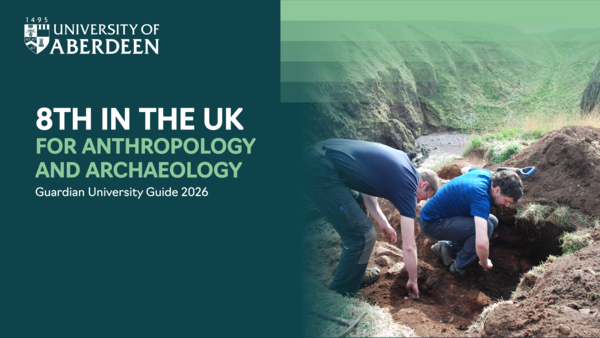
- Study at a nationally and internationally renowned university for Anthropology. We are ranked 3rd in the UK for Anthropology and Archaeology (Guardian University Guide 2025) and in the Global Top 100 for Anthropology (QS World University Rankings by Subject 2024)
- Aberdeen is ranked 1st in the UK for overall student satisfaction in Anthropology (National Student Survey 2024).
Interested in this programme?
Entry Requirements
Qualifications
The information below is provided as a guide only and does not guarantee entry to the University of Aberdeen.
2:2 UK Honours degree, or an Honours degree from a non-UK institution which is judged by the University to be of equivalent worth, in a relevant discipline such as (but not limited to) Anthropology, History, Art History, Media Studies, Cultural Studies, Art and Design, Archaeology, Geography, Environmental Sciences, or Creative Communication.
Applicants without this qualification may be admitted subject to having an alternative qualification, or an approved level of work experience appropriate to the field of study. Also taken into careful consideration is the trajectory of results, an applicant without an overall 2:2 but with 2:2 results or better in their final two years of study may be admitted.
Document Requirements
You will be required to supply the following documentation with your application as proof you meet the entry requirements of this degree programme. If you have not yet completed your current programme of study, then you can still apply and you can provide your Degree Certificate at a later date.
- Degree Certificate
- a degree certificate showing your qualifications
- Degree Transcript
- a full transcript showing all the subjects you studied and the marks you have achieved in your degree(s) (original & official English translation)
- Personal Statement
- a detailed personal statement explaining your motivation for this particular programme
- Reference
- a reference letter from your university discussing your academic ability. If you have been out of education for a long time you may wish to use your current or most recent employer, or another professional person
- Reference x 2
- two reference letters, one of which should be from your university discussing your academic ability. If you have been out of education for a long time you may wish to use your current or most recent employers, or other professional individuals
Careers
On completion of the programme you will be ready to enter the museum and heritage sector, often in an entry level role in collections management, documentation, visitor engagement, or policy-related roles. If you are an existing museum professional, the programme will allow you to deepen your skills and understanding of current issues and approaches within the sector.
Across the programme you will develop transferable skills, such as project management, critical analysis and research which are required across a broad range of roles and sectors.
Students will also be able to move into research careers in or beyond academia. Those wishing to continue in academic research who meet the entrance requirements will be able to apply to the PhD in Museum Studies.
Career Opportunities
- Collections Manager
- Curator
- Exhibition Development
- Freelance Museum Consultant
- Museum Marketing Specialist
- Museum Officer
- Museum Researcher
- Public Engagement Specialist
- Researcher
- Visitor Engagement Officer

Our Experts
- Other Experts
- Mr Neil Curtis
- Jennifer Walklate
- Rachel Smith
- Programme Manager
- Professor Alison Brown
Information About Staff Changes
You will be taught by a range of experts including professors, lecturers, teaching fellows and postgraduate tutors. However, these may be subject to change - see our Student Terms and Conditions page.
Facilities
Since 1495 we've continued to add and innovate, growing our campus to an ideal blend of old and new. Explore the historic King's Quad, study in the modern Sir Duncan Rice Library, visit our museum exhibitions and more.
Our community of 3,600 staff and over 14,000 students includes more than 130 nationalities, which enriches our teaching and student experience.
We invest in our facilities and learning resources, ensuring our students have access to everything they need to help them succeed.
Get in Touch
Contact Details
- Address
-
Student Recruitment & Admissions
University of Aberdeen
University Office
Regent Walk
Aberdeen
AB24 3FX