
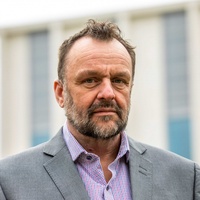
Chair in Biological Sciences, Head of School of Biological Sciences
- About
-
- Email Address
- g.i.paton@abdn.ac.uk
- Telephone Number
- +44 (0)1224 273834
- Office Address
- Room 2.22 Cruickshank Building
- Room 2.12 Zoology Building
- School/Department
- School of Biological Sciences
University of Aberdeen collaboration with the Xianghu-Laboratory
I am delighted to report that we have advertised a wide range of doctoral projects which you can access here.
I look forward to reviewing your application and answering further questions that you may have.
External Memberships
- Director of QUADRAT-DTP
- Overview for new QUADRAT-DTP Supervisors
- Director - Remedios Limited
- Editorial Board for Soil Biology and Biochemistry
- Editorial Board for Water Air Soil Pollution
- Research
-
Research Overview
I study the relationship between pollutant speciation and toxicity. This considers the fate and transformation of environmental pollutants. This is done through the use of analytical chemical tools to study organism responses to pollutants. I am also enthused by the application and comparison of ecotoxicity assays to various environmental sample. I also use general research skills in soil microbiology and biochemistry. Specific areas of interest are:
- Fate of inorganic/ organic pollutants in the environment
- Development of bioassays to assess environmental toxicity
- Chemical and biological techniques for environmental restoration
- Soil genesis and classification and linkage to soil biology
Research Areas

Research Specialisms
- Environmental Biotechnology
- Environmental Sciences
- Environmental Chemistry
- Soil Science
- Applied Environmental Sciences
Our research specialisms are based on the Higher Education Classification of Subjects (HECoS) which is HESA open data, published under the Creative Commons Attribution 4.0 International licence.
Current Research
Current Research Group
The current research group has several strands. Mostly the focus is on process level soil microbiology as a response to perturbations- mainly pollution. Biosensors are widely used to quantify and better understand these mpacts and to relate to the aspects of bioavailability. To an extent these enable sustainable solutions to be developed and bespoke risk assessment to be measured.
If you are interested in joining the group then have a think about the work that the current group and recently completed members have contributed.
Dr. Lenka Mbadugha complements the research team with her expertise in pollution monitoring, biosensor development and soil carbon dynamics.
Rosie Boyko has completed her PhD studying the link between soil pH management and sward quality with reference to Scotland and food security. Thnayan Alonaizi is studying soil-based enzymes to devise recolonisation techniques in impacted soils. This bioaugmentation work is a new twist of remediation work with hydrocarbons that we have done in the past. He is also transplanting functional biomes back into soils. Onome Omovie-Stephen is applying techniques for carbon fractionation to contrastingly managed soils to try and develop techniques to better sequester soil carbon. The great challenge is to understand carbon partitioning and links to function and availability.
Sapar Dossanov successfully defended his thesis: integrated approaches of risk and hazard assessment in current and historic metal mines. This work was further enhanced by Sandra Arroyo Sanchez who has upskilled the use of SEM and applied the risk assessment/ human exposure/ model approaches to Mexico. She aslo successfully defended her PhD is Q1 of 2024- congratulations.
Alexander Kani is studying bioleaching of metal wastes as a process for elemental recovery in a sustainable manner. The focus is on critical elements and we have widened the scope from mine wastes to other matrices and are developing resin based systems for capture.
Christoph Gade studies elemental cycling of mercury with a focus on marine sources and fate but extends this to wider geochemical concepts. The driver here is to truth test models that have been established making use of specific analytical approaches. He has also established some effective and innovative ecotoxicological testing.
Rita Moussa is a Hydro-Nation student and worked on anaerobic systems for the sustainable geeration of methane and hopefully hydrogen. She has submitted and successfully defended her PhD.
Former Members of the Research Group
Dr. Aftab Majeed studied urban ecology with respect to planning challenges from a quantitative basis. He has recently relocated to the Kingdom of Saudi Arabia.
Dr. Barry Nourice studied the fragile status of soils in the Seychelles.
Dr. Victor Igwe focussed on microbial processes in the production of bioethanols. This made use both of empirical and modelling approaches.
Dr. Amira Alzadjali developed new elemental specific biosensors to update the current suite used by the group in environmental diagnostics.
Dr. Abubakar Yuguda devised methods to apply mycorrhizal enhanced maize plants in the remediation of soils impacted with effluents from the tannery industry.
Dr. Chisom Agunwoke developed biosensors for soil and sediment remediation.
Dr. Mouza Al Mansouri studied sustainable water storage in Abu Dhabi where she works as the Director in Spatial Data Analysis at the Environment Agency.
Dr. Saad Dehlawi completed his research using chemical additives to enhance mobility and complexation of pollutants as a strategic technique for land and water remediation.
Dr. Chidinma Anunike used CaSx with a specific focus on the consideration of hexavalent chromium transformation.
Dr. Hedda Weitz, who developed a range of bacterial biosensors and the only effective fungal biolouminescence-based assay, oversees the smooth running of the microbial laboratory. Jamie Buckingham oversees the challenges of soils, environmental samples and chemical analysis within the group.
Here is a tour of the facilities
Collaborations
Prof. Kirk Semple, Lancaster University
Supervision
My current supervision areas are: Biological and Environmental Sciences.
- Teaching
-
Teaching Responsibilities
Course Co-Coordinator
- Land Use and the Changing Environment
- Publications
-
Page 1 of 13 Results 1 to 10 of 128
Temporal trends of polycyclic aromatic hydrocarbons in soils amended with sludge, compost, and manure in a Scotland pasture: An 8-year field experiment
Environmental Pollution, vol. 360, 124614Contributions to Journals: Articles- [ONLINE] DOI: https://doi.org/10.1016/j.envpol.2024.124614
- [ONLINE] View publication in Scopus
Mercury Dynamics in the Sea of Azov:: Insights from a Mass Balance Model
Toxics, vol. 12, no. 6, 417Contributions to Journals: ArticlesUse of diffusive gradient in thin-films (DGTs) to advance environmental mercury research:: Development, Growth, and Tomorrow.
Trends in Environmental Analytical Chemistry, vol. 42, e00230Contributions to Journals: ArticlesFuture proofing a long-term agricultural experiment for decades to come: Relocation and redesign
European Journal of Agronomy, vol. 158, 127214Contributions to Journals: ArticlesMercury fingerprint: A comparative evaluation of lability in North Sea drill cuttings
Marine Pollution Bulletin, vol. 204, 116518Contributions to Journals: ArticlesHigh resolution visualisation of tiemannite microparticles, essential in the detoxification process of mercury in marine mammals
Environmental Pollution, vol. 342, 123027Contributions to Journals: ArticlesA comparison of soil liming requirement methodologies in temperate, Northern European pedo-climates
Journal of Plant Nutrition and Soil Science, vol. 186, no. 5, pp. 543-553Contributions to Journals: ArticlesEcotoxicity assessment of hydrophobized soils
Environmental GeotechnicsContributions to Journals: Articles- [ONLINE] DOI: https://doi.org/10.1680/jenge.21.00096
- [ONLINE] View publication in Scopus
Temporal changes in the extractability, bioaccessibility and biodegradation of target hydrocarbons in soils from former refinery facilities
International Biodeterioration & Biodegradation, vol. 160, 105227Contributions to Journals: Articles- [ONLINE] DOI: https://doi.org/10.1016/j.ibiod.2021.105227
- [ONLINE] Link to AM in Cranfield University repository
Geogenic and anthropogenic interactions at a former Sb mine: environmental impacts of As and Sb
Environmental Geochemistry and Health, vol. 42, no. 11, pp. 3911-3924Contributions to Journals: Articles


