
This research is generously supported through a
Leverhulme Leadership Award from the Leverhulme Trust
Overview
The nature of the societies and social, ideological and political frameworks that filled the chasm left by the demise of the Roman Empire in the 5th century AD – both within and beyond the Empire's boundaries – is one of the most contentious debates about late- and post-Roman Europe. Currently, broad-scale narratives remain largely concerned with the transformations of the late Roman World that gave rise to the so-called successor states at the core of Europe. However, these debates have largely proceeded apace without considering the increasingly rich evidence for complex, highly stratified societies, alongside developed strategies of rulership and governance, that emerged amongst the communities which originated beyond the edges of the Roman Empire. In northern and western Europe in regions such as Ireland and northern Britain, the social groups of Europe's post-Roman era witnessed a very different genesis and development to those of central and southern Europe, yet to date there have been no integrated and comparative studies of the evidence from the early kingdoms that lay beyond the boundaries of the Roman world.
This Leverhulme funded project adopted an innovative interdisciplinary focus that tackled the formation of the socio-political landscapes of Northern Britain and Ireland by focusing on four power centres across Ireland and northern Britain, providing key case studies in how power was orchestrated in early medieval northwest Europe.
- Case Studies in Comparative Kingship
-
The project undertook detailed study of four power centres in Pictland, Scotland; Dál Riata, Northern Ireland; and Munster, Ireland. Synthesizing and comparing the results of these case studies will help us better understand Northern Europe during the first millennium AD, as well as contribute to broader debates regarding this transformative period of history.
- Pictland
-
Pictland was the part of modern Scotland north of the Firth of Forth that was inhabited by the Picts. The Picts were a people who first appear in written sources at the end of the 3rd century AD. By the end of the 7th century, they were ruled by powerful over-kings based in the northern region of Fortriu, around the Moray Firth. All written traces of the Picts cease by the 10th century, and are replaced by the Gaelic kingdom and culture of Alba.
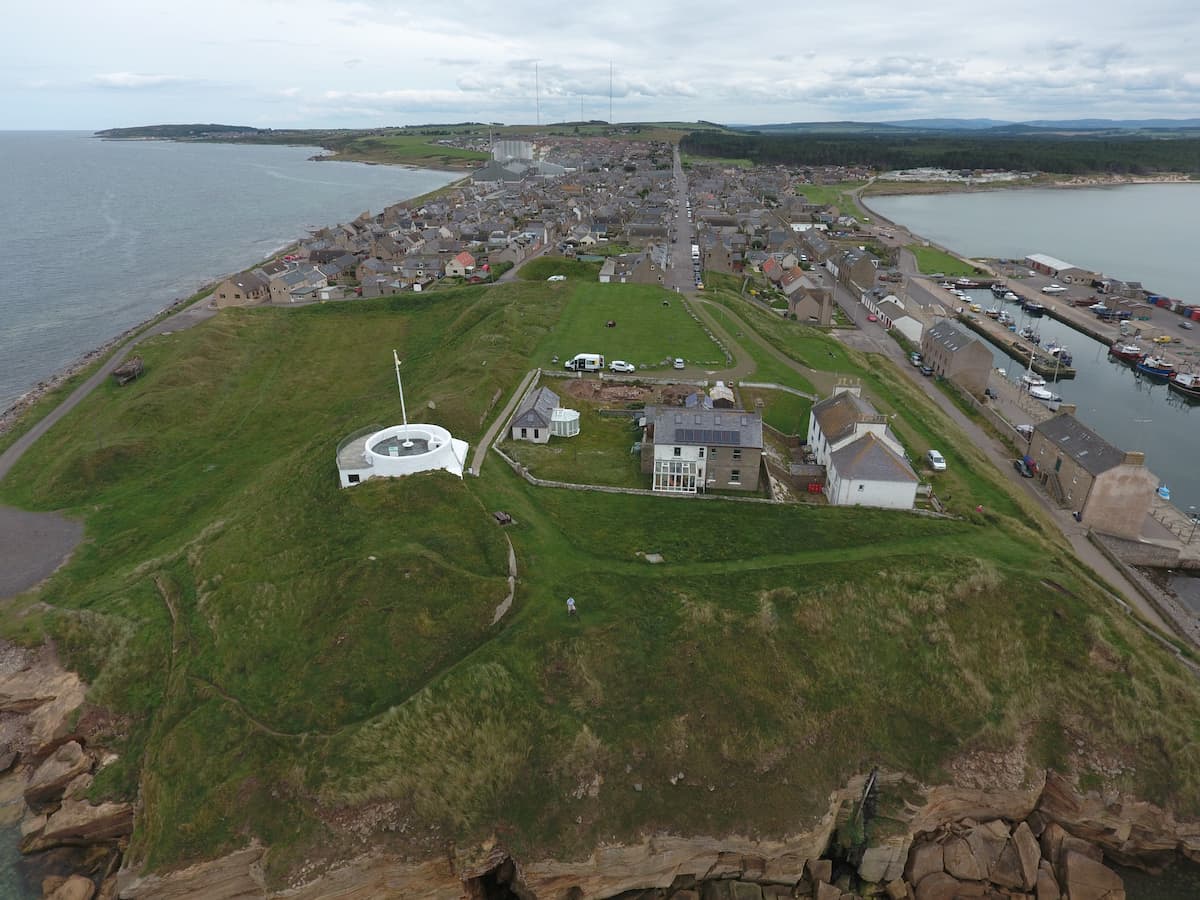
The Pictish promontory fort at Burghead
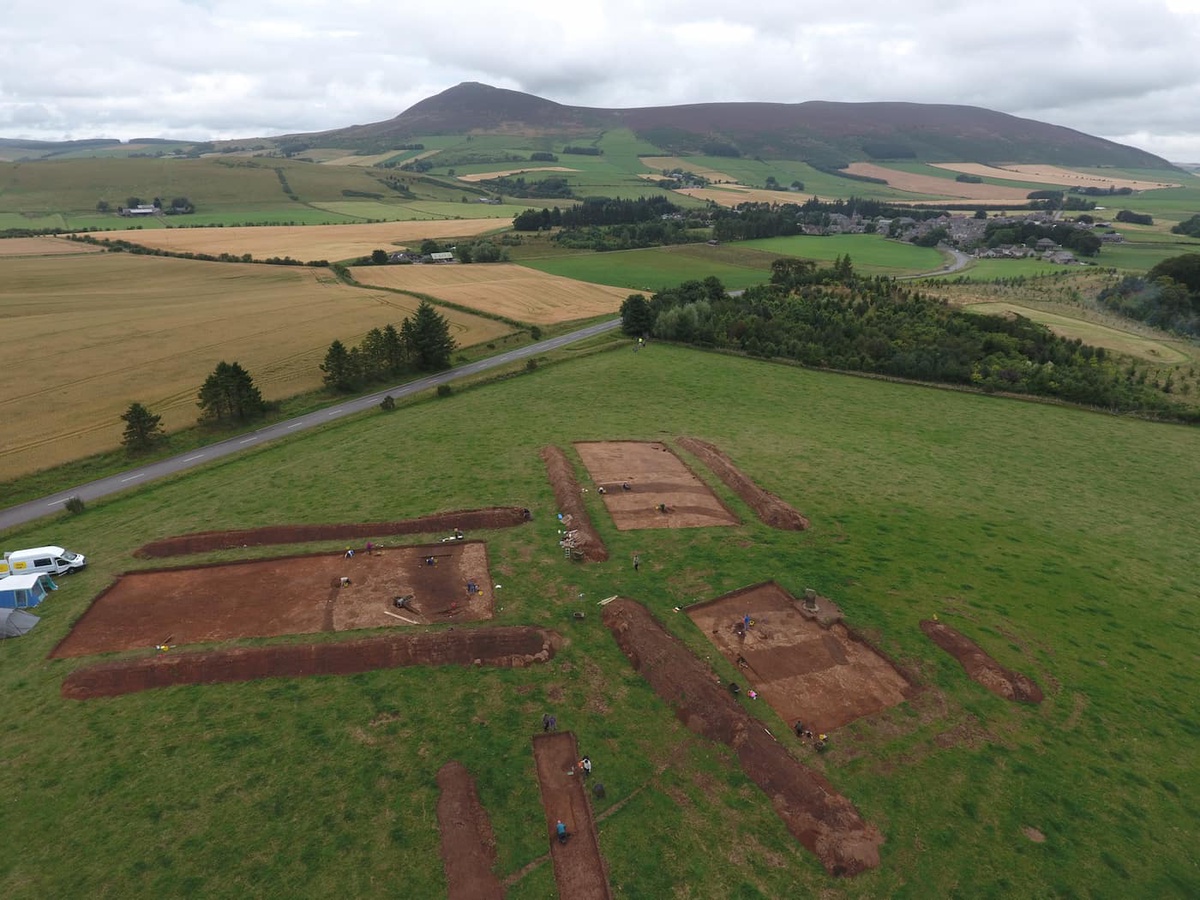
Excavations at the Pictish settlement and ceremonial centre at Rhynie, Aberdeenshire
Two major landscape studies were conducted in Pictland: Burghead and Rhynie, both in northern Scotland. Traditionally, studies of Pictish state formation have focused on southern Pictland, though recent historical research has suggested the importance of the north. Although undocumented, Burghead is the largest first millennium AD fortified settlement known in Scotland. However, the chronology of this fort is poorly understood. Large-scale excavations at this site are still ongoing revealing a remarkable promontory fort that existed from the 7th to 10th century AD. Similarly, the unrecorded enclosure complex at Rhynie has been identified as an important Pictish central place. Work on this complex and the related sites of Tap o’ Noth and Cairn More was conducted from 2011-2022 and the results will be published in a monograph by the Society of Antiquaries of Scotland.
- Dál Riata
-
Dál Riata was a Gaelic-speaking polity spanning County Antrim in Northern Ireland and Argyll and the Inner Hebrides of Scotland, which relied on close maritime connections to establish and maintain power. By the end of the 7th century, it consisted of a number of Gaelic kingdoms, which were subordinate to an over-king. Having been conquered for a period by the Picts in the mid-8th century, Scottish Dál Riata re-emerged briefly before disappearing from records around 800 AD, perhaps due to Scandinavian conquest and settlement.
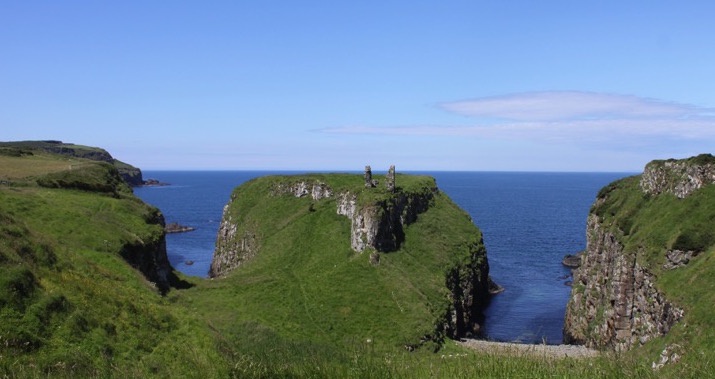
Dunseverick promontory fort (Image by Patrick Gleeson)
The case study for Dál Riata was Dunseverick in Northern Ireland, a stunning promontory on the northern coast of Co. Antrim. This site has been identified as one of the major royal seats of the Dál Riata dynasty. Despite this, no modern excavation or survey work has been undertaken on the promontory and there has been no review of the wider archaeological landscape that includes the largest hoard of Roman coins ever recovered in Ireland and a probable inauguration site. Project survey and excavations revealed extensive remains on the promontory, though much of the deposits dated to the high medieval period.
- Munster
-
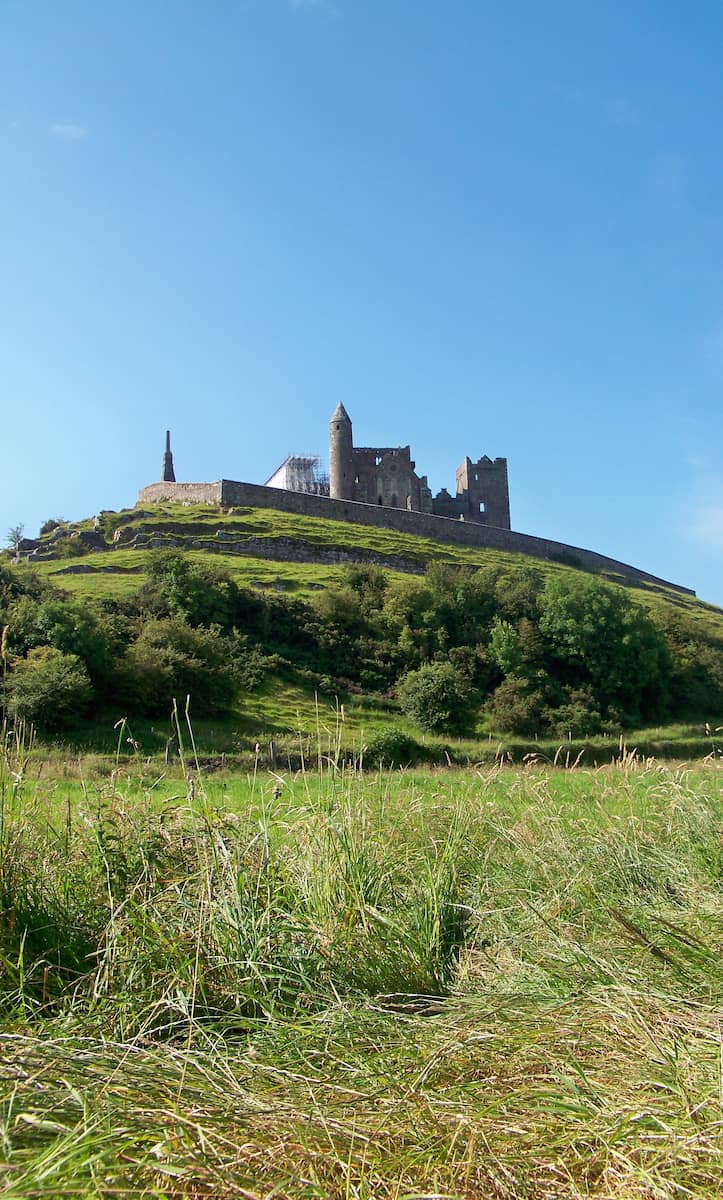
Recent survey at Cashel has revealed an extensive series of unrecorded archaeological features indicative of a vast complex in the immediate vicinity of the Rock of Cashel. The character of these new features suggests the location developed from a major fortified site during the 5th and 6th century AD, and was later transformed into a major ceremonial seat of kingship and of the early Church.
- Some Key Project Publications
-
Noble, G. & Evans, N. (2022). Picts. Scourge of Rome, Rulers of the North. Edinburgh: Birlinn. (Released Nov 2022, with over 5000 sales to date; ranked No1 in History of Scotland books on Amazon at various points since release; this is an academic book but with wide popular appeal). “Picts is an extraordinary work …but is also engagingly written with the general reader in mind' (Current Archaeology); “This book is a triumph. It marks a milestone in Pictish studies…. We will be indebted to Noble and Evans for many years to come…It marks a step-change in, perhaps even a coming of age for, Pictish studies.” (Pictish Arts Society).
Noble, G. et al. 2026. Rhynie: A Powerful Place of Pictland. The development of a landscape of Pictish royal power from the Roman to the early medieval period. Edinburgh: Society of Antiquaries of Scotland.
Jones, S.E., Gleeson, P., López-Costas, O., Martínez-Cortizas, A., Mighall, T., & Noble, G. 2024. ‘Life, death and environment at Lagore Crannog: Parasites, land-use and a royal residence in later prehistoric and early medieval Ireland’, Journal of Archaeological Science 172: 106105.
Noble, G., Evans, N., Goldberg, M. and Hamilton, D. 2022. ‘Burning Matters: The Rise and Fall of an Early-Medieval Fortified Centre. A New Chronology for Clatchard Craig’, Medieval Archaeology 66.2: 266–30.
Campbell, E., Seaman, A., Lane, A., Noble, G. 2023. ‘A new chronology for the Welsh hillfort of Dinas Powys’. Antiquity 97 (396):1548–1563.
4Gleeson, P., O'Driscoll, J., Noble, G., Murphy, E., McDowell, J. 2023 Radiocarbon dating of human remains from Navan Fort: their implications for understanding the wider ceremonial complex. Journal of Irish Archaeology 32: 53–69.
Evans, N. 2022. ‘Picti: from Roman Name to Internal Identity’. Journal of Medieval History 48: 291–322.
Jones, S; Mighall, T, Evans, N, Martínez Cortizas, A. and Noble, G. 2021. Settlement, Landscape and Land-use change at a Pictish Elite Centre: Assessing the Palaeoecological Record for Economic Continuity and Social Change at Rhynie in N.E. Scotland. The Holocene.
O'Driscoll, J, Gleeson, P & Noble, G 2020, 'Re-imagining Navan Fort: new light on the evolution of a major ceremonial centre in Northern Europe'. Oxford Journal of Archaeology 39: 247–273.
Noble, G, Gondek, M, Campbell, E, Evans, N, Hamilton, D & Taylor, S 2019, 'A Powerful Place Of Pictland: Interdisciplinary Perspectives On A Power Centre of the 4th to 6th Centuries AD'. Medieval Archaeology, vol. 63: 59–64.
Noble, G. & O'Driscoll, J. 2019. ‘Fortified settlement in early medieval Northern Britain and Ireland’, in G Lock & I Ralston (eds), Hillforts: Britain, Ireland and the Nearer Continent: Papers from the Atlas of Hillforts of Britain and Ireland Conference, June 2017. Archaeopress, Oxford: 97-116, Atlas of Hillforts of Britain and Ireland Conference, Edinburgh, United Kingdom.
Noble, G. & Evans, N. 2019. The King in the North: the Pictish Realms of Fortriu and Ce. Edinburgh: Birlinn.
Noble, G., Goldberg, M. and Hamilton, D. 2018. ‘The Development of the Pictish Symbol Tradition: Inscribing Identity at the Edges of Empire’. Antiquity 365 (92): 1329-1348.
Project Directors
- Prof Gordon Noble, University of Aberdeen (Principal Investigator)
- Prof Tim Mighall, University of Aberdeen
- Dr Patrick Gleeson, Queens University Belfast
- Prof Derek Hamilton, SUERC, University of Glasgow
Find Out More
You can follow our project on the social media pages ‘Northern Picts’ on Facebook and X and Bluesky.