Follow us
Link in to our social media feeds for the latest information and reminders of key dates.
The University of Aberdeen is delighted to be able to invite you to attend PCST 2025. The conference theme will seek to explore transitions (change versus stability), traditions (the old, current and the new) and tensions (dispute versus consensus) that influence all of our work as science communicators.
In this context of our climate emergency, of global health imperatives, such as food and water security, and poverty alleviation PCST will come together in 2025 to discuss science communication can and should be used to positive effect in our changing world.
Registration is open and you are still able to register to join us - or to add Workshops and Optional Social Events to your existing booking.
Find registration details and the link to register at Registration
Programme
The full programme is now available, along with the workshop programme and an outline programme - navigate via the programme link on the menu.
The PCST Network has introduced a PCST Conference Code of Conduct for the conference. Please be aware that by registering you have agreed to abide by this.
Bursaries have now been allocated - thanks go to all contributors: Wellcome, the Kavli Foundation, the 2023 PCST Conference in Rotterrdam and of course - all of those who 'paid it forward' - every little helps. If you want to find out more about the selection process you can view our PCST 2025 Bursary Report
You can download a pdf version of the PCST 2025 Abstract Booklet here.


Find out about the history of Old Aberdeen and explore all the nooks and crannies of the location of the University's main campus. Home to the University Chapel, St Machar Cathedral, the University Botanic Gardens, Seaton Park and much more. Our knowledgeable experts will guide you round the area on foot on this 2 hour visit. The tour will take place on the afternoon of 26 May 2025.

Why not join us to find out more and taste a range of Scotland's iconic tipple? Our knowledgeable staff will guide you through a selection of some of the world’s finest whiskies, and provide insight into the unique flavours, aromas and history behind them. The event will take place on 27 May 2025 on the University of Aberdeen's Old Aberdeen Campus.
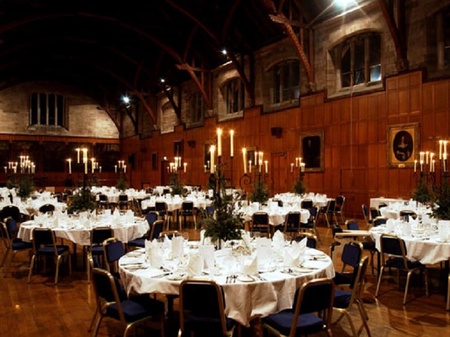
Get on your dancing shoes and join us for an informal conference dinner and (un)traditional ceilidh - what's different? This ceilidh will feature science related dances and proves to be lots of fun. To keep the event as inclusive and affordable as possible we have included food, but not alcohol, but there will be a pay bar where you can buy drinks if you wish. The event will take place in the University's Elphinstone Hall on 28 May 2025.
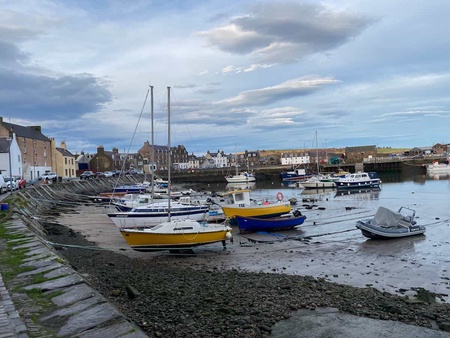
This is a relaxed 'self-guided' tour of Stonehaven a historic town nestled in the cliffs to the South of Aberdeen. Busses will take you from Aberdeen to the stunning Dunnotar Castle perched on the cliffs above Stonehaven. After a chance to visit the now ruined castle the bus will drop you in the town centre where you are free to explore the town's small shops, cafes restaurants, beachfront walk and harbour areas before being returned to Aberdeen in late afternoon. The trip will take place on 30 May 2025.
At a site visit in Aberdeen in early May 2024 a discussion seminar led by Dr Declan Fahy, Dr Melanie Smallman and Professor Richard Holliman with representatives from the Scientific Committee and Local Organising Committee for the conference presented ideas and provocations to aid the science communication community in the consideration of abstracts and sessions for the PCST Conference scheduled for 27-29 May 2025.
The Public Communication of Technology Network is international and seeks to promote new ideas, methods, intellectual and practical questions, and perspectives on the communication of science and technology. The network brings together science communication professionals and science communication researchers to improve both the study of science communication and the practice of science communication. The conference is the main way to explore these discussions and create connections.
In an era of rapid technological advancements and evolving societal landscapes, there are tensions arising from conflicting ideologies and the enduring importance of honouring traditions. Through engaging discussions, participants explored the complexities inherent within each of the three 'T's. Please be aware that these thoughts are not exhaustive - you may have your own thoughts and opinions and we encourage you to explore these through the call for abstracts and at the conference.
Transitions (change versus stability), traditions (the old, current and the new) and tensions (dispute versus consensus) influence all of our work as science communicators. In this context of our climate emergency, of global health imperatives, such as food and water security, and poverty alleviation PCST will come together in 2025 to discuss science communication can and should be used to positive effect in our changing world.
Richard Holliman, The Open University
In early May 2024 I visited the University of Aberdeen. Colleagues and I from the international PCST Network reviewed sites for the biennial conference that's scheduled for 27-29 May 2025.
During the course of the visit I presented in a symposium on the themes of the forthcoming PCST Conference (Traditions, Transitions and Tensions) alongside old friends from the EU-funded project ENSCOT, Melanie Smallman and Declan Fahy.
My contribution to the discussion of the themes of the forthcoming PCST Conference explored traditions in science communication.
I explored the role of traditions in science communication from three perspectives:
My argument was that, by identifying traditions science communicators, we can make connections between the past, the present and the future, between science as a culture and other cultures, and between scientists and other communities. I used the Giant's Causeway as an example that connects the island of Ireland with Scotland through myth, legend and scientific explanation. To draw on the theme of PCST 2023, I argued that by identifying traditions in combination with scientific explanations we can help to 'co-create common ground' with wider constituencies in society.
I went on to argue that, when science communicators fail to disentangle traditions, there is a danger that they can exacerbate pre-existing forms of disadvantage and discrimination. Drawing on the work of Rajesh Tanden , I highlighted examples where knowledge within Indigenous cultures is more complex than the Western European versions.
I drew on recent engagement between minoritized community walking groups and environmental scientists in the UK (Holliman et al. 2024 ) to argue that science communicators and wider constituencies can learn from exploring science communication as a (multi)cultural phenomenon and that research into (de)colonialisation, diversity, difference and globalisation can drive positive change in science communication if equitable principles underpin our work.
In reflecting on traditions, I made the contention that science communicators do not share the same traditions, but that some traditions have dominated our conversations at PCST Conferences because we focus on them at the exclusion of other perspectives. I argued that if we expand our horizons to explore 'majority-world ' perspectives, our conversations about the roots of science communication will be all the richer.
I finished my contribution by arguing that traditions in science communication can help or hinder research and practice depending on who is engaged and how we engage with wider constituencies and that we can learn much from recognising, reflecting on, and revising traditions.
I hope we can continue to discuss these important issues at #PCST2025 .
Over the past 20 or more years, Melanie argued that we have seen science communication framed as 'deficit to dialogue' as we have moved from believing opposition to science was due to lack of knowledge, to understanding that the benefits and risks of science and technology are not shared equally, giving rise to public concerns and opposition. As noted in the 'tensions' talk she argued that we have seen a big shift to involving the public in discussions about scientific developments but at the same time, episodes like the COVID-19 pandemic and the rapidly advancing climate crisis highlight the role of knowledge and information, the absence of science communicators - and perhaps the insufficiency of our engagement approach. So what is the next science communication idea or concept that we need to think about as we head into the climate crisis?
She raised the following areas that she would like to see explored further in Aberdeen:
In reaction to these points, the discussion in the room expanded on the following areas:
Science communicators were not heard during the pandemic but this may relate to how each of us defines ourselves. Science communicators who are behind the scenes and they were present - their faces might not have been present but their work was.
Should the non-public-facing professionals be public? A move from tradition to transition?
How are we anticipating the next crisis and are we (science communicators) in this discussion already?
Declan argued that science communication as a field of academic discipline has evolved due to external needs and pressures. He noted work by Professor Jon Agar who analysed key trends in science - including the involvement of the public in science and that programmes for the public understanding of science in the UK emerged in response to high-profile issues such as the MMR vaccine.
These are the tensions highlighted by Declan:
“The most engaging coffee break conversations I had featured things that were explicitly not being talked about in conference sessions: the relationship between science and the military; researchers' role in bringing about wealth inequality; colonialism and neocolonialism in science and science communication”.
Sarah Davis picked up on the tendency of sessions to pick up on smaller / macro projects and issues within conference sessions - failure to address large-scale issues around science and society. This will involve science communication research taking a more critical stance.
Declan agued that the Aberdeen conference offers a chance to write new histories, to offer other ways of understanding science communication. Finally, he made the closing remarks that he hopes conference participants will produce work that locates different points of historical origin for science communication, outside of only Western contexts.
From the discussion the group reflected on the point that a lot of the science communication theories were reactionary - should we as science communicators be planning rather than only be reacting? Too much reaction can get in the way of the progression of the field. Rather than seeing science communication as a form of crisis communication should we be looking for a philosophy of science communication?
Tensions are essential - there are so many different stakeholders but what is the healthy way to solve tensions and can science communicators help this process?
We now have details of the locations for all visual presentations - this includes:
You can use this to find out where your presentation should be displayed or identify the location of presentations you are interested in viewing at the conference.
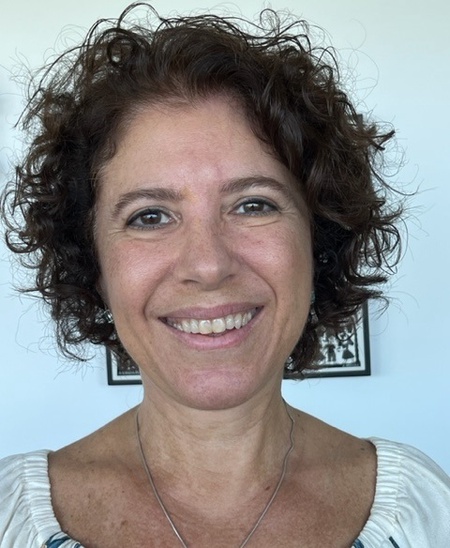
PhD in Geography. Bachelor in Sociology. Senior Researcher at the Brazilian Institute of Information in Science and Technology (Ibict), a research unit of the Ministry of Science, Technology, and Innovation of Brazil. Professor at the Postgraduate Programme in Information Science, developed by IBICT and the Federal University of Rio de Janeiro (UFRJ). Head of the Open Science and Citizen Innovation Laboratory - CindaLab. Head of Civis, a Citizen Science Platform, developed by IBICT. Head of the National Institute of Citizen Science - INCC, Brazil. Sarita has led multidisciplinary teams and developed interinstitutional and international projects on open and citizen science, social innovation, sustainable and local development, focusing on socio-environmental and climate agendas. She has published books, chapters and articles in international scientific journals on these topics. See Open Science, Open Issues. She has supervised more than 50 PhD, Master´s and Postdoctoral research.
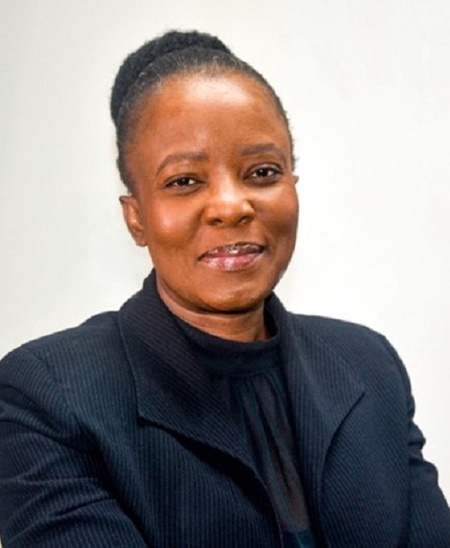
Dr Mamoeletsi Mosia is the Managing Director at the South African Agency for Science and Technology Advancement, a business unit of the National Research Foundation (NRF-SAASTA). Prior to joining NRF-SAASTA, she worked at the CSIR as a senior manager in different roles including Human Capital Development, Research Management and Operations Management. Before then, she was a scientist at Sasol where she grew within the ranks to Principal Scientist level. Throughout her career, she has been involved in the development of STEM professionals in one way or the other, a role she is very passionate about. Mamoeletsi earned her BSc (Hons) and MSc in Chemistry from the University of Natal, and her PhD in Chemistry from the Technical University of Eindhoven, The Netherlands. She also completed a MCom degree in leadership studies from University of KwaZulu-Natal as well as BA (Hons) in Psychology from UNISA.
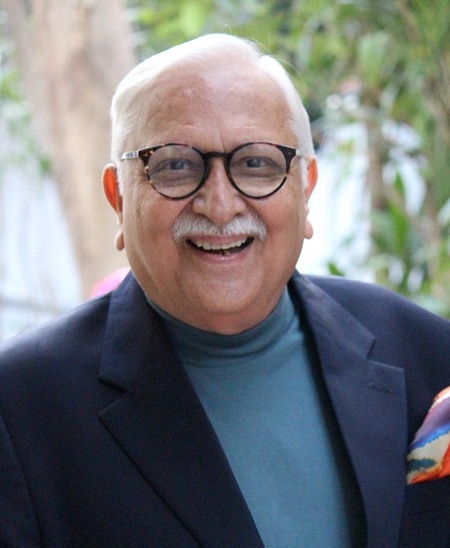
Founder-President of Participatory Research in Asia (PRIA). Dr. Tandon is an internationally acclaimed leader and practitioner of participatory research and development. He is Founder-President of Participatory Research in Asia (PRIA), a global centre for participatory research & training. He is also Co-Chair of the UNESCO Chair in Community Based Research and Social Responsibility in Higher Education since 2012. Dr. Tandon also heads the Forum for Indian Development Corporation (FIDC) as its Chairperson. Engineering in Electronics from IIT, Kanpur, MBA from IIM Calcutta and PhD in Management from Case Western Reserve University, USA, Dr. Tandon has taught courses on participatory research & democratic governance in South Africa, UK, Canada, Italy, USA, Colombia, Malaysia, Philippines and Cambodia, in addition to several universities in India. He has written more than 100 books, articles and training manuals on participatory research, social responsibility of higher education, civil society & local governance.
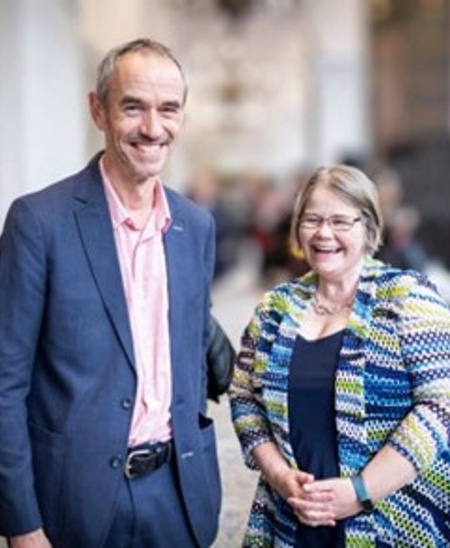
Sophie Duncan and Paul Manners co-direct the UK’s National Coordinating Centre for Public Engagement (NCCPE). The NCCPE was established in 2008 to support universities to embed innovative approaches to involving the public in their work. The NCCPE is widely recognised for its expertise in supporting organisational change, partnership working, impact assessment and innovation in engagement. Sophie leads on business development and strategy, and co-edits Research for All, an international peer reviewed journal about the processes of Engaged Research. Sophie is a physicist, who has worked in engagement her whole career, including for the Science Museum and for the BBC. Paul leads on the centre’s policy work. He began his career as an English teacher, before joining the BBC where he worked as an educational television producer and campaign director for 18 years.
Link in to our social media feeds for the latest information and reminders of key dates.

Sign up for our mailing list and get key information about PCST 2025 direct to your in-box.
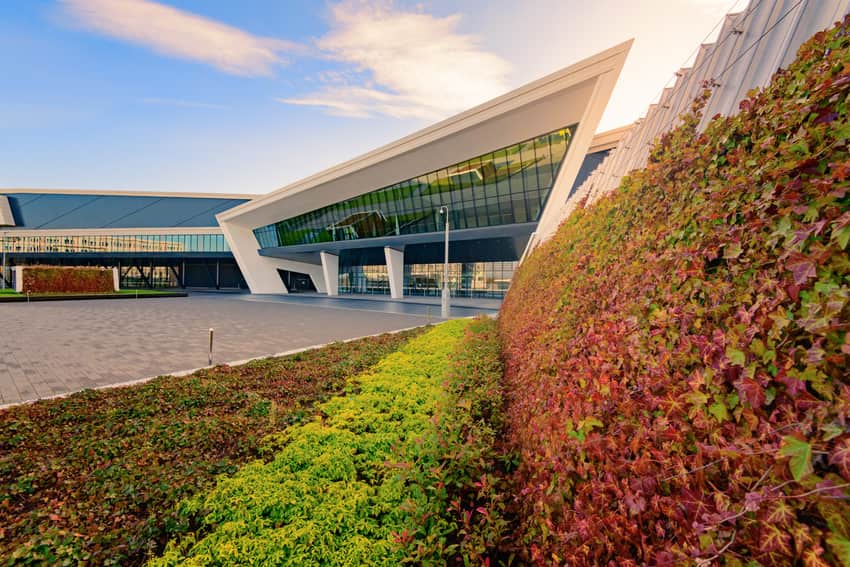
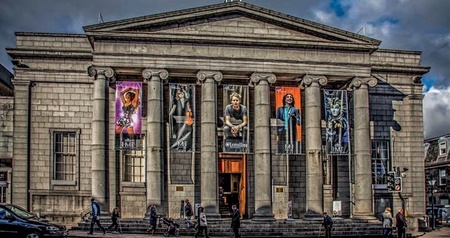
The main conference venue.

Find all out about the North East of Scotland

The Local Organising Committee would like to thank Visit Scotland for their support in delivering this conference.
The Kavli Foundation has supported the PCST Conference 2025
Bursary Sponsor
Workshop Sponsor