The excursion will take delegates to some of the North-East of Scotland's key archaeological sites. The trip will set off at around 08.30 from the University of Aberdeen's Old Aberdeen Campus.
Delegates will visit:
- Inverurie Motte and Pictish Stones
- Brandsbutt and Maiden Stones
- Burghead Fort, Well and Visitor Centre
- The Forres Cross Slab (Sueno's Stone)
A packed lunch will be provided and there are public facilities, shops and a cafe at Burghead - the stop there will give you time to explore the town and Pictish fort. The buses will return to the University of Aberdeen at around 17.45.
Excursion Details
You can find out more about some of the places you will visit on the tour in the sections below.
- Inverurie Motte and Symbol Stone
-
Inverurie Motte and Symbol Stones
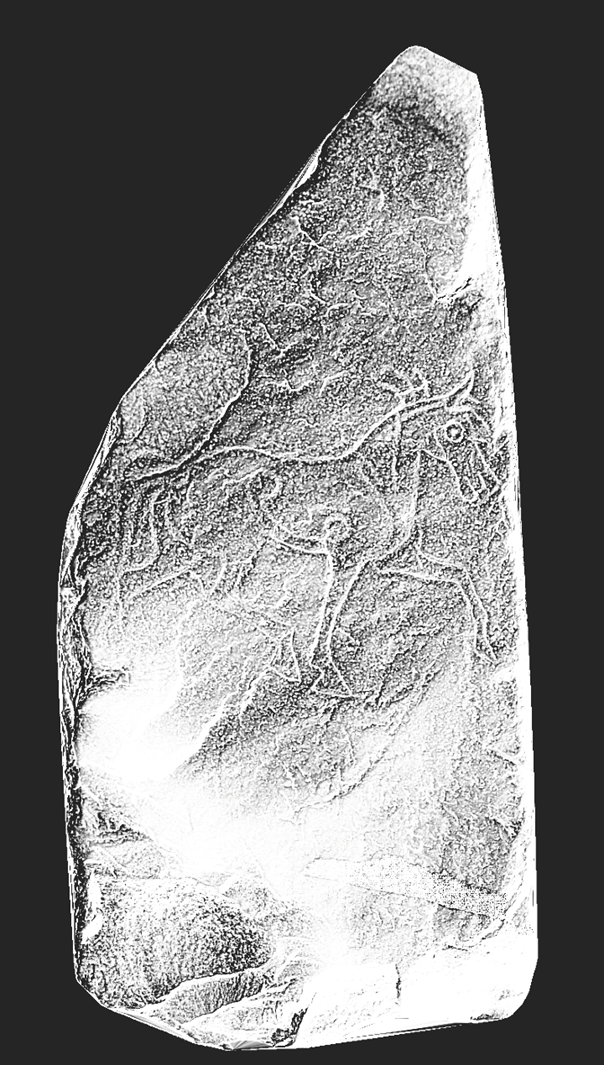
At Inverurie we will visit four nationally important Class I Pictish symbol stones (c.5th-7th century AD), now displayed in a glass case next to a motte-and-bailey castle at Inverurie Cemetery. Originally associated with the old parish church nearby, the stones were likely reused in churchyard walls after the kirk fell out of use in 1775. Each stone bears distinctive carved Pictish symbols, including crescents, V-rods, double discs, Z-rods, mirrors, serpents and a horse figure.
The Bass and Little Bass is a medieval motte-and-bailey earthwork thought to date from the 12th century, probably constructed by the Lords of Garioch as a strategic stronghold controlling routes through the Don and Urie valleys. The monument consists of two large mounds, the principal motte, ‘The Bass’, and a smaller companion mound. No standing castle survives: the two mounds supported timber or early stone defensive structures.
- The Brandsbutt and Maiden Stones
-
The Brandsbutt Stone
At Brandsbutt Stone there is a reconstructed Class I Pictish symbol stone carved around AD 600, standing today within a small landscaped area beside a modern housing estate. The dark whinstone slab is incised with classic Pictish symbols, a crescent and V-rod above a serpent and Z-rod, with the serpent’s carved scales still clearly visible. Running vertically along one side is a rare ogham inscription reading “IRATADDOARENS”, thought possibly to refer to the name Ethernan. The stone was once broken up and reused in a field dyke before being recovered and reassembled, and it may originally have stood within a prehistoric stone circle.
The Maiden Stone
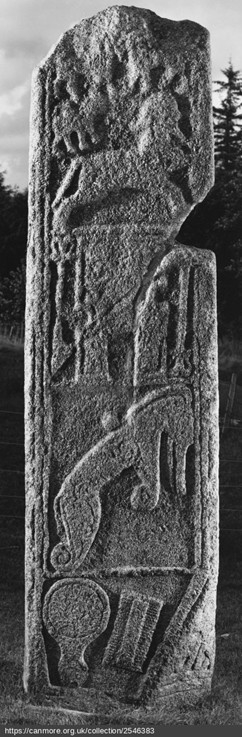
At Maiden Stone you can see one of the finest surviving Pictish cross-slabs in Scotland, a 3-metre-tall pink granite monument carved in the 8th century. One side displays a large ring-headed Christian cross beneath a figure flanked by sea monsters, possibly representing Jonah and the whales, while the reverse carries classic Pictish symbols including, a notched rectangle and Z-rod, a Pictish beast, and a mirror and comb, along with a centaur-like figure. Overlooking the Maiden Stone is Bennachie, a prominent granite hill range dominating the Garioch landscape, long recognised as an important landmark in northeast Scotland from prehistoric times onward. On the summit of Mither Tap lie the remains of a substantial hillfort of the Pictish era, and at the base lay Logie Durno – the largest Roman marching camp north of the Antonine Wall.
- Burghead Fort, Well and Visitor Centre
-
Burghead Fort, Well and Visitor Centre
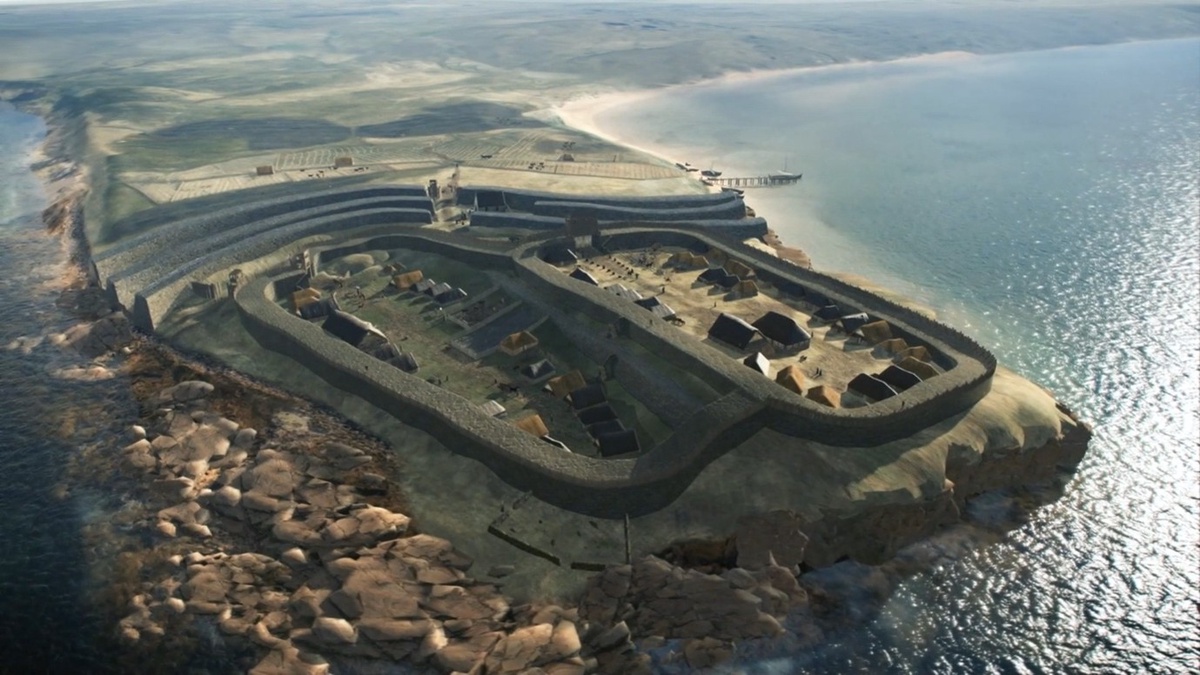
Since 2018 the University of Aberdeen’s Northern Pict’s project has been working on the Pictish promontory fort at Burghead. This fort would have covered an area of around 5.5ha prior to the southern and easter portion of the site being destroyed by the construction of the modern village in the 19th century. Part of the interior of both the upper and lower citadel remains intact at the seaward end. Well-known finds from Burghead include nearly 30 bull carvings and an impressive well. Excavation at the site occurred in the 1860s and 1890s revealing the complexity of the defences – with timber-laced ramparts over 8m wide and 6m high investigated by antiquaries James MacDonald and Hugh Young. Finds from the University of Aberdeen excavations to date have included over 15 different buildings and structures, weaponry, the largest iron assemblage known from early medieval Scotland, bone pins and metalworking evidence. Over 150 radiocarbon dates have been obtained thus far showing that the site was occupied from at least the 6th century AD and was destroyed around 900 AD – a quite obscure period when the Pictish realm had become the expansionist Gaelic kingdom of Alba.
- The Forres Cross-Slab (Sueno’s Stone)
-
The Forres Cross-Slab (Sueno’s Stone)
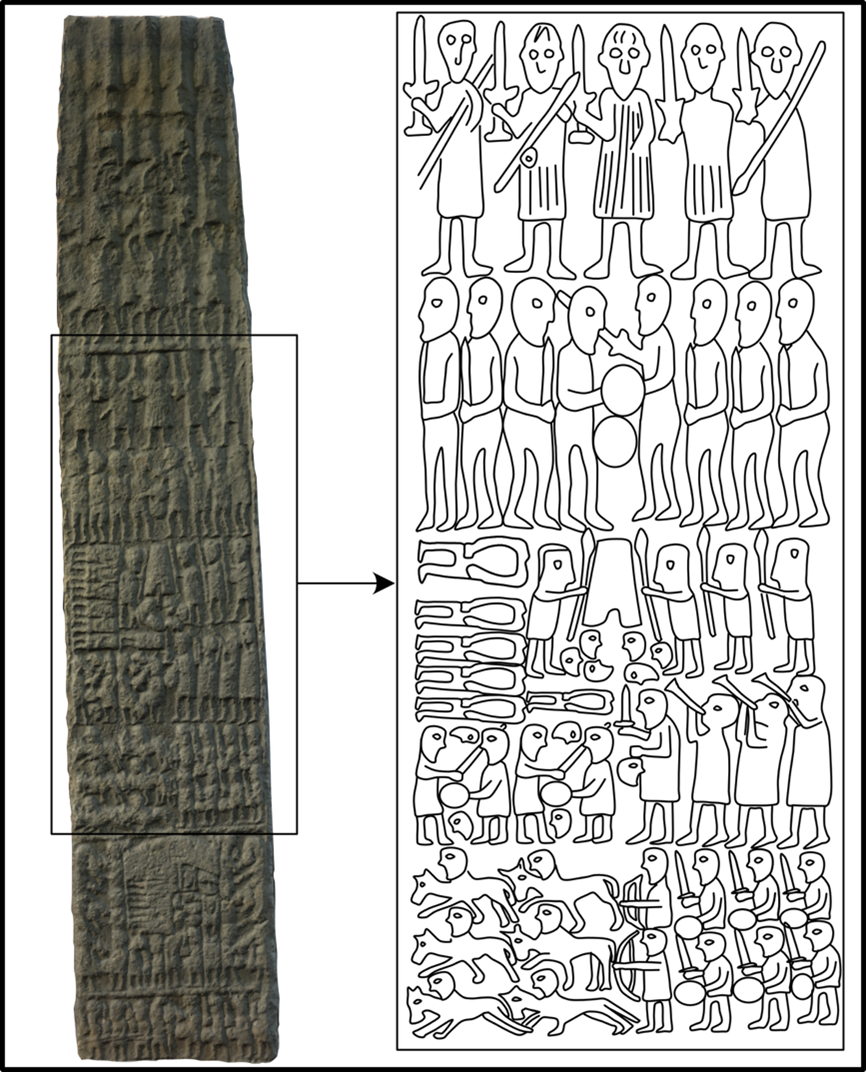
‘Sueno’s Stone’ is the tallest surviving early medieval carved stone monument in Scotland, standing over 6.5 metres high and dating most likely to the 9th century. The massive red sandstone cross-slab is carved with an elaborate ring-headed cross on one side and dramatic battle scenes on the other, including marching warriors, horsemen, executions and bound prisoners, probably commemorating a major conflict or assertion of royal power during the turbulent Viking age in Pictland. Archaeological excavations suggest the stone still stands in its original position, where it may have marked an important route junction or territorial boundary. Although traditionally linked to the Danish king Sweyn Forkbeard — giving rise to the name “Sueno’s Stone” — modern scholarship rejects this connection and instead views the Forres cross-slab as a powerful statement of Pictish authority and kingship in Northern Scotland.