Diploma in Archaeology, DipHE
Introduction
Archaeology is a window into our shared human journey, tracing our story from the earliest communities to the shaping of the modern world. You will gain cutting-edge insight into how archaeologists investigate lifeways, environments, and cultural change. Your learning will be guided by highly rated professional archaeologists and researchers committed to uncovering the richness of our human story.
Study Information
At a Glance
- Learning Mode
- Online Learning
- Degree Qualification
- DipHE
- Duration
- 24 months
- Study Mode
- Part Time
- Start Month
- September
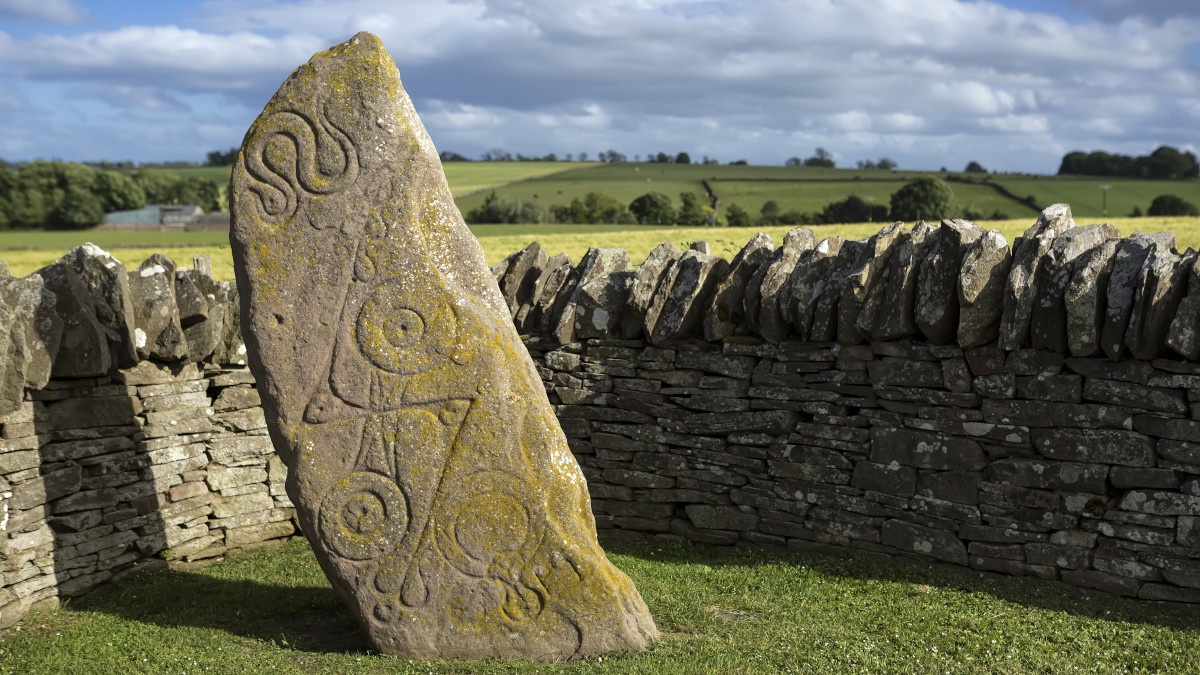
The Diploma in Science (Archaeology) offers a wide-ranging exploration of past societies, exploring themes spanning prehistoric Britain, Palaeolithic Europe, Viking archaeology, Scottish archaeology, and the archaeology of landscapes. You will also develop specialist knowledge of archaeological science and gain insight into contemporary debates in community-based and public archaeology amongst other topics.
Delivered through the university’s flexible online learning platform, the Diploma is designed to suit students who may be balancing study with work, family, or other commitments, while still providing access to internationally recognised teaching and resources. The Diploma of Science (Archaeology) builds on the Certificate of Archaeology, combining lectures and courses on archaeological science, past landscapes, and more. Through a range of specialist courses, you will gain cutting-edge insight into how archaeologists investigate lifeways, environments, and cultural change.
By engaging with questions about how humans adapted to changing environments, structured their societies, and expressed their identities, you will not only gain a deeper understanding of the past but also learn how archaeology informs current global challenges—from sustainability and climate change to cultural heritage and community resilience.
As a student, you will be part of Aberdeen’s welcoming academic community, benefiting from the expertise of renowned researchers and joining an international network of learners passionate about uncovering the human story. Study fully online or, if you live locally, you can also study alongside our undergraduate students on campus.
Aberdeen Global Scholarship
The University of Aberdeen is delighted to offer eligible self-funded international on-campus undergraduate students a £6,000 scholarship for every year of their programme.
View the Aberdeen Global ScholarshipWhat You'll Study
- Year 1
-
Compulsory Courses
- Mammoths to Microliths: Life and Landscapes in Palaeolithic Europe (AY3028)
-
15 Credit Points
For over a million years, our Palaeolithic ancestors lived a hunter-gatherer life. Sometimes their world was gripped by an Ice Age; at other times it was warm enough that hippos swam in the River Thames. Drawing on evidence from Britain and Europe, this course explores how humans lived in these environments. In doing so we look at the archaeological evidence for key questions, such as how humans first occupied the north, whether Neanderthals made art, and when “modern” human behaviour first appeared.
- Viking Archaeology (AY4008)
-
15 Credit Points
In their brief 300-year heyday, the peoples of Viking-Age Scandinavia transformed the northern world, and themselves. This course explores the Vikings at home, abroad, and in their new homes overseas in the developing colonies of the diaspora that stretched from the coasts of North America to the Asian steppe. In lectures and seminars, looking at the finds, students will consider themes such as settlement and social structure, urbanism and commerce, pagan and Christian religion, and the political process that created the modern nation states of Norway, Sweden and Denmark
- Indigenous, Community - Based and Public Archaeology (AY4517)
-
15 Credit Points
Lectures and workshops will provide an overview of the impacts archaeology can have on civic life and discourse beyond academia; including varied archaeologies of northern indigenous peoples across the globe, community-based archaeology and public archaeology. Students will be introduced to the methods, theories and issues that are associated with archaeology and its role in public policy, economic development, and cultural politics.
Optional Courses
Plus 90 credits from courses of your choice.
- Archaeologies of Landscape (AY3517)
-
15 Credit Points
Landscapes may be quantitative or qualitative; they can be explored with scientific instruments, using our bodies or in our imagination. This course investigates the key concept of landscape and its relationship to archaeological research across a broad range of cultural and historical contexts. The course is organized around thematic lectures and culminates in an interactive 3-day study trip to the Orkney Isles.
- Historical Archaeology (AY3522)
-
15 Credit Points
What can archaeology tell us about the lives of people who lived in times and places dominated by written records? Contrary to popular perception 'history' is not all in the books! Historical Archaeology provides us with an alternative means of studying historical people, periods and places through the things that people left behind. If historians study historic documents to shed light on the past, historical archaeologists use artefacts and information from the natural environment to do this. Students who take this course will not only learn the methods of historical archaeology but how they can be applied to some of the most significant issues to have shaped the medieval and modern periods; from diet and disease to social status and gender; and from the rise of nations and nationalism to capitalism and globalisation.
- Year 2
-
Compulsory Courses
AY2014 Diploma: Special Subject in Archaeology (30 Credit Points)
- Current Issues in Archaeology (AY4518)
-
30 Credit Points
Archaeology is a contemporary discipline and the focus in archaeological questions, subject areas and theoretical debates constantly change with time. In this course we focus on some of the topics that are important for the ongoing research within our department, from domestication and climate change to community archaeology and relating to death. The different issues are discussed in text-based seminars, where the students themselves are responsible for presenting the topic and leading the seminars. The course aims to explore and challenge current trends in the archaeological discourse.
We will endeavour to make all course options available. However, these may be subject to change - see our Amendments to Programmes and Courses document. In exceptional circumstances there may be additional fees associated with specialist courses, for example field trips.
How You'll Study
Learning Methods
- E-learning
- Field Trips
- Field Work
- Group Projects
- Individual Projects
- Lectures
- Seminars
- Tutorials
- Workshops
Assessment Methods
Students are assessed by any combination of three assessment methods:
- coursework such as essays and reports completed throughout the course;
- practical assessments of the skills and competencies they learn on the course; and
- written examinations at the end of each course.
The exact mix of these methods differs between subject areas, years of study and individual courses. Please note: Final examinations must be taken either on-campus or at an approved location off-campus at the same time.
Why Study Diploma in Archaeology?
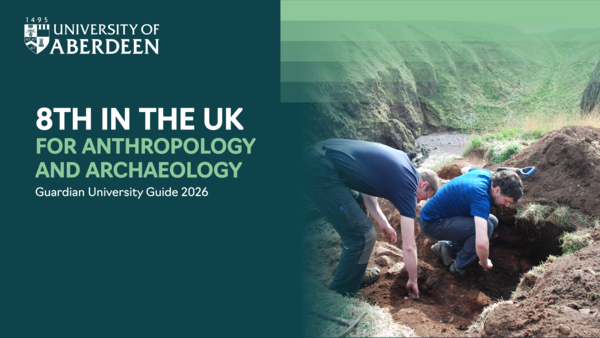
- Study at an internationally renowned university for Archaeology. The University of Aberdeen is ranked 1st in the UK for Archaeology (Times UK University Guide 2026) and in the Global Top 100 for Archaeology (QS World University Rankings by Subject 2025)
- Learn from research-active staff who are among the world leaders in their fields
- Taught fully online, the Diploma provides flexible study for students balancing work or other commitments, while connecting you with leading researchers and an international community
- This programme not only deepens your understanding of the past but also highlights how archaeology can address global challenges in the present
- If living locally, you also have the choice to take your classes and labs on campus alongside other students
Entry Requirements
Qualifications
The information below is provided as a guide only and does not guarantee entry to the University of Aberdeen.
Additional Information
Applicants applying within 5 years of leaving school will normally be expected to produce evidence of at least four Higher passes at grade B or better, BBB at A Level, an HNC with at least a B in the graded unit, or equivalent qualifications.
For candidates who left school more than 5 years ago a minimum of four qualifications with evidence of high achievement should still be presented if available. Professional, work-based qualifications, work experience and volunteering history, Open University or Access courses may be offered in lieu of Highers/A-Levels. Applications will be considered on a case-by-case basis by the University Admissions team.
The information displayed in this section shows a shortened summary of our entry requirements. For more information, or for full entry requirements for Arts and Social Sciences degrees, see our detailed entry requirements section.
English Language Requirements
To study for an Undergraduate degree at the University of Aberdeen it is essential that you can speak, understand, read, and write English fluently. The minimum requirements for this degree are as follows:
IELTS Academic:
OVERALL - 6.0 with: Listening - 5.5; Reading - 5.5; Speaking - 5.5; Writing - 6.0
TOEFL iBT:
OVERALL - 78 with: Listening - 17; Reading - 18; Speaking - 20; Writing - 21
PTE Academic:
OVERALL - 59 with: Listening - 59; Reading - 59; Speaking - 59; Writing - 59
Cambridge English B2 First, C1 Advanced or C2 Proficiency:
OVERALL - 169 with: Listening - 162; Reading - 162; Speaking - 162; Writing - 169
Read more about specific English Language requirements here.
International Applicants
Should your programme necessitate a visit to the University you may find the following information helpful.
Fees and Funding
Please refer to our Tuition Fees page for fee information for this programme, or contact us via the Enquire Now form.
Scholarships and Funding
UK Scholarship
Students from England, Wales and Northern Ireland, who pay tuition fees may be eligible for specific scholarships allowing them to receive additional funding. These are designed to provide assistance to help students support themselves during their time at Aberdeen.
Aberdeen Global Scholarship
The University of Aberdeen is delighted to offer eligible self-funded international on-campus undergraduate students a £6,000 scholarship for every year of their programme. More about this funding opportunity.Funding Database
View all funding options in our Funding Database.
Careers
The curriculum is designed to equip graduates with the practical and research skills required to work as professional archaeologists. The broad-based nature of the discipline enables graduates to compete strongly in the marketplace. The analytical and communications skills acquired by Archaeology graduates make them sought-after in a wide variety of fields including commerce, research and a range of professions.
Career Opportunities
- Archaeological Researcher
- Community Education Officer
- Cultural Resource Officer
- Curator
- Field Archaeologist
- Heritage Advisor
- Outreach and Community Engagement Officer
- Project Archaeologist
Features
Department Research
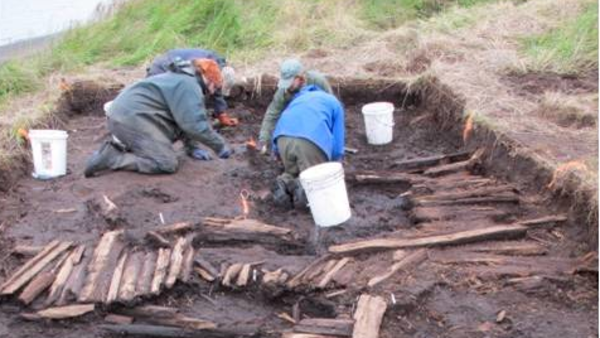
Archaeological research at Aberdeen spans the the arts and humanities, physical and biological sciences, reflecting the interdisciplinary nature of the Archaeology and the collaborative ethos within the University.

What are the benefits of online learning?
Studying online with the University of Aberdeen keeps you in control; you can study in a way that suits you and your life.
Find out moreGet in Touch
Contact Details
- Address
-
Student Recruitment & Admissions
University of Aberdeen
University Office
Regent Walk
Aberdeen
AB24 3FX