
Sustainability Economics and Finance (MScEcon)
Introduction
This programme provides students a broad but rigorous training in the field of Sustainability Economics and Finance through a combination of relevant economics and finance-related courses in the context of environment, energy, natural resources, sustainability policies, and carbon management.
Study Information
At a Glance
- Learning Mode
- On Campus Learning
- Degree Qualification
- MScEcon
- Duration
- 12 months or 24 months
- Study Mode
- Full Time or Part Time
- Start Month
- September
- Location of Study
- Aberdeen
The world faces complex and interconnected challenges such as climate change, resource depletion, pollution, and environmental degradation. These issues cannot be effectively addressed without a solid understanding of both economics/finance and environmental sustainability.
At the same time, there is a growing demand for professionals who can bridge the gap between economics/finance and sustainability. The MSc(Econ) Sustainability Economics and Finance contributes to filling this gap. It will prepare students to become professionals who can navigate the intricate intersection of these domains.
With Scotland being an unquestionable leader in the field of sustainability, and Aberdeen being ‘the energy capital of Europe’, there is no better place to learn about sustainability than the North-East of Scotland. The advantage of being based here also derives from the proximity to some of the most important and geographically varied landscapes in the whole UK.
The University of Aberdeen is a leader in teaching and research in the field of environmental and energy economics, and this programme builds on our considerable strengths in these areas. The Business School is home to the Aberdeen Centre for Research in Energy Economics and Finance (ACREEF), the Scottish Experimental Economics Laboratory (SEEL), and the Centre for Labour Market Research (CeLMR). There are especially strong links between the Economics Department and Health Economics Research Unit, one of the leading centres in health economics in Europe.
What You'll Study
- Semester 1
-
Semester 1: Compulsory Courses
- Economic Analysis (BU5033)
-
15 Credit Points
The course will cover the main elements of Microeconomic Theory together with how this underpins the macro economy, covering consumer theory, how consumers choose under constraint of a budget, to generate demands. How this theory can be used to consider the welfare effects of price changes will be considered. The problem of production will be examined to understand the supply, and the demand and supply side will be drawn together to consider market structure. How the theory can be used to identify market supplies and demands from empirical data will be examined.
- Quantitative Methods (BU5025)
-
15 Credit Points
This course develops a mathematical and statistical ‘toolbox’ for PGT students in the Business School. These tools will be useful in understanding and implementing research in business- and economics-related fields both during a student’s academic career as well as after graduation. The first part of the course covers basic mathematical models common across these fields. The second part of the course develops standard data analysis methods, including multivariate regression. The final part of the course examines shortcomings in the standard model and describes ways of overcoming those shortcomings.
- Investment and Real Options Analysis for Energy (BU505J)
-
15 Credit Points
This course provides a comprehensive journey into the intricacies of financial decision-making. By blending theory with practical applications, you will develop the skills and insights needed to navigate the ever-evolving landscape of the energy industry. This course blends theory and hands-on Excel modelling to analyse investment choices in the energy sector. Empower your employability by developing practical skills and in depth understanding on financial choices under risk and uncertainty.
- Environmental Economics (BU507A)
-
15 Credit Points
This course explores the intricate relationship between the economy and the environment, focusing on how economic activities impact the environment, and how environmental policies can be developed to address environmental issues. Students will learn the fundamental principles of economics as they apply to environmental issues, integrating both theoretical concepts and practical applications to address contemporary environmental challenges.
- Getting Started at the University of Aberdeen (PD5006)
-
This course, which is prescribed for all taught postgraduate students, is studied entirely online, takes approximately 2-3 hours to complete and can be taken in one sitting, or spread across the first 4 weeks of term.
Topics include University orientation overview, equality & diversity, MySkills, health, safety and cyber security, and academic integrity.
Successful completion of this course will be recorded on your Transcript as ‘Achieved’.
Semester 1: Optional Courses
- Soft Skills Development Programme (BU50D1)
-
This is a skills development course to develop soft Skills to enhance student employability. Students coming to study in the UK seek to improve their employability once they return to their home country. The University can boost their employability by addressing these soft skills.
- Semester 2
-
Semester 2: Compulsory Courses
- Internationalisation (BU5579)
-
15 Credit Points
International Business is a wide-ranging subject that includes economic, political, cultural and technological facets. The aim of this course is to provide an introduction to the complexities of international business management by examining how the global environment and our understanding of these affect management within an international context.
- Resource Rent and Energy Policy (BU555E)
-
15 Credit Points
This course discusses the world petroleum market in the context of overall energy markets. The main features of the evolving petroleum market are analysed including examination of the Hotelling model and Hubbert curve. Oil price determination is discussed with detailed consideration of the special characteristics of the demand and supply curves in the industry. The role of OPEC in the market is examined, including discussion of the various models of OPEC behaviour and the determinants of its market power. The economics of climate change and the place of renewable energy in the wider energy market is discussed.
- Sustainable Development (BU557B)
-
15 Credit Points
This course provides a comprehensive understanding of the principles, challenges, and opportunities associated with achieving sustainability and development objectives. Students will develop an understanding of urbanization and rural issues in the context of sustainable development, explore the challenges faced by global food systems and biodiversity, analyse the link between pollution, income, and health, and apply environmental concepts to understand just policy making, ensuring equitable access to natural resources and clean environment.
- Climate Change Economics and Carbon Finance (BU557D)
-
15 Credit Points
Climate change presents one of the most formidable global challenges. This course offers an extensive introduction to the economics of climate change and relevant policy responses which shape societies’ efforts to mitigate the effects of climate change. It explores how the toolkit from economics and finance can be utilised to assess and evaluate carbon management strategies in the realm of climate policy, both from a national and international perspective.
- Semester 3
-
Semester 3: Compulsory Courses
- Dissertation in Sustainability Economics and Finance (BU597E)
-
60 Credit Points
The dissertation is the final element of the programme and compulsory to all students in the MSc (Econ) Sustainability Economics and Finance. The dissertation provides an opportunity for a sustained period of independent study and research. It can take wo forms, including (i) an academic based dissertation, or (ii) an applied dissertation or practice-based ‘consultancy project’. Either type of dissertation seeks to develop the same learning outcomes and follow the same assessment criteria.
We will endeavour to make all course options available. However, these may be subject to change - see our Student Terms and Conditions page. In exceptional circumstances there may be additional fees associated with specialist courses, for example field trips.
Fees
- UK
-
- Tuition Fees for 2026/27 Academic Year
- £15,700
- Tuition Fees for 2026/27 Academic Year (University of Aberdeen Graduates *)
- £7,000
-
University of Aberdeen graduates are eligible for the Alumni Postgraduate Scholarship, reducing tuition fees to £7,000 - matching the current SAAS tuition loan - See full terms and conditions
- EU / International students
-
- Tuition Fees for 2026/27 Academic Year
- £26,250
- Tuition Fees for 2026/27 Academic Year (Self-funded Students *)
- £18,250
-
The above fee includes the £8,000 Aberdeen Global Scholarship provided to self-funded international students. Full terms and conditions apply.
Funding Opportunities
Alumni Discount Scheme - we are pleased to offer a 20% discount for postgraduate tuition fees to all alumni who have an undergraduate degree from University of Aberdeen.
Please note that the Aberdeen Alumni Discount cannot be claimed in conjunction with any other scholarship award.
Scholarships
All eligible self-funded international Postgraduate Masters students will receive an £8,000 scholarship. Learn more about this Aberdeen Global Scholarship here.
To see our full range of scholarships, visit our Funding Database.
How You'll Study
Students will be assessed based on group reports, individual essays, and problem-solving based assessments.
Learning Methods
- Group Projects
- Individual Projects
- Lectures
- Research
- Seminars
- Tutorials
- Workshops
Why Study Sustainability Economics and Finance?
- The Business School is EQUIS accredited, placing it among a select group of globally recognised institutions. Out of over 15,000 business schools worldwide, less than 300 schools across 45 countries have attained this distinction.
- The University of Aberdeen was ranked 18th in the UK (Guardian University Guide 2026).
- Ranked 6th in the UK for Student Positivity in Business Studies (National Student Survey 2026) and 6th in the UK for Accounting and Finance (Guardian University Guide 2026).
- Ranked 3rd in Scotland and 57th in the World for Sustainability in the QS Sustainability Rankings 2026.
- Societies across the globe require a profound transformation and transition towards sustainability. Economics and finance are pivotal in shaping this transformation.
- This programme is designed to equip students with the relevant knowledge and skills needed to navigate the complex sustainability-economics-finance interface. It enables students to gain expertise in analysing and designing economic strategies and solutions alongside a deep understanding of sustainability principles.
- Access world-leading facilities such as our Bloomberg Terminal. This in-house stock exchange provides the opportunity to work with a real trading platform used by more than 300,000 banks, government agencies, and corporations around the world, and develop the practical and analytical financial skills in high demand from employers.
- In a recent Harvard Business Report, 76% of respondents identified skills such as communication, conflict management, and empathy as essential skills for the modern workforce. All of our postgraduate Business students develop these soft skills, valued by employers across sectors, with our Soft Skills Development Programme.
- With a community of over 130 nationalities at the University of Aberdeen, students are immersed in an environment that enables international discourse creating truly global exchanges, generating deep insights that spark innovative change.
Interested in this programme?
Entry Requirements
Qualifications
The information below is provided as a guide only and does not guarantee entry to the University of Aberdeen.
Our minimum entry requirement for this programme is an undergraduate degree at UK Honours level (or a degree from a non-UK institution which is judged by the University to be of equivalent worth).
Document Requirements
You will be required to supply the following documentation with your application as proof you meet the entry requirements of this degree programme. If you have not yet completed your current programme of study, then you can still apply and you can provide your Degree Certificate at a later date.
- Degree Transcript
- a full transcript showing all the subjects you studied and the marks you have achieved in your degree(s) (original & official English translation)
Careers
The world faces complex and interconnected challenges such as climate change, resource depletion, pollution, and environmental degradation. These issues cannot be effectively addressed without a solid understanding of both economics/finance and environmental sustainability.
At the same time, there is a growing demand for professionals who can bridge the gap between economics/finance and sustainability. This programme contributes to filling this gap, preparing students to become professionals who can navigate the intricate intersection of these domains. On completion of this programme, students can be placed for work in governmental organisations, NGOs, as well as industry.
Career Opportunities
- Civil Servant
- Energy and Sustainability Adviser
- Environmental Adviser
- Environmental Data Coordinator
- Financial Manager
- Government Officer
- Sustainability Consultant
Accreditation
The Business School is EQUIS accredited, placing it among a select group of globally recognised institutions. Out of over 15,000 business schools worldwide, less than 300 schools across 45 countries have attained this distinction.

Our Experts
You will be taught by and have access to a number of experts, many of whom are internationally renowned within their respective fields. These will include members of the Scottish Experimental Economics Laboratory (SEEL), the Centre for Labour Market Research (CeLMR), and the Aberdeen Centre for Research in Energy Economics and Finance (ACREEF)
- Programme Leader
- Takahiko Kiso
Information About Staff Changes
You will be taught by a range of experts including professors, lecturers, teaching fellows and postgraduate tutors. However, these may be subject to change - see our Student Terms and Conditions page.
Features
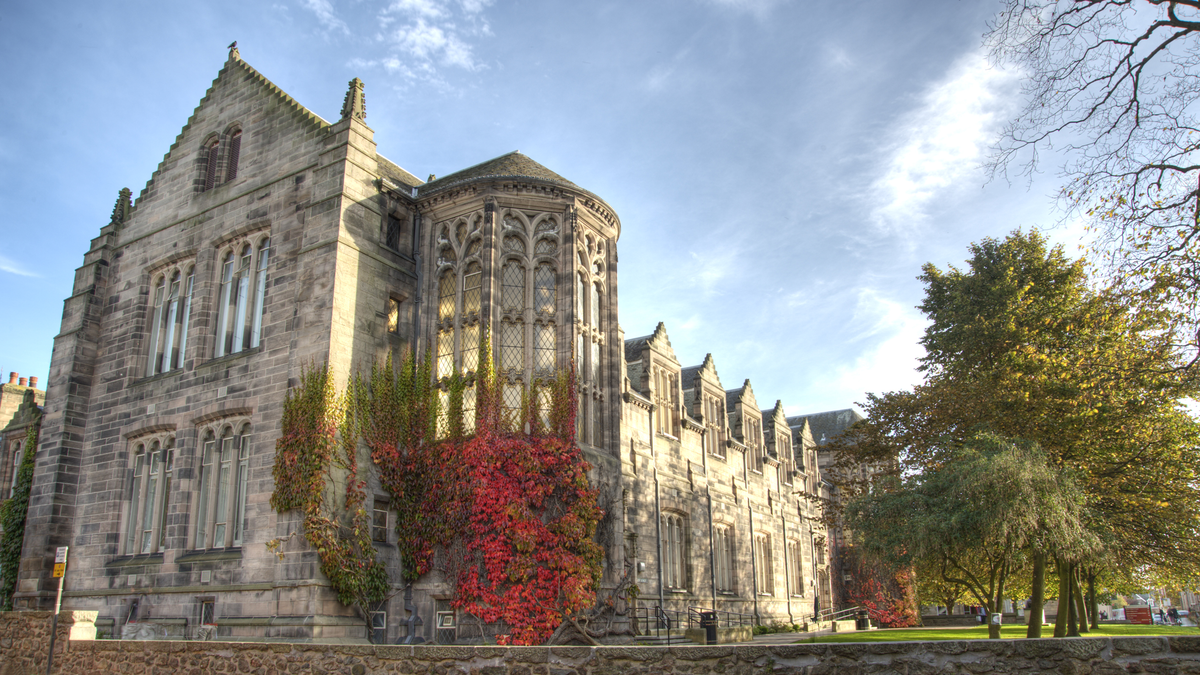
The University of Aberdeen, established in 1495, is Scotland’s third oldest and the UK’s fifth oldest University. The university’s ancient campus reflects its long-standing academic tradition, with historic buildings such as King's College, which dates back to the 15th century. This blend of ancient architecture and modern facilities creates a unique atmosphere where students can experience the best of both tradition and innovation.
Get in Touch
Contact Details
- Address
-
Business School
University of Aberdeen
MacRobert Building
King Street
Aberdeen
AB24 3FX