PIR staff expertise
Politics and International Relations staff at the University of Aberdeen offer internationally renowned expertise in politics, public policy and multilevel governance.
The MSc Politics and Public Policy equips students with the necessary expertise and skills for careers in politics and policymaking in government, business, third-sector organisations, the media, the research sector, and international institutions.
You will gain a deep understanding of key problems and issues in UK and international politics, the processes of policy making, the limitations of public policy responses, and how to bring about good public policy. Apply today.
Public policy responses to the world’s political problems tend to disappoint. In this programme you will gain the theoretical knowledge, frameworks and tools to analyse, evaluate and develop policy relating to key political contemporary issues and challenges including poverty, human rights, migration, climate change and energy transition.
Through examining pressing issues in contemporary politics and the complexity of the public policy process in a variety of economic, social and cultural settings, you develop an understanding of how public policy can resolve these immense challenges, in the UK and internationally.
This programme will equip you with knowledge of policymaking process and the strengths and limitations. You will explore how key actors, such as politicians, experts, corporate interests, the media, social movements, activists and the public, set the agenda and shape the development of public policy at various levels. You will consider how to bring about change and develop successful public policy and learn how policymaking can meet the challenges of modern multi-level governance in a rapidly changing world.
You will have the unique opportunity to study specialist courses on political issues like migration and climate change,which consider how campaigns and movements apply pressure on political systems to change.
Students will complete the research Dissertation or can apply to take part in the Social Science Professional Project where you will work in a group with an external organisation to tackle real-world policy challenges. This new module is an opportunity to gain hands-on experience to enhance your employability and prepare for an exciting career path.
The MSc Politics and Public Policy is suitable for students from a range of backgrounds, including politics, business, economics, international relations, law, and sociology, who seek the skills necessary for a career in politics and public policy at local, national or international levels.
University of Aberdeen graduates are eligible for the Alumni Postgraduate Scholarship, reducing tuition fees to £7,000 - matching the current SAAS tuition loan - See full terms and conditions
The above fee includes the £8,000 Aberdeen Global Scholarship provided to self-funded international students. Full terms and conditions apply.
This course, which is prescribed for all taught postgraduate students, is studied entirely online, takes approximately 2-3 hours to complete and can be taken in one sitting, or spread across the first 4 weeks of term.
Topics include University orientation overview, equality & diversity, MySkills, health, safety and cyber security, and academic integrity.
Successful completion of this course will be recorded on your Transcript as ‘Achieved’.
Students must take 60 credit points from the following courses:
30 Credit Points
As a global superpower, how the US conducts itself in international affairs is both incredibly visible and has become a standard by which to judge successes and failures in this realm. By examining the development of US Foreign Policy through specific eras we can begin to judge the impact and effectiveness of their diplomatic practices.
30 Credit Points
This course investigates issues at the intersection of politics, psychology, and climate change. It aims to develop the knowledge and skills of student to apply a political psychological analysis to global climate politics. It considers factors such as how personality, beliefs, perceptions, emotions, and identity impacts environmental issues.
30 Credit Points
The course will analyse a political phenomenon which is growing across Europe. It will cover political parties as well as extra-parliamentary movements and online activities. Key concepts such as fascism, racism and populism will be covered, as well as voting patterns, ideologies, campaign strategies and theoretical approaches. The course will be beneficial to future study and work in a wide range of areas and contexts, with relevance to integration, internationalisation and social cohesion.
30 Credit Points
All researchers need to understand quantitative research, not only those who carry it out themselves. Everyone comes across quantitative research in literature reviews and even in the press. In this course students will acquire an understanding of the most common quantitative methods they are likely to use or come across in published social science research. The module will encompass different types of quantitative study and address issues such as when quantitative methods are appropriate, how quantitative questions are formulated, research design, sampling (both online and offline), scale construction, reliability and validity and ethical practices in quantitative research and design.
60 Credit Points
The dissertation allows students to study the effectiveness of integrating theoretical knowledge and practical skills in the MSc Politics and Public Policy programme to enhance their abilities to analyse and evaluate public policy. As a compulsory element of the degree, the dissertation seeks to assess the impact of the programme's theoretical frameworks and optional courses on students' capacity to engage critically with public policy issues in diverse contexts.
30 Credit Points
This course provides an overview of the main frameworks and theories applied to the study of public policy, along with practical examples of their application. It aims to introduce students to the systematic study of public policy, as well as to bring to them a range of empirical cases that illustrate the approaches in the field.
Students must take 30 credit points from the following courses:
30 Credit Points
Qualitative Sociology: Philosophy and Methods: This course introduces students to a range of methods used in qualitative social science research (such as participant observation, qualitative interviewing, focus groups, diaries, photography and film, and archived data sources). The emphasis will be on the research process, from project design to analysis and presentation, with methodological issues raised in the context of researchable questions. Issues of reliability, representativeness and validity, and the potential for combining methods will be addressed. Students use the course work to develop their research interests and reflect on their research practices.
30 Credit Points
Institutions and organizations are today commonly demanding evidence-based policy formation. As a result, the necessary social research methods for Monitoring & Evaluation (M&E) are in high demand. This course in Policy Evaluation is the core course in the MSc in Policy Evaluation and will equip graduates with the knowledge necessary to understand the current demand for, existing practices of, and substantial challenges to monitoring and evaluation of policy, implementation procedures, and impacts. The course serves as the primary topical course for this MSc and provides students with the theoretical and conceptual understanding of policymaking and programme implementation necessary to put M&E practices in context, and to better understand the need for specific M&E skills and how they might be best utilized across an array of work environments.
30 Credit Points
We live in an era of campaign activism, public protest and movement politics. While traditional politicians are maligned, political activism is on the rise, from the signing of online petitions to street rallies and public marches. This course examines the history of political activism and campaigning with a focus on how protest turns to power. Combining theoretical understanding and empirical investigation, it analyses how and why political activism takes place, and the factors that determine campaign success or failure. How do individual campaigners, groups and movements mobilise support? How do they effect change? How is the art of political activism and campaigning evolving?
30 Credit Points
This course will examine the causes and the effects of the current climate crisis, while placing a critical lens over the solutions being brought forth. We will also examine different framings of climate security and look at the politics upholding the securities of particular actors, spaces, and knowledges over others. Students will attain a critical understanding of the complexities involved in protecting the planet’s climate, and addressing the many challenges on the horizon if we do not.
University of Aberdeen graduates are eligible for the Alumni Postgraduate Scholarship, reducing tuition fees to £7,000 - matching the current SAAS tuition loan - See full terms and conditions
The above fee includes the £8,000 Aberdeen Global Scholarship provided to self-funded international students. Full terms and conditions apply.
We will endeavour to make all course options available. However, these may be subject to change - see our Student Terms and Conditions page. In exceptional circumstances there may be additional fees associated with specialist courses, for example field trips.
All eligible self-funded international Postgraduate Masters students will receive an £8,000 scholarship. Learn more about this Aberdeen Global Scholarship here.
To see our full range of scholarships, visit our Funding Database.
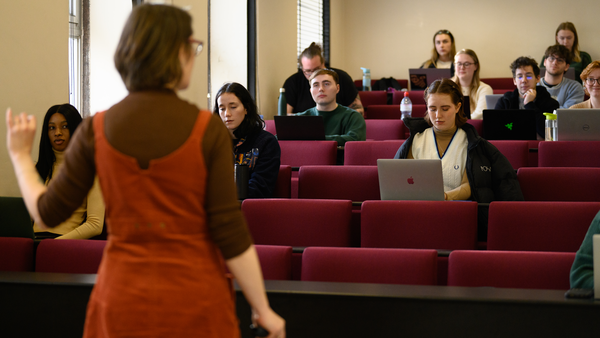
Teaching includes a range of interactive methods and approaches to learning to enhance critical thinking, presentation, communication, interpersonal, and policy drafting skills.
Examples of assessments include policy reports, writing (and presenting) speeches and group projects. A supervised dissertation allows students to conduct independent research.
Courses are assessed through essays, presentations, group and project work. The variety of assessment in the programme ensures that students apply theory to practice and become expert communicators and team players.
The information below is provided as a guide only and does not guarantee entry to the University of Aberdeen.
The information below is provided as a guide only and does not guarantee entry to the University of Aberdeen.
Applicants for admission will normally be expected to hold a relevant Honours degree with a 2.2 standard from a recognised university or body.
Applicants without this qualification may be admitted subject to having an alternative qualification, or an approved level of work experience appropriate to the field of study. Also taken into careful consideration is the trajectory of results, an applicant without an overall 2.2 but with 2.2 results in their final two years of study may be admitted.
You will be required to supply the following documentation with your application as proof you meet the entry requirements of this degree programme. If you have not yet completed your current programme of study, then you can still apply and you can provide your Degree Certificate at a later date.
The MSc Politics and Public Policy is an ideal programme for those who seek to develop the skills necessary for a career in politics and public policy at local, national, or international levels.
Graduates of this programme will be well prepared for a career in various political and policy roles in government at a local or national level, in the public sector (e.g. the civil service), in international organisations, in media and in consultancy work for private sector organisations, trade unions, charities and not-for-profit organisations.
Politics and International Relations staff at the University of Aberdeen offer internationally renowned expertise in politics, public policy and multilevel governance.

This programme combines conceptual knowledge and practical research skills, meeting the demands of modern employers in public and private sectors.
You will be taught by a range of experts including professors, lecturers, teaching fellows and postgraduate tutors. However, these may be subject to change - see our Student Terms and Conditions page.