Introduction
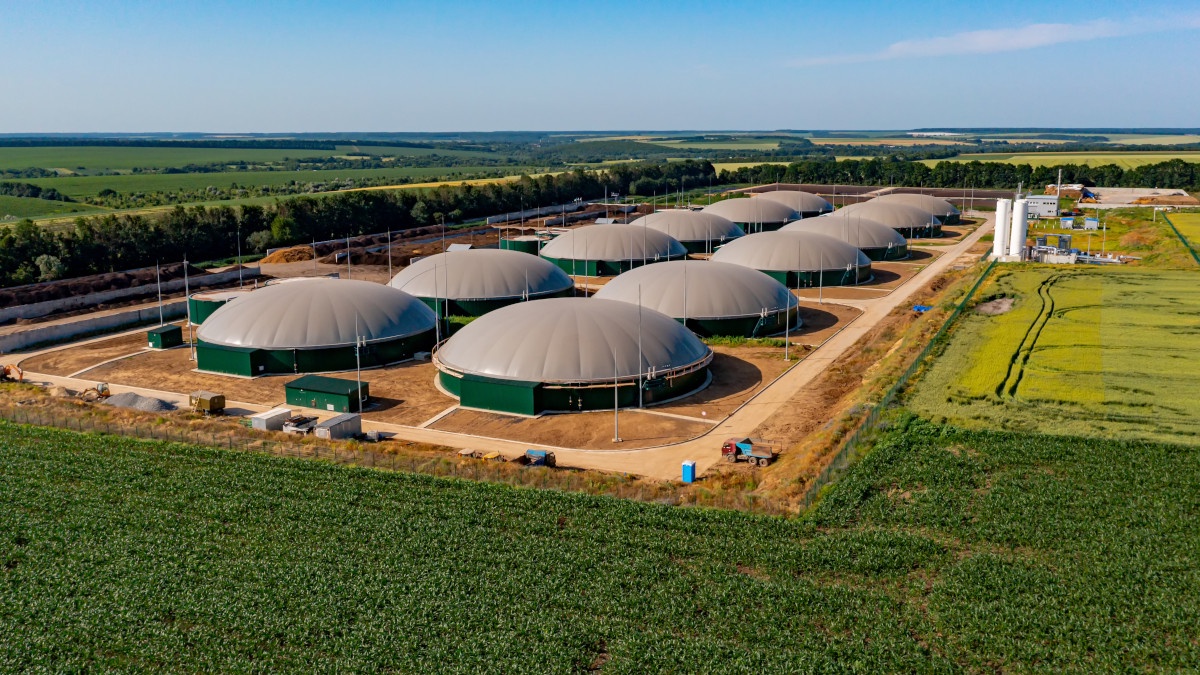
The MSc Sustainable Product, Process and Energy Engineering focuses on the use of renewable resources, in particular biomass and carbon dioxide, to produce energy, chemicals, materials and other products in a sustainable way.
This degree is also available to study online.
Watch our webinar on MSc programmes in renewable and sustainable energy.
Study Information
Study Options
- Learning Mode
- On Campus Learning
- Degree Qualification
- MSc
- Duration
- 12 months
- Study Mode
- Full Time
- Start Month
- January or September
- Location of Study
- Aberdeen
Today, most of the fuels, raw materials and chemicals used to produce goods are produced using energy and feedstock from fossil fuels. This raises large questions about future sustainability, due to the finite availability of natural resources and the generation of greenhouse gasses such as C02.
As a result of the greater focus on sustainability amongst consumers, governments and investors, companies are urgently examining ways that they can reduce their environmental impact while protecting their profitability. To achieve this, manufacturers are increasingly looking for engineers who have the specialist knowledge and tools to ensure that the choice of energy sources, raw materials and manufacturing processes are rigorously considered when designing and manufacturing products.
The MSc Sustainable Product, Process and Energy Engineering is specifically designed to provide you with the specific skills and knowledge to design products and processes that are energy efficient, reduce waste and minimise the impact on the environment. In particular, the programme focuses on the following main areas:
- Energy from biomass and energy conversion and storage
- Production of chemicals from biomass
- Biorefinery - production of chemicals from carbon dioxide
- Sustainable chemical processes
- Biotechnology for industrial applications.
These core topics are supplemented by elective options related in geothermal, solar and hydro energy.
This programme is linked to the prestigious Leverhulme Centre for Doctoral Training in the Sustainable Production of Chemicals and Materials, hosted here at the University of Aberdeen. The research undertaken within the centre informs much of the content taught and so you will be taught by world-leading experts who are actively researching the very latest tools, systems and techniques in this field.
Available Programmes of Study
- MSc
-
Sustainable Product, Process and Energy Engineering
Qualification Duration Learning Mode Study Mode Start Month LocationMSc 12 months On Campus Learning Full Time September Aberdeen MoreMSc 12 months On Campus Learning Full Time January Aberdeen MoreProgramme Fees
Fee information Fee category Cost UK Tuition Fees for 2025/26 Academic Year £11,100 Tuition Fees for 2026/27 Academic Year £11,100 Tuition Fees for 2025/26 Academic Year (University of Aberdeen Graduates *) £7,000 Tuition Fees for 2026/27 Academic Year (University of Aberdeen Graduates *) £7,000 EU / International students Tuition Fees for 2025/26 Academic Year £26,250 Tuition Fees for 2026/27 Academic Year £26,250 Tuition Fees for 2025/26 Academic Year (Self-funded Students *) £18,250 Tuition Fees for 2026/27 Academic Year (Self-funded Students *) £18,250 Semester 1
Compulsory Courses
Mineral Processing and Recycling for Energy Transition
This course focuses on sustainable mining of valuable subsurface resources such as lithium and zinc, their use in batteries and energy transition, as well as the subsequent processing, recycling and reuse of these materials.Sustainable Engineering Challenges
This course is concerned with the challenges presented by people, the planet and profitability to sustainability and incorporates learning on tools such as lifecycle assessment, process engineering principles, waste as a resource for energy and products as well as the various standards for managing quality.Industrial Biotechnology for Sustainability
In this course you will learn the fundamentals of microbiology and biochemistry, downstream separation, enzyme kinetics, fermentation processes and their use for sustainable production.- Energy Conversion and Storage (EG55M3)
-
15 Credit Points
To gain an understanding of the need to and the efficiency behind conversion of energy form one form to another and in the need to store energy in distinct forms. To understand the reasoning behind energy losses and how they might be minimised or overcome.
Semester 2
Compulsory Courses
- MSc Individual Project (EG59F1)
-
60 Credit Points
The MSc Individual Project is an independent piece of research based on a topic related to a student’s degree programme. Students are encouraged to focus on a problem confronting industry or a related area. The individual project provides students with an opportunity to demonstrate how the in-depth skills and knowledge they have gained during the taught courses can be used to provide solutions to practical problems. The individual project should contain a degree of original research.
Semester 3
Compulsory Courses
Biorefinery for Sustainability
In this course you still study a range of topics, including biofuels from lignocellulose,, sugar and lignin-derived chemicals and materials, comparison of petro- and biorefineries, role of catalysts in biorefineries, and alternative energy sources (plasma, ultrasounds and microwaves).- Energy from Biomass (EG50M1)
-
15 Credit Points
This course describes in detail the technologies used to convert biomass into energy. The course covers combustion, gasification, pyrolysis, anaerobic digestion, bioethanol and biodiesel.
- Carbon Capture, Utilisation and Storage (Ccus) (EG504K)
-
15 Credit Points
This course presents an overview of the motivations, challenges and technological solutions associated with Carbon Capture, Utilisation and Storage (CCUS). The main carbon capture technologies and methods, CO2 transportation and underground storage are covered. These are introduced in terms of their technical, economic, and environmental criteria, as well as stage of development. Examples of operating pilot plants are shown, complemented by industrial guest lectures and webinars.
Optional Courses
Choose ONE from:
- Geothermal and Hydro Energy (EG503A)
-
15 Credit Points
To provide an understanding of the physical principles, technologies and systems associated with renewable energy generation from geothermal and hydro sources. To provide an understanding of the position of these sources of energy in the current and future global energy requirements and the technical challenges in meeting the future energy demand.
- Solar Energy (EG503V)
-
15 Credit Points
This course aims to provide a broad understanding of generation from solar sources, the associated technologies and the main technical challenges.
Programme Fees
Fee information Fee category Cost UK Tuition Fees for 2025/26 Academic Year £11,100 Tuition Fees for 2026/27 Academic Year £11,100 Tuition Fees for 2025/26 Academic Year (University of Aberdeen Graduates *) £7,000 Tuition Fees for 2026/27 Academic Year (University of Aberdeen Graduates *) £7,000 EU / International students Tuition Fees for 2025/26 Academic Year £26,250 Tuition Fees for 2026/27 Academic Year £26,250 Tuition Fees for 2025/26 Academic Year (Self-funded Students *) £18,250 Tuition Fees for 2026/27 Academic Year (Self-funded Students *) £18,250
We will endeavour to make all course options available. However, these may be subject to change - see our Student Terms and Conditions page. In exceptional circumstances there may be additional fees associated with specialist courses, for example field trips.
Fee Information
Scholarships
All eligible self-funded international Postgraduate Masters students starting in September 2025 will receive an £8,000 scholarship. Learn more about this Aberdeen Global Scholarship here.
To see our full range of scholarships, visit our Funding Database.
Why Study Sustainable Product, Process and Energy Engineering?
- Businesses are increasingly prioritising sustainability as they seek to address their environmental obligations while protecting profitability. There is therefore a growing demand for engineers who can design and manufacture products that are both energy-efficient and eco-friendly.
- The programme focuses on the following key related areas:
- the transition to sustainable energy, including the use of biofuels, biomass, geothermal, hydro and solar energy in manufacturing processes and Carbon Capture, Utilisation and Storage (CCUS) technology
- the use of sustainable products and raw materials such as metals, chemicals, plastics, including recycling
- the adoption of sustainable production processes and technologies that can increase operational efficiency by maximising yields and minimising waste and pollution.
- This MSc programme is linked to the research being undertaken by the prestigious Leverhulme Centre for Doctoral Training in the Sustainable Production of Chemicals and Materials. You will be taught by world-leading experts in this field and gain valuable insights into the latest tools, systems, and techniques used to promote sustainable manufacturing practices.
Entry Requirements
Qualifications
The information below is provided as a guide only and does not guarantee entry to the University of Aberdeen.
A 2:2 BEng or BSc UK honours degree (or equivalent) in Engineering, Mathematics, Physics or Chemistry.
Academic Technology Approval Scheme (ATAS) certificate
The CAH3 code for this degree is CAH10-01-09. Students who need a visa to live or study in the UK must to apply for ATAS clearance. The ATAS clearance certificate must be valid when you apply for a visa to enter the UK. To find out if you need to apply for ATAS clearance, please visit https://www.gov.uk/guidance/academic-technology-approval-scheme
Please enter your country or territory to view relevant entry requirements.
Aberdeen Global Scholarship
Eligible self-funded Postgraduate Taught (PGT) students will receive the Aberdeen Global Scholarship. Eligibility details and further information are available on our dedicated page.
Aberdeen Global ScholarshipEnglish Language Requirements
To study for a Postgraduate Taught degree at the University of Aberdeen it is essential that you can speak, understand, read, and write English fluently. The minimum requirements for this degree are as follows:
IELTS Academic:
OVERALL - 6.5 with: Listening - 5.5; Reading - 5.5; Speaking - 5.5; Writing - 6.0
TOEFL iBT:
OVERALL - 90 with: Listening - 17; Reading - 18; Speaking - 20; Writing - 21
PTE Academic:
OVERALL - 62 with: Listening - 59; Reading - 59; Speaking - 59; Writing - 59
Cambridge English B2 First, C1 Advanced, C2 Proficiency:
OVERALL - 176 with: Listening - 162; Reading - 162; Speaking - 162; Writing - 169
Read more about specific English Language requirements here.
Document Requirements
You will be required to supply the following documentation with your application as proof you meet the entry requirements of this degree programme. If you have not yet completed your current programme of study, then you can still apply and you can provide your Degree Certificate at a later date.
- Degree Transcript
- a full transcript showing all the subjects you studied and the marks you have achieved in your degree(s) (original & official English translation)
- Personal Statement
- a detailed personal statement explaining your motivation for this particular programme
Careers
The MSc Sustainable Product, Process and Energy Engineering prepares students for careers in various sustainable engineering roles across many different sectors. As companies increasingly look to change and adapt their processes in line with sustainability targets, they require engineers who have the skills and knowledge in areas such as raw materials, manufacturing processes, waste management and energy usage to create meaningful change.
Related job roles include:
- Carbon Capture Consultant
- Biomass Engineer
- Environmental Engineer
- Manufacturing Engineer
- Process Engineer
- Renewable Energy Engineer
- Sustainability Consultant
Our Experts
- Programme Leader
- Dr Davide Dionisi
- Other Experts
- Dr Waheed Afzal
- Ines Sofia Biscaya Semedo Pereira da Graca
Information About Staff Changes
You will be taught by a range of experts including professors, lecturers, teaching fellows and postgraduate tutors. However, these may be subject to change - see our Student Terms and Conditions page.
Get in Touch
Contact Details
- Address
-
Student Recruitment & Admissions
University of Aberdeen
University Office
Regent Walk
Aberdeen
AB24 3FX