Aberdeen Philosophy is a lively research community. Our staff are internationally recognised experts across a wide range of philosophical sub-disciplines, and we have an active group of PhD and MLitt by Research students learning by distance and on-campus.
Expertise in the department is particularly strong in the following four research clusters. More information about our recent research projects and publication highlights can be found below. Information about postgraduate research at Aberdeen can be found here and here.
The Joy of Chinese Philosophy (De Gruyter, 2026). Available here.
In his latest book, Professor Michael Beaney introduces some central ideas and themes in ancient Chinese philosophy through a detailed analysis of one famous passage—the happy fish dialogue—in the Zhuangzi, one of the two founding texts of Daoism. The Zhuangzi is the most exhilarating and intellectually challenging of all the texts of ancient Chinese literature, and appreciating its spirit is as important as understanding its ideas. Methodologically, this book shows how we can approach Chinese philosophy analytically, an approach that is needed if Chinese philosophy is to be recognized in Western (analytic) philosophy today. At the same time, it seeks to broaden our conceptions and practices of analysis and our methods and styles of philosophizing in learning from Chinese philosophy. Throughout the book the emphasis is on engaging the reader in thinking through the issues for themselves.
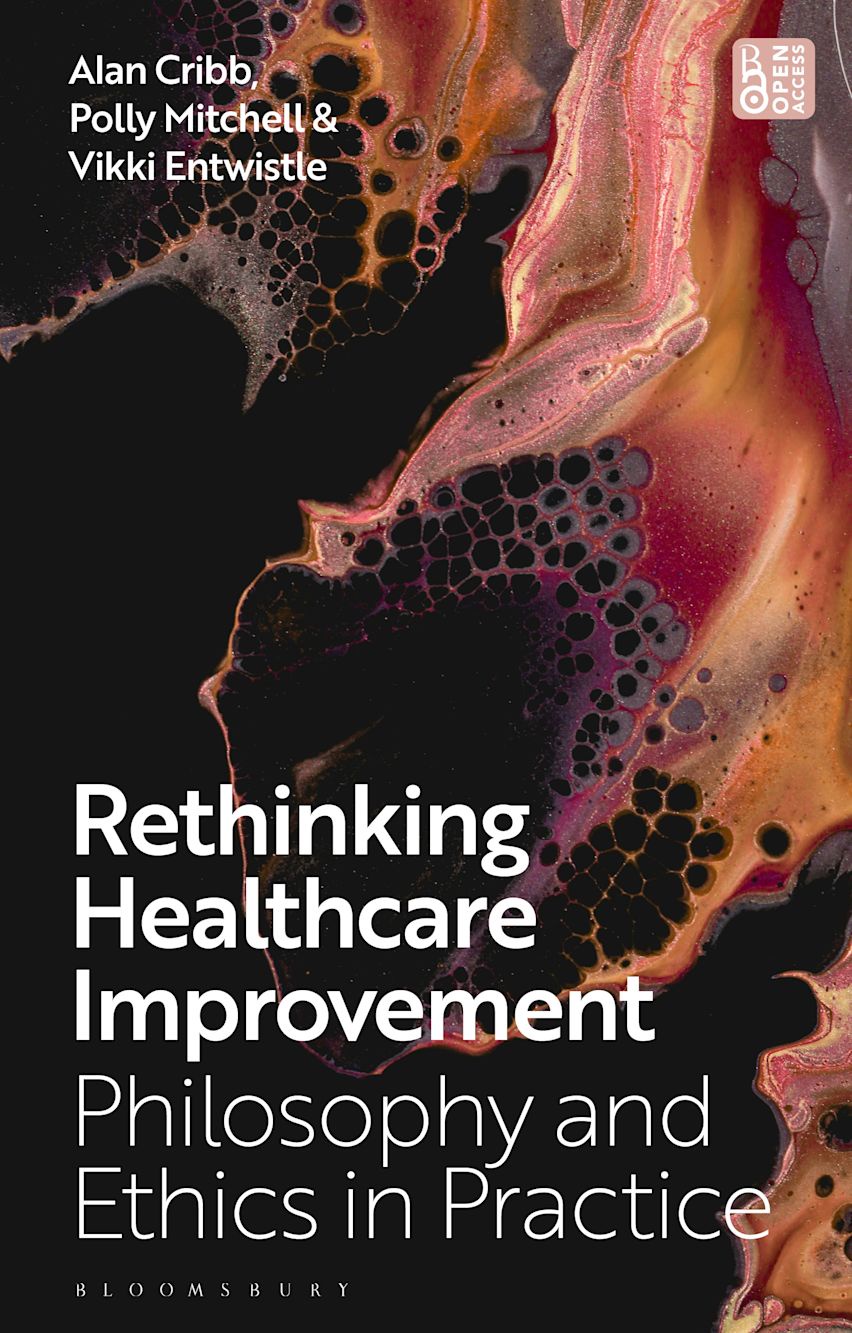
Rethinking Healthcare Improvement: Philosophy and Ethics in Practice (Bloomsbury, 2026). Available here.
Professor Vikki Entwistle's latest book, co-authored with Alan Cribb and Polly Mitchell and available open access, explores the question: What is ‘good’ healthcare? Can we define and deliver it, or will we simply make things better for some people and worse for others? Bringing together the fields of philosophy and healthcare quality, it provides a much-needed framework for understanding and navigating the conceptual and ethical issues at the heart of healthcare improvement.
Acknowledging the complexity in attempts to raise the quality of healthcare, including from different cultural and intellectual perspectives to ever-increasing costs, Rethinking Healthcare Improvement reveals the contribution philosophy can make to the provision of quality healthcare. In four clear parts, it uncovers the ethical commitments already embedded in health services and connects them with philosophical literature to present an original and practically useful approach to answering questions about what is better and why. Throughout, the authors advocate ‘pragmatic pluralism’, emphasizing compassion, social justice and practical wisdom alongside techniques, measures and outcomes, and maintain that healthcare demands a reflective, context sensitive approach which is cautious about the universality of claims and the scalability of improvement interventions.
Methods and Skills for Philosophy: An Advanced Guide (Routledge 2024). Available here.
Professor Jesper Kallestrup's latest book, Methods and Skills for Philosophy introduces students to methodologies, strategies, heuristics and formal tools which are typically employed in contemporary analytic philosophy. This helpful resource gets the reader to engage with the analytical skills required to master postgraduate studies in philosophy.
In conjunction with analysing texts, reflecting on arguments and trying to solve problems, the book will help instil in students the kind of understanding, knowledge, and skills they need to succeed at the postgraduate level. More specifically, students will have a better grasp of how to pose a succinct research question and then critically pursue the proposed topic by engaging with relevant literature, reflecting on philosophical presuppositions, selecting suitable argumentative strategies, and defending a preferred view against objections. Topics covered include the nature and character of arguments, conceptual analysis, analytical truths, logic and language, models of explanation and reduction, strategies and dialectics, and rational intuitions.
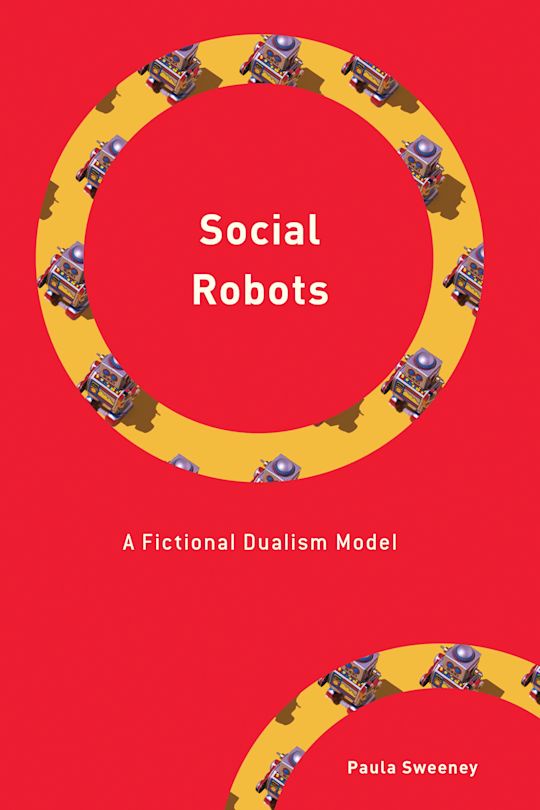
Social Robots: A Fictional Dualism Model (Rowman & Littlefield, 2023). Available here.
In her latest book, Dr Paula Sweeney develops an account of how we should relate to ‘social robots.'
Social robots are an increasingly integral part of society, already appearing as customer service assistants, care-home helpers, teaching assistants and personal companions. This book argues that the wider inclusion of social robots in our society is having a revolutionary impact on some of our key intuitions regarding ethics, metaphysics and epistemology and, as such, will put pressure on many of our best theories.
Social robots elicit an emotional and social response in humans that some have taken to be evidence that robots deserve moral consideration. Others have argued that, as robots are only machines, we should avoid designing robots that encourage emotional engagement. Dr Sweeney’s fictional dualism model provides a new way for us to view social robots and a new route for our continued relationship with them. When we engage with a social robot, we create a fictional overlay that has wants, needs and desires. Our emotional attachment to social robots is a natural continuation of our relationship to fiction: a life-enhancing and important connection, but not one that prompts moral consideration for the fictional entity.