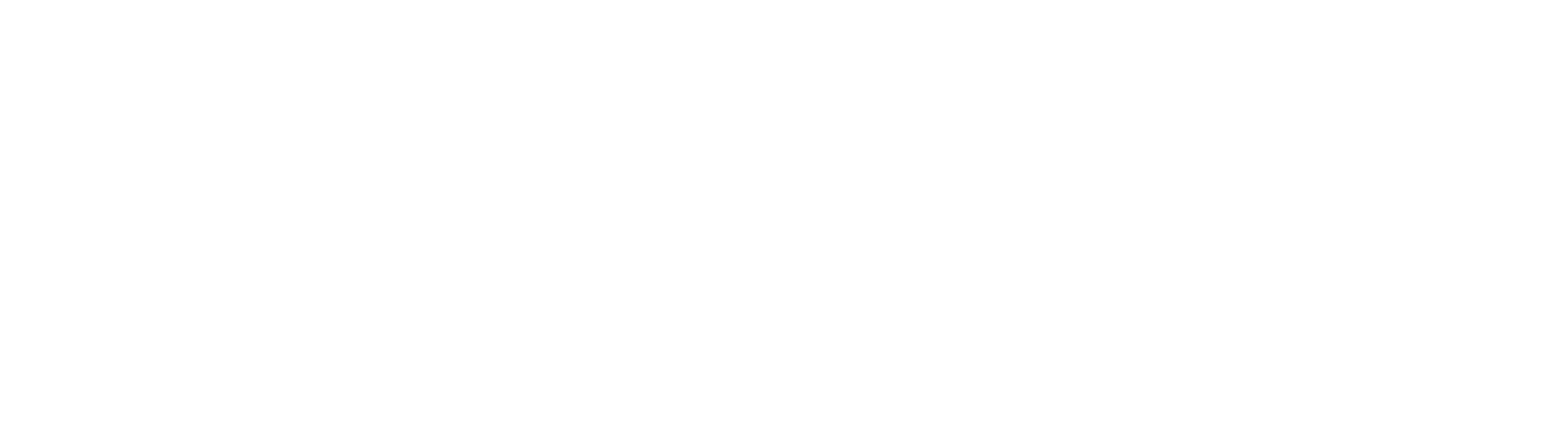
The University of Aberdeen leads the AHRC Doctoral Focal Award, North-Sea Heritage in Transitions (NHT), an ambitious investment in research talent spanning Scotland’s North Sea region.
NHT is a national centre for excellence addressing the role of art history, visual arts and creative practice in a region undergoing economic, environmental and cultural transition. Together with Robert Gordon University (RGU) and University of the Highlands and Islands (UHI), we are funded by an Arts and Humanities Research Council Doctoral Focal Award.
Why North-Sea Heritage in Transitions?
North-Sea Heritage in Transitions (NHT) fosters investment in collaborative doctoral training with a direct route to shaping regional cultural regeneration.
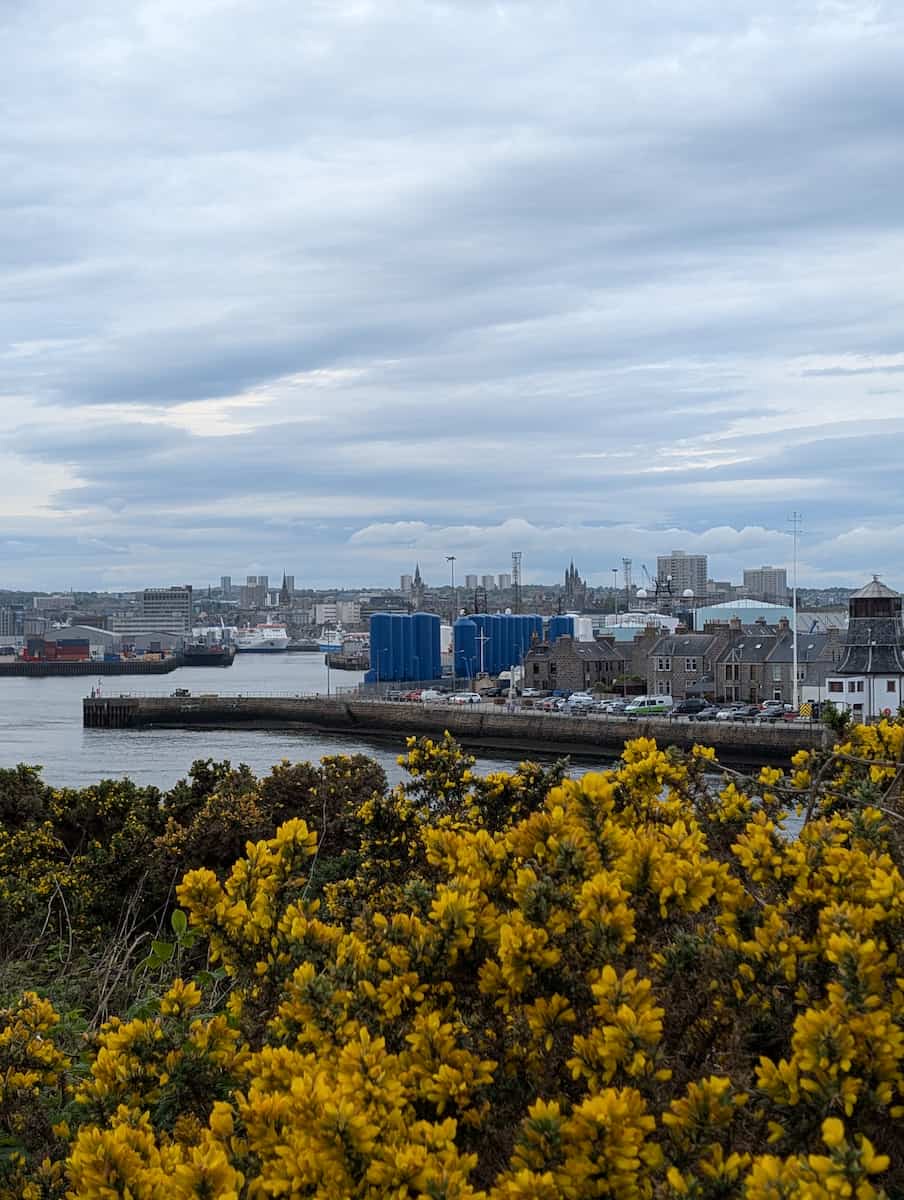
With the arts, heritage, and cultural initiatives increasingly recognised in the region as drivers of community wellbeing and economic growth, NHT supports place-based research to strengthen and empower a regionally-significant cultural workforce for a national and international creative economy.
Together we will:
- Build distinctive doctoral cohorts analysing and creating North Sea visual culture while collaborating with cultural practitioners to address geopolitical, environmental, societal change;
- Strengthen creative and digital skills, enhancing regional, national, international capability;
- Support partnerships delivering North Sea-specific expertise and furthering strong career pathways in the arts, heritage, creative sectors.
Our Three Pillars
North-Sea Heritage in Transitions is organised around three interconnected heritage pillars:
Combines art history, creative practice, and environmental humanities approaches to landscape and environmental change, examining how this intersects with cultural memory, community identity, creative practice in rural and coastal contexts.
Examines architecture, urban and island spaces, and heritage infrastructure through approaches including architectural history, design, lighting, archaeology, and digital humanities. This pillar supports research on regeneration, adaptive reuse, and archival practices.
Investigates heritage through social and cultural dynamics including migration, health and wellbeing, religion and faith, emerging technologies and interconnected communities. Research explores how creative industries and heritage organisations shape public life and community resilience.
Our Consortium Partners
North-Sea Heritage in Transitions comprises three partner Higher Education Institutions, leading environmental humanities research centre The Greenhouse, University of Stavanger, and 24+ cultural and community partners:


Our Projects and How to Apply
Please see below for full application guidelines and available PhD opportunities in the AHRC DFA North-Sea Heritage in Transitions. Deadline for applications: 29 August 2026
Any questions? Contact nht@abdn.ac.uk
- Application Procedure
-
Application Procedure
Please ensure you follow the application procedure carefully, as we cannot consider incomplete or incorrectly submitted applications.
To apply, please submit your application via email to pgrc-studentships@abdn.ac.uk
Email Requirements
- Subject line: This should read “Project ID – [Your Name]” (e.g., NHT_UOA_BH – Joe Bloggs).
The specific Project ID can be found at the bottom of each project advert. - Email body: Please include the title of the project you are applying for, the name of the lead supervisor, and state whether you are a Home/UK or an international student.
You do not need to include any other information in the body of the email.
Required Documents
Please ensure all the documents below are attached directly to your email. These can be combined or sent as individual attachments.
We are unable to download files from external sources.- Cover letter: Addressed to the supervisor of the project. Please ensure this is attached as a separate document and not written in the body of your email.
- Supplementary Questions: A document containing your answers to the three specific questions detailed below.
- Up-to-date CV: Detailing your academic qualifications, employment history, and any other relevant experience. Please clearly state your current permanent address, as this will help us determine your fee status.
- Degree certificates and transcripts: Clear copies (if available).
- Evidence of settled or pre-settled status: (If applicable).
- Two academic/professional references: We cannot request references on your behalf. Please either provide us with copies yourself or have your referees email them directly to us.
Direct emails from referees must include your full name and the project you are applying for.
Should you be invited to an interview, we would ideally like to have received your references beforehand. However, we understand that this may not be possible during the summer break.
Supplementary Questions In addition to your cover letter, please provide written responses to the following:
- Why does this doctoral project interest you, and why do you think you are a strong candidate for it?
- Briefly outline how you might develop or approach the advertised project (c. 300–500 words).
- How do you see this PhD contributing to your future research, creative practice, or career?
- Portfolio link (optional): If relevant to the specific project you are applying for, please include a web link to a digital portfolio showcasing your creative practice or previous work.
- Subject line: This should read “Project ID – [Your Name]” (e.g., NHT_UOA_BH – Joe Bloggs).
- University of Aberdeen
-
Mermaids in the Basement: Scottish Folklore and Contemporary Street Art
Supervisors: Dr Catriona McAra, Dr Shane Strachan, Dr Antonia Thomas
Find out more here
Mermaids in the Basement explores the myriad ways in which Scottish literature has informed and reimagined contemporary street art and its audience identities. Drawing inspiration from KMG’s recent mural for Nuart Festival, Unseen, Unheard, Yet All Beside Us (2026), the selected doctoral candidate will advance the cause for gender diversification in street art. The resulting thesis will be the first art history of the North-East’s contribution to such heritage.Creating Medieval Aberdeen: Archive-led Game Development and the Experience of Space in a North Sea City
Supervisors: Dr William Hepburn, Dr Jackson Armstrong, Dr Verda Munir
Find out more here
This creative practice research project responds to the missing medieval visual heritage in Scotlands’s built environment, using archives and game development to explore non-visual sources through a visual frame and imagine spaces that have been lost and what they meant to people in medieval Aberdeen. In doing so, it throws light on rich and largely untapped sources of cultural identity and economic growth for the region.
Sacred Sites in Transition: Medieval Architecture and Pilgrimage in Orkney
Supervisors: Dr Karl Kinsella, Dr Sarah Jane Gibbon, Mr Douglas Pritchard
Find out more here
How do medieval churches and sacred landscapes continue to serve as religious sites while also transitioning to important heritage attractions? This PhD explores how people experience, understand and care for the Orkney Islands’ medieval religious sites in the modern day. Situated within one of Britain’s richest medieval religious landscapes, the Orkney Islands offers an exceptional and unique environment for research. Focusing on St Magnus Cathedral in Kirkwall and the St Magnus Way pilgrimage route, the project asks how historic buildings and landscapes can retain their religious significance while welcoming growing numbers of visitors from diverse backgrounds.The visual, ecological and creative landscapes built around Nawken (Gypsy/Traveller) stopping places
Supervisors: Prof David Anderson, Dr Michael Stratigos, Dr Jim MacPherson
Find out more here
Stopping places (greens, foreshore, wood-ends and roadside sites) used by Scottish Gypsy/Traveller (Nawken) families for generations are disappearing from the North-East landscape, and no systematic visual record of them exists. Where Travellers do appear in Scottish art, photography and archives, they were most often pictured by others, on the others’ terms. Central to the project will be understanding the harmony or dissonance of visual artefacts to the Nawken community. This project will support a PhD student to work with local Nawken communities in Aberdeenshire, Moray, and Orkney to document Nawken landscapes visually, and thereby record and reclaim a unique and threatened living heritage infrastructure at a time of transition new restructuring and enclosures.
Walking the energy transition: Art, anthropology and heritage at the North Sea coast
Supervisors: Dr Jo Vergunst, Dr Andrew Whitehouse, Dr Jen Clarke
Find out here
The current energy transition marks a broad social, economic and environmental shift from humanity’s use of fossil fuels to renewable energy. Decision-making on energy transitions takes place across many layers of governance and while the effects of climate change are felt everywhere, rural and coastal communities are often on the front line of energy transition infrastructure. This PhD at the University of Aberdeen, will draw on art and anthropology to explore the everyday experience of the energy transition in North Sea rural and coastal areas. While we expect the main focus of the research to be in north east Scotland including the Northern Isles, we welcome proposals that also broaden this geographic reach. - Robert Gordon University
-
Making Heritage Otherwise: Material Lives and Afterlives in the North Sea Region
Supervisors: Dr Jen Clarke, Dr Jo Vergunst
Find out more here
How can artistic research make heritage otherwise? With this PhD project, making heritage otherwise means using artistic practice not only to represent or preserve the past, but to work across unstable boundaries—between the living and the mineral, the natural and the artificial—questioning how materials are classified, valued and cared for, and opening different possibilities for their futures.
Cultivating a Productive Wood Culture: Heritage, Creativity and Forestry in North-East Scotland
Supervisors: Dr Chris Fremantle, Dr Isabelle Gapp, Dr Jonathan Scott
Find out more here
This PhD project asks: How can heritage and creative practice help build a productive wood culture in Scotland's expanding forests? Adopting a place-based approach within the North-East of Scotland, the student will draw upon the region's rich woodland heritage, landscape art history, archives and collections, and contemporary creative activity to investigate how culture-based action can contribute to sustainable woodland futures. The project will explore the role that heritage, creative practice and public engagement can play in shaping relationships between people, forests, timber and woodland products, considering how cultural knowledge, skills and traditions might support Scotland's changing forestry landscape. - University of the Highlands and Islands
-
Sea Changes: Charting the contemporary archaeology of North Seaa energy through the eyes of women artists
Supervisors: Dr Antonia Thomas, Dr Catriona McAra, Dr Jen Clarke
Find out more here
Drawing on art history, contemporary archaeology, visual and material anthropology, and the environmental humanities, this PhD will examine the contemporary industrial archaeology of marine energy infrastructure and material culture through the lens of contemporary women artists. It will explore the role that visual art responses to marine energy regimes can make to interdisciplinary critical debates about energy in a region currently undergoing transition (Gormley et al 2025), and the ways in which contemporary art can contribute to understandings of contemporary and industrial archaeology (McAra 2025; Thomas et al 2018; Thomas 2024). It will also engage with established and emerging contemporary women artists who are working in the North Sea region today and whose work explores marine energy.Creative Islands, Past, Present and Future: Heritage as a driving force for creative practice in the Northern Isles of Scotland
Supervisors: Prof Ingrid Mainland, Dr Antonia Thomas, Dr Siún Carden
Find out more here
This PhD at UHI Orkney asks how heritage and creative practice can contribute to more sustainable futures for Scotland's island communities. Combining approaches from art history, heritage studies, visual culture and anthropology, the project will investigate how artists, makers and creative practitioners engage with the heritage of the Northern Isles, and how contemporary creative practice contributes to understandings of place, identity and community wellbeing.
Women as Agents of Change in Scotland's Coastal Communities
Supervisors: Dr Siún Carden, Prof Roxane Permar, Dr Rebecca Macklin
Find out more here
The project aims to make visible the ways that migrants have reshaped Scotland’s coastal communities, past and present, and to identify pluralistic and dynamic conceptions of place and identity in relation to understandings of coastal life. In particular, it will focus on gender and identity in the context of belonging, placemaking, and cultural heritage. Through place-based participatory research, the project aims to encourage dialogue between communities and expand ideas of local belonging in ways that will inform contemporary global challenges related to increasing global mobility, environmental and climate displacement, and rising cultural tensions in the 21st century.
Living Heritage as Custodian of Memory and Catalyst for Resilience
Supervisors: Prof Roxane Permar, Dr Siún Carden, Dr Rebecca Macklin
Find out more here
This PhD at UHI Shetland examines how environmental change intersects with cultural memory and community identity in rural and coastal contexts through creative practice. It asks how living heritage can inform genuine place-based and community-led research that emerges from and with the communities it concerns. It is practice based and employs methods drawn from socially engaged art to bridge the cultural heritage of North Sea coastal communities with lived experience, cultivating and recovering alternative ways of thinking rooted in ethical relationships, shared stewardship, and mutual learning (Meighan, 2023; Nı́ Mhathú na, 2022).
Our Training Programme
North-Sea Heritage in Transitions offers a bespoke training programme that is open to all postgraduate researchers in relevant fields. NHT students will further benefit from participation in the annual training programme of the Scottish Graduate School for Arts and Humanities (SGSAH).
A 9-week, hybrid, training course taken in the first year of study addressing how art historians and creative practitioners can engage critically with AI literacy and responsible AI policy.
A 2-day residency event providing training in collections conservation, heritage preservation, curation, business development, entrepreneurship, policy engagement, reciprocal ethnography, qualitative interviewing, and digital heritage.
A multi-day event organised with The Greenhouse at the University of Stavanger, and run biannually, around environmental humanities themes relevant to North-Sea heritage.
An annual 2-day event rotating around the academic partners to foster best writing practice and peer feedback networks.
- Upcoming Events
-
There are currently no upcoming events.
Subscribe to our RSS feed to stay up-to-date with upcoming events.
Header image: Frances Walker, Clashach Cove (North Sea Glimpses), 1996, lithograph and screenprint, 46.3 x 61.5 cm. Peacock Archive, Aberdeen Archives, Galleries & Museums. © Frances Walker (2007).