
Page 10 of 31Results 91 to 100 of 308, 11 July - 23 August 2022
-
Dr Juliano Morimoto honoured with membership of RSE's Young Academy of Scotland

Lecturer in the School of Biological Sciences at the University of Aberdeen Dr Juliano Morimoto has been appointed a member of the renowned Royal Society of Edinburgh's Young Academy of Scotland.
-
Join us at the Research Facilities Showcase - Wed 14th Sept 2022
Come along to this free event on Wed 14th Sept and enjoy a cup of tea or coffee and explore the vast array of research facilities the University of Aberdeen has to offer, as well as a chance to network with colleagues across the University.
-
Aberdeenshire community woodlands could offset carbon emissions of 80 residents

The annual carbon emissions of 80 people could be offset by a community woodland designed for recreation and biodiversity conservation; research carried out in Maryculter, Aberdeenshire, has shown.
-
Invasive pests have cost New Zealand billions

Getting rid of invasive pests such as agricultural weeds, stoats, possums, and fire ants will provide New Zealand with massive economic and ecological benefits, a new study has found.
-
Using strength of Greek sun makes sense

Using solar panels in the tourism industry in countries like Greece and Cyprus will not only help reduce carbon emissions but also significantly reduce costs, research has found.
-
Hooded capuchin monkey at higher risk of extinction than realised
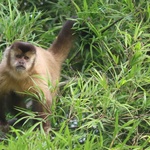
The hooded capuchin monkey has been identified as being at a higher risk of extinction than scientists previously realised following University of Aberdeen and Fundación Para La Tierra research in Paraguay.
-
University shortlisted for five projects in sustainability awards

The University of Aberdeen has had five transformational projects shortlisted in an internationally recognised awards scheme celebrating sustainability excellence.
-
Can some people really eat what they like and not gain weight?

Scientists shed light on the diet and lifestyles of the super-lean. An international team of scientists led by the University of Aberdeen and the Chinese Academy of Sciences have for the first time identified what separates heathy underweight people, also known as 'super-lean', from the rest of us.
-
Are you going to eat that? Study reveals dog faeces are significant part of foxes' diet

A study that analysed the diet of red foxes in the Scottish Highlands has found that dog faeces are a significant part of their diet, the first time that such a connection has been detected anywhere in the world.
-
Global warming may not be as bad for animal reproduction as thought, study suggests
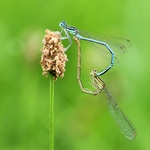
Animals are more likely to mate in warmer environments, a study analysing the impact of climate change on reproductive behaviour has found.