Congratulations to multiple researchers in the Ecophysiology research cluster for their success in attracting research funding from UKRI BBSRC totalling £2.16million to the University of Aberdeen (100% cost, 80% from BBSRC) across two research projects.
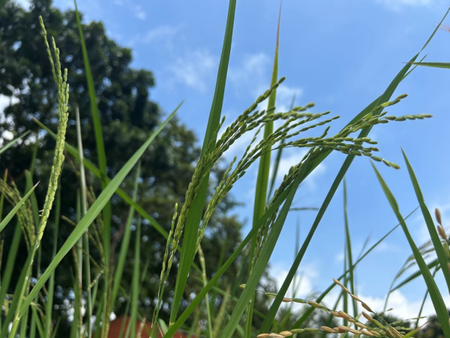
Project 1: A multi-level exploration of biological nitrification inhibition in rice for improved sustainability of crop production
- Funds to the University of Aberdeen: £1,601,186
- Aberdeen Principal Investigator: Gareth Norton
- Aberdeen Co-Investigators: Cecile Gubry-Rangin, Adam Price, Alex Douglas, Jo Smith, Marcel Jaspars, Matthias Kuhnert
- Durham University Co-Principal Investigator: Ari Sadanandom
The overall aim of this multi-disciplinary proposal is to investigate biological nitrification inhibition (BNI) efficiency in rice, by understanding the nature of natural variation in BNI efficiency of both domesticated and wild rice. This will be conducted through genetic mapping and functional genomics (to identify key genes involved in increasing BNI efficiency), characterising BNI compounds produced by rice, evaluating the impact of variation in BNI on soil microbial communities and processes and the use of modelling to evaluate the impact of increasing BNI efficiency in rice on nitrous oxide emissions from soil.
Project 2: Mitigating salmon gill disease by integrating genotype-environment studies with host-gill microbiome associations
- Funds to the University of Aberdeen: £561,027
- Aberdeen Principal Investigator: Sam Martin
- University of Stirling Co-Principal Instigator (project lead): Simon Mackenzie
Gill health is the biggest health challenge within the salmon aquaculture industry and regarded as a priority area of research. A key area of research to promote improved fish welfare and survival is the identification of resistance to Amoebic gill disease (AGD) within Atlantic salmon breeding programs. This project will examine the relationships between genetic family background in salmon and aquaculture environment on the composition of the gill microbiome and how these interactions impact upon gill health during AGD infection and gill health production. This project will extend current knowledge highlighting the role of the gill microbiome in disease resistance and salmon robustness and importantly through our commercial partner will directly impact upon commercial selective breeding strategies to future proof sustainable salmon farming in the UK.