
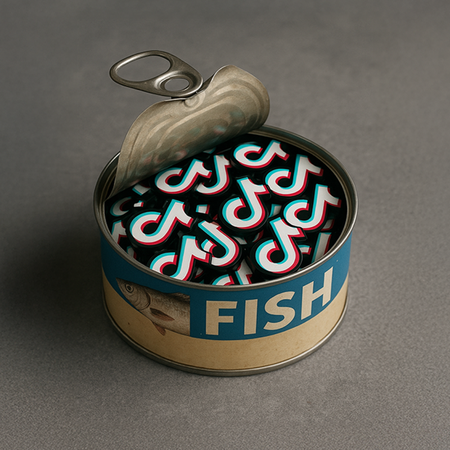
If we want to reel in a new generation of seafood fans in order to improve public health and protect the planet then there’s an unexpectedly rich sea we need to go fishing in: social media.
Millennials and Gen Z are eating and talking about food differently, and that includes seafood! Recent trends such as tinned fish date night and sardine girl summer show the creative and fun ways that TikTok creators are advancing seafood awareness and literacy.
The ‘From Sea to Screen’ project explored how shellfish and tinned fish are portrayed across TikTok and the results were both fascinating and full of opportunity for the Scottish shellfish sector.
TikTok has become one of the most influential social media platforms in the world, downloaded over 5 billion times and used by over 1.6 billion people every month, creating content ranging from recipes to tips and tricks and bringing viewers along on a “Day in the life”. Surprisingly, seafood is becoming a thriving category on TikTok, with more than 929 million posts in 2025.
Why is seafood important?
As we need to transition towards diets that are healthy and environmentally friendly, seafood, which includes fish and shellfish, turns out to be a catch-all. It's important for our health because it provides essential nutrients such as omega-3 fatty acids, vitamin D, vitamin B12, iron, selenium, and zinc. All are important for a variety of functions in our bodies (e.g., the brain, heart, bone health, and the immune system). Seafood in general also has a lower carbon footprint than other animal sources, such as red meat. As we transition towards diets that have less red meat in them, seafood offers a way to keep getting the nutrients we need while reducing our carbon footprint.
However, online enthusiasm isn’t matching real-world consumption data. In fact, in the UK, we eat less than half the recommended two portions of fish per week (one of which should be oily fish). That includes Millennials and Gen Zs. However, as they are some of the country’s most powerful spenders, and are changing their habits, centring health, wellbeing, convenience and ethics in their purchasing decisions, understanding their relation to seafood is important. These two generations spend a lot of time on social media, so understanding the content that resonates there can help the seafood industry better understand and cater to a new generation of seafood consumers.
Our research
We downloaded and analysed 100 TikTok videos using the hashtags #tinnedfish, #shellfish, #mussels, and #oysters, and thematically analysed them. Research on TikTok trends such as climate change, COVID-19, and eating behaviour has been growing in recent years. We believe this is the first project to conduct a thematic analysis focused on seafood-related content.
Firstly, we found six overarching themes that can help drive content on these platforms:
- Communal and participatory: experiences highlight how shellfish are presented in “eat with me” or “first try” videos, which invite audiences to share in authentic, social moments.
- Reviews and reactions: build peer-to-peer trust, with creators’ unscripted impressions enhancing relatability and reducing intimidation.
- Visual and sensory appeal: demonstrates how seafood’s sounds and visuals can create highly engaging content, from ASMR mussel eating to the visual spectacle of opening a tin of fish or dressing an oyster.
- Lifestyle and provenance: connects seafood to local identity, sustainability, and authenticity, though Scottish oysters remain underrepresented in this space.
- Food pairing and preparation: shows how even minimal recipes and simple accompaniments can elevate perception of seafood.
- Accessibility and practicality: reinforce the importance of affordability and convenience, especially during cost-of-living pressures.
What needs to happen next?
We would love to see the seafood sector use cultural narratives, go beyond traditional education and step confidently into the digital tide, where authenticity, community, and creativity lead with the following recommendations:
- Explore youth involvement in content creation, campaign strategies, and ensure they have a voice in this industry.
- Engage with both micro and macro trends, experiment with meme culture and challenges and take inspiration from other categories (e.g., plant-based products).
- Reframe storytelling, shifting from education to cultural storytelling, rooted in positive and experience-led examples, highlighting provenance.
- Humour is cross-cutting in British culture and can make seafood more approachable, fun and part of mainstream culture.
- Learn from small innovative brands such as Fish Wife, Fangst, and Sea Sisters, taking on a different approach.
- Oysters are seen as adventurous and luxurious, while mussels come across as communal and affordable.
- Across all themes, authenticity and relatability consistently beat polished advertising.
Thank yous
This research emerged from the 2024 Early Career Researcher (ECR) Challenges in the Shellfish Industry workshop. It was kindly funded by the Fishmongers' Company's Charitable Trust and the Association of Scottish Shellfish Growers (ASSG). Thanks to Emer McCoy, Rhianna Parry and Dulani Nadeesha for all their hard work, partnership, workshops and chats over the last year.
You can read the full report here: From Sea to Screen: An analysis of shellfish and tinned fish videos on TikTok