Lecturer
- About
-
- Office Address
- School/Department
- School of Divinity, History, Philosophy & Art History
Biography
I joined the Divinity Department as a lecturer in Second Temple Judaism in September 2022. Prior to this I was a post-doctoral fellow under the supervision of Prof. Eshbal Ratzon in the School of Jewish Studies and Archaeology at Tel Aviv University. At that time, I lived in a Palestinian village near Ramallah, where I was studying local Spoken Arabic dialects.
Even if the College of Interdisciplinary Individual Studies in Humanities and Social Sciences at the University of Warsaw is my Alma Mater, starting a lectureship in Aberdeen feels like a homecoming - it is at the University of Aberdeen that I did my PhD in divinity with Prof. Joachim Schaper as my Doktorvater (2013-2019), during which time I spent two years on the campus and four years in off-campus travels from Germany (Tübingen), France (Paris), Austria (Salzburg), Israel (Haifa, Jerusalem) to Turkey (Tur Abdin).
From Abu Qash / Tel Aviv to Aberdeen
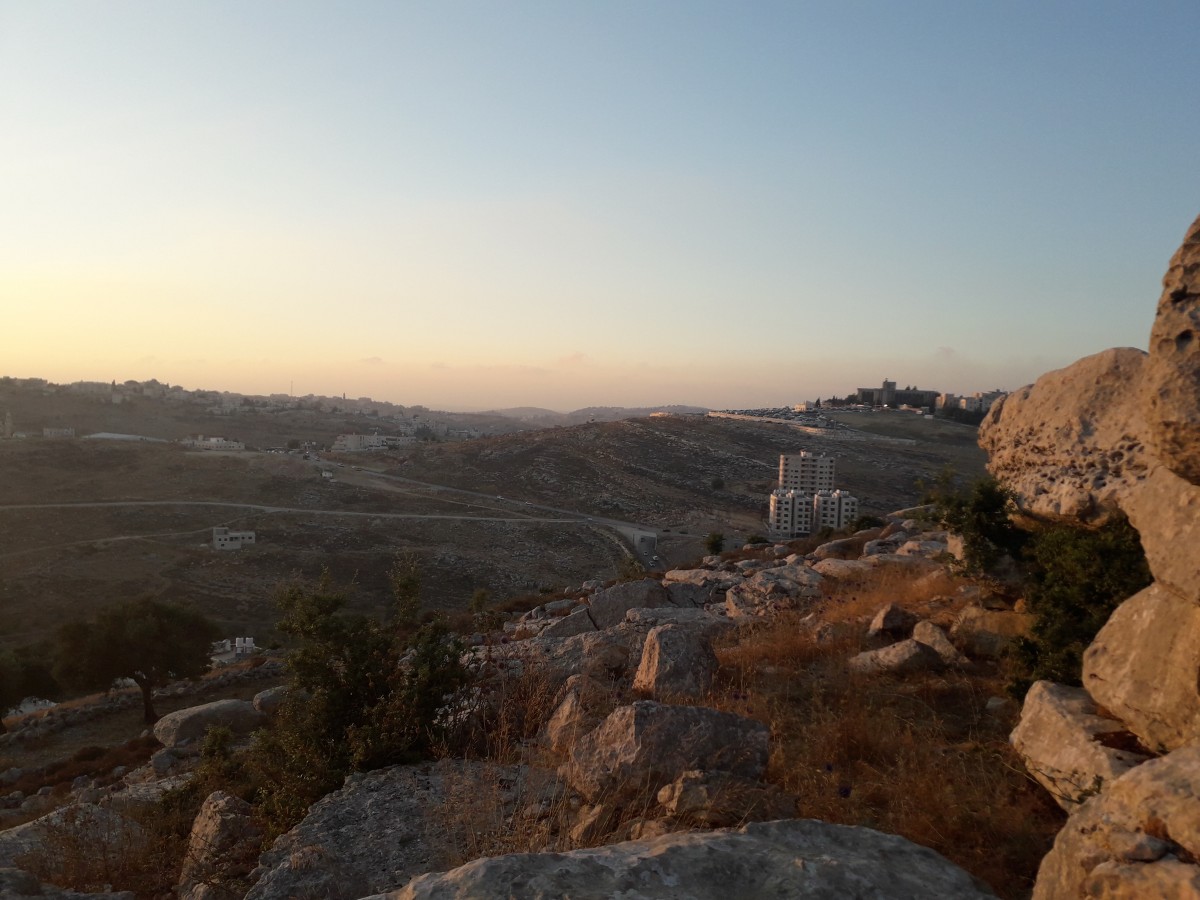
It is Abu Qash, a Palestinian village in the vicinity of Ramallah, where I lived while doing my post-doctoral research at Tel Aviv University. Crossing the boundaries!
Qualifications
- PhD Divinity2019 - University of Aberdeen
PhD dissertation:
‘Biblioclasm and the Scriptures – An Investigation of the Phenomena’subject of research:
the impact of book burning on the textual history of the Jewish and Christian Bibles and the Quran in their oral and written manifestationssupervisor:
Professor Joachim Schaper, Professor of Hebrew and Semitic Languages at the University of Aberdeeninternal examiner:
Professor Grant Macaskill, Lightfoot Professor of Divinity at the University of Durhamexternal examiner:
Professor Geoffrey Khan, Regius Professor of Hebrew at the University of Cambridge (2012-2025) - MA Classics within Interdisciplinary Individual Studies in Humanities and Social Sciences2011 - University of Warsaw
MA thesis:
Greek hagiography of Syriac stylitismsupervisor:
dr hab. Jan Kozlowski, Institute of Classical Philology at the University of Warsaw - BA Classics within Interdisciplinary Individual Studies in Humanities and Social Sciences2010 - University of Warsaw
BA thesis:
Latin Mozarabic psalm prayerssupervisor:
dr hab. Jan Kozlowski, Institute of Classical Philology at the University of Warsaw
Internal Memberships
Roles in the School of the Divinity, History, Philosophy and Art History:
[1] Postgraduate Taught Programmes Director (since January 2026)
[2] Member of the School Executive (since January 2026)
[3] Enterprise & Innovation Champion (since September 2024)Role in the Divinity Department:
[1] Postgraduate Taught Programmes Lead (since September 2025)
[2] Theology Online Programme Coordinator (since September 2022) - Research
-
Research Overview
My research concerns Second Temple Judaism.
Firstly, we are dealing here with manifestations of Judaism chronologically delimited by the existence of the Second Temple in Jerusalem. Of course, this approach does not ignore other contemporary temples such as those in Leontopolis and Elephantine, on Mt Gerazim, and possibly elsewhere. To the contrary, it correlates Temple alternatives with their Jerusalemite point of reference.
Secondly, we are dealing here with manifestations of the ‘Temple-centred’, that is, the ‘sacrifice-centred’ Judaism. For sure, this approach does not ignore the fundamental role of Scripture in Second Temple Judaism. To the contrary, it precisely correlates the Scriptures with their focal point. Thus, the Scriptural and yet ‘sacrifice-centred’ Judaism of the time is distinguished from its later ‘Scripture-centred’ interpretation, which was projected onto it during successive Islamic and Christian reformations, and which belongs to its subsequent history of reception. Bearing this in mind will have a significant impact on understanding the historical Jesus and nascent Christianity.
Thus, delimited by the Second Temple period, the Judaism centred on the second Beit HaMiqdash in Jerusalem is the subject of my research.
This ‘exegesis’ of the term ‘Second Temple Judaism’ is based on my experience of living more than five years among Jews, Christians, and Muslims of and in the Middle East. In addition to my European intellectual formation, being immersed in Judaism, Christianity, and Islam in their original habitats has been a formative experience for me as a biblical scholar, theologian, and Christian. It is the Middle East that these three interrelated traditions manifest themselves as religions of the Book and of Sacrifice.
In my investigation of Second Temple Judaism, I seriously take into account Jewish, Christian, and Muslim sources, as well as historical, linguistic, and cultural parallels, from Late Antiquity through the Umayyad and Abbasid periods up to the present day, since languages and cultures of modern speakers of Neo-Aramaic and Spoken Arabic dialects can teach us a great deal about antiquity. I am highly interested in ambitious PhD students joining me in this multifaceted exploration across historical, cultural, linguistic, and religious boundaries, which is both challenging and fascinating.
Scroll down to learn more about my current research focused on how the Jewish and Christians Bibles in their pre-modern Arabic versions are understood by their devout Muslim readers in Palestine today, and how their modern 'reading' may illuminate these ancient texts.
Research Areas
Accepting PhDs
I am currently accepting PhDs in Divinity.
Please get in touch if you would like to discuss your research ideas further.
Current Research
Hexapla Arabica
The Anthology of Local Arabic Readings of Biblical Traditions:
A Reading from the Countryside of al-KhalīlContext
If hosted by Muslim friends, a non-Arab guest to Palestinian towns and villages of the rural areas of the West Bank will quickly notice that his or her hosts are deeply fond of and familiar with stories of the Bible, devotedly cherish biblical figures, and have Arabic translations of the Hebrew Bible and New Testament, whose volumes are shown the same reverence as the Qurʾān.
Aim
This project aims to explore and document how such ‘non-expert’ and yet ‘traditionally knowledgeable’ Muslim readers from rural areas of al-Khalīl / Hebron understand the Jewish and Christian Scriptures as preserved in the pre-modern Arabic Bible, which still awaits scholarly exploration. This sheds new light not just on the ancient text, but also on intercultural and interreligious Scriptural dynamic in the region and beyond.
Method
To this end, a trusted and closely befriended group of five siblings from the Khalili clan of al-Hroub (four sisters and their brother Ahmad) transcribe selected manuscripts of the pre-modern Arabic Bible, the fruit of Jewish and Christian Arab scholarship, uninfluenced by modern Western missionaries, and then render the transcribed text into their own rural Khalīlī dialect, exemplifying a popular reading of the biblical text. The rendition is subsequently translated into English.
Progress Update (January 2026)
[1] The Book of Genesis: 100% transcription from MS BnF Arabe 1 + 100% dialect rendition
[2] The Gospel according to Matthew: 100% transcription from MS Sinai Ar. 72 + 100% dialect rendition
[3] The First Letter of John: 100% transcription from MS Sinai Ar. 154 + 100% dialect renditionNext steps (winter and spring 2026)
[1] review of the transcriptions and dialect renditions towards their publication
[2] annotating the texts with parallel Qurʾānic passages
[3] developing an online course in Khalili ArabicResearch dissemination
[1] Research Seminar: "Al-Āmmīyah (Colloquial Arabic) and Generative AI - a snapshot of its emerging text-to-text abilities: experiments and evaluation results", Computing Science Department, University of Aberdeen, 4 February 2026, Aberdeen, UK
[2] Conference: (with A. Hroub) "Arabic Large Language Models: the Afterlife of Colonialism?", Arab-German Young Academy of Sciences and Humanities (AGYA) International Workshop: Beyond Eurocentrism and Arabocentrism: Race, Ethnicity, and Knowledge Production in the Arabo-Islamic 'Golden Age', University of Aberdeen, 13 September 2025, Aberdeen, UK
[3] Research Seminar: (with A. Hroub) "(A) Reading (of) the Bible among Muslims of the rural West Bank: Initial Outcomes and Prospective Directions", Joint session of the Biblical Studies and Islam and Christian-Muslim Relations, School of Divinity, University of Edinburgh, 11 February 2025, Edinburgh, UK
[4] Conference: (with A. Hroub) "Pre-modern Arabic Translations of the Bible and their Value for a Modern Reader: experiments with MS BnF Arabe 1 and MS Sinai Ar. 72", International Conference "Translation and Multilingualism in the Premodern Islamic World(s)", Arab-German Young Academy of Sciences and Humanities (AGYA), 16 November 2024, Institute of Islamic Studies, Freie Universität Berlin, Germany
[5] Symposium: (with W. Zhao) "From ancient Bible to modern AI-generated Colloquial Arabic", Interdisciplinary Research and Innovation Symposium, University of Aberdeen, 4 September 2024, Aberdeen, UKNotes
Note 1: This research project does not serve any political or religious agenda. None of its participants is involved in any form of “activism”: whether political or missionary. The only aim of the project is to advance scholarship and mutual understanding between Jews, Christians, and Muslims. Its indirect impact beyond academe pertains to contributing towards the preservation and appreciation of rural dialects of Arabic. It also creates meaningful and safe work opportunities in the area of an extremely high unemployment, particularly among young educated women.
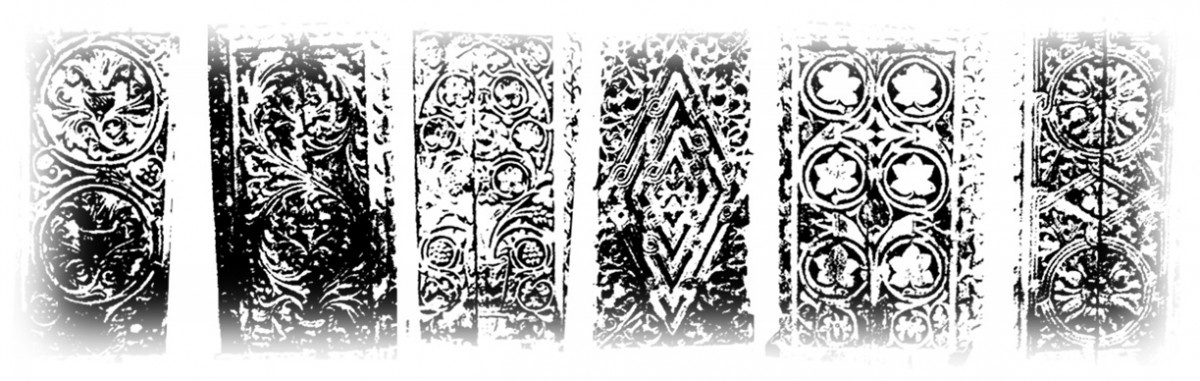
Note 2: Six wooden panels: © Jakub Zbrzeżny. Based on photographs taken by Jakub Zbrzeżny at the Rockefeller Archaeological Museum in East Jerusalem in summer 2023. The photographs depict six wooden panels, which, according to the Museum, originate from al-Aqsa Mosque, are dated to the eight century CE, and represent Byzantine (Christian) artistic style. The panels on the image were arranged by Jakub Zbrzeżny (with no bearing on their original arrangement) and presented in black&white with high contrast and soft edges, with the use of Microsoft PowerPoint and without the use of Generative AI. This image may not be copied, redistributed, modified, or used in any form without prior written permission. Not licensed under Creative Commons.
Collaborations
International Partners
Hexapla Arabica
Local Partners:
At the core of the project is our collaboration with five Khalili siblings from the south of the West Bank: four sisters and their brother, Ahmad. The siblings have been working as contractors for the University of Aberdeen on a series of individual projects since 2023. Their work includes transcribing selected Arabic manuscripts, creating dialect renditions of newly transcribed texts, and contributing expertise stemming from traditional knowledge of language, culture, and agriculture.Institutional Partners:
The project is supported by the Department of Near Eastern Studies at Cornell University through financial contributions and expertise of its members:[1] Professor Ross Brann: advice on pre-modern Arabic cultures
[2] Professor Kim Haines-Eitzen: advice on ancient Judaism and Early Christianity
[3] Professor Munther Younes: advice on developing didactic materialsInternal Interdisciplinary Partners
My research and teaching activities involve collaboration with the Computing Science Department at the University of Aberdeen. Our collaborative activities include:
[1] Royal Society of Edinburgh Collaboration Grant: “Al-ʿĀmmīyah (Colloquial Arabic) and Generative AI – a snapshot of its emerging text-to-text abilities” - with Professor Ehud Reiter and Dr Wei Zhao
[2] Co-supervision of CS Undergraduate and Postgraduate dissertation projects:
[2.1] with Professor Ehud Reiter: Mr Luke Shaw, "Investigating Textual Affinities in Arabic Translations of the Bible using Machine Learning Methods, (BSc in Computing Science 2026 (expected))
[2.2] with Professor Ehud Reiter: Mr Ryosuke Nagata "Authorship Attribution of Peshitta, a Syriac Translation of the Old Testament" (MA in Computing 2025)
[2.3] with Dr Wei Zhao: Ms Utkalika Kuanar "Natural Language Processing for Written Arabic and Aramaic in Ancient Inscriptions and Papyri" (MSc in Artificial Intelligence 2024)Supervision
PhD research proposals are particularly welcome on subjects such as:
[1] textual criticism of the Hebrew Bible and its versions (Greek, Latin, Syriac, Arabic),
[2] the First Book of Maccabees and its reception,
[3] sacrifice in Second Temple Judaism,
[4] Jewish traditions in the Christianity of Late Antiquity and early Islamic period,
[5] Palestinian Arabic dialects and culture as vehicles for understanding the Bible,
[6] application of Machine Learning to Semitic languages (for projects involving a computer scientist as a co-supervisor).Funding and Grants
Institutional Funding & Grants
External Funding
[1] The Al Tajir Trust, Grant, 2025
PI; project: "From Colloquial Arabic to Qur’anic Arabic: parallel verbal paradigms between Colloquial Khalili Arabic and Classical Arabic"; £3,000[2] Department of Near Eastern Studies, Cornell University, Donation, 2025
Contribution towards the project "Arabic Readings of Biblical Traditions"; $5,000[3] Aberdeen Humanities Fund Staff Research Awards, 2024
PI; project: “From Egypt to Aberdeen: the Supposed Remnants of a Jewish Diaspora Temple in University Collections”; £1986.11[4] Royal Society of Edinburgh Collaboration Grant, 2024
PI; co-applicants: Prof. Ehud Reiter and Dr Wei Zhao; project: “Al-ʿĀmmīyah (Colloquial Arabic) and Generative AI – a snapshot of its emerging text-to-text abilities”; £9,998.58[5] British Academy Talent Development Award, 2024
PI; project: “The Bible in (actually) Spoken Arabic: Palestinian Genesis”; £9,889.00Internal Funding
[1] UoA Internal Internship Funding, 2026
Supervisor, "Interdisciplinary Research Intern", c.£2,700[2] Aberdeen-Curtin-Calgary Research Catalyst Funds, 2026
PI; project: "Dark Skies across Alberta and Scotland: gazing at the sky with ancient eyes", £4,912[3] UoA Impact & Engagement Accelerator Fund, 2026 (PI; project: "From Manuscript to Smartphone: Changing Paradigms of Digital Typing in Arabic through Ancient Handwriting"; £3,993.46)
[4] UoA School of Divinity, History, Philosophy, and Art History Conference Funding 2025 (Organiser; workshop: “Appreciating inner Linguistic Diversity of “Old Scots” and “New Scots” of Arabic Heritage”; £992.60)
[5] UoA Pump Prime Research Funding, 2023 (PI; project: “The Injeel in Spoken Arabic of Palestinian Women – towards Historical Ethnographic Theology”; £10,062.96)
Philanthropic Funding & Crowdfunding
Nearly £5,000 was raised through generous donations in 2025. If you consider contributing, please visit the University-linked JustGiving page Arabic Bible or contact the Department of Development and Alumni Relations through our Development Officer Ms Louise Mackay.
- Teaching
-
Teaching Responsibilities
Programme Coordination:
- Certifcate in Theology [14V819R1]
- Diploma in Theology [14V829R2]
- Bachelor of Theology non-Honours DL [08V82088]
- Bachelor of Theology with Honours DL [08V82070]
- Individual Subject Study in Divinity [12V80699]
Course Coordination:
2024/25:
- History and Religion(s) of Ancient Israel (on-campus & online)
- Old Testament: Mundane Mechanics and Heavenly Concepts (on-campus; with Prof. Joachim Schaper)
2023/24:
- Hebrew of the Bible 1 (online)
- Hebrew of the Bible 2 (online)
2022/23:
- History and Religion of Ancient Israel (online & on-campus)
Non-course Teaching Responsibilities
Talmud Reading Group (2022/23)
under the auspices of the Chair of Hebrew and Semitic Languages (Prof. Joachim Schaper)
The goal of this reading group is to introduce students and scholars of theology, history, and philosophy who do not have Jewish educational background to studying the Mishnah and Gemara. We follow the text of the Talmud in English translation. Even if we occasionally refer to Hebrew and Aramaic as well as to manuscripts, it is not a prerequisite that participants know the Mishnaic Hebrew, Jewish Babylonian Aramaic, and Jewish Palestinian Aramaic, or have skills in Talmudic textual criticism.
Our weekly hybrid meetings are moderated from the campus by Dr Jakub Zbrzezny and remotely led by Dr Hillel Gershuni, a young Talmudic scholar, whose eight years at the Torat Hachayim Yeshiva were followed by twelve years in the Talmud and Halacha Department at the Hebrew University of Jerusalem. Dr Gershuni currently works on the digital critical edition of the Talmud Yerushalmi, an Israel Science Foundation’s project, hosted by the Department of Jewish History & Bible at Haifa University.
First half-session:
16 Nov., 23 Nov., 30 Nov., 7 Dec., 14 Dec. 2022
Second half-session:
15 Feb., 22 Feb., 1 Mar., 8 Mar., 15 Mar., 22 Mar., 29 Mar., 19 April, 26 April, 3 May, 10 May, 17 May 2023
Scholarly Voices of the Middle East (2022/23)
under the auspices of the Chair of Hebrew and Semitic Languages (Prof. Joachim Schaper)
This initiative aims at popularizing biblical scholarship from outside Western academia, focusing on research conducted by ancient and modern scholars based in or originating from what is called the Middle East in the anglophone world today. This aim is realised by means of popular lectures given by invited speakers whose field of expertise includes the history of ancient Middle Eastern biblical scholarship or who themselves represent Middle Eastern scholars of Biblical Studies and related fields.
Moderated by Dr Jakub Zbrzezny, the lectures are delivered in a hybrid mode, with on-campus participants meeting on the campus, and online participants joining through MS Teams. The lectures are open to all members of the UoA community.
Guest speakers:
- Dr Joe Uziel (28 Sept. 2022)
- Prof. Ishay Rosen-Zvi (5 Oct. 2022)
- Prof. Geoffrey Khan (12 Oct. 2022)
- Prof. Menachem Katz & Dr Hillel Gershuni (19 Oct. 2022)
- Prof. Menachem Fisch (26 Oct. 2022)
- Prof. Jonathan Ben-Dov (2 Nov. 2022)
- Dr Eshbal Ratzon (9 Nov. 2022)
- Publications
-
Page 1 of 1 Results 1 to 4 of 4
A computational analysis of the special Talmudic Tractates
Journal of Jewish Studies, vol. 75, no. 1, pp. 1-27Contributions to Journals: ArticlesBiblioclasm and the Scriptures: An Investigation of the Phenomena
Vandenhoeck & Ruprecht. 400 pagesBooks and Reports: BooksLiber Orationum Psalmographus: Nieobecne Dzieło Reformy Soborowej
Warszawskie Studia Teologiczne, vol. 23, no. 2, pp. 169-180Contributions to Journals: ArticlesLitania do Najświętszej Maryi Panny przyjęta przez Zakon Kaznodziejów
Prace Filologiczne, vol. 52, pp. 301-338Contributions to Journals: Articles

