Geddes AEM Prize in Physics

In this section
Geddes AEM Prize in Physics

Awarded annually to the undergraduate student who submits the best photograph or written or other description of some natural physical phenomenon personally observed during the previous year.

AEM Geddes OBE FRSE was on the staff of the Department of Natural Philosophy (the old name for Physics at Aberdeen) from 1909 to 1955. The Prize was inaugurated by his daughters.

His speciality was meteorology and his 1921 book Meteorology: An Introductory Treatise has numerous examples relevant to Aberdeen. It was illustrated by George Aubourne Clarke's internationally acclaimed cloud photographs, taken at King's College.

Since "a picture is worth a thousand words", the prize has gone to the best photograph in recent years.

Rules

  • To be eligible, you must be an undergraduate of the University of Aberdeen and either of the following:
    • Studying for any of the degrees listed under "Degree programmes" on our Study Here page.
    • Taken a Physics-taught undergraduate course during the current academic year (e.g. PX1514 or ST1506).
  • The submission can be a single photo, portfolio of photos, or written or other description of a natural physical phenomenon.
  • Please send submissions to any of your Department of Physics undergraduate course coordinators or to the departmental administrators, clearly indicating it is a Geddes Prize submission.
  • The submission deadline is the end of the teaching term in May each year.
  • Pictures must be taken by yourself in the year leading up to the submission deadline (i.e. from June the previous year).
  • Please supply a description of the photograph (i.e. what physical phenomenon we are looking at) and any details of how the photograph was taken - location, time of day, device used, special camera settings, etc. Descriptions that demonstrate an understanding of the physical phenomenon being photographed will be at an advantage.
  • The picture should not be altered (e.g. using Photoshop or AI techniques) and therefore should carry, with the file, the original date.
  • Written entries should be short, no more than one page in length.

Previous entries

2025 winner - Zara Smerdon: Milky Way and shooting stars from Tonga

2025 winner - Zara Smerdon: Milky Way and shooting stars from Tonga

You are able to see a few shooting stars as I set the shutter for around 5 minutes, away from any light disruption. This photo doesn’t even begin to capture what it was like to see the sky this clear in person.

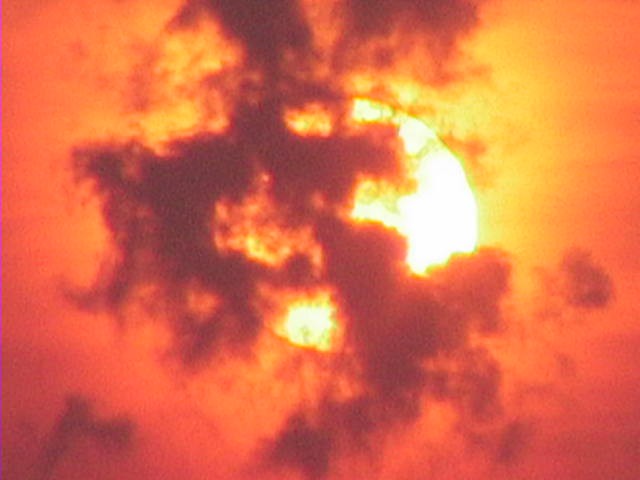
2006 runner-up - Nikki Cassie: Sun<br>

2006 runner-up - Nikki Cassie: Sun

Sunday 7th May 2006, at Cruden Bay.

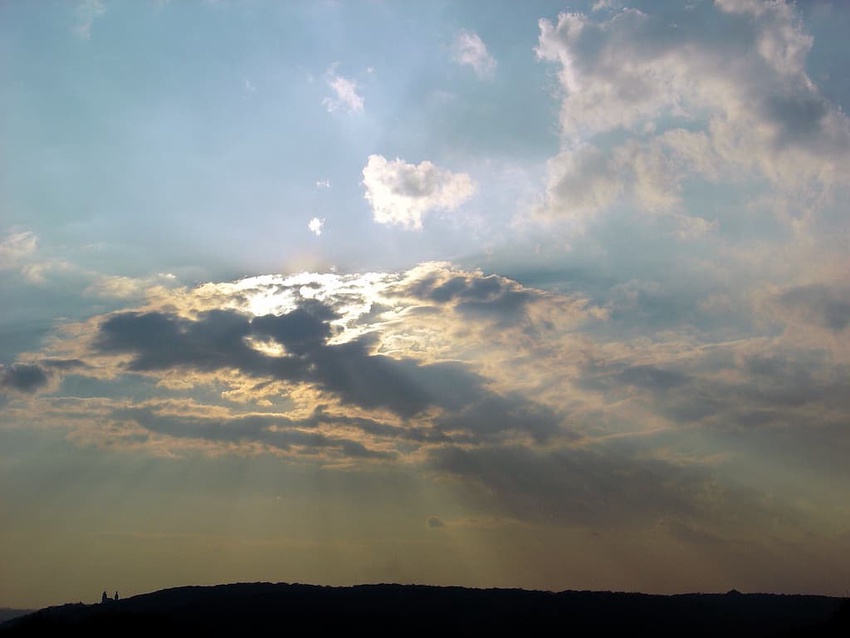
2006 runner-up - Stephanie Stevenson: Sky at Krakow<br>

2006 runner-up - Stephanie Stevenson: Sky at Krakow

Taken from Krakus Mound in Krakow, Poland.

2004 winner - Gillian Morgan: Smoke on a highland stream<br>

2004 winner - Gillian Morgan: Smoke on a highland stream

The time-lapse photo makes the turbulent water appear like smoke.

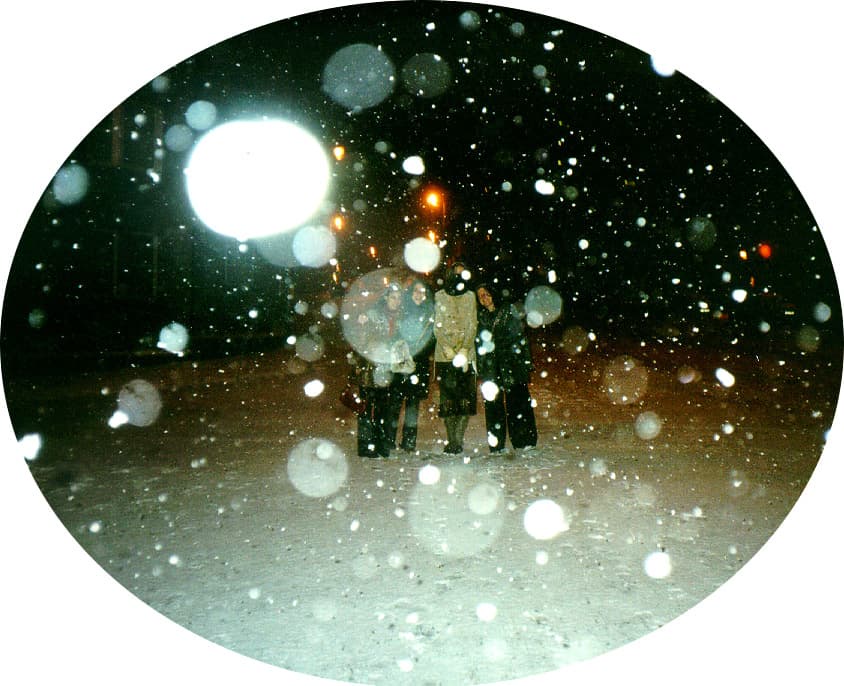
2004 winner - Laura Nash: Focus<br>

2004 winner - Laura Nash: Focus

The focus of the camera is on the people, making the falling snow between the camera and the group of people appear distorted and out of focus.

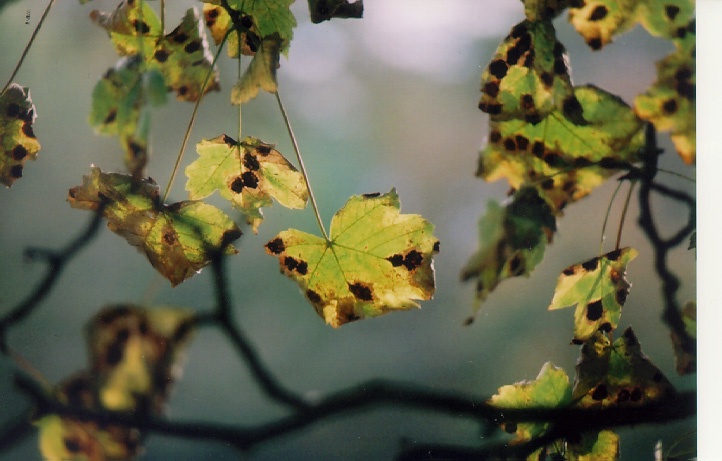
2004 runner up - Mark Wood: Death in the Woods<br>

2004 runner up - Mark Wood: Death in the Woods

A photo showing leaves in a wood succumbing to disease.

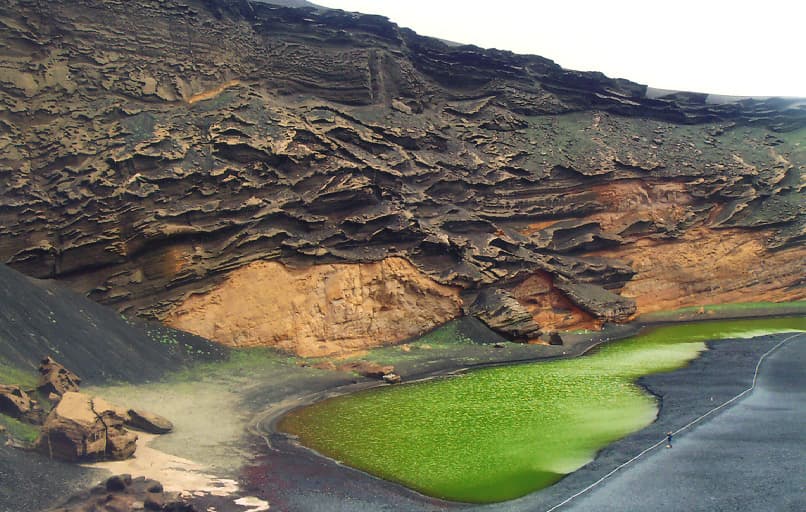
2004 runner up - Stuart Robb: Volcanic aftermath<br>

2004 runner up - Stuart Robb: Volcanic aftermath

Layered lava deposits following a volcanic eruption. Note the person in the bottom right, for scale.

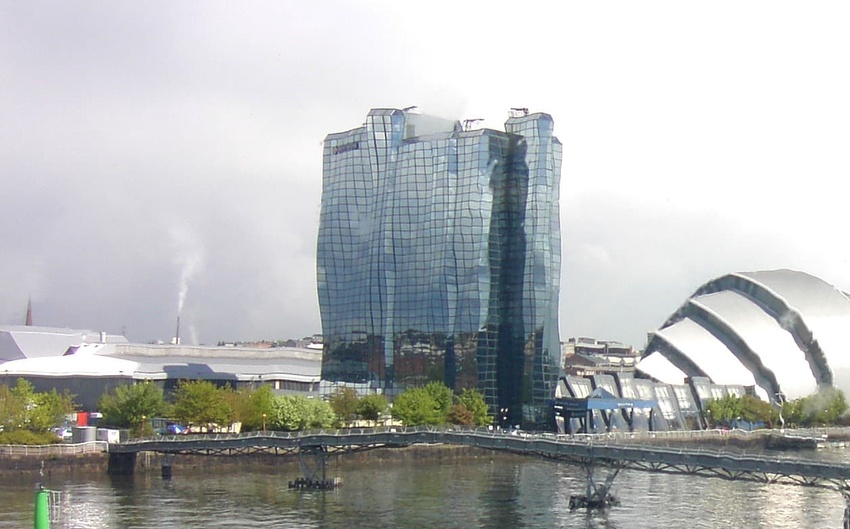
2003 winner - Gary Angus: Complex distortion<br>

2003 winner - Gary Angus: Complex distortion

A photo showing the Glasgow Science Centre viewed through a wet window, inducing complex distortion patterns.

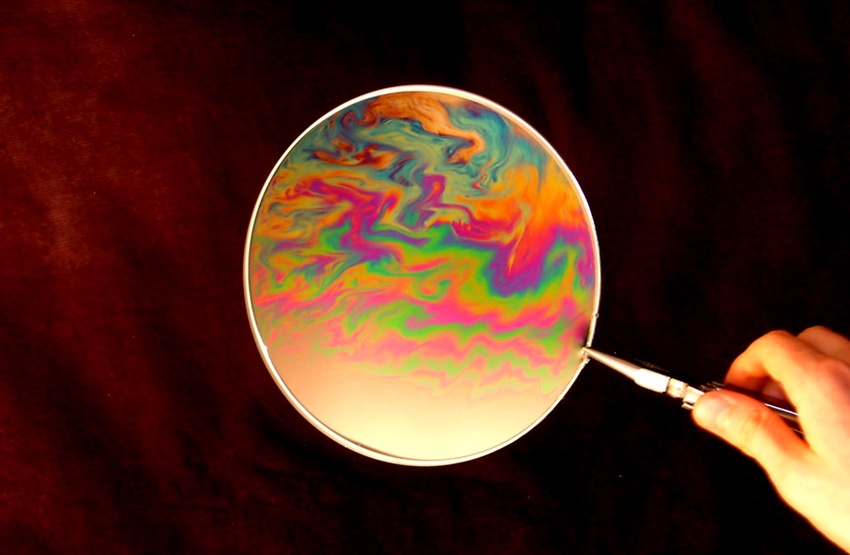
2001 winner - Darren White: Thin film interference<br><br>

2001 winner - Darren White: Thin film interference

A TV aerial was used to hold the thin film. The film was imaged in a dark room illuminated by a 200-watt light. I blew lightly over the film to disrupt its surface and give an irregular interference pattern.

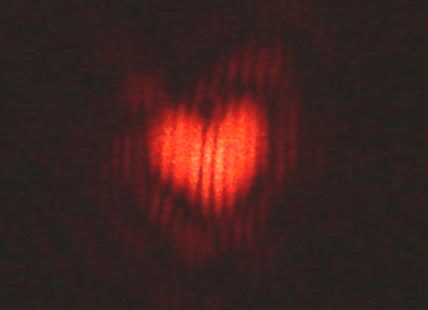
2001 winner - Darren White: Double-slit interference<br><br>

2001 winner - Darren White: Double-slit interference

The laser was a HL202 Laser Pointer. A camera tripod was used to hold it and two holes were punched through the magnetic film from a floppy disk. The film was 5mm from the laser, and 8m from the screen.

2001 winner - Darren White: Compact disc<br><br>

2001 winner - Darren White: Compact disc

Data is stored on a CD as a series of minute grooves in its surface. These are too small to see with the naked eye, but they lay out spiral tracks which act as a diffraction grating, producing the spectrum.

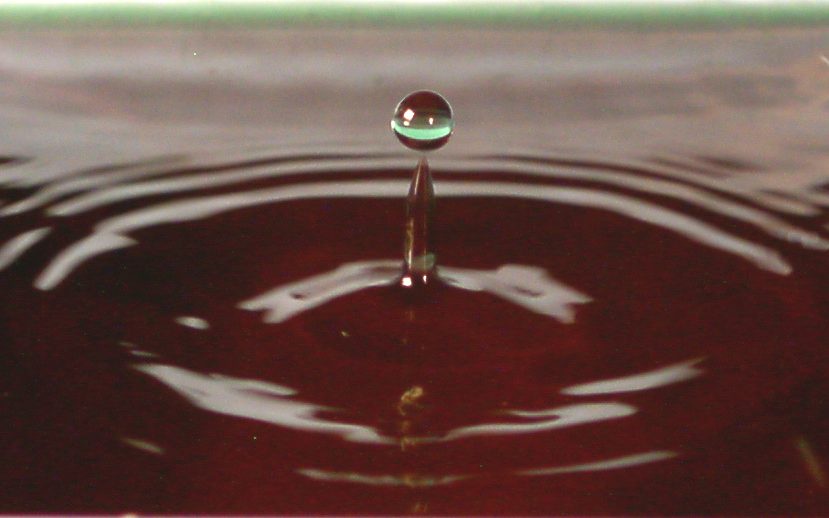
2001 winner - Darren White: Water waves<br><br>

2001 winner - Darren White: Water waves

Circular waves on water propagate outwards. The fluid is a mixture of ink and water. The exposure time was 1 ms and the fluid was illuminated by a 200-watt light so there were enough photons to capture.

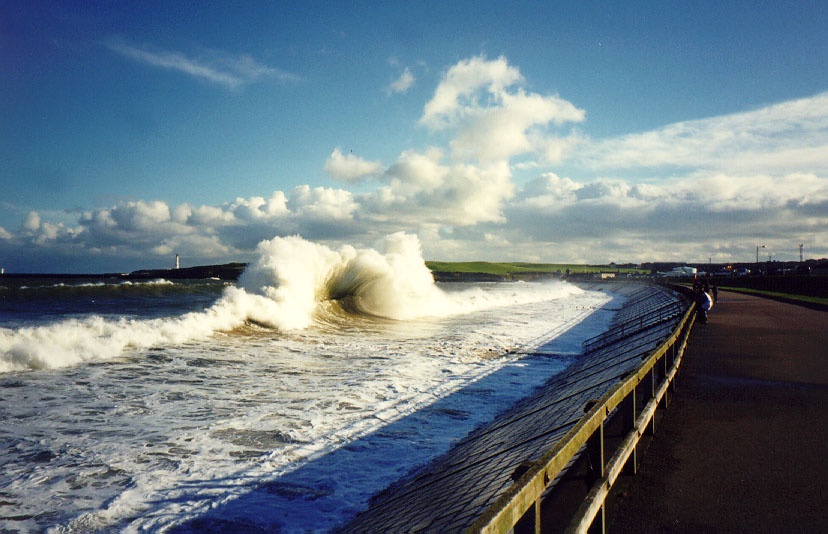
2000 winner: Kirstin Jacobson: Dramatic wave

2000 winner: Kirstin Jacobson: Dramatic wave

The Aberdeen esplanade with a large wave breaking against the seafront wall. Girdle Ness Lighthouse is visible in the background.

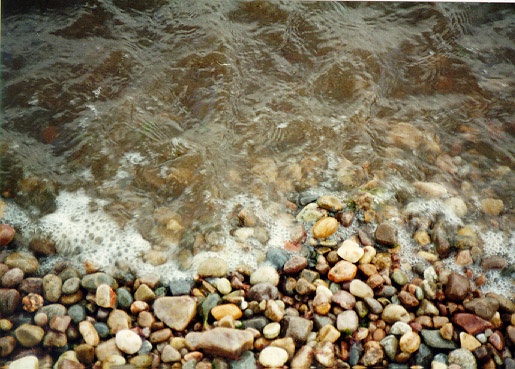
1999 winner: Alison Treharne: Tide on the river Spey

1999 winner: Alison Treharne: Tide on the river Spey

A close-up view of a rocky beach seen from above at the boundary between the land and the water.

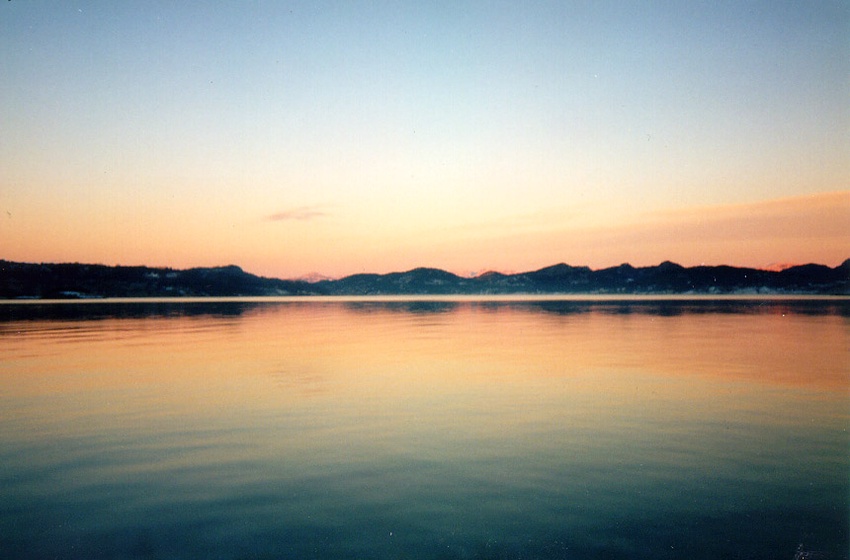
1997 winner: Paul Duncan: Sunset from Li harbour in Norway

1997 winner: Paul Duncan: Sunset from Li harbour in Norway

The sea reflects the range of colours from red through to blue in the sunset sky.