

The University of Aberdeen's History Department welcomed a distinguished delegation from the Royal Historical Society (RHS) on 17-18 September, led by its President, Professor Lucy Noakes (University of Essex).
The visit featured wide-ranging discussions with staff and students on the state of the historical discipline, career progression, and the use of AI in research and teaching. A roundtable with Library and University Collections explored the opportunities and challenges of Digital Humanities, drawing participants from across academic disciplines and career stages.
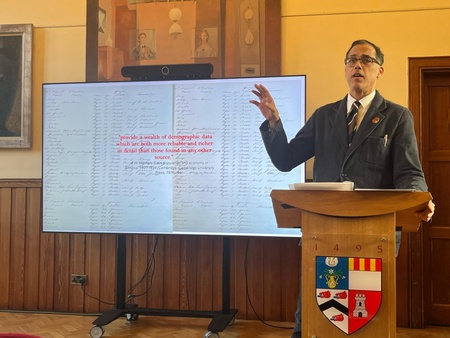
A highlight of the programme was a public evening lecture in the packed Linklater Rooms by Professor Matthew Smith, Director of the Centre for the Legacies of British Slavery (UCL). In Twice Removed: Slavery, Big Data, and the Cultures of Caribbean Ancestral Histories, Professor Smith drew on his own Caribbean-Haitian background and 19th-century Caribbean archives to show how digital tools are reshaping the study of slavery and colonialism. Looking closely at nineteenth century Caribbean archives, he demonstrated how the digital age has advanced historical research on blind spots in the narratives of British slavery and colonialism in the Caribbean.
The visit continues a longstanding relationship between Aberdeen historians and the RHS, which includes teaching and book prizes, trustee appointments, and contributions to the Society’s flagship lectures.
These include Professor Karin Friedrich’s time as a trustee of the Society (2016-20); the Society’s Teaching Award (The Jinty Nelson Prize) for Professor Marjory Harper (2020); the award of the Society’s Whitfield book prize to Professor Jackson Armstrong (2021); a runner-up place for Dr Eloise Grey for the RHS David Berry Prize in Scottish History (2022); and the delivery by Professor Robert Frost of the Society’s annual Prothero Lecture in London in 2021.
Professor Friedrich said: “We were delighted to host this two-day visit by the Royal Historical Society. The programme of the visit comprised meetings with members of staff, discussions on the wider state of the historical discipline, career progression, the use of AI in research and teaching, and a round table discussion involving members of the Library and University Collections on the benefits and challenges of the Digital Humanities.
“It was a privilege to host such a wide-ranging exchange of ideas, and the event inspired many conversations about how historians work today.”
For more information see the Society’s report on the visit on the RHS website