- "Fundaments of Knowledge," Art History in Britain c.1940-1970
-

Dates:
Project Lead: Dr Hans C. Hönes
This project reassessed the institutional history of art history in Britain between c. 1940-70. Looking beyond the usual focus on art history as a university discipline, the project looks to the informal networks and (semi-) institutional nodes that fostered disciplinary discourse in postwar Britain. The project was particularly interested in the practice and ethics of collaborative research efforts such as large-scale cataloguing projects, and how they were fostered by bodies such as the Paul Mellon Foundation.
Historiography often judges British art writers of the postwar period rather mercilessly, contrasting them unfavorably with the serious and sustained research efforts of their continental peers: the British seemed ill-equipped for the scrupulous task of “cataloguing and compilation on a gargantuan scale” so characteristic for the “Teutonic Genius” (Michael Kitson). Many concurred: for example, Ellis Waterhouse claimed to write about pictures “for the pleasure they give”, with any academic apparatus being a “necessary concession” (Italian Baroque Painting, 1962). And yet his archive documents a lifetime's labour of systematically cataloguing British artists and collections.
This project inquired into the intellectual and institutional frameworks behind the cataloguing activity of scholars such as Ellis Waterhouse and Paul Oppé. I argued that their work is evidence of a 'pathos of positivism' (Lorraine Daston): a penchant for large-scale data collection that was not exclusively aimed at producing imminent output in form of publications. Instead, this research ethic deemed the accumulation of resources to be exploited by future generations to be the epitome of academic integrity.
- Menstruation Network
-

Project period: Funded by the Wellcome Trust from January 2022 - January 2025
Project lead: Dr Camilla Mørk Røstvik (formerly University of Aberdeen, now University of Agder)Established by Dr Camilla Mørk Røstvik and colleagues in 2019 with a Wellcome Trust Network Grant, the Menstruation Research Network UK has been able to partake in and document a change in the visual culture, art, discourse, policy, and media surrounding menstruation in Britain and the world. This network included scholars, activists, and artists from many disciplines, including Art History and visual culture.
Since then, Scotland has passed the Period Product (Free) Provision Act, the UK has formed the Period Poverty Task Force, and the Welsh and Northern Irish governments have outlined similar policies. The network has been involved in these debates, lending interdisciplinary expertise about menstruation to policy makers, academic colleagues, and activists. In 2021 we were awarded funding to carry on this work for the next four years. Today, the continuation of our work is more necessary than ever, as menstrual discourse moves from a focus on products to larger debates about underlying structural issues, such as legal rights, sustainability, and diversity. The grant will continue our network by hosting three blended (online and in-person) workshops at the University of Aberdeen, University of St Andrews and Liverpool John Moores University. These events will invite international keynote speakers and diverse stakeholders in and out of academia, linking UK debates about menstruation to the world. Our aim is to strengthen and broaden the network in the UK, link with international colleagues, plan ambitious grant applications, provide mentoring to students and early career academics, and information for policy, media and community engagement.
The network's home in the Art History department at Aberdeen from 2022-2025 is a unique position for an interdisciplinary group of this size. Art history, visual culture and art itself challenges many of the stereotypes regarding menstruation, most notably instance the taboo of visual menstrual blood and the secrecy surrounding it. By foregrounding our network in questions of visual culture, the network makes a strong case for Art History as discipline that can bring expertise regarding visual stigma and history to other fields. By including artists in our work, we likewise connect current debates about menstruation to the contemporary practices of artists who are attempting to challenge taboos today. The network will also engage with the strong scholarly tradition of Women's Health Research at Aberdeen, as well as researchers who examine digital culture and women's health, feminist histories of art and film, and international perspectives on menstrual education and wellbeing.
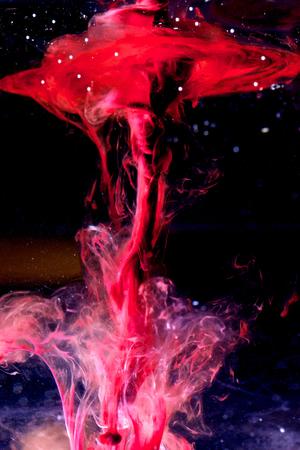
Image: Beauty in Blood project by Jen and Rob Lewis, The Whirl, 2010s. Menstrual fluid collected in menstrual cup by artist and photographed. Wellcome Trust Collection, attribution 4.0 International (CC BY 4.0).