Doctors with disabilities: understanding challenges to career progression
Doctors with disabilities: understanding challenges to career progression
Doctors with disabilities face significant and well-documented challenges in their NHS careers. The number of doctors with disabilities within the NHS is much lower than the level of disability in the United Kingdom (UK). Doctors with disabilities in the UK report facing bullying and discrimination. Some doctors who have disabilities report delays and less choice in their careers. The Disabled Doctors Network in the UK highlights career development as an area of concern. It is not clear why this is happening as there are laws which should prevent this. Morally and legally, doctors with disabilities should have equal opportunities in their jobs. Many doctors with disabilities are thinking about leaving the NHS. This is worrying as doctors with disabilities bring many benefits to healthcare. These include empathy with patients and diversity within the workforce. We want to better support and retain the doctors with disabilities we have in the NHS. At present, it is unclear how best to achieve this.
We aim to understand what barriers doctors with disabilities in the UK face and when. We will work with organisations like the Disabled Doctors Network to ensure our research is relevant.
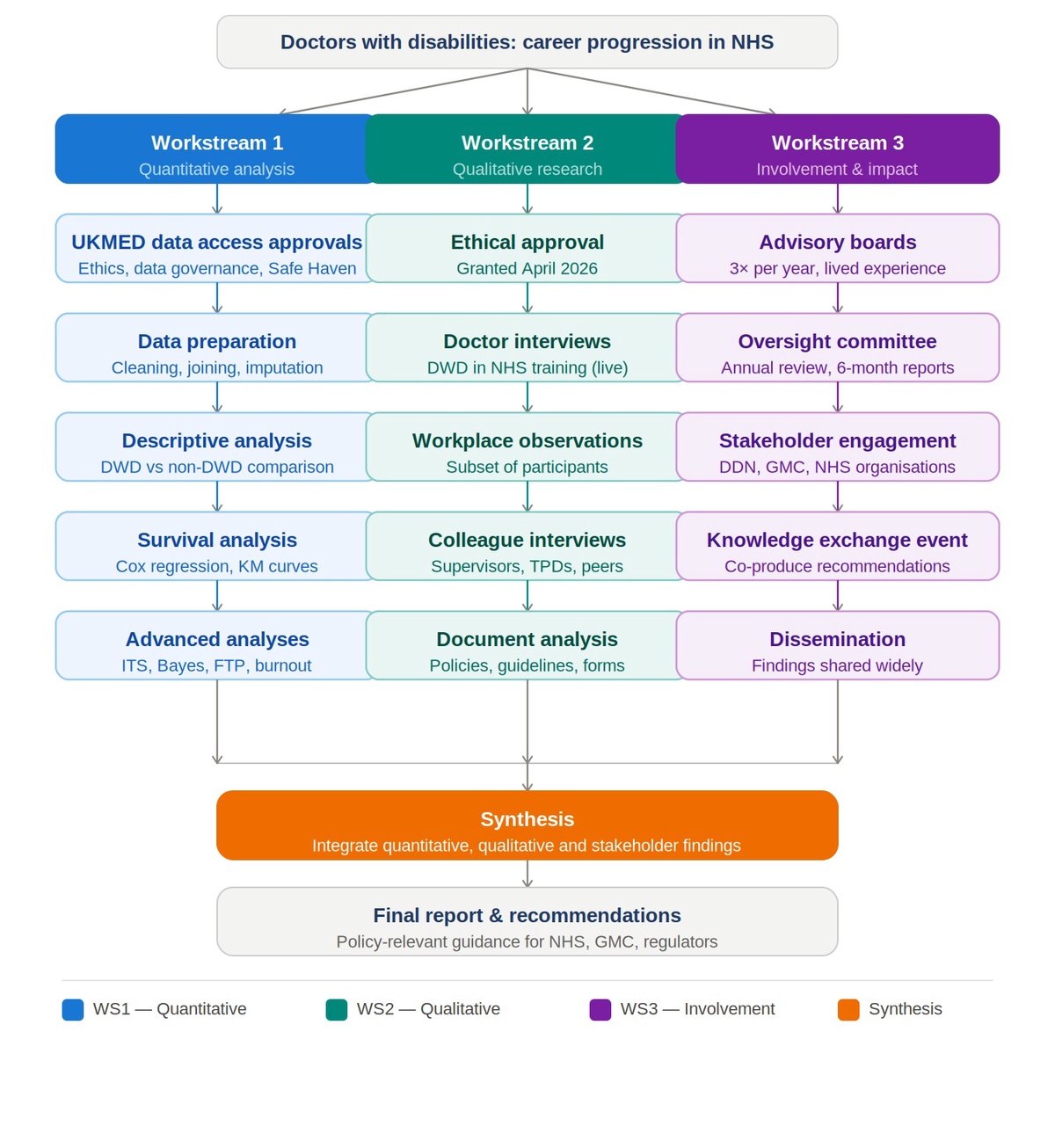
Data that is routinely collected for other purposes will be examined to help us understand how careers of doctors with disabilities differ from those of doctors without disabilities. We will also examine whether disability interacts with other factors, like gender, to shape career outcomes. This can help us understand key points for career delays. It can also tell us if there are specialty areas that doctors with disabilities are more or less likely to end up in. Some specialties may be thought to be accessible to doctors with disabilities.
We will also ask doctors to self-identify their disabilities. We will invite doctors with disabilities to talk us through their day-to-day work. We will ask them why they work in the way they do. Are there activities they can and cannot do? How do they make choices at work? Are there guidelines they use that help them make choices? Doctors with disabilities may have found solutions to some challenges in the workplace. We will also observe them as they work to help us understand what they say to us.
Work colleagues of doctors with disabilities will also be interviewed. We will ask them how their work relates to the experience of the doctor with a disability. For example, they may be responsible for the rota for a ward. We will ask them what guidelines or policies affect the decisions they make.
Our analysis of all of this data will help us understand career opportunities for doctors with disabilities better. Once we have that better understanding we will share it with people who can improve those opportunities. This will include doctors with disabilities, patients, and people who can enable and facilitate the careers of doctors with disabilities such as employers and regulators. This will happen at an event where all these people come together with the researchers. This information and the expertise of everyone will help us develop recommendations together that will enable the career progression of doctors with disabilities in their careers. This will mean that the recommendations are agreed by the different groups who can make them happen. We will then work with these organisations to share the findings and recommendations more widely and help improve fairness for doctors with disabilities who work in our NHS.
This study will improve equity of career opportunities for doctors with disabilities in the NHS. Having a more diverse workforce should improve patient care.