
Madhura

Our Master of Public Health (MPH) provides a flexible programme that students can tailor to meet their own needs across a broad range of professional accreditation standards in public health, and/or to pursue an academic career.
This programme is available to start in January or September - apply here. You can also study this programme part-time online.
This MPH covers the core disciplines required for professional accreditation in public health that is relevant to both UK and international students. The programme also offers an excellent range of specialist elective options to allow you to tailor your learning to your needs and includes a flexible project component enabling you to gain experience oriented towards either the development of a professional career in public health practice or the pursuit of an academic career.
You will be taught by experienced lecturers from a broad range of disciplines including epidemiology, statistics, health data science, public health, global health, psychology, sociology, philosophy, economics and management. Lecturers include both renowned academics and expert practitioners to give you the holistic understanding of Public Health. Your learning is enriched by interaction with other students from varied clinical, non-clinical, professional and cultural backgrounds.
Undertaking this MPH does not require any particular specialist knowledge (e.g. clinical).
This programme is available to start in September or January.
*Students who would like to specialise in a research focused career, for example, through PhD or research jobs, may find that the September cohort is better aligned with their needs. The January cohort is more practice-based and has a stronger alignment with non-research intensive jobs such as working in the community or policy development, and our January start students will enrol on extended work-based placement in their second semester. They can also extend your learning by evaluating the existing policies and understanding their effects on public health practice. We recommend that students check the course details of September and January entries to make an informed decision.*
| Fee category | Cost |
|---|---|
| UK | |
| Tuition Fees for 2025/26 Academic Year | £11,100 |
| Tuition Fees for 2026/27 Academic Year | £11,100 |
| Tuition Fees for 2025/26 Academic Year (University of Aberdeen Graduates *) | £7,000 |
| Tuition Fees for 2026/27 Academic Year (University of Aberdeen Graduates *) | £7,000 |
| EU / International students | |
| Tuition Fees for 2025/26 Academic Year | £23,000 |
| Tuition Fees for 2026/27 Academic Year | £23,000 |
| Tuition Fees for 2025/26 Academic Year (Self-funded Students *) | £15,000 |
| Tuition Fees for 2026/27 Academic Year (Self-funded Students *) | £15,000 |
We will endeavour to make all course options available. However, these may be subject to change - see our Student Terms and Conditions page. In exceptional circumstances there may be additional fees associated with specialist courses, for example field trips.
All eligible self-funded international Postgraduate Masters students will receive an £8,000 scholarship. Learn more about this Aberdeen Global Scholarship here.
To see our full range of scholarships, visit our Funding Database.
A variety of different approaches (e.g. essays, exams, poster presentation in mini conference style, oral presentation) are used to assess student understanding, progress and performance throughout the programme.


Completion of our PgCert in Research Methods for Health allows you to enter the PgDip stage of the programme.
The information below is provided as a guide only and does not guarantee entry to the University of Aberdeen.
Applicants will usually possess a health-related Honours degree (at a 2:2 level or at least 60%) or be able to demonstrate evidence of equivalent experience in health care practice or research. Students from non-health backgrounds who have Honours degrees (as above) in science, social science or humanities subjects and who are interested in a public health related career will also be considered for the programme.
Please check the In My Country or Territory pages to find out if your degree is equivalent.
Please enter your country or territory to view relevant entry requirements.
Eligible self-funded Postgraduate Taught (PGT) students will receive the Aberdeen Global Scholarship. Eligibility details and further information are available on our dedicated page.
Aberdeen Global ScholarshipTo study for a Postgraduate Taught degree at the University of Aberdeen it is essential that you can speak, understand, read, and write English fluently. The minimum requirements for this degree are as follows:
IELTS Academic:
OVERALL - 6.5 with: Listening - 5.5; Reading - 6.0; Speaking - 5.5; Writing - 6.0
TOEFL iBT:
OVERALL - 90 with: Listening - 17; Reading - 21; Speaking - 20; Writing - 21
PTE Academic:
OVERALL - 62 with: Listening - 59; Reading - 59; Speaking - 59; Writing - 59
Cambridge English B2 First, C1 Advanced or C2 Proficiency:
OVERALL - 176 with: Listening - 162; Reading - 169; Speaking - 162; Writing - 169
Read more about specific English Language requirements here.
You will be required to supply the following documentation with your application as proof you meet the entry requirements of this degree programme. If you have not yet completed your current programme of study, then you can still apply and you can provide your Degree Certificate at a later date.
Completing the MPH at the University of Aberdeen will equip you with a cutting-edge knowledge of Public Health and essential research skills relevant for application in both academic and workplace practitioner environments across the globe, including:
Students starting the programme in Jan 2024 may be able to apply for the Post-MPH Internship, gaining experience of working in a service Public Health Directorate and interacting with the NHS Board and Local Authorities. This internship is open to home and international students and will take place from February 2025 to May 2025. Please contact Prof A Poobalan (a.poobalan@abdn.ac.uk) and Dr S Hanley (sharon.hanley@abdn.ac.uk) for more information.
The University has excellent links with NHS Grampian and the City Council which is responsible for providing health and social care to a population of just over 500,000 in the Northeast region of Scotland and employs around 17,000 staff.
I surely recommend Masters in Public Health here at the University of Aberdeen for the future students, you will surely develop professional skills and you will feel very competitive to tackle the global health crisis.

Our MPH is delivered by experienced academic researchers and public health specialists from across various disciplines, professions and research methodologies.
If you have any questions regarding our September start programme please contact Dr Janet Kyle. For queries on the January start programme please direct these to Dr Sharon Hanley.
You will be taught by a range of experts including professors, lecturers, teaching fellows and postgraduate tutors. However, these may be subject to change - see our Student Terms and Conditions page.

The Health Sciences building, located on the Foresterhill Health Campus, houses the purpose built Clinical Research Facility, researchers from the Institute of Applied Health Sciences and the Imaging Department which boasts state-of-the-art equipment
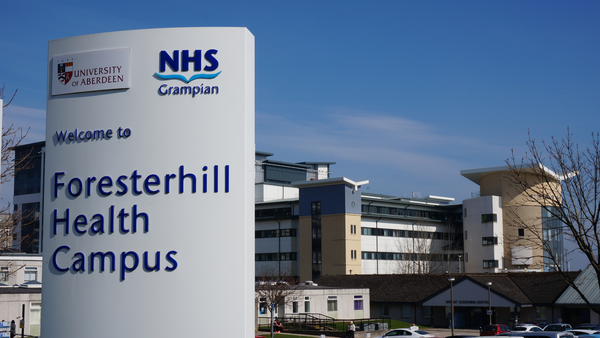
The Foresterhill Health Campus is one of the largest clinical complexes in Europe which includes the Medical School, large teaching hospital, the Institute of Medical Sciences and the Rowett Institute.