Medical Imaging (MSc)
Introduction
Our MSc in Medical Imaging will give you a deep understanding of how technology can help detect and study disease.
This programme is available to start in January or September. Apply now
Study Information
Study Options
- Learning Mode
- On Campus Learning
- Degree Qualification
- MSc
- Duration
- 12 months or 24 months
- Study Mode
- Full Time or Part Time
- Start Month
- September or January
- Location of Study
- Aberdeen
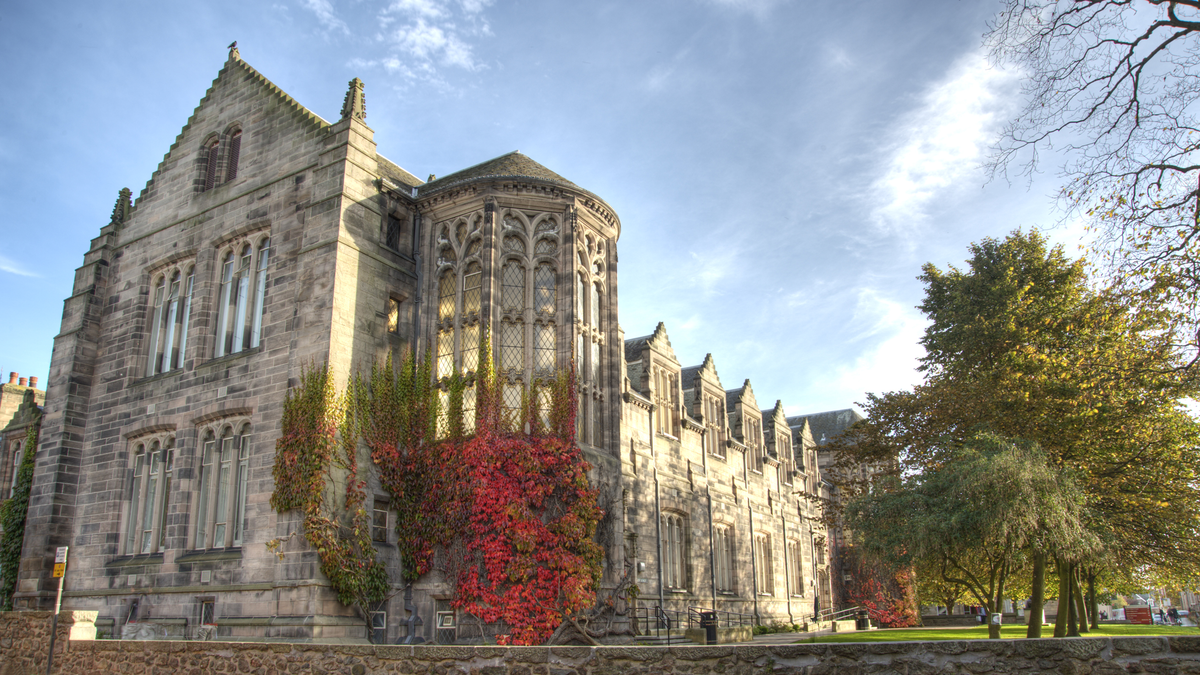
The University of Aberdeen has an internationally renowned reputation for the development of new techniques for medical imaging, including being the first place in the world to build and use a whole body Magnetic Resonance Imaging (MRI) scanner.
The use of imaging techniques in medicine has been, and continues to be, an area of vast expansion. The specialities of this programme include the full range of medical imaging modalities, including Nuclear Medicine, Positron Emission Tomography (PET), MRI and Ultrasound. It is a classroom-based programme and while there are no clinical or work-based placements we do draw on the close working relationship between the University and the Hospital to improve your knowledge of how these technologies are used in both the modern clinical and research environments.
The University’s world class equipment and facilities will provide you with unrivalled insight into medical imaging. Gaining a degree from the University of Aberdeen, with its long history of delivering medical imaging programmes, will add significant credibility to your qualification.
This programme is available to start in September or January.
Available Programmes of Study
The Medical Imaging programme shares some courses with the Medical Physics programme (particularly the introductory courses in the first term), but it doesn’t include radiotherapy and goes more deeply into image processing and image analysis. We also offer extra modules on maths/physics for imaging, making this programme accessible to those with a life sciences background as well as those with a maths, physics or engineering background.
In the second term you’ll study a course in image processing and a comparative imaging course that aims to give you a complete understanding of the advantages and disadvantages of each modality. You will also take a course on the principles of systematic reviewing and will be able to choose one of the “deeper study” courses to gain a more thorough understanding of a modality of your choice.
In the third term you will conduct a systematic review on a topic of your choice. A systematic review is a scientific methodology that combines evidence from multiple sources that satisfy pre-determined eligibility conditions in order to answer a particular research question. This project will give you the opportunity to explore an area of interest in more depth and will also give you the skills that you need in order to start developing your own research projects in either a clinical, academic or industrial environment.
- MSc
-
Medical Imaging
- Qualification
- MSc
- Duration
- 12 months or 24 months
- Learning Mode
- On Campus Learning
- Study Mode
- Full Time or Part Time
- Start Month
- September
- Location
- Aberdeen
Programme Fees
- UK
-
- Tuition Fees for 2026/27 Academic Year
- £11,100
- Tuition Fees for 2026/27 Academic Year (University of Aberdeen Graduates *)
- £7,000
-
University of Aberdeen graduates are eligible for the Alumni Postgraduate Scholarship, reducing tuition fees to £7,000 - matching the current SAAS tuition loan - See full terms and conditions
- EU / International students
-
- Tuition Fees for 2026/27 Academic Year
- £23,000
- Tuition Fees for 2026/27 Academic Year (Self-funded Students *)
- £15,000
-
The above fee includes the £8,000 Aberdeen Global Scholarship provided to self-funded international students. Full terms and conditions apply.
Stage 1
Stage 1: Compulsory Courses
- Core Biomedical Physics Skills (BP5025)
-
30 Credit Points
Core skills required for the MSc programmes in Medical Physics and Medical Imaging. These skills include academic writing, research methods (including statistics), mathematical skills required to reconstruct and process medical images as well as an understanding of the origins of radiation and its interactions with living tissues.
- Biomedical and Safety Topics in Healthcare (BP5017)
-
15 Credit Points
A study of the biomedical and safety topics relevant to Medical Physics, Medical Imaging and Bioengineering. This course is designed to provide the student with a fundamental understanding of several key biological topics which underpin medical imaging and medical physics.
- Imaging in Medicine – Ionising (BP5019)
-
15 Credit Points
The aim of this course is to give a thorough grounding in X-ray, CT and Nuclear Medicine as used in medical imaging. The course will cover the physics, hardware, and uses of ionising radiation based medical imaging technology.
Stage 2
Stage 2: Compulsory Courses
- Project Part 1 - Medical Imaging (BP5522)
-
30 Credit Points
This course comprises a literature review of the wider field of investigation within a topic to be decided. Students will work with an expert in the field to define the aims of a project and a hypothesis that can be tested.
- Comparative Imaging (BP5518)
-
15 Credit Points
A study of the similarities and differences between the various modalities that used for medical imaging
- Computing and Information Technology in Medicine (BP5516)
-
15 Credit Points
A study of computing and information technology as applied to medical physics and medical imaging. The aims of the course are: to introduce students to the applications of computing in a clinical context; to develop knowledge and skills in basic data management and medical image processing; to provide familiarity with standard data formats, networking and security in medicine; to introduce legal and safety aspects of information management in medicine and to introduce the principles of computer programming in a practical environment.
Stage 3
Stage 3: Compulsory Courses
- Project Part 2 - Medical Imaging (BP5922)
-
30 Credit Points
This course includes a data collection, computational or theoretical component, whereby students will perform the methodological and data-analysis components of a research project defined in Project Part 1 - Medical Physics. Students will work with an expert in the field to complete the aims of their project.
- Medical Image Processing and Analysis (BP5909)
-
15 Credit Points
This course provides both formal teaching of the fundamentals and hands-on practical work, to build expertise in all aspects of medical image processing and analysis. In addition to learning standard image processing techniques, students are introduced to some of the major software applications used in the Medical Imaging community.
- Imaging in Medicine – Non - Ionising (BP5908)
-
15 Credit Points
The aim of this course is to give a thorough grounding of the principles and applications of non-ionizing radiation in medical imaging. The course will cover the hardware, software and uses of both Magnetic Resonance Imaging (MRI) and Ultrasound.
- Qualification
- MSc
- Duration
- 12 months
- Learning Mode
- On Campus Learning
- Study Mode
- Full Time
- Start Month
- January
- Location
- Aberdeen
Programme Fees
- UK
-
- Tuition Fees for 2026/27 Academic Year
- £11,100
- Tuition Fees for 2026/27 Academic Year (University of Aberdeen Graduates *)
- £7,000
-
University of Aberdeen graduates are eligible for the Alumni Postgraduate Scholarship, reducing tuition fees to £7,000 - matching the current SAAS tuition loan - See full terms and conditions
- EU / International students
-
- Tuition Fees for 2026/27 Academic Year
- £23,000
- Tuition Fees for 2026/27 Academic Year (Self-funded Students *)
- £15,000
-
The above fee includes the £8,000 Aberdeen Global Scholarship provided to self-funded international students. Full terms and conditions apply.
We will endeavour to make all course options available. However, these may be subject to change - see our Student Terms and Conditions page. In exceptional circumstances there may be additional fees associated with specialist courses, for example field trips.
Fee Information
Scholarships
All eligible self-funded international Postgraduate Masters students will receive an £8,000 scholarship. Learn more about this Aberdeen Global Scholarship here.
To see our full range of scholarships, visit our Funding Database.
How You'll Study
Our Medical Imaging programme is taught using a combination of lectures, tutorials, workshops and practical classes. We employ a blended learning approach with all content (including recordings of any lectures) being available through our virtual learning environment, meaning you will have immediate access to lessons after they have been taught and can replay them online when required.
You will benefit from being able to learn outside the classroom in the university’s world class facilities, with some practical sessions also being conducted in the hospital on the same campus. You will also have access to the expertise of our staff, based in the School of Medicine, Medical Sciences and Nutrition and Foresterhill Health Campus.
Some of the teaching methods used in this programme include:
- One-to-one academic support
- Insights into current medical imaging projects
- Access to medical imaging experts
- Research-led teaching taught by key opinion leaders
Much of the teaching on this course involves participatory research work. Students are expected to engage with research work as well as classroom teaching and independent study in their own time.
Learning Methods
- Individual Projects
- Lab Work
- Lectures
- Research
- Seminars
Assessment Methods
The programme is assessed by continuous assessment (including practical write-ups, essay assignments, online tests and student presentations), written examinations, assessment of the project work and the submission of a thesis.
Why Study Medical Imaging?
- The University and the adjacent teaching hospital are home to cutting-edge medical technology, including a new £2m PET-CT scanner, a brand new radiotherapy centre with state-of-the-art linac treatment machines, as well as 3T and 1.5T MRI scanners. All of these facilities are used during the MSc.
- You will be immersed in a clinical culture and environment at the Foresterhill Health Campus, which includes a large teaching hospital and the School of Medicine, Medical Sciences and Nutrition.
- You will have the opportunity to contribute to the continued research within the department expanding knowledge of medical imaging technology and techniques such as Fast-Field Cycling MRI, functional MRI of the brain and PET scanning.
- You will be part of a select group of students being taught by academics who are active researchers and key opinion leaders.
- The MSc will help you establish a professional network and provide access to those working in the field of medical imaging to assist you with career development.
- The University of Aberdeen has been delivering MSc programmes in this field for over 30 years and was the first place in the world to build and conduct a whole body MRI scan.
- The Queen’s Anniversary Prize was awarded to the University in recognition of its achievements in developing new medical imaging techniques.
Interested in this programme?
What Our Students Say
Entry Requirements
Qualifications
The information below is provided as a guide only and does not guarantee entry to the University of Aberdeen.
A second-class honours degree in physical science or engineering.
The programme is also open to students with a Biological Sciences or Life Sciences background. Applicants from non-physical science or engineering backgrounds must be prepared to undertake training in maths and physics as part of the programme.
Please check the In My Country or Territory pages to find out if your degree is equivalent.
Academic Technology Approval Scheme (ATAS) certificate
The CAH3 code for this degree is CAH07-01-01. Students who need a visa to live or study in the UK must to apply for ATAS clearance. The ATAS clearance certificate must be valid when you apply for a visa to enter the UK. To find out if you need to apply for ATAS clearance, please visit http://www.gov.uk/guidance/academic-technology-approval-scheme
Please enter your country or territory to view relevant entry requirements.
English Language Requirements
To study for a Postgraduate Taught degree at the University of Aberdeen it is essential that you can speak, understand, read, and write English fluently. The minimum requirements for this degree are as follows:
IELTS Academic:
OVERALL - 6.5 with: Listening - 5.5; Reading - 6.0; Speaking - 5.5; Writing - 6.0
TOEFL iBT:
OVERALL - 90 with: Listening - 17; Reading - 21; Speaking - 20; Writing - 21
PTE Academic:
OVERALL - 62 with: Listening - 59; Reading - 59; Speaking - 59; Writing - 59
Cambridge English B2 First, C1 Advanced or C2 Proficiency:
OVERALL - 176 with: Listening - 162; Reading - 169; Speaking - 162; Writing - 169
Read more about specific English Language requirements here.
Document Requirements
You will be required to supply the following documentation with your application as proof you meet the entry requirements of this degree programme. If you have not yet completed your current programme of study, then you can still apply and you can provide your Degree Certificate at a later date.
- CV
- an up-to-date CV/Resumé
- Degree Certificate
- a degree certificate showing your qualifications
- Degree Transcript
- a full transcript showing all the subjects you studied and the marks you have achieved in your degree(s) (original & official English translation)
- Personal Statement
- a detailed personal statement explaining your motivation for this particular programme
Careers
By studying an MSc in Medical imaging at the University of Aberdeen, you will have a solid grounding to pursue a career in healthcare and science. Although, it is not a vocational qualification (i.e. it doesn’t include any clinical or work-based placements) you will get a thorough grounding in the area and the skills required to pursue a number of different career paths. In short, you will develop expert knowledge and understanding of medical imaging techniques that will enable you to help advance the practice of medical procedures through medical imaging technology.
Graduates of this programme have gone on to work in hospitals alongside clinicians, providing scientific and technical expertise. Others have gone on to conduct research in universities, working as research assistants. Some graduates have also chosen to work in industry or to continue with their studies and complete a PhD in Medical Imaging.
Some of the career options include:
- Further study (PhD)
- Academic jobs in university settings, e.g. lecturer, researcher
- Medical device risk management
- Jobs in hospital-based medical imaging
- Employment in the medical imaging industry
An MSc in Medical imaging from the University of Aberdeen will show employers that you have the knowledge and the practical experience of applying medical imaging techniques to real-world projects. The contacts that you make within the University and the Foresterhill Health Campus enhance the credibility of your degree and help establish your reputation as a contributor to essential research projects.
Industry Links
NHS Grampian
GE Healthcare
Philips Healthcare
Siemens Healthcare
What our Alumni Say


Our Experts
The programme will be delivered by an experienced, multidisciplinary team of internationally renowned researchers and NHS staff.
- Programme Coordinator
- Dr Gordon Waiter
- Other Expert
- Professor Andy Welch
Information About Staff Changes
You will be taught by a range of experts including professors, lecturers, teaching fellows and postgraduate tutors. However, these may be subject to change - see our Student Terms and Conditions page.
Facilities
Get in Touch
Contact Details
- Address
-
Student Recruitment & Admissions
University of Aberdeen
University Office
Regent Walk
Aberdeen
AB24 3FX