

Natural Resources Law, LLM
Introduction
Our innovative Masters programme allows students the opportunity to develop the relevant skills and knowledge in managing natural energy resources for future generations. This programme will equip students with the knowledge, and skills, to develop sound governance regimes within areas that raise the most fundamental issues for humanity.
Study Information
Study Options
- Learning Mode
- On Campus Learning
- Degree Qualification
- LLM
- Duration
- 12 months or 24 months
- Study Mode
- Full Time or Part Time
- Start Month
- January or September
- Location of Study
- Aberdeen
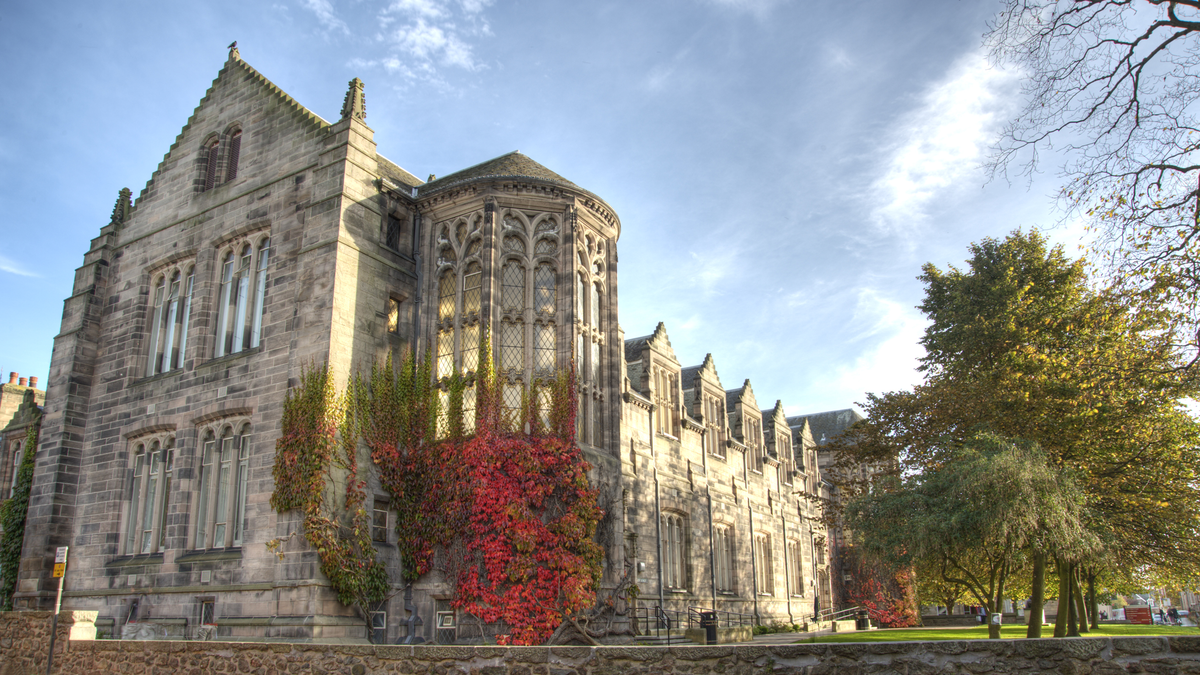
The University of Aberdeen has long held a reputation as a leader in teaching, and research, in the energy resources sector and this programme will give students a competitive advantage in highly relevant and rapidly developing sector. Our growing population has a major impact on the world’s natural resources. Indeed, this issue will only grow as the pressure to meet humanity’s developing demands. Hence, international and domestic law must address the legal implications of ownership, extraction distribution and management of natural resources. This unique programme focuses on the legal and regulatory issues associated with society’s use of and exploitation of the natural world.
Available Programmes of Study
Students will gain an in-depth understanding of extracting natural resources, ocean law, food law, and water law. Students must complete the Introduction to Natural Resources Law and Policy and Critical Legal Thinking and Scholarship. Students must then choose an additional 4 courses, taking 2 in semester 1 and 2 in semester 3.
Please note: Students staring their LLM programme in January write their Dissertation project during the Summer semester.
Duration: 12 months full-time. 24 months part time.
- LLM
-
Natural Resources Law
Qualification Duration Learning Mode Study Mode Start Month LocationLLM 12 months or 24 months On Campus Learning Full Time or Part Time September Aberdeen MoreLLM 12 months or 24 months On Campus Learning Full Time or Part Time January Aberdeen MoreProgramme Fees
Fee information Fee category Cost UK Tuition Fees for 2025/26 Academic Year £11,900 Tuition Fees for 2026/27 Academic Year £11,900 Tuition Fees for 2025/26 Academic Year (University of Aberdeen Graduates *) £7,000 Tuition Fees for 2026/27 Academic Year (University of Aberdeen Graduates *) £7,000 EU / International students Tuition Fees for 2025/26 Academic Year £23,000 Tuition Fees for 2026/27 Academic Year £23,000 Tuition Fees for 2025/26 Academic Year (Self-funded Students *) £15,000 Tuition Fees for 2026/27 Academic Year (Self-funded Students *) £15,000
We will endeavour to make all course options available. However, these may be subject to change - see our Student Terms and Conditions page. In exceptional circumstances there may be additional fees associated with specialist courses, for example field trips.
Fee Information
Scholarships
All eligible self-funded international Postgraduate Masters students starting in September 2025 will receive an £8,000 scholarship. Learn more about this Aberdeen Global Scholarship here.
To see our full range of scholarships, visit our Funding Database.
How You'll Study
Teaching is organised on a modular basis. There are two eleven-week semesters. Examinations are held at the end of each semester in December and May. The dissertation is submitted in August. The variety of assessments in the programme ensures that students apply theory to practical situations in order to become expert at being able to analyse and reason issues thoroughly. Moreover, students will gain transferrable skills including: enhanced ability to undertake advanced research in the field; an opportunity to undertake group work activities; ability to synthesise ideas and present work in oral and written assignments, plus students will undertake critical analysis.
Learning Methods
- Individual Projects
- Lectures
- Peer Learning
- Seminars
- Tutorials
Assessment Methods
Assessment is a combination of coursework during the semester and an examination at the end of the relevant semester. In addition, students must complete research skills course and a dissertation on a topic within the specialism. All full time students who begin in January commence work on the dissertation in May with a final submission date in the beginning of August.
Why Study Natural Resources Law?
- Law was one of the University of Aberdeen's foundation discipline in 1495. Today our School of Law is considered to be one of the UK’s elite training ground for lawyers.
- You will achieve an internationally recognised and respected postgraduate degree in one of the fastest growing and most dynamic areas of law.
- We are ranked in the Top 10 for Energy Law programmes in the LLM Guide 2025
- We are ranked in the Top 15 Law Schools in the UK in the Guardian University Guide 2026
- Over 93.8% of our Law graduates were in employment or further study 15 months after graduation (Graduate Outcomes Survey 2025)
- Learn from top academics, responsible for shaping energy policy and providing thought leadership to governments on key pervasive and emerging issues.
- Gain transferable skills in research, presentations, group work and conflict resolution - all of which are highly sought after in today's competitive job market
Entry Requirements
Qualifications
The information below is provided as a guide only and does not guarantee entry to the University of Aberdeen.
Normally, a 2.2 honours degree (or equivalent) in Law will be required to be accepted onto this programme. Relevant practical experience in a related field will also be beneficial.
Please enter your country or territory to view relevant entry requirements.
Aberdeen Global Scholarship
Eligible self-funded Postgraduate Taught (PGT) students will receive the Aberdeen Global Scholarship. Eligibility details and further information are available on our dedicated page.
Aberdeen Global ScholarshipEnglish Language Requirements
To study for a Postgraduate Taught degree at the University of Aberdeen it is essential that you can speak, understand, read, and write English fluently. The minimum requirements for this degree are as follows:
IELTS Academic:
OVERALL - 6.5 with: Listening - 5.5; Reading - 5.5; Speaking - 5.5; Writing - 6.0
TOEFL iBT:
OVERALL - 90 with: Listening - 17; Reading - 18; Speaking - 20; Writing - 21
PTE Academic:
OVERALL - 62 with: Listening - 59; Reading - 59; Speaking - 59; Writing - 59
Cambridge English B2 First, C1 Advanced, C2 Proficiency:
OVERALL - 176 with: Listening - 162; Reading - 162; Speaking - 162; Writing - 169
Read more about specific English Language requirements here.
Document Requirements
You will be required to supply the following documentation with your application as proof you meet the entry requirements of this degree programme. If you have not yet completed your current programme of study, then you can still apply and you can provide your Degree Certificate at a later date.
- Degree Transcript
- a full transcript showing all the subjects you studied and the marks you have achieved in your degree(s) (original & official English translation)
- Personal Statement
- a detailed personal statement explaining your motivation for this particular programme
- Reference
- a reference letter from your university discussing your academic ability. If you have been out of education for a long time you may wish to use your current or most recent employer, or another professional person
Careers
As the Law has an impact on many parts of public life and, thus, is beneficial should you wish to enter politics, business, international finance or banking. More and more non-legal employers are valuing the eminently transferable skills law graduates can bring to industry and other international business organisations. These skills include but are not limited to:
- Research
- Critical thinking
- Problem solving
- Effective communication
- Diplomacy
This programme would equip graduates interested in a career in the following industries and sectors: policy, planning, NGOs, civil service, energy and extraction.
Accreditation
This degree holds accreditation from
Our Experts
- Programme Coordinator
- Daria Shapovalova
- Other Experts
- Dr Titilayo Adebola
- Prof Zeray Yihdego
Information About Staff Changes
You will be taught by a range of experts including professors, lecturers, teaching fellows and postgraduate tutors. However, these may be subject to change - see our Student Terms and Conditions page.
Get in Touch
Contact Details
- Address
-
School of Law
University of Aberdeen
Taylor Building
Aberdeen
AB24 3UB