

Environmental Management, MSc
Introduction
Equip yourself with applied knowledge and skills to address pressing environmental challenges through this interdisciplinary programme that blends environmental science, policy and management principles. Develop environmental leadership and promote sustainable practices across various sectors. Study at a Queen's Anniversary Prize-winning university ranked 4th in the UK for sustainability, with access to the Cairngorms National Park and internationally unique field sites.
Study Information
At a Glance
- Learning Mode
- On Campus Learning
- Degree Qualification
- MSc
- Duration
- 12 months or 24 months
- Study Mode
- Full Time or Part Time
- Start Month
- September
- Location of Study
- Aberdeen
The MSc in Environmental Management will equip graduates with applied knowledge and skills to address pressing environmental challenges, fostering development of environmental leadership and promotion of sustainable practices across various sectors. This interdisciplinary programme blends environmental science, policy and management principles to facilitate comprehensive understanding of environmental change, its analysis, communication and sustainable management.
Students will explore drivers of key environmental issues and adopt a rigorous approach to assessment and management of freshwater, marine, and terrestrial biomes. The programme provides a strong foundation in core quantitative skills necessary to analyse environmental data, plus opportunities to branch out into advanced statistical analysis and mapping of complex data.
Alongside core knowledge, students can expand into environmental ethics, economics and politics, or explore biodiversity conservation and restoration challenges. Students conclude with substantial independent study with an external organisation, or a more academic project related to environmental challenges like climate change, pollution, or biodiversity loss.
Aberdeen received the Queen's Anniversary Prize in Environment and Conservation for innovations in soil science research and teaching to combat the climate crisis.
What You'll Study
- Stage 1
-
Compulsory Courses
Stage 1 compulsory courses are likely to include:
- Environmental Science in the context of the climate crisis and sustainability
- Getting Started at the University of Aberdeen (PD5006)
-
This course, which is prescribed for all taught postgraduate students, is studied entirely online, is studied entirely online, takes approximately 2-3 hours to complete and can be taken in one sitting, or spread across the first 4 weeks of term.
Topics include University orientation overview, equality & diversity, MySkills, health, safety and cyber security, and academic integrity.
Successful completion of this course will be recorded on your Transcript as ‘Achieved’.
- Ecological and Environmental Data Analysis Using R (EV5020)
-
15 Credit Points
This course is uniquely tailored for environmental scientists and ecologists and will provide students with the required background theory and practical skills relevant to modern science. Our example-led lectures and real-world based practical sessions will provide you with a foundation to become confident and proficient in analysing real data. Throughout this course, we will introduce you to using the programming language R to implement modern statistical modelling techniques. You will use the flexible linear and generalised linear modelling frameworks to analyse environmental and ecological data with an emphasis on robust and reproducible statistical methods.
Optional Courses
Stage 1 optional courses are likely to include:
- Conservation and Restoration Ecology
- Introduction to GIS Tools, Techniques, Cartography & Geovisualisation (GG5065)
-
15 Credit Points
This module will introduce students to remote sensing techniques and fundamental geospatial tools for displaying and analysing geospatial data. This will include: navigation, measurement, spatial queries, geocoding, scripting, buffering, digitising, and overlay analysis. Several ‘real world’ examples will be used to illustrate the application of the tools for data exploration, spatial analyses, mapping, and visualisation. Emphasis will be placed on obtaining a sound understanding of the principles of each technique, as well as the importance of selecting the correct approach to a problem, analysing the data, and interpretation of the results.
- Introduction to GIS Tools, Techniques, Cartography & Geovisualisation (GG5565)
-
15 Credit Points
This module will introduce students to remote sensing techniques and fundamental geospatial tools for displaying and analysing geospatial data. This will include: navigation, measurement, spatial queries, geocoding, scripting, buffering, digitising, and overlay analysis. Several ‘real world’ examples will be used to illustrate the application of the tools for data exploration, spatial analyses, mapping, and visualisation. Emphasis will be placed on obtaining a sound understanding of the principles of each technique, as well as the importance of selecting the correct approach to a problem, analysing the data, and interpretation of the results.
- Sustainability Transitions - Challenges and Opportunities (GG5072)
-
15 Credit Points
This course will discuss the theoretical (and historical) evolution of the notion of sustainability, discuss various related concepts such as green growth and the green economy, introduce the topic of sustainability transitions as an interdisciplinary issue, explore the theory of sustainability transitions and discuss various technological, political, economic and socio-cultural challenges which transitions to sustainable forms of production and consumption must overcome to be successful.
- Stage 2
-
Compulsory Courses
Stage 2 compulsory courses are likely to include:
- The Cairngorms National Park: the natural and managed environment
- Managing Terrestrial and Aquatic Environments
Optional Courses
Stage 2 optional courses are likely to include:
- Quantitative approaches for biodiversity and conservation
- Environmental Economics (EC59D5)
-
15 Credit Points
Producing and using energy is fundamentally bound up with environmental issues and challenges For example, climate change; oil spills, Acid Rain, environmental pollution and health in cities, bind the use (and misuse) of the natural environment with energy. In this module you will learn how institutions and structures affect the incentives for energy firms and consumers to damage the environment or otherwise, how to analyze the trade-offs between environmental damage and economic activity associated with the energy industry. How should governments response and what policies are likely be effective in context of environmental challenges such as Climate change? Can emissions trading and taxes help?
- Governance and Political Economy of Sustainability (GG5557)
-
15 Credit Points
This course will provide students with knowledge of theories of governance in the context of sustainable development. It will focus on the political economy of sustainable development and the political and economic tensions between different institutions, levels of administration and sectors of economy. Students will learn about theories of governance pertaining to the natural environment and sustainable development. They will explore the different institutional scales (e.g. local, national, global) of environmental governance and the processes of decision making for environmental governance. The course will also investigate the tensions between social, economic and environmental objectives for sustainable development.
- Stage 3
-
Compulsory Courses
Stage 3 will include a Environmental Management Project or Placement.
We will endeavour to make all course options available. However, these may be subject to change - see our Student Terms and Conditions page. In exceptional circumstances there may be additional fees associated with specialist courses, for example field trips.
| Fee category | Cost |
|---|---|
| UK | |
| Tuition Fees for 2025/26 Academic Year | £12,200 |
| Tuition Fees for 2026/27 Academic Year | £12,200 |
| Tuition Fees for 2025/26 Academic Year (University of Aberdeen Graduates *) | £7,000 |
| Tuition Fees for 2026/27 Academic Year (University of Aberdeen Graduates *) | £7,000 |
| EU / International students | |
| Tuition Fees for 2025/26 Academic Year | £26,250 |
| Tuition Fees for 2026/27 Academic Year | £26,250 |
| Tuition Fees for 2025/26 Academic Year (Self-funded Students *) | £18,250 |
| Tuition Fees for 2026/27 Academic Year (Self-funded Students *) | £18,250 |
Funding Opportunities
Alumni Discount Scheme - we are pleased to offer a 20% discount for postgraduate tuition fees to all alumni who have an undergraduate degree from University of Aberdeen.
Please note that the Aberdeen Alumni Discount cannot be claimed in conjunction with any other scholarship award.
Scholarships
All eligible self-funded international Postgraduate Masters students starting in September 2025 will receive an £8,000 scholarship. Learn more about this Aberdeen Global Scholarship here.
To see our full range of scholarships, visit our Funding Database.
How You'll Study
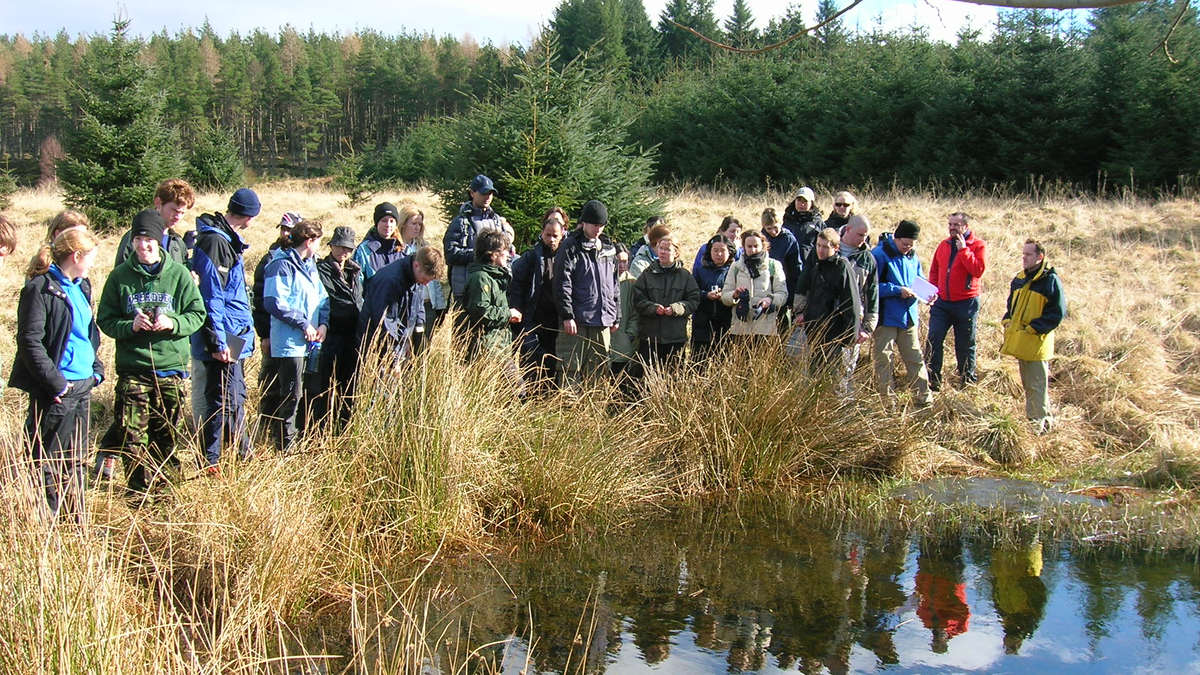
Classes are predominantly delivered in-person with recordings available online for accessibility. The programme features extensive field work including day-long trips to key environmental locations and a residential field course with on-site teaching across Aberdeenshire.
Students learn from active researchers and world experts in global change biology, freshwater and marine ecology, plant and soil science, environmental science and environmental modelling. NGO and industry professionals provide guest lectures, practical sessions, and co-supervise MSc projects and placements.
The independent research project involves direct data collection and analysis with training from academic research groups, emphasizing independent thinking and working. Alternatively, students can complete an industry placement working with and at partner organisations.
The programme benefits from the School of Biological Sciences Programme Advisory Board, with industry members providing insights into emerging trends, technologies and skills in demand, ensuring curriculum relevance and employability focus.
Small class sizes ensure personalised attention and mentoring from world-leading academics conducting cutting-edge environmental research.
Learning Methods
- E-learning
- Field Trips
- Field Work
- Group Projects
- Individual Projects
- Lectures
- Research
- Workshops
Assessment Methods
The programme is assessed entirely by continuous assessment. There are no exams. The assessments have been developed to provide training in key transferable skills as well as assessments applied assessments in courses such as environmental pollution, environmental impact assessment, and environmental management plan. The final assessment is your project report submitted in the form of a manuscript.
Why Study Environmental Management?
Award-Winning Excellence: Aberdeen received the Queen's Anniversary Prize in Environment and Conservation for innovations in soil science research and teaching to combat the climate crisis. We're ranked 4th in the UK for sustainability (QS World Rankings 2024) and 10th in the UK for delivering SDGs.
Outstanding Student Satisfaction: Top 10 in the UK for student satisfaction, ranked 2nd in Scotland. We achieve the highest postgraduate student satisfaction rates related to teaching, support and development of skills useful for career (NSS 2025).
Unique Location and Access: Study near the UK's largest fishing port and largest national park. Aberdeen features the HQ of GB Energy, offices for Marine Directorate and NatureScot, and is Europe's oil and gas capital - the epicentre of important contemporary environmental issues.
World-Class Facilities: Use modern laboratory facilities in the Science Teaching Hub, Zoology and Cruickshank buildings, plus plant growth facilities, research aquarium, and Cromarty research station. Visit internationally unique field sites including residential field courses across Aberdeenshire.
Industry Integration: Well-established links with environmental industry and annual networking events with key stakeholders. The programme benefits from input of the School of Biological Sciences Programme Advisory Board, with members drawn from environmental industry providing insights into emerging trends and technologies.
Exceptional Career Outcomes: Employability rates exceed sector averages with 80-90% of postgraduate students securing exciting opportunities within six months of graduation. Many graduates receive job offers from environmental consultancies, local government, SEPA and NatureScot.
Flexible Pathways: Choices in courses, independent study and research projects can be tailored to suit students' unique interests and intended career paths, with options for both industry placement and academic research projects.
Entry Requirements
The programme welcomes applications from graduates across diverse academic backgrounds who are passionate about environmental management and sustainability. Candidates should demonstrate genuine interest in environmental issues through relevant experience, whether academic, professional, or personal engagement with environmental challenges.
Qualifications
The information below is provided as a guide only and does not guarantee entry to the University of Aberdeen.
Minimum entry requirement for this programme is a degree in a biological, environmental or physical science, geography, or other relevant discipline at 2:2 (lower second class) UK Honours level, or an Honours degree from a non-UK institution which is judged by the University to be of equivalent worth. Candidates with at least a 2:2 or equivalent in other disciplines may be considered if they can demonstrate relevant experience and motivation.
Please enter your country or territory to view relevant entry requirements.
Aberdeen Global Scholarship
Eligible self-funded Postgraduate Taught (PGT) students will receive the Aberdeen Global Scholarship. Eligibility details and further information are available on our dedicated page.
Aberdeen Global ScholarshipEnglish Language Requirements
To study for a Postgraduate Taught degree at the University of Aberdeen it is essential that you can speak, understand, read, and write English fluently. The minimum requirements for this degree are as follows:
IELTS Academic:
OVERALL - 6.5 with: Listening - 5.5; Reading - 5.5; Speaking - 5.5; Writing - 6.0
TOEFL iBT:
OVERALL - 90 with: Listening - 17; Reading - 18; Speaking - 20; Writing - 21
PTE Academic:
OVERALL - 62 with: Listening - 59; Reading - 59; Speaking - 59; Writing - 59
Cambridge English B2 First, C1 Advanced, C2 Proficiency:
OVERALL - 176 with: Listening - 162; Reading - 162; Speaking - 162; Writing - 169
Read more about specific English Language requirements here.
Document Requirements
You will be required to supply the following documentation with your application as proof you meet the entry requirements of this degree programme. If you have not yet completed your current programme of study, then you can still apply and you can provide your Degree Certificate at a later date.
- CV
- an up-to-date CV/Resumé
- Degree Certificate
- a degree certificate showing your qualifications
- Degree Transcript
- a full transcript showing all the subjects you studied and the marks you have achieved in your degree(s) (original & official English translation)
- Personal Statement
- a detailed personal statement explaining your motivation for this particular programme
Careers
- Environmental Business Advisor and Environmental Consultant
- Environmental Quality Officer and Environmental Policy Officer
- Environmental Reporting Scientist and Environmental Planner
- Ecologist/Ecological Consultant and Conservation Practitioner
- Compliance Advisor and Climate Change & Sustainability Consultant
- Energy and Sustainability Analyst and Sustainability Officer
- Data Scientist/Analyst and Researcher/Biologist
- Engagement Officer, Landscape Technician, and Park Ranger
Outstanding Employment Success: Employability rates exceed sector averages with 80-90% of postgraduate students securing exciting opportunities within six months of graduation. Many graduates receive job offers from environmental consultancies, local government organisations such as SEPA and NatureScot, working as conservation officers or engaged in environmental policy.
Industry Connections: Well-established links with environmental industry facilitate networking opportunities during annual networking events with key stakeholders. The extensive alumni network demonstrates the programme's international reputation and global relevance across different countries and sectors.
Further Study: Postgraduate students successfully compete for PhD positions in environmental, plant, and soil science, with many progressing to academic careers in university settings as researchers.
Industry Links
University of Aberdeen environmental scientists work closely with colleagues in research institutions all over the world and have active involvement with local, national and international governmental & non-governmental organisations including:
- Scottish Natural Heritage
- Scottish Environment Protection Agency
- Marine Scotland Science
- Royal Society for the Protection of Birds
- British Trust for Ornithology
- Forestry Commission and Forest Research
- International Council for the Exploration of the Sea
Accreditation
The MSc Environmental Management programme is ISEP approved. This means graduates automatically qualify for GradISEP professional status – showing you are part of the next generation of leaders in sustainability. You can also fast-track an application to PISEP (Practitioner Status) once you have gained enough experience to complete a work-based competence assessment. ISEP Student Membership is also free on approved programmes, underpinning your studies with an invaluable toolkit of resources.
This degree holds accreditation from
Our Experts
- Programme Coordinator
- Dr Vasilis Louca
- Other Expert
- Dr Lenka Mbadugha
Information About Staff Changes
You will be taught by a range of experts including professors, lecturers, teaching fellows and postgraduate tutors. However, these may be subject to change - see our Student Terms and Conditions page.
Facilities
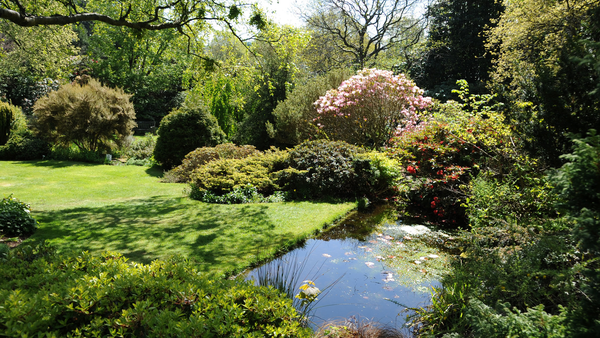
Cruickshank Botanic Garden
The Cruickshank Botanic Garden is situated on our King's College campus. It is used to support both our teaching and research; existing to promote the diversity and importance of plants and their role in the natural world.

Sir Duncan Rice Library
The University’s award winning Sir Duncan Rice Library is listed in the “Top 20 spellbinding University libraries in the World”. It contains over a million volumes, more than 300,000 e-books and 21,000 journals.
Find out more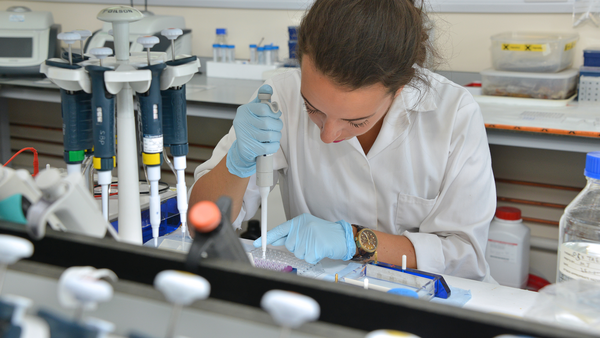
Laboratory Facilities
Our laboratory facilities include advanced analytical equipment to study soil chemical, physical and biological properties. Students have the opportunity to access state-of-the-art facilities such as mass spectroscopy, GC-MS and XRay CT imaging.
Get in Touch
Contact Details
- Address
-
Student Recruitment & Admissions
University of Aberdeen
University Office
Regent Walk
Aberdeen
AB24 3FX