
Click on any study to read more about what the research is for, who we need to take part, what may be involved and who to contact for more information.
- Impact of daily behaviour on weight-loss drug effectiveness
-
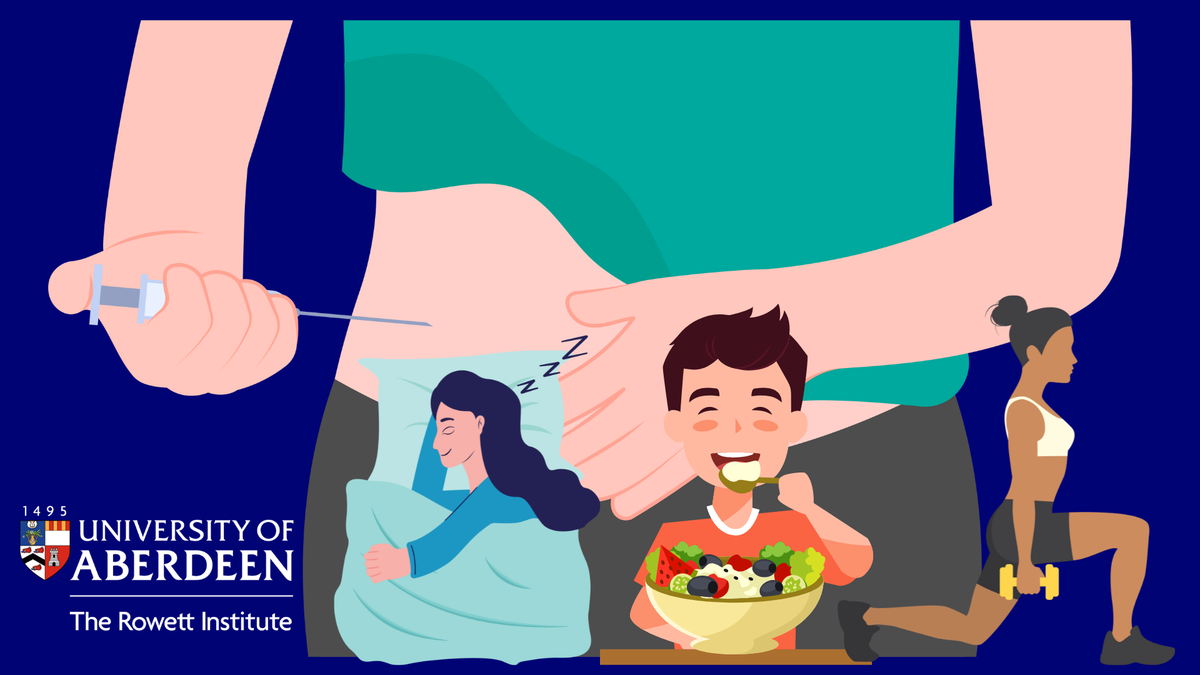
This study aims to understand how day-to-day behaviours such as meal timing, physical activity, sleep, and medication use, affect short-term changes in blood glucose levels in people who are using Mounjaro® (tirzepatide) or Ozempic® (semaglutide).
While these medications are effective in supporting blood glucose control and weight management, there is limited evidence on how daily behaviours may influence their effectiveness in real-world settings.
We will collect information on food intake, medication timing, sleep, physical activity, and blood glucose levels over a 7-day period in everyday (free-living) settings.
The findings from this study may offer preliminary insights into how lifestyle behaviours influence medication response and could help inform future research and the development of more tailored support for people using Mounjaro® or Ozempic®.
You may be eligible to take part if you:
- Are 18-75 years old
- Are currently taking Mounjaro® or Ozempic®
- Are fluent in English and able to give informed consent
- Have access to a smartphone (to use the Google Fit app)
You will find more detailed information in the Mounjaro Ozempic Blood Glucose Study Participant Information Sheet.
Contact us
Dr Brendan M Gabriel: brendan.gabriel1@abdn.ac.uk
- EnteroBiotix Study - Donate stool to help beat recurrent C.difficile infection
-
Become a Donor, Make a Difference - Request for Stool Donors
The human gut microbiome has the potential to change modern medicine and our vision is to transform the standard of care for patients suffering from substantial unmet clinical needs through microbiome modulating therapeutics.
- To achieve this we need healthy volunteers to donate their stool
- Find out more about the company here
- Find out more about becoming a donor
We need your poo to unlock the full therapeutic potential of Intestinal Microbiota Transplantation (IMT)so if you are:- Over the age of 18
- A non-smoker
- Generally fit and healthy
Further information:
Download the participant information sheet pdf.
COVID-secure measures
Find out how we will make volunteer visits COVID secure
Contact the Study Team

Claire Kidd is a Research Assistant based at the Human Nutrition Unit of the Rowett Institute.
Email Claire Kidd
Tel: 01224 438690 - FAMOUS Study - Help us investigate the heart health benefits of eating fish
-
Eating fish can protect against heart disease, but also increase blood levels of a chemical associated with unhealthy diets which has been linked to heart disease.
Our study will determine whether this chemical is a cause for concern with those who eat a diet high in fish, or whether fish should be considered a healthy alternative to eating meat-based diets in terms of heart disease.
We are looking for healthy, overweight volunteers, both male and female, with elevated blood lipids, sugar or blood pressure but not on medication, to take part in a dietary intervention study.
Volunteers should be aged between 30 and 65 years old, have a BMI of 25-29.9, have no history of heart disease or other inflammatory diseases, and should not be taking any medication for cholesterol or lipaemia.
We would also ask that volunteers are not taking any dietary supplements.
You will find more detailed information in the FAMOUS Study Participant Information Leaflet.
Contact us
Prof Frank Thies
Tel: 01224 437954 - Food Swap Study - Change your diet for your personal health and the health of the planet
-
Are you looking to change your diet for your personal health and the health of the planet but do not know how?
Help us understand how easy or difficult it is for you and others to swap the red meat in your diet with fish or plant-based foods.
Who are we looking for:
- Healthy young adults (18-30 years)
- Those who are eating red meat (beef, veal, lamb, and pork) on most days
- Those interested in making their diet healthier and more sustainable
- Those with access to a smartphone or computer
What is involved?
- Receive personalised food swaps
- Replace some red meat in your diet with fish or plant-based foods (for free) for 8 weeks.
- Complete short daily questionnaires for 24 weeks
- Monitor your food intake once a month
- Monitor your health once a month
Further Information
Download our Participant Information Sheet PIS FOOD SWAPS.
Contact us
- GendAge Study - Help us understand how age and gender affect weight loss
-
Are you interested in helping us understand how age and gender affect weight loss?
We’re conducting a ground-breaking study to explore how sex hormones influence dieting outcomes in men and women as they age. If you are willing to help us advance women’s health research by participating in a six-week diet programme with all food provided, please contact the study research team for more information.
We are looking for healthy men and women who are:
- Aged 18-40 or 55-65
- Living with overweight or obesity (BMI 27-45 kg/m2 - we can measure this for you at the screening visit)
What is involved?
- We will assess your body composition and energy expenditure
- We will analyse your blood and fat tissue, as well as urine samples
- You will be asked to consume a specially-designed weight-loss diet with all foods prepared at the Rowett Institute by dietetic staff
- We will equip you with wearable devices to monitor your glucose and physical activity levels over the course of the study
Further information
Download the GendAge Study Participant Information Leaflet V2 June 2025.
Contact us
- Purple Foods Study - Assessing the effects of purple corn and yacon on gut microbiota composition and glucose metabolism
-
Assessing the effects of purple corn and yacon on gut microbiota composition and glucose metabolism of healthy individuals.
Aim
The purpose of this study is to understand potential benefits of consuming foods prepared from Peruvian crops like purple corn and yacon, on gut and metabolic health.
What is involved?
You will receive the purple corn and yacon rich beverage and Control beverage (in powder form) to be consumed 3times/day for 5 days each, while wearing a portable glucose monitor for two weeks and complete food diaries.
This study will involve four short visits to the Rowett Institute to drop off sample drop off samples.
You can take part in this study if:
- You are between 18-70 years old, with BMI: 18-35 kg/m2.
- You are healthy
- Don’t have any food allergies
- Consume an omnivore diet (including fish and/or meat)
Further information
You will find full details in the Purple Food Study Participant Information Sheet.
Contact us
Kim Moar
k.moar@abdn.ac.uk
01224 438709Dr Madalina Neacsu
m.neacsu@abdn.ac.uk - PROSO-COPD Study - The relationship between dietary protein intake and the prevalence of sarcopenic obesity in adult females with chronic obstructive pulmonary disease (COPD)
-
As we get older, we may start to lose muscle tissue and gain more body fat. When this happens at the same time, this could lead to a health problem called sarcopenic obesity. We have ways to assess whether you are likely to have sarcopenic obesity, by measuring your fat-free body mass, and your body mass index (BMI), although we currently do not have an official clinical definition for sarcopenic obesity.
Recently we found that eating more protein, from both animal and plant-based foods, reduces your risk of getting sarcopenic obesity. We also found that those with sarcopenic obesity have a higher risk of a decreased lung function.
In this pilot study we would like to investigate, in more detail, whether the amount of protein you eat in your diet is associated with levels of muscle and fat tissue, and with your lung function
We will do this study in a small group of female participants with chronic obstructive pulmonary disease (COPD). As part of this study, we will ask you to visit us once at the Rowett Institute to measure your dietary intake, your muscle mass and body mass index, your lung function and to obtain a small blood sample.
For more information, see the PROSO-COPD Study Participant Information Sheet.
Contact us
Professor Baukje de Roos
b.deroos@abdn.ac.uk
01224 438636Tasneem Baabbad
t.baabbad.22@abdn.ac.uk
07312 653449