

An Invitation
In June 2025, I received an exciting invitation to contribute to the BBC’s A House Through Time. The programme is presented by distinguished historian Prof David Olusoga and its sixth series focuses on a property at Calton Hill, Edinburgh. One of the early residents was Mr John Steell (or Steel(e)) Snr (c.1774-1848), a carver and gilder who moved with his family from Aberdeen to Edinburgh but later faced significant financial problems. The producers were therefore keen to speak to someone about the history of debt and insolvency law in Scotland, which is where I came in.
There is much that can be said about debt in the early nineteenth century, and indeed about John Steell’s case. Prof Olusoga and I discussed such matters at length, but the time constraints of television mean that what is eventually broadcast is inevitably condensed. The following therefore provides some further detail.
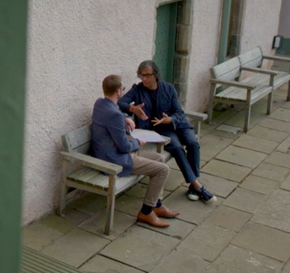
https://www.bbc.co.uk/iplayer/episode/m002zk1v/a-house-through-time-series-6-edinburgh-episode-1?seriesId=b09l64y9-structural-3-m002zk1t (TwentyTwenty and BBC)
Debt Problems
As the 1810s progressed, Steell was faring well professionally, with work projects enhancing his reputation in Edinburgh and beyond. He was a member of the Incorporated Trades of Calton and became the organisation’s convenor, a prestigious position. However, by the time he left office in mid-1819, he had incurred debts to the society amounting to £1,727 2s 9d, around £135,000 today. It has been suggested that in his financial dealings as convenor he “was not a dishonest man but he was perhaps more than a little foolish”.
Steell’s indebtedness to the Incorporated Trades, and various other creditors, was devastating, resulting in his bankruptcy and entry into sequestration in July 1819. Such an outcome could represent financial and social ruin within a society so dependent upon personal relationships and reputation in the community.
Eligibility for Sequestration
Sequestration, in the sense of a modern formal insolvency procedure, was only introduced to Scots law by the Bills of Exchange Act 1772 and was then altered in successor legislation, including the Payment of Creditors (Scotland) Act 1814 (see DW McKenzie Skene, Bankruptcy (2018), para 2-10 onwards). Sequestration involves a trustee being appointed to take control of the debtor’s assets, to sell those assets and to distribute proceeds to creditors.
In Steell’s time, the process was limited to certain occupations, including traders, merchants, manufacturers and artificers. For other (non-trading) individuals, there was an even stronger stigma attached to bankruptcy, with the accumulation of debt outside a trading context often viewed as the product of duplicity or other moral failings. Consequently, sequestration was not made available as a formal mechanism to address their debt problems.
The procedure’s restriction to traders and other specified occupations was not removed until the Bankruptcy (Scotland) Act 1856. It remains so unrestricted in the present day under the Bankruptcy (Scotland) Act 2016.
The Commencement of John Steell’s Sequestration
Records of John Steell’s sequestration provide details about his estate and the conduct of the procedure (NRS, CS96/415/1-2 – sederunt books). Despite holding various assets, including stock-in-trade, furniture, heritable property and claims, Steell’s debts far outweighed these. At the outset of the sequestration, there was a reported deficit of £5,667 16s 3d (over £442,000 today).
As well as outlining the claims of creditors in considerable detail, the sequestration records disclose various attempts made to reach an agreement with Steell’s creditors. The initial attempts were unsuccessful and a record of a meeting on 24 January 1820 discloses that Steell had “sometime ago retired to the abbey to be allowed a protection from the diligence of his creditors”.
Seeking Sanctuary
In the early nineteenth century, creditors had the ability to not only enforce debt against a debtor’s property, but also to have them imprisoned. This was a real possibility, including for Steell. The law of personal execution (enforcement) was criticised by some, including Kames in the middle of the previous century:
“There is not in the law of any country a stronger instance of harshness, I may say of brutality, than occurs in our present form of personal execution for payment of debt; where the debtor, without ceremony, is declared a rebel, merely upon failure of payment.” (H Home (Lord Kames), Historical Law Tracts (1753) vol II, 81)
However, to avoid imprisonment, sanctuary could be sought. Sanctuary sites had been more common in previous centuries, but by the nineteenth century there was only one left: “the precincts of Holyroodhouse, to which every debtor in Scotland may flee for protection against imprisonment” (GJ Bell, Commentaries, 5th edn (1826), II, 570). In the wake of Steell’s insolvency, and fearful of imprisonment, he fled to Holyrood (“the abbey”) from his home on Calton Hill.
While debtors remained within the boundaries of the sanctuary, they could not be arrested by their creditors, and there were even some opportunities for them to leave temporarily. They were, however, greatly restricted and remained essentially trapped by their debt problems.
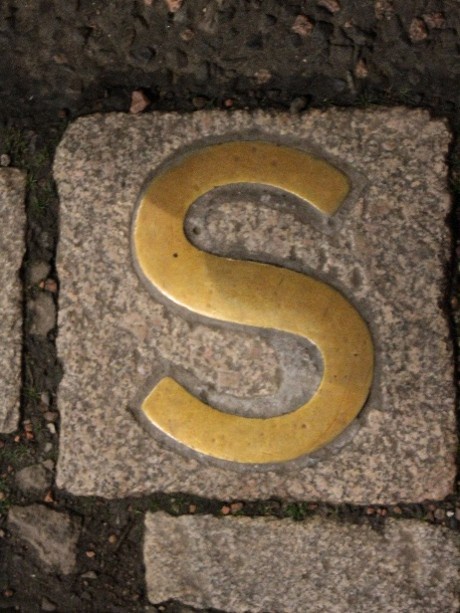
It was not until the Debtors (Scotland) Act 1880, section 4, abolished imprisonment for most forms of debt that Holyrood’s sanctuary status became largely redundant. In the present day, the boundary of the sanctuary is marked on one side by metallic “S”s on the cobblestones outside Holyrood Palace. Small reminders of the site’s former status.

The Possibility of Debt Release?
While Steell remained at Holyrood, his sequestration continued. Eventually, an agreement seems to have been reached enabling him to leave the sanctuary and return to his work. He was apparently back trading by 1822 but it is difficult to know exactly when he left the sanctuary for good and whether he sought to return there at a later date. Certainly, the sequestration records show that various requests were made for Steell to be protected from enforcement by his creditors. In any event, while he remained an undischarged bankrupt, the possibility of imprisonment would have hung over him.
Obtaining a discharge from liability for pre-existing debts was more difficult for a debtor in the 1820s than under the current law but it was certainly achievable. As Bell noted, it was the policy of mercantile bankruptcy to give:
“a reasonable relief against those misfortunes to which every man exposed to the chances of trade is liable; and, on the other hand, to restore to the public the exertions and the talents of a trader or manufacturer, who has, without his own fault, become a bankrupt.” (Bell, Commentaries, II, 439).
Bell himself provided an opinion to the trustee in Steell’s case regarding a proposed arrangement with creditors (see CS96/415/1, entry for 18 January 1821).
Discharge and the End of Sequestration
Despite such efforts, it was a couple of Dickens-esque strokes of good fortune that ultimately enabled Steell to be discharged, albeit that a death was the catalyst. The trustee in sequestration reported (CS96/415/2, 1 February 1826) that in December 1825 Steell had informed him that “by the decease of Mr Gersham Gourlay”, his wife Margaret’s uncle, he had “become entitled through [her] to a share of Mr Gourlay’s personal estate”.
This leads us to an inventory of the “personal estate” of Gersham Gourlay (NRS, SC47/40/2, Forfar Sheriff Court). Gourlay died intestate in December 1825 with a huge estate of just over £36,157, conservatively estimated at around £3 million today but potentially significantly higher if other calculations are used. His estate was split among various nephews and nieces. However, we cannot be sure how much of it reached Steell’s family or indeed how much was used to pay his creditors but the money that did arrive was no doubt gratefully received.
Another fortunate development was that Steell’s brother-in-law made a new proposal for discharge of debts in early 1826. He agreed to guarantee the payment of 2s/6p per pound, in addition to the dividend(s) already paid, if Steell’s creditors agreed to a discharge (CS96/415/2, 1 February 1826). This seems to have helped bring the sequestration to an end in 1826. Consequently, Steell’s marriage into a family of wealthy Dundonian shipbuilders had literally borne dividends.
The End of the Story…?
We will never know how Steell’s earlier debt problems affected him and his family in later life. His resilience in the face of such difficulties is admirable but, as we have seen, there was also considerable luck involved. By escaping from his debt problems, Steell could set about rebuilding his reputation and his business. In doing so, he was supported by his family, including his son John Jr (1804-1891), who later eclipsed his father as a sculptor.
Excessive debt was a haunting spectre in early nineteenth-century Scotland, even more so than today. John Steell’s case provides us with glimpses as to how the law of debt and insolvency were engaged with respect to a particular individual.
Even some of the most famous individuals of the age were not immune from debt’s ravages. Sir Walter Scott (1771-1832) was bankrupted by financial crisis in 1825-1826 and a trust was established for the benefit of his creditors. This resulted in him repaying debts for the rest of his life and beyond.
Given the debt problems experienced by both Scott and Steell, and their families, it seems fitting that the author’s statue at the Scott Monument in Princes Street Gardens was sculpted by Sir John Steell Jr.
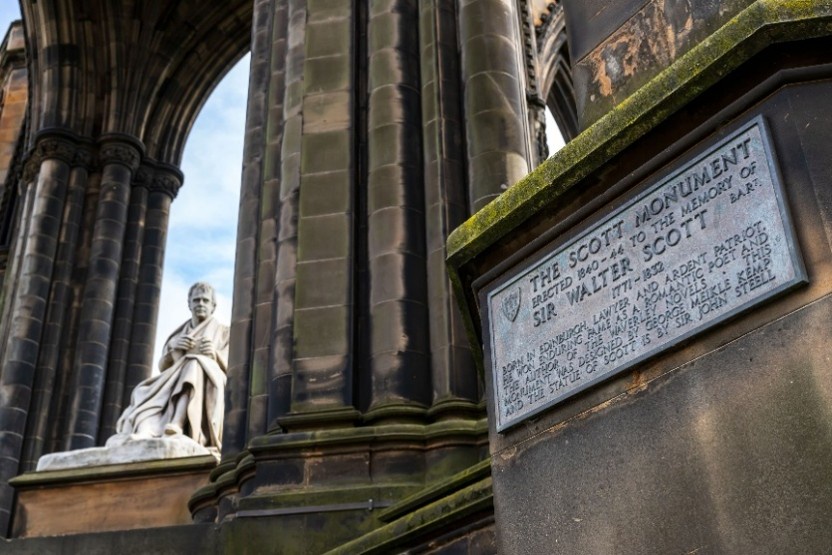
https://cultureedinburgh.com/our-venues/scott-monument
A House Through Time, Series 6, is available now on BBC Iplayer