Introduction
Understand and tackle the global biodiversity crisis with field courses, stakeholder engagement, and expert tuition from world-leading ecologists. Learn the latest fundamental science behind the conservation of biodiversity alongside practical skills in data analysis, GIS, project management, and grant writing. Study in Scotland's biodiversity hotspot with access to the Cairngorms National Park, coastal environments, and key conservation sites. Prepare for careers in conservation agencies, NGOs, government, consultancy, or academic research at an institution ranked globally for sustainability.
Study Information
At a Glance
- Learning Mode
- On Campus Learning
- Degree Qualification
- MSc
- Duration
- 12 months or 24 months
- Study Mode
- Full Time or Part Time
- Start Month
- September
- Location of Study
- Aberdeen
Earth's ecosystems are in crisis with biodiversity suffering from anthropogenic climate change. Can we live sustainably alongside wolves and other large predators? How do we balance our need for food, land, and power with the need to preserve biodiversity? Do we know which conservation efforts will work and which will fail?
Explore answers to critical conservation questions through field courses, stakeholder engagement, and expert tuition from our world-leading ecologists and environmental scientists. This interdisciplinary programme takes a holistic and ambitious approach to limiting and reversing biodiversity loss.
Students will develop practical skills in field monitoring techniques, rewilding and restoration ecology, ecological data analysis using R and GIS, project management, and grant writing. The programme includes placement opportunities with carefully selected NGO and industry partners, plus hands-on field work in the Cairngorms National Park and coastal environments.
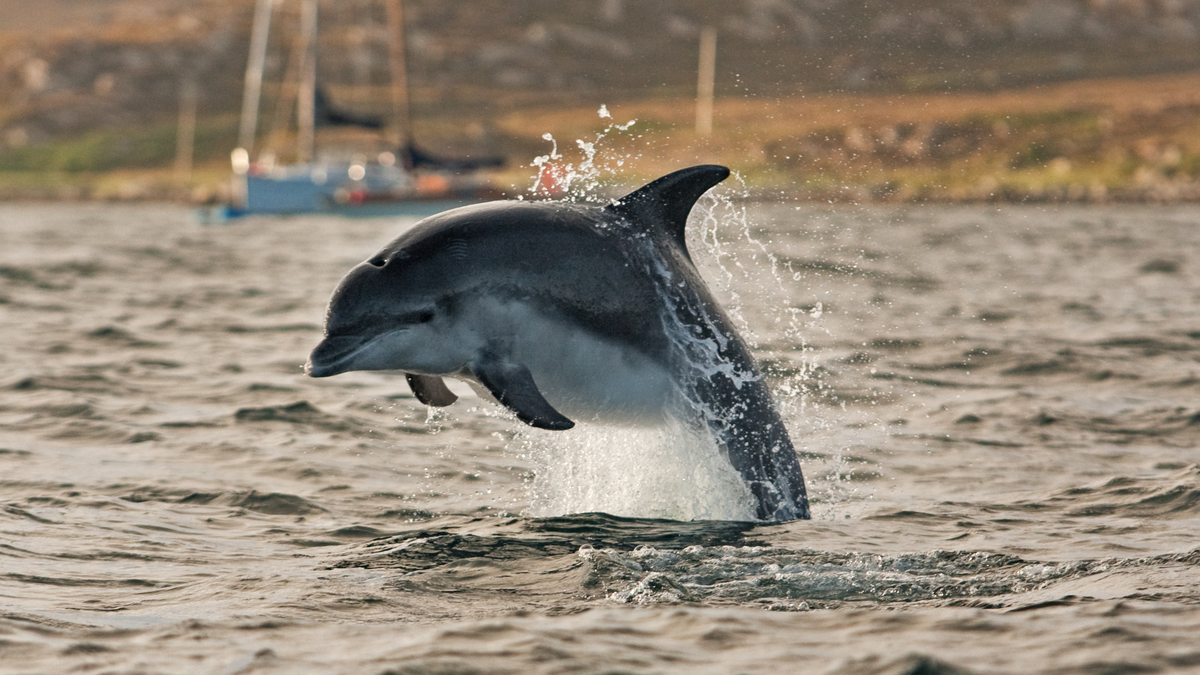
Aberdeen's unique location provides access to a biodiversity hotspot featuring beavers, golden eagles, dolphins, otters, pine martens, red squirrels, and seals. The university ranks 37th globally for sustainability and has over 60 years of experience teaching ecological science.
What You'll Study
- Stage 1
-
Part-time students can take up to 120 credit points in an academic year.
Requirements:
- 120 credits of compulsory courses (Stages 1 and 2)
- 60-credit research project or professional work placement
Compulsory Courses
Compulsory courses included:
- EK50XX - Conservation and Restoration Ecology
- This course blends tuition from leading ecologists on the latest conservation science with visits to key biodiversity sites in north east Scotland. Learn the science behind species decline and restoration, including reintroductions, rewilding, and other contemporary approaches
Part-time students must take PD5006 and EV5020
- Ecological and Environmental Data Analysis Using R (EV5020)
-
15 Credit Points
This course is uniquely tailored for environmental scientists and ecologists and will provide students with the required background theory and practical skills relevant to modern science. Our example-led lectures and real-world based practical sessions will provide you with a foundation to become confident and proficient in analysing real data. Throughout this course, we will introduce you to using the programming language R to implement modern statistical modelling techniques. You will use the flexible linear and generalised linear modelling frameworks to analyse environmental and ecological data with an emphasis on robust and reproducible statistical methods.
- Getting Started at the University of Aberdeen (PD5006)
-
This course, which is prescribed for all taught postgraduate students, is studied entirely online, takes approximately 2-3 hours to complete and can be taken in one sitting, or spread across the first 4 weeks of term.
Topics include University orientation overview, equality & diversity, MySkills, health, safety and cyber security, and academic integrity.
Successful completion of this course will be recorded on your Transcript as ‘Achieved’.
Optional Courses
Plus selecting 30 credits from the following optional courses:
- EK50XX - Environmental Change, Management and Sustainability
- Gain practical knowledge and skills in the science of environmental monitoring and management and understand how contemporary approaches relate to the major crises of today. Use laboratory approaches to master current approaches to environmental analysis.
- EK50XX - Rewilding: Principles, Perspectives and Practice
- Study the history, theory, methods and practice of rewilding from a range of different perspectives including ecological, historical, social, and archaeological.
- PH50XX - Environmental Ethics
- Introduction to GIS Tools, Techniques, Cartography & Geovisualisation (GG5065)
-
15 Credit Points
This module will introduce students to remote sensing techniques and fundamental geospatial tools for displaying and analysing geospatial data. This will include: navigation, measurement, spatial queries, geocoding, scripting, buffering, digitising, and overlay analysis. Several ‘real world’ examples will be used to illustrate the application of the tools for data exploration, spatial analyses, mapping, and visualisation. Emphasis will be placed on obtaining a sound understanding of the principles of each technique, as well as the importance of selecting the correct approach to a problem, analysing the data, and interpretation of the results.
- Stage 2
-
Compulsory Courses
Compulsory courses include:
- EK55XX - Quantitative Approaches for Biodiversity Conservation
- Tackle major global biodiversity problems with cutting edge analytical tools. Through interactive lectures and guided computer workshops this course will teach you the latest analytical methods, how to apply them to medium, large, and "big" datasets, and how to communicate complicated outcomes to stakeholders to maximise impact.
Part-time students must register for either:
- Project in Environmental and Conservation Science, or
- Professional Work Placement
Assessments for part-time students will be:
- Coursework: Assignments as prescribed for each course
- MSc students: Dissertation based on your research project
Please note: Project work can be split between Year 1 and Year 2 and Part-time students must consult with the Programme Coordinator before registering for courses.
- Land use and the Changing Environment (EV5803)
-
15 Credit Points
This course is a residential field course that takes place in the Cairngorm National Park. During this course you will gain experience relating to the broad theme of environmental science.
You will develop a greater understanding of the dynamics of the landscape and the interactions and conflicts between stakeholders. You will be focusing on issues associated with different land uses within the Cairngorms National Park and associated decisions which directly impact the environment. This will be done by a number of site visits to sporting estates, forests, farms, and national nature reserves.
You will also have the chance to collect and make use of empirical data within the national park.
This course carries a cost of £95 for MSci Biological Sciences students
Dates for this field course are 23rd March – 27th March 2026
Optional Courses
You must select two of the following courses:
Please note, if you select GG5065 in the first term you cannot select this in the second term.
- EV55XX - Systems Ecology and Resource Management
- Introduction to GIS Tools, Techniques, Cartography & Geovisualisation (GG5565)
-
15 Credit Points
This module will introduce students to remote sensing techniques and fundamental geospatial tools for displaying and analysing geospatial data. This will include: navigation, measurement, spatial queries, geocoding, scripting, buffering, digitising, and overlay analysis. Several ‘real world’ examples will be used to illustrate the application of the tools for data exploration, spatial analyses, mapping, and visualisation. Emphasis will be placed on obtaining a sound understanding of the principles of each technique, as well as the importance of selecting the correct approach to a problem, analysing the data, and interpretation of the results.
- Governance and Political Economy of Sustainability (GG5557)
-
15 Credit Points
This course will provide students with knowledge of theories of governance in the context of sustainable development. It will focus on the political economy of sustainable development and the political and economic tensions between different institutions, levels of administration and sectors of economy. Students will learn about theories of governance pertaining to the natural environment and sustainable development. They will explore the different institutional scales (e.g. local, national, global) of environmental governance and the processes of decision making for environmental governance. The course will also investigate the tensions between social, economic and environmental objectives for sustainable development.
- Environmental Economics (EC59D5)
-
15 Credit Points
Producing and using energy is fundamentally bound up with environmental issues and challenges For example, climate change; oil spills, Acid Rain, environmental pollution and health in cities, bind the use (and misuse) of the natural environment with energy. In this module you will learn how institutions and structures affect the incentives for energy firms and consumers to damage the environment or otherwise, how to analyze the trade-offs between environmental damage and economic activity associated with the energy industry. How should governments response and what policies are likely be effective in context of environmental challenges such as Climate change? Can emissions trading and taxes help?
- EK55XX - Quantitative Approaches for Biodiversity Conservation
- Stage 3
-
Compulsory Courses
Students will undertake a final stage 60 credit research project or placement in Environmental and Conservation Science.
We will endeavour to make all course options available. However, these may be subject to change - see our Student Terms and Conditions page. In exceptional circumstances there may be additional fees associated with specialist courses, for example field trips.
| Fee category | Cost |
|---|---|
| UK | |
| Tuition Fees for 2026/27 Academic Year | £12,200 |
| Tuition Fees for 2026/27 Academic Year (University of Aberdeen Graduates *) | £7,000 |
| EU / International students | |
| Tuition Fees for 2026/27 Academic Year | £26,250 |
| Tuition Fees for 2026/27 Academic Year (Self-funded Students *) | £18,250 |
Fee Information
Scholarships
All eligible self-funded international Postgraduate Masters students will receive an £8,000 scholarship. Learn more about this Aberdeen Global Scholarship here.
To see our full range of scholarships, visit our Funding Database.
How You'll Study
Classes are predominantly delivered in-person with recordings available online. The programme features extensive field work including day-long trips to key biodiversity locations and a residential field course in the Cairngorms National Park.
Students work directly with conservation organisations through placement opportunities and engage with industry experts through guest lectures and workshops. The independent research project involves direct data collection and analysis with training from active research groups.
Teaching combines theoretical foundations with practical application, emphasising hands-on learning in real conservation contexts. Small class sizes ensure personalized attention and mentoring from world-leading academics in ecology and environmental science.
Learning Methods
- Field Trips
- Field Work
- Group Projects
- Individual Projects
- Lectures
- Professional Placements
- Research
- Workshops
Assessment Methods
The programme uses continuous assessment with no traditional exams. Assessment methods include conservation project reports, data analysis assignments, field work assessments, independent research manuscripts, and professional skills portfolios covering project management, grant writing, and policy communication.
Why Study Biodiversity Conservation?
World-Class Location: Aberdeen provides unrivalled access to the Cairngorms National Park (UK's largest), stunning coastline, and the UK's largest fishing port. Study in a biodiversity hotspot with beavers, golden eagles, dolphins and cetaceans, otters, pine martens, red squirrels, capercaillie, and seals.
Global Reputation: The University of Aberdeen has been teaching ecological science for over 60 years and ranks 37th globally for sustainability (QS World University Ranking 2024). Our graduates work in conservation agencies, NGOs, government, consultancy, and leading academic positions worldwide.
Industry Connections: Aberdeen hosts the HQ for GB Energy and key offices for Marine Directorate and NatureScot. The programme is designed with industry input and includes placement opportunities with conservation organisations.
Practical Focus: This programme uniquely focuses on ecological principles that facilitate humanity and animal populations living sustainably side-by-side. From environmental monitoring to modelling population dynamics and resolving human-animal conflict, you'll gain hands-on experience.
Cutting-Edge Skills: Develop quantitative expertise in R programming, GIS analysis, and data visualisation alongside professional skills in project management, grant writing, and policy communication that are in high demand in the conservation sector.
Real-World Experience: Conduct independent research projects, work with key industry stakeholders, and gain first-hand experience of contemporary conservation practice including rewilding and other nature recovery interventions.
Entry Requirements
The programme welcomes applications from graduates with relevant academic backgrounds who are passionate about biodiversity conservation and restoration. We particularly encourage applications from candidates with experience in biological sciences, environmental studies, geography, or related disciplines.
Candidates from other academic backgrounds may be considered if they can demonstrate relevant experience, motivation, and commitment to conservation work through volunteering, employment, or personal projects in environmental or conservation contexts.
Qualifications
The information below is provided as a guide only and does not guarantee entry to the University of Aberdeen.
- 2:2 (lower second class) UK Honours degree in biological sciences, environmental science, physical science, geography, or other relevant discipline
- International qualifications judged equivalent to UK 2:2 Honours level
- Candidates with degrees in other disciplines may be considered if they demonstrate relevant experience and strong motivation for conservation work
Additional Requirements: Applicants should demonstrate genuine interest in biodiversity conservation through:
- Relevant work experience (paid or voluntary)
- Participation in environmental projects or research
- Clear articulation of career goals in conservation
- Understanding of current environmental challenges
Please enter your country or territory to view relevant entry requirements.
Aberdeen Global Scholarship
Eligible self-funded Postgraduate Taught (PGT) students will receive the Aberdeen Global Scholarship. Eligibility details and further information are available on our dedicated page.
Aberdeen Global ScholarshipEnglish Language Requirements
To study for a Postgraduate Taught degree at the University of Aberdeen it is essential that you can speak, understand, read, and write English fluently. The minimum requirements for this degree are as follows:
IELTS Academic:
OVERALL - 6.5 with: Listening - 5.5; Reading - 5.5; Speaking - 5.5; Writing - 6.0
TOEFL iBT:
OVERALL - 90 with: Listening - 17; Reading - 18; Speaking - 20; Writing - 21
PTE Academic:
OVERALL - 62 with: Listening - 59; Reading - 59; Speaking - 59; Writing - 59
Cambridge English B2 First, C1 Advanced, C2 Proficiency:
OVERALL - 176 with: Listening - 162; Reading - 162; Speaking - 162; Writing - 169
Read more about specific English Language requirements here.
Document Requirements
You will be required to supply the following documentation with your application as proof you meet the entry requirements of this degree programme. If you have not yet completed your current programme of study, then you can still apply and you can provide your Degree Certificate at a later date.
- CV
- an up-to-date CV/Resumé
- Degree Certificate
- a degree certificate showing your qualifications
- Degree Transcript
- a full transcript showing all the subjects you studied and the marks you have achieved in your degree(s) (original & official English translation)
- Personal Statement
- a detailed personal statement explaining your motivation for this particular programme
- Reference
- a reference letter from your university discussing your academic ability. If you have been out of education for a long time you may wish to use your current or most recent employer, or another professional person
Careers
Graduates will be equipped with the knowledge, skills, and practical experience needed for successful careers in biodiversity conservation and environmental management. The programme's emphasis on quantitative analysis, field skills, and professional development prepares students for immediate impact in the conservation sector.
Career Opportunities:
- Ecological Consultant - Working with environmental consultancies on habitat assessments, species surveys, and conservation planning
- Conservation Practitioner - With NGOs, national parks, wildlife trusts, and conservation organisations
- Research Scientist - In universities, research institutes, or government agencies conducting conservation research
- Environmental Policy Advisor - With government departments, international organisations, or advocacy groups
- Wildlife Manager - In protected areas, national parks, or private conservation estates
- Environmental Educator - With museums, visitor centres, or educational organisations
- Conservation Project Manager - Leading restoration and conservation initiatives
Further Study: Many graduates pursue PhD research in biodiversity conservation, ecology, environmental science, or related fields.
Our Experts
- Other Experts
- Dr Thomas Bodey
- Dr David Fisher
Information About Staff Changes
You will be taught by a range of experts including professors, lecturers, teaching fellows and postgraduate tutors. However, these may be subject to change - see our Student Terms and Conditions page.
Facilities
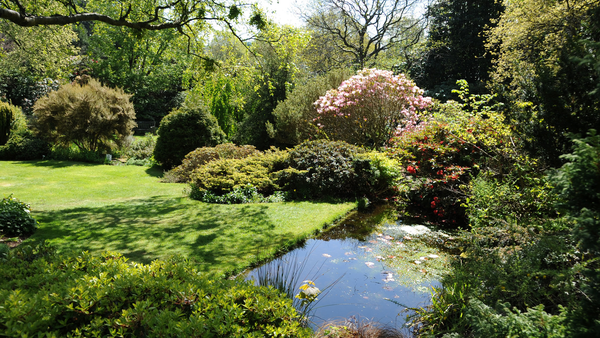
Cruickshank Botanic Garden
The Cruickshank Botanic Garden is situated on our King's College campus. It is used to support both our teaching and research; existing to promote the diversity and importance of plants and their role in the natural world.

Science Teaching Hub
Our state-of-the-art Science Teaching Hub provides students with a digitally focussed environment including advanced analytical tools, research-grade equipment and flexible laboratory spaces.
Find out more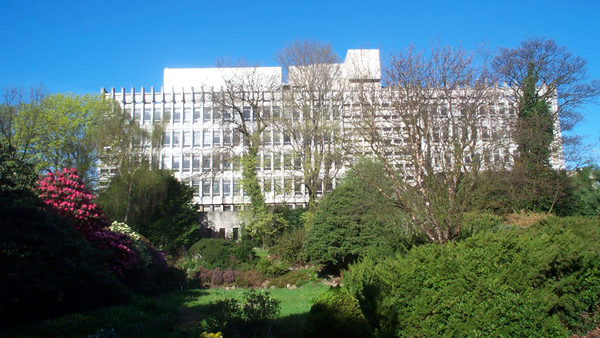
Zoology Museum
The museum’s displays are worldwide in scope, from protozoa to the great whales, including taxidermy, skeletal material, study skins, fluid-preserved specimens and models.
Get in Touch
Contact Details
- Address
-
Student Recruitment & Admissions
University of Aberdeen
University Office
Regent Walk
Aberdeen
AB24 3FX