

The journey to mercury-free microscopy at the University of Aberdeen Microscopy and Histology Core Facility
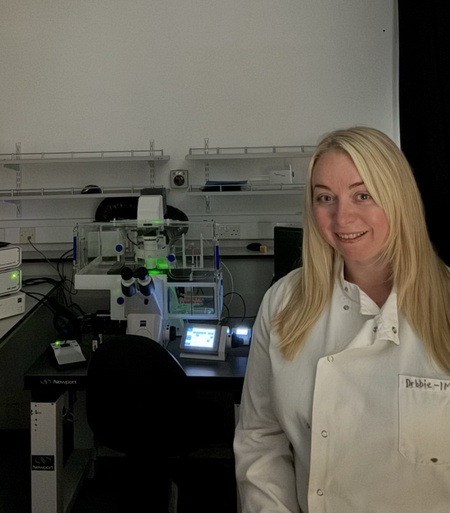
Replacing mercury and metal halide lamps with LED illumination is a great idea for many reasons – that’s why new microscopes now come with LED systems. However, retrofitting old microscopes isn’t always the top priority. With the impending mercury and metal halide bulb phase-out coming in 2027, this is moving up the priority list, but what can microscope facilities do to address this? We spoke to Dr Debbie Wilkinson, who manages the Microscopy and Histology Core Facility at the University of Aberdeen, about her experience and the lessons she learned along the way.
The full article is available here, below is an overview of the challenge encountered, along with advice for other Facilities.
The challenge
When did the mercury ban first land on your radar, and what was your initial reaction?
I first heard about the upcoming mercury restrictions around 2022, and my initial reaction was a mix of concern and uncertainty. Stockpiling mercury bulbs was discussed, but it never felt like a sustainable approach. Prices were already increasing, and it was clearly a short-term fix rather than a long-term solution.
Advice for other facilities
If you had one piece of advice for facilities that haven’t started planning yet, what would it be?
Don’t wait for the ban to become an emergency. Gather information and explore what options might be available from your institution to support the upgrade to sustainable equipment. Then bring in your distributor early to discuss costs, demos and practicalities. That way, by the time you’re writing a grant or capital request, you’ll have evidence from your own facility and a clear implementation plan.
The earlier you start the conversation, the more options you have. Waiting until mercury lamps become difficult to source only makes the transition harder and more expensive.