
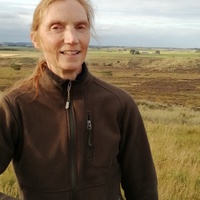
Chair in Health Services Research and Philosophy
- About
-
- Email Address
- vikki.entwistle@abdn.ac.uk
- Office Address
- More Contact Information
- School/Department
- School of Medicine, Medical Sciences and Nutrition
Biography
I am Professor of Health Services Research and Philosophy with academic homes in both the Aberdeen Centre for Evaluation (formerly Health Services Research Unit) within the Institute of Applied Health Sciences on the University's Foresterhill campus and Philosophy (School of Divinity, History, Philosophy & Art History) on the Old Aberdeen campus.
My research and teaching are highly interdisciplinary. Broadly speaking, I use philosophy and social research to understand and address concerns about quality, ethics and social justice in health care, public health and funeral provision. I am particularly interested in what are sometimes called person-centred approaches - you might prefer to talk about the humanity in health care and death care. I often use feminist theorising and a relational capabilities approach to human wellbeing in my work.
I've had the privilege of working in, and visiting, a number of universities internationally, gravitating back to the University of Aberdeen each time with an extended range of valued colleagues and learning.
Qualifications
- BA (hons) Natural Sciences and Theology1986 - University of Cambridge
- MSc Information Science (Distinction)1990 - City University, London
- MA Philosophy (Distinction)2008 - The Open University
- PhD Information Science1994 - City University, London
Memberships and Affiliations
- Internal Memberships
-
I am currently a member of the Academic Advisory Board of Aberdeen University Press and the Gifford Lectures Committee.
I co-convene, with Arnar Arnason, the interdisciplinary 'Death Matters' network and Centre-in-Development.
- External Memberships
-
I am currently a member of the Faculty of Public Health Ethics Committee and the NHS Grampian Charity Research Grants Committee.
Latest Publications
Staying connected? Revaluing 'relationship goods' in digital health ecologies
Health Care AnalysisContributions to Journals: Articles- [ONLINE] DOI: https://doi.org/10.1007/s10728-026-00600-2
Rethinking Healthcare Improvement: Philosophy and Ethics in Practice
Bloomsbury Academic. 320 pagesBooks and Reports: BooksWhy does funeral attendance matter?: Revisiting 'Configurational Eulogies' in light of the COVID-19 pandemic in the UK
Mortality, vol. 29, no. 4, pp. 706-727Contributions to Journals: ArticlesTelephone consulting for ‘Personalised Care and Support Planning’ with people with long-term conditions: a qualitative study of healthcare professionals’ experiences during COVID-19 restrictions and beyond
BMC Primary Care, vol. 25, 193Contributions to Journals: ArticlesValues and Ethics
Cambridge University Press, Cambridge. 44 pagesBooks and Reports: Books
- Research
-
Research Overview
I use social research and practical philosophy to help understand what matters for 'good' public health, healthcare and care of the dead and bereaved, to analyse ethical issues, and to consider how policy and practice should be developed in those domains. I seek to take seriously the plurality of values, diversity of perspectives, complexity of social relationships and demands of social justice.
Research Areas
Accepting PhDs
I am currently accepting PhDs in Applied Health Sciences, Philosophy.
Please get in touch if you would like to discuss your research ideas further.

Research Specialisms
- Ethics
- Feminism
- Health and Social Care
Our research specialisms are based on the Higher Education Classification of Subjects (HECoS) which is HESA open data, published under the Creative Commons Attribution 4.0 International licence.
Current Research
I am currently working on several projects:
Following from the Wellcome funded 'But why is that better?' project, which explored what applied philosophy and ethics can contribute to healthcare improvement, I continue to work with Professor Alan Cribb on questions about the nature and value of relationship goods in healthcare, and the implications for these of various 'shifts to digital'. We've recently published an agenda-setting paper for that work. Most outputs from 'But why is that better?' can be found at https://www.kcl.ac.uk/research/but-why-is-that-better-project and our open access book 'Rethinking healthcare improvement: philosophy and ethics in practice' is available from Bloomsbury.
I am also working with Dr Arnar Árnason (Anthropology), to develop the foundations for a Centre (currently 'in development') for Interdisciplinary Death Matters. This broad initiative builds from the collaboration and learning that for me were initiated with the ESRC funded project 'Developing practical ethics of care for the dead and bereaved' . That project examined what we can learn from the disruption and development of funeral practices during COVID-19. One of the main outputs was the Care in Funerals Casebook - an online resource to support reflection and discussion of values and practical and ethical challenges in funeral provision (see www.abdn.ac.uk/care-in-funerals-casebook ). My contributions to developmental work for the Death Matters Centre include fostering internal and external network development and supporting grant writing. We have recently been awarded seed funding from the Scotland Beyond Net Zero initiative to develop a research network and scope a research agenda to promote sustainability in funerary practices.
Collaborations
Current external collaborations include with:
Professor Alan Cribb (King's College London) - on philosophy for healthcare quality, including development of work on the value of healthcare relationships in the context of digitalisation.
Dr Rachel Adedokun (Robert Gordon University) - on sustainability in funeral provision.
Dr Gert Olthuis (Radbound UMC), Prof Katrien Schaubroeck (University of Antwerp), Lucas Boer (Radboud UMC), Dr Carolyn Phelan (Flinders University), Abi Pattenden (National Association of Funeral Plan Providers), Dr Kate Falconer (University College Cork) and Dr Tadgh Connery (University College Cork) on various ideas and potential projects relating to respect and care for the dead and bereaved.
- Teaching
-
Teaching Responsibilities
For Academic Year 2026-27 my main teaching commitments are:
Lecturer for PU5056/5062 Key Concepts in Global Health (covering human rights, justice and ethics in global health)
Lecturer for PH1522 How Should One Live? (covering feminist approaches to ethics)
Lecturer for AY1505 Death! (covering Funerals and COVID-19: learning from disruption)
Lecturer for PH2042 Philosophy and Society (covering philosophy of healthcare improvement)
Lecturer for PH355U Contemporary Ethics
Lecturer for PH5069 Philosophy and Society (online)
Lecturer for PH5075 Core Concepts and Methods in Applied Philosophy (online)
Lecturer/supervisor for PH5571 Readings in Applied Philosophy (online)
Project and dissertation supervision:
I supervise UG and PG philosophy projects and dissertations (usually relating to ethics, feminist philosophy or philosophy of healthcare).
I am happy to discuss possible supervision with postgraduate students from diverse disciplinary and practitioner backgrounds who are interested in pursuing questions relating to values and ethics in healthcare and/or deathcare. I particularly welcome inquiries from people who want to work across philosophical and social research approaches, and to draw on feminist theorising and/or a capability approach.
Non-course Teaching Responsibilities
I contribute to the Philosophy Summer School, usually teaching on applied philosophy and ethics.
- Publications
-
Page 20 of 20 Results 191 to 199 of 199
Developing information materials to present the findings of technology assessments to consumers: The experience of the NHS centre for reviews and dissemination
International Journal of Technology Assessment in Health Care, vol. 14, no. 1, pp. 47-70Contributions to Journals: Articles- [ONLINE] View publication in Scopus
Disseminating information about healthcare effectiveness: A survey of consumer health information services
Quality in Health Care, vol. 7, no. 3, pp. 124-129Contributions to Journals: Articles- [ONLINE] View publication in Scopus
Evaluating interventions to promote patient involvement in decision-making: By what criteria should effectiveness be judged?
Journal of Health Services Research & Policy, vol. 3, no. 2, pp. 100-107Contributions to Journals: Articles- [ONLINE] View publication in Scopus
Supporting consumer involvement in decision making: What constitutes quality in consumer health information?
International Journal for Quality in Health Care, vol. 8, no. 5, pp. 425-437Contributions to Journals: Articles- [ONLINE] View publication in Scopus
Media coverage of the child B case
British Medical Journal, vol. 312, no. 7046, pp. 1587-1591Contributions to Journals: Articles- [ONLINE] View publication in Scopus
A systematic review of the effectiveness of health service interventions aimed at reducing inequalities in health
Journal of Health Services Research & Policy, vol. 1, no. 2, pp. 93-103Contributions to Journals: ArticlesInformed choice for users of health services: views on ultrasonography leaflets of women in early pregnancy, midwives, and ultrasonographers
BMJ (Clinical research ed.), vol. 313, no. 7067, pp. 1251-3Contributions to Journals: ArticlesReporting research in medical journals and newspapers
British Medical Journal, vol. 310, no. 6984, pp. 920-923Contributions to Journals: Articles- [ONLINE] DOI: https://doi.org/10.1136/bmj.310.6984.920
- [ONLINE] View publication in Scopus
Health and medical coverage in the UK national press
Public Understanding of Science, vol. 1, no. 4, pp. 367-382Contributions to Journals: Articles- [ONLINE] DOI: https://doi.org/10.1088/0963-6625/1/4/002
- [ONLINE] View publication in Scopus


