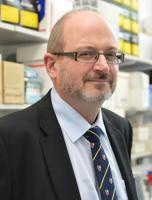
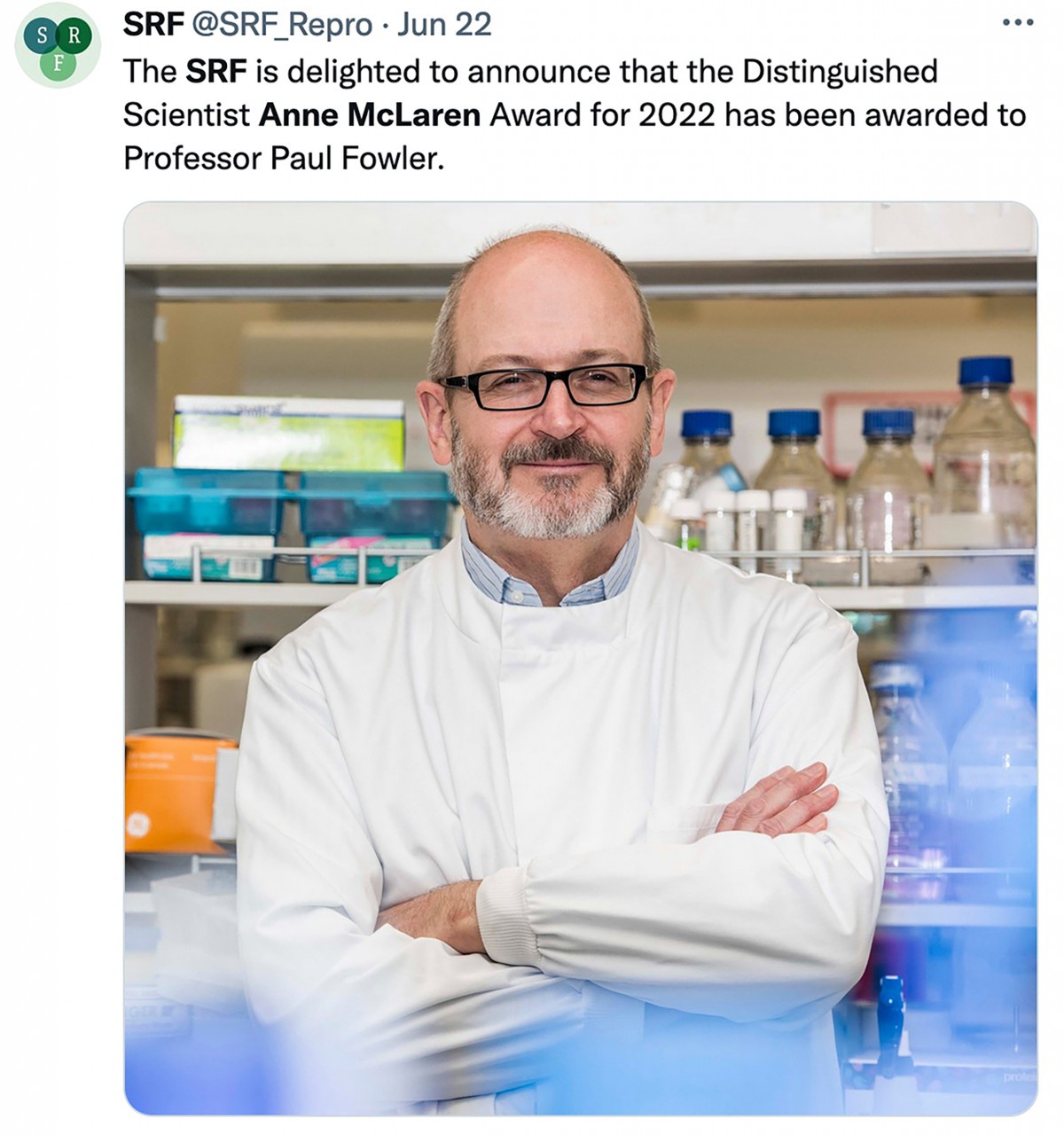
Following his BSc Hons and PhD in Zoology, Professor Fowler worked on ovarian hormones in Obstetrics & Gynaecology, University of Aberdeen. In 2000, he moved to the University of Aberdeen’s Institute of Medical Sciences and was its director for 6 years (2015-21). His work elucidates mechanisms regulating/dysregulating reproduction and development. He has over 170 peer-reviewed publications and book chapters and co-authored numerous European Food Standards Agency opinions. Since 2000, his research focused principally on effects of environmental/lifestyle exposures, including maternal smoking, obesity, and medication use. This aims to understand disruption of fetal development and health, principally using normal first and second trimester human fetus. Since 2009 he has led/participated in 4 large EU research programmes studying endocrine disruption and received MRC, BBSRC, Wellcome Trust, charities and PARC (Partnership of the Assessment of Risks from Chemicals, 2022-2029) funding. In 2023 he was awarded the Anne McLaren Distinguished Scientist award by the Society for Reproduction & Fertility.
Air pollution nanoparticles get into fetal human organs in the 1st and 2nd trimester
Member, Gendered Innovations, FP7 case study panel, 2012
Fellow of the Royal Society of Biology, UK (FRSB), 2010
Member, Standing Evaluation Panel, Environmental Pollution at the Swedish Research Council Formas, 2010
Member, Scientific Committee, 5th Copenhagen Workshop on Endocrine Disrupters, 2009
Chair, Society for Reproduction & Fertility, 2009-2013
External Examiner, year 3 Reproductive Biology, University of Edinburgh, 2008-2013
External Examiner, Masters by Research (MRes), St George’s Hospital Medical School, London, 2008-2012
Editorial Advisory Board for Current Medicinal Chemistry, 2005-2009
Society for Reproduction and Fertility, Council Member, 2005-2013
Editorial Board of the journal Reproductive Biology & Endocrinology, 2002-2008
Chair, Local Organising Committee for Fertility 2003, joint meeting of BAS, BFS, SRF, 2000-2003. This conference was held in Aberdeen July 13-17 2003 and is considered to be one of the most successful Fertility conferences, with 685 delegates and £45,000 surplus
Society for Reproduction & Fertility, Meetings Committee, 2000-2004
Acted on various BFS/SRF sub-committees, including scientific referee for abstracts, poster/presentation judge and assessment of applications for the Serono/BFS Studentships etc
British Fertility Society Committee, 1993-1996
Latest Publications
Comparison of steroidogenic disruption in adrenal H295R and ovarian KGN and COV434 cell models and the implications to assess female reproductive toxicity
Vazakidou, P., Koopmans, C., Nijmeijer, S., Lecante, L. L., Liu, P., Mazaud Guittot, S., Fowler, P. A. F., Leonards, P. E., van Duursen, M. B.
Linking epidemiology and genomics of maternal smoking during pregnancy in utero and in ageing: a population-based study using human foetuses and the UK Biobank cohort
Mihov, M., Shoctor, H., Douglas, A., Hay, D. C., O'Shaughnessy, P. J., Iredale, J. P., Shaw, S., Fowler, P. A. F., Grassmann, F.
Deciphering Cell-Type and Temporal-Specific Matrisome Expression Signatures in Human Cortical Development and Neurodevelopmental Disorders via scRNA-Seq Meta-Analysis
Gim, D. H., Assir, M. Z. K., Fowler, P. A. F., Morgan, M., Berg, D., Kang, E.
The profile of steroid hormones in human fetal and adult ovaries
Vazakidou, P., Evangelista, S., Li, T., Lecante, L. L., Rosenberg, K., Koekkoek, J., Salumets, A., Velthut-Meikas, A., Damdimopoulou, P., Mazaud-Guittot, S., Fowler, P. A., Leonards, P. E., van Duursen, M. B.
Reproductive Biology and Endocrinology, vol. 22, 60
Since the breakthrough epidemiological studies of the 1980s it has been clear that adult human health is dependent upon fetal development and fetal programming (‘early life programming’). Fetal growth restriction, for example, can lead to hypertension, type 2 diabetes, obesity and cardiovascular disease in the adult. This fetal programming is also termed "Developmental Origins of Health and Disease" (DOHaD) or "Fetal Origins of Adult Disease. Dysfunctional changes in the fetus can arise through a range of mechanisms, such as:
maternal cigarette smoking
maternal obesity
maternal deprivation
maternal nutrition
maternal environmental pollutant exposure (such as air pollution)
The health trajectory of an individual offspring is likely to depend upon a range of maternal and lifestyle factors, including the chemical burden carried at birth. Fetal pollutant exposure has clear adverse effects on development but we have very little knowledge about levels of fetal exposure to “real-life” complex pollutant cocktails and developmental consequences. This fundamental lack of knowledge is a major impasse to developing strategies for reducing fetal pollutant burdens and predicting likely health outcomes. Available data is limited, and often indirect (i.e. animal models or surrogates of exposure), but all studies suggest that fetal pollutant exposure affects lifelong health outcomes and, thereby, impacts on the general economy.
As well as laboratory-based studies of the human fetus my group has also become involved in epidemiological studies in the same field. Our intention with this move is to improve linkage between the individual fetus/mother (laboratory) and population-wide (epidemiology) analyses of maternal environment/lifestyle effects on the fetus and its future health.
Our aim is to understand how maternal factors disturb human fetal development, leading to offspring with greater risk of adverse health outcomes.
Our objective is to identify mechanisms linking these maternal factors with sub-optimal fetal development and lifelong health burdens.
Research Areas
Accepting PhDs
I am currently accepting PhDs in Biological and Environmental Sciences, Biomedical Sciences.
Please get in touch if you would like to discuss your research ideas further.
INITIALISE (Inflammation in human early life: targeting impacts on life-course health) is an EU funded project that aims to elucidate how exposures and genome impact gut microbiome, host immune system and metabolism, and how the interplay of these factors impact life-course health. INITIALISE aims to define the role of the maturation of the immune system as a mediator between exposures and life-course health.
Black carbon nanoparticles can locally alter human fetal airway epithelial transcriptomes. UKHSA Annual Outdoor and Indoor Air Pollution Research Review Meeting, Bristol, 26 November 2024.
What happens in the womb doesn’t stay in the womb. 9th NHS Grampian Research Conference “Mind the Gap” and the NHS Research Scotland Reproductive Health & Childbirth Event. Aberdeen, UK, 04-05 October 2024.
Proof of concept: associating the presence of nanoparticles with localised gene expression in the human fetal lung. 9th NHS Grampian Research Conference “Mind the Gap” and the NHS Research Scotland Reproductive Health & Childbirth Event. Aberdeen, UK, 04-05 October 2024.
Chemical pollutants and the human fetus. UK-PARC Science Day, Birmingham, 21-22 May 2024.
Maternal smoking: revisiting the estrogen hypothesis and effects on receptor activation. 10th Copenhagen Workshop on Endocrine Disruptors, Copenhagen, Denmark, 11-14 March 2024.
Prenatal exposure to environmental pollution and long-term outcomes in children. 31stWorld Congress on Controversies in Obstetrics, Gynecology & Infertility (COGI), Vienna, Austria, 23-25 November 2023.
Selecting the right model for your research. SfE BES Conference 2023, Glasgow, 13-15 November 2023.
Laying the foundations for future life and reproduction. Distinguished Scientist (Anne McLaren) Award Lecture. Fertility 2023, Belfast, 10-13 January 2023.
Toxicants and maternal lifestyle disturb human fetal developmental programming. Society for Reproductive Investigation Annual Conference, Fetal Physiology Satellite meeting, Boston, July 2021.
Exposure to the complex mixture of environmental chemicals found in human biosolids. Virtual University of Michigan Symposium on Chemical Mixtures, 12 February 2021.
Maternal lifestyle, endocrine disruption and the developing fetus. Vrije Universiteit Amsterdam, 19 February 2020, Amsterdam, Netherlands.
Preparing for a healthy life – maternal lifestyle and fetal programming. Toxalim, 12 October 2018, Toulouse, France.
Effect of prenatal exposure to environmental toxins on female reproduction. Fertility 2018, 4-6 January 2018, Liverpool, UK.
Evidence for EDC involvement in reproductive dysfunction in women. Invited seminar at PhD Course in Reproductive Toxicology, Centre for Reproductive Biology in Uppsala (CRU) and Swedish Toxicological Sciences Research Centre (SWETOX), 12-16 June 2016, Uppsala, Sweden.
Real-world chemical mixtures disturb fetal endocrine systems and gonad development humans and animal models. Symposium: “Mixtures, medicines and diet, where now for endocrine disrupting compounds?” ECE2016: European Congress of Endocrinology, 28-31 May 2016, Munich, Germany.
New insights into human fetal development: endogenous oestrogens, maternal smoking and gene methylation. 8th Copenhagen Workshop of Endocrine Disrupters, 27-30 April 2015, Copenhagen, Denmark.
Dr David Hay Centre for Regenerative Medicine, University of Edinburgh, Scotland
Prof John Iredale MRC Centre for Inflammation Research, University of Edinburgh, Scotland
Prof Peter O'Shaughnessy Institute of Biodiversity Animal Health and Comparative Medicine, University of Glasgow, Scotland
also partners in the following EU projects:
INITIALISE
FREIA
PARC
PROTECTED
Funding and Grants
Career total = £28 million
major grants:
2007-10 Wellcome Trust (080388) Effect of in-utero exposure to environmental chemicals via maternal pasture ingestion on fetal development. £426k [PI: collaboration with Macaulay, Edinburgh, Glasgow & INRA]
2008-12 European Commission FP7 (212855) Reproductive effects of environmental chemicals in females (REEF). £2,646k. (PI: collaboration with Macaulay, Edinburgh, INRA, Nottingham, Martin-Luther, Milan]
2009-11 Chief Scientist Office (CZB/4/742) Bioincubator system to model toxic effects on the human fetal testis. £62k [PI]
2014-17 MRC (L010011/1) The human fetal liver: development and response to maternal drug use. £589k [PI: collaboration with Glasgow, Edinburgh]
2014-18 MRC DTP (K501335/1) Development of the human fetal adrenal gland and effects of maternal smoking. £63k [CoI: Bellingham, Glasgow is PI]
2016-19 Glasgow Children’s Hospital Charity (YRSS/PHD/2016/05) Maternal smoking, drinking and deprivation: when and how of placental damage. £60k [PI: collaboration with Glasgow]
2017-21 European Commission H2020 MSCA-ITN (722634) PROTECTion against Endocrine Disruptors; detection, mixtures, health effects, risk assessment and communication(PROTECTED). £3,152k [CoI: Connolly Queen’s Belfast is PI]
2017-20 MRC (L011535/1) Sex-specific disease aetiology from developmental steroid insults: mechanistic understanding and biomarker development towards disease prevention. £637k [CoI: Rae, Edinburgh is PI]
2017-21 BBSRC EASTBIO DTP Mechanisms via which the human fetus is at risk from over-the-counter analgesics. £97k [PI: collaboration with Edinburgh]
2018-21 Arthritis Research UK (21800) Unlocking the joint morphogenetic code in mesenchymal stem cells from human synovium. £328k [CoI: De Bari is PI]
2019-24 European Commission H2020 (825100) Female Reproductive toxicity of Endocrine disrupting chemicals (EDCs): a human evidence-based screening and Identification Approach (FREIA). £5,217k [CoI: van Duursen, VU Amsterdam, is PI]
2022-25 Cunningham Trust (PhD-CT-21-18) Discovery of retinoic acid receptor control of stress granules as a treatment for neurodegenerative diseases. £97k [CoI: Mccaffery, Aberdeen, is PI]
2022-25 BCUK (2122029) Evaluating the effects of BPA on breast cancer development. £99k [CoI: Speirs, Aberdeen, is PI]
2022-25 MRC (MR/W015439/1) Towards a novel treatment targeting obesity in women with polycystic ovary syndrome. £380k [CoI: Duncan, Edinburgh, is PI]
2022-29 European Commission, Horizon Europe (10045444) Partnership for the assessment of risks from chemicals (PARC). €400 million cofund [CoI: ANSES+199 other institutions/agencies]
2023-27 European Commission, Horizon Europe (101094099) Inflammation in human early life: targeting impacts on life-course health (INITIALISE). £6,209k [CoI: Oresic, University of Turku is PI]
Gonadotropin Surge-Attenuating Factor Attenuates Invitro LH-Secretion Induced by Gonadotropin-Releasing-Hormone from Cultured Ovine Pituitary-Cells Only During the Breeding-Season
Fowler, P. A. F., TOWNSEND, C., MESSINIS, I. E., CUNNINGHAM, P., Templeton, A.
Journal of Endocrinology, vol. 135, no. 2, pp. 221-227
Contributions to Journals: Articles
Validation of in vivo measurement of adipose tissue by magnetic resonance imaging of lean and obese pigs
Fowler, P., Fuller, M. F., Glasbey, C. A., Cameron, G. G., Foster, M. A.
American Journal of Clinical Nutrition, vol. 56, pp. 7-13
Validation of the in vivo measurement of adipose tissue by magnetic resonance imaging of lean and obese pigs
Fowler, P. A., Fuller, M. F., Glasbey, C. A., Cameron, G. G., Foster, M. A.
The American Journal of Clinical Nutrition, vol. 56, no. 1, pp. 7-13
Contributions to Journals: Articles
Nonsteroidal control of gonadotropin secretion: the role of gonadotropin surge-attenuating factor
Templeton, A., Fowler, P. A. F., Messinis, I. E.
Chapters in Books, Reports and Conference Proceedings: Conference Proceedings
Gonadotrophin surge-attenuating factor attenuates in-vitro LH secretion induced by gonadotrophin-releasing hormone from cultured ovine pituitary cells only during the breeding season
Fowler, P. A., Townsend, C., Messinis, I. E., Cunningham, P., Templeton, A.
Journal of Endocrinology, vol. 135, no. 2, pp. 221-227
Total and Subcutaneous Adipose-Tissue in Women: the measurement of distribution and accurate prediction of quantity by using magnetic resonance imaging
Fowler, P., Fuller, M. F., Glasbey, C. A., Foster, M. A., Cameron, G. G., McNeill, G., Maughan, R. J.
The American Journal of Clinical Nutrition, vol. 54, no. 1, pp. 18-25