
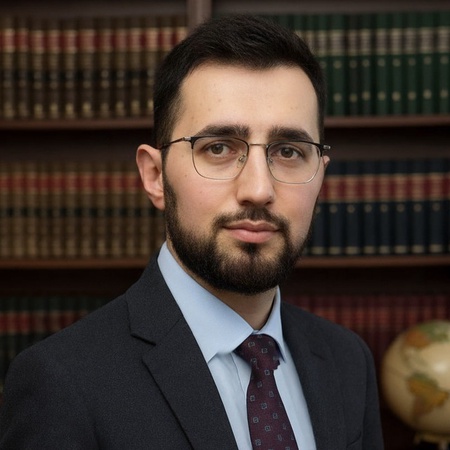

Many congratulations to Muhammed Nurullah Benli who recently passed his PhD viva examination, subject only to minor corrections. His PhD thesis was supervised by Professor Irene Couzigou and Dr Edouard Fromageau, both working at the University of Aberdeen. It was examined by Professor Zeray Yihdego from the University of Aberdeen and Professor Nicholas Tsagourias from Sheffield University.
The PhD, The Principles of Sovereignty and Non-Intervention in Cyberspace, examines whether and how States may violate those two principles in cyberspace. Most of the state cyberoperations do not cause physical damage but may still violate international law. The PhD evaluates when different kinds of low-intensity cyber conducts – eg, cyberespionage, online disinformation, electoral interference – violate international law. For doing so, the PhD analyses statements increasingly expressed by States related to the implementation of international law in cyberspace.
The PhD first considers that the principle of sovereignty is a primary rule of international law in cyberspace and examines when a cyber operation perpetrated by a State affects the territorial integrity or political independence of another State. The PhD then analyses how to interpret the notion of ‘domaine réservé’ and ‘coercion’ and thus when the principle of non-intervention is infringed by a state cyberoperation. The thesis argues that an overly broad approach to sovereignty and coercion in cyberspace risks legal uncertainty, while an overly narrow approach may leave States without adequate protection against serious detrimental cyber operations. It therefore proposes a sensitive understanding of the principles of sovereignty and non-intervention, reflecting both the emerging opinio juris and practice of States and the distinctive features of cyberspace.