

FRSE
Chair in Zoology
- About
-
- Email Address
- x.lambin@abdn.ac.uk
- Telephone Number
- +44 (0)1224 273259
- Office Address
Room 408 Zoology building Tillydrone Avenue Aberdeen AB24 2TZ Scotland UK
- School/Department
- School of Biological Sciences
Biography
2016 Elected Fellow of the Royal Society of Edinburgh FRSE
2015 Elected Fellow of the Royal Society of Biology FRSB
2004 Professor of Ecology, University of Aberdeen
1994 Lecturer, Senior Lecturer (1999), Reader in zoology (2002) University of Aberdeen
1993 NATO/Royal Society Research Fellow at Institute of Terrestrial Ecology, Banchory field Station
1992 PhD University of Louvain & Univ British Columbia, Personal Reseach Fellowship National Foundation for Scientific Research (Belgium)
1988-1991 Visiting Graduate Student, University of British Columbia1986 BSc Zoological Sciences, University of Louvain, First class
1988 MSc Biology, University of Louvain, First class
1987 Visiting Graduate Student, University of Oslo
Recruiting a PhD student in population ecology for October 2026 Start
We are inviting applications for our fully funded, cross institution PhD on
Predicting and managing the spatially asynchronous pulses of herbivorous rodent abundance cascading through ecosystems.
Memberships and Affiliations
- Internal Memberships
-
Prof Lambin is currently:
A member of REF 2029 Strategy Group
A member of Anthony & Margaret Johnston Centre for Doctoral Training in Plant Executive Board
- External Memberships
-
Prof Lambin is currently:
A member of REF2029 subpanel A5 Biological Sciences
A member of NatureScot's Scientific Advisory Committee
A member of Orkney's Native wildlife Project Independent Technical Advisory Group
Scientific advisor to and a member of Scottish Invasive Species Initiative Steering Group
A member of the Flow Country World Heritage Site Advisory Group
A member of Cairngorm's National Park Authority and Nature Scot Capercaillie emergency plan scientific advisory Group
Prizes and Awards
2025 Nature of Scotland Awards: Innovation, Reducing the Impact of Predation with Diversionary-Feeding for work led by Jack Bamber Highly Commended
2024 Project CONTAIN Research prize - University of Aberdeen Principal's Prizes for Research & Engagement Interdisciplinary Research Award (joint winners) (2024)
2019 RSPB Nature of Scotland Conservation Science Award Highly Commended: Large scale participatory control of invasive mink in Scotland (representing consortium)
2017 Winner of the NE Scotland Biodiversity partnership 20th anniversary Collaboration project award.
2016 Watson Raptor Science Prize for the best paper on raptor science published in an international peer reviewed journal in 2015 as senior author of paper led by PhD student Sarah Hoy.
2015 University of Aberdeen Principal prize for public engagement with research “Outstanding achievement senior award”
2011 Certificate of recognition SNH “Special contribution to species conservation in Scotland”, Minister of the Environment, Scottish government.
- Research
-
Research Overview
I conduct ecological and multi-disciplinary socio-ecological research aimed at providing strong empirical evidence for practical solutions to pressing conservation issues.
My ecological research aims are to understand
the contribution of dispersal to the dynamics of populations,
to understand how the outcome of trophic interactions is modified by dispersal and
to apply population ecology to wildlife management and conservation.
I achieve these aims by conducting large scale, often long-term field studies with birds and mammals as well as by linking theoretical insights with empirical findings using state of the art statistical techniques.
I work with e.g. water vole metapopulations, cyclic field voles, their birds of prey predators, food plants and parasites in commercial forests and non-native American mink culled as part of conservation efforts, forest ecosystem managed for timber or transformed for rewilding, rats in Madagascar, non-native pines wasps and mink in South America and people.
I am invested in conservation biology, including the management of invasive species and rewilding. I research how to optimise the impact of conservation volunteers. I collaborate with multiple NGOs over many years.
Research Areas

Research Specialisms
- Applied Statistics
- Community Ecology
- Ecology
- Population Biology
- Population Ecology
Our research specialisms are based on the Higher Education Classification of Subjects (HECoS) which is HESA open data, published under the Creative Commons Attribution 4.0 International licence.
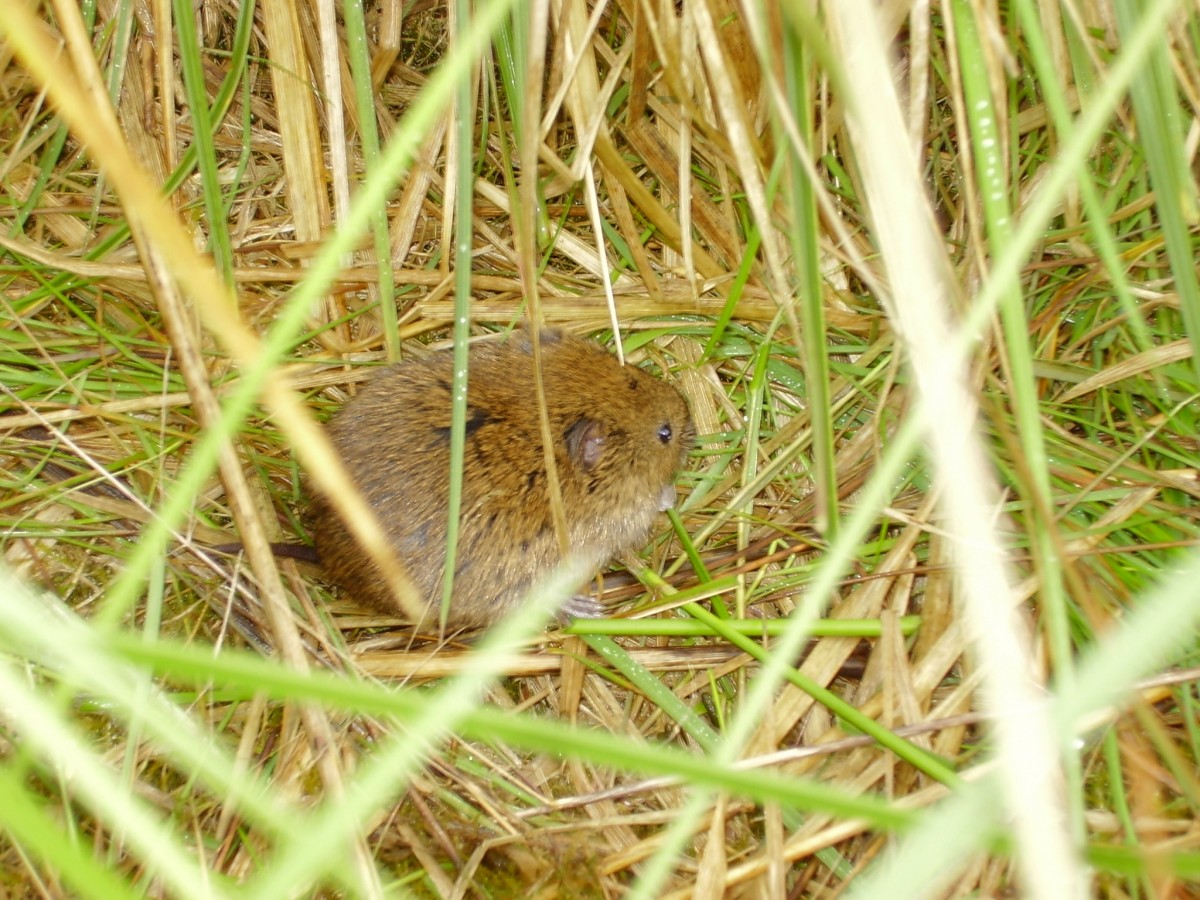
Density-dependent recruitment but not survival drives cyclic dynamics in a field vole population
For 101 years, ecologists have sought to explain the 3-4 years multi-annual cycles of voles and lemmings. Oddly, debates on the demographic phenomenon that underpin multi-annual cycles have largely taken place in the absence of demographic data. In our paper, we find that Density-dependent recruitment, especially early in the breeding season, but not survival drives cyclic dynamics in a field vole population, overturning accepted wisdom.
Collaborations
Dr Sandra Telfer (water vole metapopulations, disease dynamics); Prof Mike Begon (University of Liverpool)
Cyclic Vole demography
Prof Madan Oli University of Florida
Statistical ecology
Dr Chris Sutherland (Univ St Andrews);
Kenny Kortland (pine martens, wood ants, squirrels, Forest Scotland)
Supervision
My current supervision areas are: Biological and Environmental Sciences.
Current students
- Anna Kellner (2021-2026) Rewilding and the return of interacting meso-predators: Understanding, modelling and monitoring predator-prey dynamics in non-equilibrium ecosystems. Lead
- Elouise Mayall (2022-2026) Searching for a bit of peace and quiet despite unreliable cues: dispersal, settlement, and fitness of a top predator in multi-use forests. Lead
- Albert Bonet Bigata (2022-2026) Optimising the long-term control of invasive American mink from catchment to coast: how many mink is too many? Lead
- Leah Gray (2022-2026) Developing effective agricultural wetland management to reduce predation and improve wader breeding outcomes. 2nd supervisor
- Amber Cowans (2022-2026) How do recreational activities alter spatiotemporal species interaction networks, and can this knowledge assist in promoting pro-environmental behaviour? 2nd supervisor
- Emily Legge (2022-2026) The effect of Changing Soundscapes on Trophic Interactions. 2nd supervisor
- Rosie Irwin-Holbrey (2023-2027) When is a wild-living cat a wildcat? Using carnivore guild interactions to decipher ecological function. Lead
- Seunyeon Lee (2024-2028) The demography and dynamics of Tawny owl populations linked by dispersal and experiencing spatially variable food limitation and predation: a 40 year study. Lead
- Oliver Hartley (2024-2028) Developing an efficient and accessible “data-to-decision” pipeline for remotely sensed biodiversity monitoring data. 2nd supervisor
- Sarah Rehman (2024-2028) Dispersal and local selection in metapopulations 2nd supervisor
- Eleonor Foster Native, or invasive? Ancestry, drivers of population density, and public perceptions of feral pigs in Scotland. 2nd supervisor
Past PhD and MPhil students 42 PhD and 6 MRes students supervised with 100 % completion rate within 4 year timeline. 29 now as academic or researchers in universities private sector or government.
Sandra Telfer MSc (1997); Wendy Stewart MSc (1997); Jason Matthiopoulos (1998); Andrew DC MacColl (1998); James L MacKinnon (1998); Shahrul Anuar Mohd Sah (1998); Julie MacKnight (1999) MSc; Isla M Graham (2001); Sandra Telfer (2000); Arjun Amar (2001); Ann Humble MPhil (2002); John Durban (2002); Torbjørn Ergon (2003); Miriam Brandt (2003) MSc; Kerry Lock (2004); Stijn Bierman (2004); Sarah Burthe (2004); Sevvandi Jayakody (2005); Kenneth Kortland (2005) MSc; Ros Bryce (2005); Michelle Sims (2006); Matthew J Smith (2007); Eduardo Tedesco (2010); Ali Abdullah M Shati (2007); Anna Renwick (2009); Nacho Villar (2010); Anna Evely (2010); Chris Sutherland (2013); Elaine J Fraser (2013); Claire Davies (2014); Ewan Weston (2014); Sarah Hoy (2015); Marie Pages (2016); Rupert Houghton (2017); William Morgan (2018); Ewan McHenry (2018); Ruth Rodriguez (2018);Richard Hassall (2019); Deon Roos (2021); Ruben Bernardo Madrid (2021); Joseph Drake (2021); Cristian Navarro Waggershauser (2021); Kathryn Scobie (2022); Irilena Linardaki (2023) MRes; Keziah Hobson (2023); Katie August (2023); Laura MacKenzie (2023); Holly Accacia Broadhurst (2023); Jack Bamber (2025)
Funding and Grants
Current funding
2025-2028 Impact of mink on seabirds Ossian Offshore Wind Farm Limited
2024-2026 Ecosystems in flux: synthesising a 40 year multi species study Leverhulme Trust
2024-2031 NETGAIN: developing the science and practice of nature markets for a net positive future; NERC DLA Consortium PhD award
2024 Hebridean Mink Project – Strategic Review; Scottish Natural Heritage
- Teaching
-
Teaching Responsibilities
I am presently on research leave
- Publications
-
Page 4 of 5 Results 151 to 200 of 223
Red deer Cervus elephus vigilance behaviour differs with habitat and type of human disturbance
Wildlife Biology, vol. 14, no. 1, pp. 81-91Contributions to Journals: ArticlesTuberculosis (Mycobacterium microti) in wild field vole populations
Parasitology, vol. 135, no. 3, pp. 309-317Contributions to Journals: Articles- [ONLINE] DOI: https://doi.org/10.1017/S0031182007003940
Cowpox virus infection in natural field vole Microtus agrestis populations: significant negative impacts on survival
Journal of Animal Ecology, vol. 77, no. 1, pp. 110-119Contributions to Journals: Articles- [ONLINE] DOI: https://doi.org/10.1111/j.1365-2656.2007.01302.x
High-resolution genetic fingerprinting of European strains of Anaplasma phagocytophilum by use of multilocus variable-number tandem-repeat analysis
Journal of Clinical Microbiology, vol. 45, no. 6, pp. 1771-1776Contributions to Journals: Articles- [ONLINE] DOI: https://doi.org/10.1128/JCM.00365-07
Contrasting dynamics of Bartonella spp. in cyclic field vole populations: the impact of vector and host dynamics
Parasitology, vol. 134, no. 3, pp. 413-425Contributions to Journals: Articles- [ONLINE] DOI: https://doi.org/10.1017/S0031182006001624
Movement patterns of a specialist predator, the weasel Mustela nivalis exploiting asynchronous cyclic field vole Microtus agrestis populations
Acta Theriologica, vol. 52, no. 1, pp. 13-25Contributions to Journals: Articles- [ONLINE] DOI: https://doi.org/10.1007/BF03194195
Sympatric Ixodes trianguliceps and Ixodes ricinus ticks feeding on field voles (Microtus agrestis): Potential for increased risk of Anaplasma phagocytophilum in the United Kingdom?
Vector Borne and Zoonotic Diseases, vol. 6, no. 4, pp. 404-410Contributions to Journals: Articles- [ONLINE] DOI: https://doi.org/10.1089/vbz.2006.6.404
Cowpox virus infection in natural field vole Microtus agrestis populations: delayed density dependence and individual risk
Journal of Animal Ecology, vol. 75, no. 6, pp. 1416-1425Contributions to Journals: Articles- [ONLINE] DOI: https://doi.org/10.1111/j.1365-2656.2006.01166.x
Delayed density-dependent season length alone can lead to rodent population cycles
The American Naturalist, vol. 167, no. 5, pp. 695-704Contributions to Journals: Articles- [ONLINE] DOI: https://doi.org/10.1086/503119
Widespread gene flow and high genetic variability in populations of water voles Arvicola terrestris in patchy habitats
Molecular Ecology, vol. 15, no. 6, pp. 1455-1466Contributions to Journals: Articles- [ONLINE] DOI: https://doi.org/10.1111/j.1365-294X.2006.02889.x
Vole population cycles in northern and southern Europe: Is there a need for different explanations for single pattern?
Journal of Animal Ecology, vol. 75, no. 2, pp. 340-349Contributions to Journals: Articles- [ONLINE] DOI: https://doi.org/10.1111/j.1365-2656.2006.01051.x
Phylogeographic structure and postglacial evolutionary history of water voles (Arvicola terrestris) in the United Kingdom
Molecular Ecology, vol. 14, no. 5, pp. 1435-1444Contributions to Journals: Articles- [ONLINE] DOI: https://doi.org/10.1111/j.1365-294X.2005.02496.x
Decline of the Orkney Hen Harrier Circus cyaneus population: Do changes to demographic parameters and mating system fit a declining food hypothesis?
Bird Study, vol. 52, no. 1, pp. 18-24Contributions to Journals: Articles- [ONLINE] DOI: https://doi.org/10.1080/00063650509461370
- [ONLINE] View publication in Scopus
Amar, A N. Picozzi, E.R. Meek, X. Lambin & S.M. Redpath (2005)Variation in demographic parameters and mating system during the decline of the hen harrier on Orkney. British birds 52, 18-24
British Birds, vol. 52, pp. 18-24Contributions to Journals: ArticlesSummertime activity patterns of common weasels Mustela nivalis vulgaris under differing prey abundances in grassland habitats
Acta Theriologica, vol. 50, pp. 67-79Contributions to Journals: ArticlesDisease dynamics in cyclic populations of field voles (Microtus agrestis): cowpox virus and vole tuberculosis (Mycobacterium microti)
Proceedings of the Royal Society of London. B, Biological Sciences, vol. 271, no. 1541, pp. 859-867Contributions to Journals: Articles- [ONLINE] DOI: https://doi.org/10.1098/rspb.2003.2667
Inferring patterns and process in small mammal metapopulations: insights from ecological and genetic data
Ecology, genetics and evolution in metapopulations. Hanski, I., Gaggiotti, O. (eds.). Elsevier Inc, pp. 515-540, 25 pagesChapters in Books, Reports and Conference Proceedings: Chapters- [ONLINE] DOI: https://doi.org/10.1016/B978-012323448-3/50023-4
- [ONLINE] View publication in Scopus
Optimal body size and energy expenditure during winter: Why are voles smaller in declining populations?
The American Naturalist, vol. 163, no. 3, pp. 442-457Contributions to Journals: Articles- [ONLINE] DOI: https://doi.org/10.1086/381940
Resting and daily energy expenditures of free-living field voles are positively correlated but reflect extrinsic rather than intrinsic effects
PNAS, vol. 100, no. 24, pp. 14057-14062Contributions to Journals: Articles- [ONLINE] DOI: https://doi.org/10.1073/pnas.2235671100
Testing the specialist predator hypothesis for vole cycles
Trends in Ecology & Evolution, vol. 18, no. 10, pp. 493Contributions to Journals: Letters- [ONLINE] DOI: https://doi.org/10.1016/S0169-5347(03)00181-2
The Effects of the Size and Shape of Landscape Features on the Formation of Traveling Waves in Cyclic Populations
The American Naturalist, vol. 162, no. 4, pp. 503-513Contributions to Journals: Articles- [ONLINE] DOI: https://doi.org/10.1086/377186
The decline of Common Kestrels Falco tinnunculus in a forested area of northern England: the role of predation by Northern Goshawks Accipiter gentilis
Ibis, vol. 145, no. 3, pp. 472-483Contributions to Journals: Articles- [ONLINE] DOI: https://doi.org/10.1046/j.1474-919X.2003.00191.x
Parentage assignment detects frequent and large-scale dispersal in water voles
Molecular Ecology, vol. 12, no. 7, pp. 1939-1949Contributions to Journals: Articles- [ONLINE] DOI: https://doi.org/10.1046/j.1365-294X.2003.01859.x
Demographic and genetic structure of fossorial water voles (Arvicola terrestris) on Scottish islands
Journal of Zoology, vol. 259, pp. 23-29Contributions to Journals: Articles- [ONLINE] DOI: https://doi.org/10.1017/S0952836902003321
Territorial behaviour and population dynamics in red grouse Lagopus lagopus scoticus. II. Population models
Journal of Animal Ecology, vol. 72, no. 6, pp. 1083-1096Contributions to Journals: Articles- [ONLINE] DOI: https://doi.org/10.1046/j.1365-2656.2003.00780.x
Generation of periodic waves by landscape features in cyclic predator-prey systems
Proceedings of the Royal Society of London. B, Biological Sciences, vol. 269, no. 1489, pp. 327-334Contributions to Journals: Articles- [ONLINE] DOI: https://doi.org/10.1098/rspb.2001.1890
Mycobacterium microti Infection (Vole Tuberculosis) in Wild Rodent Populations
Journal of Clinical Microbiology, vol. 40, no. 9, pp. 3281-3285Contributions to Journals: Articles- [ONLINE] DOI: https://doi.org/10.1128/JCM.40.9.3281-3285.2002
Population Cycles: inferences from experimental, Modeling, and time seris approaches
In: Population Cycles: The Case for trophic interactions (ed. Berryman,A. A.) Oxford University Press, Oxford, pp. 155-176, 21 pagesChapters in Books, Reports and Conference Proceedings: ChaptersThe impact of weasel predation on cyclic field-vole survival: the specialist predator hypothesis contradicted
Journal of Animal Ecology, vol. 71, no. 6, pp. 946-956Contributions to Journals: Articles- [ONLINE] DOI: https://doi.org/10.1046/j.1365-2656.2002.00657.x
The kin facilitation hypothesis for red grouse population cycles: territorial dynamics of the family cluster
Ecological Modelling, vol. 147, no. 3, pp. 291-307Contributions to Journals: Articles- [ONLINE] DOI: https://doi.org/10.1016/S0304-3800(01)00420-3
Life-history traits of voles in a fluctuating population respond to the immediate environment
Nature, vol. 411, no. 6841, pp. 1043-1045Contributions to Journals: Articles- [ONLINE] DOI: https://doi.org/10.1038/35082553
Adaptive precocial reproduction in voles: reproductive costs and multivoltine life-history strategies in seasonal environment
Journal of Animal Ecology, vol. 70, no. 2, pp. 191-200Contributions to Journals: Articles- [ONLINE] DOI: https://doi.org/10.1046/j.1365-2656.2001.00494.x
Analysis of aggregation, a worked example: numbers of ticks on red grouse chicks
Parasitology, vol. 122, pp. 563-569Contributions to Journals: Articles- [ONLINE] DOI: https://doi.org/10.1017/S0031182001007740
Dispersal, intraspecific competition, kin competition, and kin facilitation: A review of the empirical evidence
Dispersal. Clobert, J., Danchin, E., Dhondt, A. A., Nichols, J. D. (eds.). Oxford University PressChapters in Books, Reports and Conference Proceedings: ChaptersMechanisms for delayed density-dependency reproductive traits in field voles, Microtus agrestis: the importance of inherited environmental effects
Oikos, vol. 95, no. 2, pp. 185-197Contributions to Journals: Articles- [ONLINE] DOI: https://doi.org/10.1034/j.1600-0706.2001.950201.x
Metapopulation processes and persistence in remnant water vole populations
Oikos, vol. 95, no. 1, pp. 31-42Contributions to Journals: Articles- [ONLINE] DOI: https://doi.org/10.1034/j.1600-0706.2001.950104.x
Modelling space-phase relationships in cyclic populations
Journal of Applied Biometry in Environmental ScienceContributions to Journals: ArticlesScale invariant spatio-temporal patterns of field vole density
Journal of Animal Ecology, vol. 70, no. 1, pp. 101-111Contributions to Journals: Articles- [ONLINE] DOI: https://doi.org/10.1046/j.1365-2656.2001.00479.x
Water vole in the Scottish uplands: distribution patterns of disturbed and pristine populations ahead and behind the American mink invasion front
Animal Conservation, vol. 4, pp. 187-194Contributions to Journals: Articles- [ONLINE] DOI: https://doi.org/10.1017/S1367943001001226
Cyclic dynamics in field vole populations and generalist predation
Journal of Animal Ecology, vol. 69, pp. 106-118Contributions to Journals: ArticlesMatrilineal genetic structure and female-mediated gene flow in red grouse (Lagopus lagopus scoticus): An analysis using mitochondrial DNA
Evolution, vol. 54, pp. 279-289Contributions to Journals: ArticlesSpatial arrangement of kin affects recruitment success in young male red grouse
Oikos, vol. 90, pp. 261-270Contributions to Journals: ArticlesSpatial synchrony in field vole Microtus agrestis abundance in a coniferous forest in northern England: The role of vole-eating raptors
Journal of Applied Ecology, vol. 37, pp. 136-147Contributions to Journals: ArticlesThe kin-facilitation hypothesis for red grouse population cycles: territory sharing between relatives
Ecological Modelling, vol. 127, pp. 53-63Contributions to Journals: ArticlesUse of coupled oscillator models to understand synchrony and travelling waves in populations of the field vole Microtus agrestis in northern England
Journal of Applied Ecology, vol. 37, pp. 148-158Contributions to Journals: ArticlesFox predation on cyclic field vole populations in Britain
Ecography, vol. 22, pp. 575-581Contributions to Journals: ArticlesMetapopulation genetic structure in the water vole, Arvicola terrestris, in NE Scotland
Biological Journal of the Linnean Society, vol. 68, pp. 159-171Contributions to Journals: ArticlesSpatial distribution of genetic relatedness in a moorland population of red grouse (Lagopus lagopus scoticus)
Biological Journal of the Linnean Society, vol. 68, pp. 317-331Contributions to Journals: ArticlesSpatial population dynamics: analyzing patterns and processes of population synchrony
Trends in Ecology & Evolution, vol. 14, pp. 427-432Contributions to Journals: Literature ReviewsModels of red grouse cycles. A family affair?
Oikos, vol. 82, no. 3, pp. 574-590Contributions to Journals: Articles
