
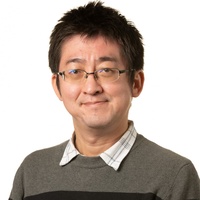
Lecturer
- About
-
- Email Address
- riko.hatakeyama@abdn.ac.uk
- Telephone Number
- +44 (0)1224 437359
- Office Address
Institute of Medical Sciences
University of Aberdeen
Foresterhill
Aberdeen
AB25 2ZD
Scotland, UK
Office: 2.30.1
Lab: 2.06
- School/Department
- School of Medicine, Medical Sciences and Nutrition
Biography
2020- Lecturer (Assistant Professor), University of Aberdeen, UK (Group leader)
2014-2020 Postdoctoral Fellow, University of Fribourg, Switzerland (with Prof Claudio De Virgilio)
2011-2014 Postdoctoral Fellow, Brandeis University, USA (with Prof Satoshi Yoshida)
2006-2011 PhD student, The University of Tokyo, Japan (with Prof Tatsuya Maeda)
2002-2006 Undergraduate student, The University of Tokyo, Japan (Thesis with Prof Katsuhiko Kitamoto)
Memberships and Affiliations
- Internal Memberships
-
- Foresterhill Biological Safety Committee
- External Memberships
-
- British Society for Cell Biology Ambassador
- Scottish Microscopy Society Committee
- Research
-
Research Overview
Cell Growth Signalling in Space: Our lab studies how individual cells sense and respond to environmental changes. Our particular focus is the protein kinase complex Target of Rapamycin Complex 1 (TORC1, or mTORC1), a master regulator of cell growth. TORC1 adjusts cell growth in response to diverse external stimuli such as nutrients, hormones and stresses (reviewed in Hatakeyama, 2021 Biomolecules). TORC1 regulates a wide range of cellular processes operating at diverse subcellular locations (organelles). We aim to understand how TORC1 receives signals from, and sends signals to, different locations. By combining various techniques of genetics, biochemistry, cell biology and bioinformatics in yeast and mammalian cell models, our lab tries to fill the existing gap between the signalling and the organelle research fields.
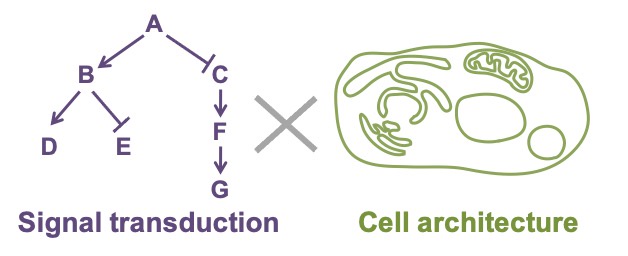
Core question of our research: WHERE does growth signalling happen within a cell? Spatially and Functionally Distinct TORC1 Pools: We identified distinct subcellular pools of TORC1 in the yeast model (Hatakeyama et al., 2019 Mol Cell). Two TORC1 pools localise to vacuoles (equivalent to mammalian lysosomes) and perivacuolar signalling endosomes, where they perform distinct biological functions through locally phosphorylating specific substrates. The concept of spatially and functionally distinct TORC1 pools has since been extended to mammalian cells (reviewed in Pan et al., 2026 Curr Opin Cell Biol), establishing the subcellular 'division of labour' as a new paradigm of TORC1 research. We currently study how distinct TORC1 pools are differentially regulated by upstream regulatory cues.
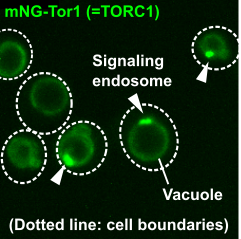
Two TORC1 pools at vacuoles and signalling endosomes in yeast. TORC1-containing Signalling Endosomes: The endosomal population that accommodates TORC1, coined signalling endosomes, is a novel organelle with distinct protein/lipid composition compared to canonical endosomes. Their mode of biogenesis is unique, as signalling endosomes originate from the vacuolar membrane (Muneshige and Hatakeyama, 2025 J Cell Biol). There remain many questions around formation, function, and regulation of signalling endosomes. We are investigating the roles of signalling endosomes in intracellular signalling and trafficking, as well as their evolutionary conservation in mammalian cells.

De novo formation of a signalling endosome from the vacuolar membrane. Distinct TORC1 Pools as a Potential Clinical Breakthrough: TORC1 is a promising therapeutic target due to its link to many conditions including cancer, diabetes, neurodegenerative diseases, and aging. However, because TORC1 regulates virtually all aspects of cell physiology, the clinical benefit of targeting TORC1 has been limited by unwanted side effects. Our work on dissecting distinct TORC1 pools could provide a solution by enabling selective manipulation of a desired subset of TORC1 functions, promising a safer and more effective therapeutic approach. We aim to achieve pool/substrate-specific TORC1 manipulation in human cells by, for example, pharmacologically targeting upstream G protein-coupled receptors (Atkinson et al., 2026, Biochem J).
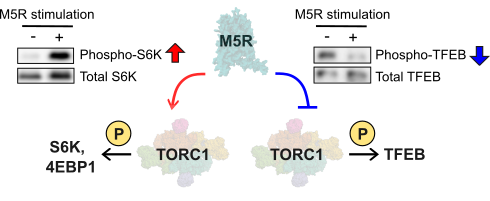
Substrate-specific regulation of human TORC1 by G protein-coupled receptor M5R. Selected publications: original research articles
- Atkinson SJ, Negoita F, Ioi Y, Ritchie WV, Thompson K, Gardner M, Ashdown PT, Hellberg K, Takahara T, Sakamoto K, Thompson D, Hislop JN, Hatakeyama R. (2026) Substrate-specific regulation of the mTORC1 pathway by G protein-coupled receptors. Biochemical Journal. 483(10):1817-1834.
- Muneshige K and Hatakeyama R. (2025) Vacuoles provide the source membrane for TORC1-containing signaling endosomes. Journal of Cell Biology. 224 (5): e202407021.
- Hatakeyama R, Péli-Gulli MP, Hu Z, Jaquenoud M, Garcia Osuna GM, Sardu A, Dengjel J, De Virgilio C. (2019) Spatially distinct pools of TORC1 balance protein homeostasis. Molecular Cell. 73:325-338.
Selected publications: review articles
- Pan J, Fernandes SA, Hatakeyama R, Demetriades C. (2026) Substrate selectivity as a paradigm shift in mTORC1 signaling. Curr Opin Cell Biol. 101:102664.
- Hatakeyama R. (2021) Pib2 as an Emerging Master Regulator of Yeast TORC1. Biomolecules. 11(10), 1489.
Research Areas
Accepting PhDs
I am currently accepting PhDs in Biomedical Sciences.
Please get in touch if you would like to discuss your research ideas further.
Research Specialisms
- Biochemistry
- Cell Biology
Our research specialisms are based on the Higher Education Classification of Subjects (HECoS) which is HESA open data, published under the Creative Commons Attribution 4.0 International licence.
Supervision
Current Lab Members
- Colin Ferguson (Technician, 2024-)
- Cheuk Yin Yuen (Technician, 2026-)
- William Ritchie (PhD student, 2022-)
Past Lab Members
Technicians
- Peter Eijlers (Technician, 2025)
- Megan Robertson (Technician, 2022-2024)
Postdocs
- Samuel Atkinson (Postdoctoral fellow, 2022-2025)
- Shoki Fujita (Visiting postdoctoral fellow, 2023)
- Eri Hirata (Visiting postdoctoral fellow, 2021)
PhD students
- Kenji Muneshige (PhD student, 2022-2025)
Masters students
- Max Gardner (Undergraduate project student, 2025; Research Master student, 2025-2026)
- Krisha Chandarana (Masters project student, 2026)
- Sonnia Oni Idahosa (Masters project student, 2026)
- Michael Garavaglia (Masters project student, 2026)
- Aneena Thomas (Masters project student, 2025)
- Jonah Mayhall (Masters project student, 2025)
- Johanna Bode (Visiting Masters student, 2025)
- Sotonye Krukrubo (Masters project student, 2024)
- Fidan Huseynzade (Masters project student, 2024)
- Saran Babooraj (Masters project student, 2023; Research assistant, 2024)
- Aolat Adetosoye (Masters project student, 2022)
- Yiqi Cai (Masters project student, 2021)
Undergraduate students
- Anna Sbizzera (Undergraduate summer student, 2026)
- Serena Duncan (Undergraduate shadowing student, 2026)
- Aaidah Farooq (Undergraduate project student, 2025)
- Camelia Filip (Undergraduate project student, 2024)
- Alexandra-Ioana Ondrea (Undergraduate project student, 2024)
- Eleftheria Moschou (Undergraduate project student, 2023)
- Gregor Barr (Undergraduate project student, 2023)
- Trami Nielsen (Undergraduate summer student, 2022)
- Daniel Paterson (Undergraduate project student, 2021)
- Patryk Marcinkowski (Undergraduate project student, 2021)
Interested in joining us? I am always looking for talented personnel with diverse backgrounds. There are plenty of exciting projects waiting for you!
Postdocs and PhD students: I constantly seek funding to recruit motivated postdocs and PhD students. If you are interested in our research, contact me (riko.hatakeyama@abdn.ac.uk) with your CV. Please be specific on what you want to do in my lab. When there is a good fit, we can discuss potential options such as pending grant applications and available fellowships or studentships.
Masters and undergraduate students: Students of the University of Aberdeen have chances to join our lab via project allocation processes. We may also accept full-year Research Masters students (https://www.abdn.ac.uk/smmsn/postgraduate/research/masters-by-research-in-biomedical-sciences-1228.php#panel1248), so please get in touch with me (riko.hatakeyama@abdn.ac.uk) if you are interested in this program.
Funding and Grants
As the Lead applicant
- Tenovus Scotland Research Grant (2025-2027), "Metabolic checkpoint model for fungal cell growth control", £13,800.
- BBSRC New Investigator Research Grant (2022-2025), "Separate pools for distinct outputs: Division of labour in the TORC1 cell growth signalling pathway", £529,826.
- Royal Society of Edinburgh SAPHIRE Fund (2024), "The origin of autophagosome", £8,367.
- BBSRC International Partnering Awards (2023-2024), "How G-protein coupled receptors regulate TORC1 pathway: Does receptor trafficking signal cell growth?", £22,487.
- Daiwa Foundation Small Grant (2021), "Short stay of an early-career scientist for research collaboration (regulatory mechanism of Rho protein)", £2,850.
- Wellcome Trust ISSF Seed Corn Fund (2021), "Visualizing the subcellular postcode PI(3,5)P2", £7,300.
As a Co-applicant
- BBSRC ALERT (2026) “High Pressure Freezing: Powering World-Class Ultrastructural Research at The University of Aberdeen” Lead: Dr Gillian Milne (University of Aberdeen), £459,335.
- BSCB one-day meeting funding (2026) “Scottish Cell Biology meeting” Lead: Prof. Stephen Tait (University of Glasgow), £1,500.
- BSCB one-day meeting funding (2025) “Scottish Cell Biology meeting” Lead: Dr. Carine de Marcos (University of Dundee), £1,500.
- Tenovus Scotland Research Grant (2023-2024), "Combatting multidrug resistance: Inducing degradation of multidrug transporters in the pathogenic fungus Candida glabrata", Lead: Dr Takashi Kubota (University of Aberdeen), £12,000.
- Teaching
-
Courses
Course coordinator
Tutorial: TOR pathway
Lecture: Protein translation
Lecture: Protein trafficking
Lecture: Fungal cell architecture
Seminar: TOR pathway
Tutoring and assessments
Lab project supervision
Lab project supervision
- Publications
-
Page 1 of 1 Results 1 to 18 of 18
Divergent Morphologies and Common Signaling Features of Active and Inactive Oncogenic RHOA Mutants in Yeast
Cells, vol. 14, no. 18, 1439Contributions to Journals: ArticlesTORC1 autonomously controls its spatial partitioning via the Rag GTPase tether Tco89
Cell Reports, vol. 44, no. 5, 115683Contributions to Journals: ArticlesVacuoles provide the source membrane for TORC1-containing signaling endosomes
Journal of Cell Biology, vol. 224, no. 5, e202407021Contributions to Journals: ArticlesThe Yeast Protein Kinase Sch9 Functions as a Central Nutrient-Responsive Hub That Calibrates Metabolic and Stress-Related Responses
Journal of Fungi, vol. 9, no. 8, 787Contributions to Journals: Review articles- [ONLINE] DOI: https://doi.org/10.3390/jof9080787
- [OPEN ACCESS] https://aura.abdn.ac.uk/bitstreams/dfb8e38e-0a53-4b77-88d4-27e101881cb9/download
- [ONLINE] View publication in Scopus
The nutrient-responsive CDK Pho85 primes the Sch9 kinase for its activation by TORC1
PLoS Genetics, vol. 19, no. 2, e1010641Contributions to Journals: ArticlesPib2 as an Emerging Master Regulator of Yeast TORC1
Biomolecules, vol. 11, no. 10, 1489Contributions to Journals: ArticlesTORC1 determines Fab1 lipid kinase function at signaling endosomes and vacuoles
Current Biology, vol. 31, no. 2, pp. 297-309Contributions to Journals: Articles- [ONLINE] DOI: https://doi.org/10.1016/j.cub.2020.10.026
- [OPEN ACCESS] https://aura.abdn.ac.uk/bitstreams/ae8a10f4-a343-4fb4-ae84-d82c806b6cfb/download
- [ONLINE] View publication in Scopus
TORC1 specifically inhibits microautophagy through ESCRT-0
Current Genetics, vol. 65, no. 5, pp. 1243-1249Contributions to Journals: ArticlesMultilayered Control of Protein Turnover by TORC1 and Atg1
Cell Reports, vol. 28, no. 13, pp. 3486-3496.e6Contributions to Journals: ArticlesA spatially and functionally distinct pool of TORC1 defines signaling endosomes in yeast
Autophagy, vol. 15, no. 5, pp. 915-916Contributions to Journals: Articles- [ONLINE] DOI: https://doi.org/10.1080/15548627.2019.1580107
Spatially Distinct Pools of TORC1 Balance Protein Homeostasis
Molecular Cell, vol. 73, no. 2, pp. 325-338.e8Contributions to Journals: Articles- [ONLINE] DOI: https://doi.org/10.1016/j.molcel.2018.10.040
Functional mapping of yeast genomes by saturated transposition
eLife, vol. 6, e23570Contributions to Journals: ArticlesYpk1 and Ypk2 kinases maintain Rho1 at the plasma membrane by flippase-dependent lipid remodeling after membrane stresses
Journal of Cell Science, vol. 130, no. 6, pp. 1169-1178Contributions to Journals: Articles- [ONLINE] DOI: https://doi.org/10.1242/jcs.198382
Zds1/Zds2-PP2ACdc55 complex specifies signaling output from Rho1 GTPase
Journal of Cell Biology, vol. 212, no. 1, pp. 51-61Contributions to Journals: ArticlesUnsolved mysteries of Rag GTPase signaling in yeast
Small GTPases, vol. 7, no. 4, pp. 239-246Contributions to Journals: Articles- [ONLINE] DOI: https://doi.org/10.1080/21541248.2016.1211070
Endocytosis of the aspartic acid/glutamic acid transporter Dip5 is triggered by substrate-dependent recruitment of the Rsp5 ubiquitin ligase via the arrestin-like protein Aly2
Molecular and Cellular Biology, vol. 30, no. 24, pp. 5598-607Contributions to Journals: Articles- [ONLINE] DOI: https://doi.org/10.1128/MCB.00464-10
Isolation of hyperactive mutants of mammalian target of rapamycin
The Journal of Biological Chemistry, vol. 283, no. 46, pp. 31861-70Contributions to Journals: Articles- [ONLINE] DOI: https://doi.org/10.1074/jbc.M801546200
Light represses conidiation in koji mold Aspergillus oryzae
Bioscience, biotechnology, and biochemistry, vol. 71, no. 8, pp. 1844-1849Contributions to Journals: Articles- [ONLINE] DOI: https://doi.org/10.1271/bbb.60713


