
PhD, AFHEA
Senior Lecturer
- About
-
- Email Address
- marius.wenzel@abdn.ac.uk
- Telephone Number
- +44 (0)1224 273206
- Office Address
- School/Department
- School of Biological Sciences
Biography
since 2022: Lecturer (University of Aberdeen)
2019-2022: Advanced Research Fellow (University of Aberdeen)
2018-2019: Bioinformatician (CGEBM, University of Aberdeen)
2015-2018: Post-doctoral research fellow (University of Aberdeen)
2011-2015: PhD Biological Science (University of Aberdeen)
2008-2011: BSc (Hons.) Biology, 1st class (University of Aberdeen)Qualifications
- FHEA Fellow of Advance HE2023 - Advance HE
- AFHEA Associate Fellow of Advance HE2019 - Advance HE
- PhD Biological Science2015 - University of Aberdeen
- BSc Hons. Biology2011 - University of Aberdeen
Latest Publications
Cap-adjacent 2′-O-ribose methylation of RNA in C. elegans is required for postembryonic growth and germline development in the presence of the decapping exonuclease EOL-1
Nucleic Acids Research, vol. 54, no. 8, gkag355Contributions to Journals: ArticlesEphemeral signatures of phylosymbiosis in dermal microbiomes within the requiem shark family (Carcharhinidae)
Access microbiology, vol. 8, no. 3, 001140Contributions to Journals: ArticlesNeurometabolic adaptations to intestinal inflammation in a mouse model of colitis
American journal of physiology. Gastrointestinal and liver physiology , vol. 330, no. 2, pp. G98-G109Contributions to Journals: ArticlesEphemeral signatures of phylosymbiosis in dermal microbiomes within the requiem shark family (Carcharhinidae)
Working Papers: Preprint Papers- [ONLINE] DOI: https://doi.org/10.1099/acmi.0.001140.v1
Cap-adjacent 2’-O-ribose methylation of RNA in C. elegans is required for postembryonic growth and germline development in the presence of the decapping exonuclease EOL-1
Working Papers: Preprint Papers- [ONLINE] DOI: https://doi.org/10.1101/2025.03.10.638824
- Research
-
Research Overview
I am an evolutionary biologist with broad interests in fundamental questions regarding the evolution of phenotypes, physiology, behaviour, ecology and biodiversity, spanning all levels of biological organisation from molecules to ecosystems. The main themes of my research include phylogenomics, comparative genomics, transcriptomics, epigenomics and conservation genetics. I am particularly interested in genome evolution and the role of epigenetics in the evolution of functional phenotypic diversity.
My research emphasises the use of high-throughput sequencing to characterise genomes, transcriptomes and epigenomes in wild and laboratory systems, and involves a large amount of bioinformatics data mining. A large component of my computational interest is the utility of long-read sequencing using Oxford NanoPore and PacBio technology for characterising environmental samples, obtaining full-length transcript repertoires and assembling complex eukaryotic genomes.
Research Areas

Research Specialisms
- Evolution
- Bioinformatics
- Transcriptomics
- Biomolecular Science
- Genomics
Our research specialisms are based on the Higher Education Classification of Subjects (HECoS) which is HESA open data, published under the Creative Commons Attribution 4.0 International licence.
Current Research
Current research in my lab centres on the following themes:
Theme 1: The multi-'omic basis of phenotypic plasticity and molecular memory
Study systems:
- Slime mould Physarum polycephalum
- Beadlet anemones Actinia equina
- Predatory mites Stratiolaelaps scimitus
1.1 The molecular basis of decision making and memory in aneural unicellular slime mould
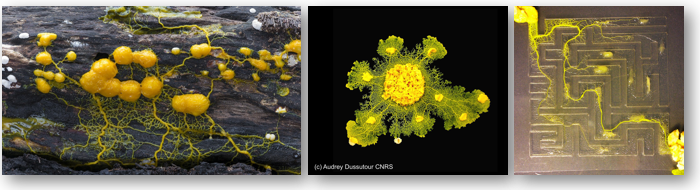
The slime mould Physarum polycephalum is a single-celled eukaryotic organism that forms a large amorphous blob termed a plasmodium. The plasmodium can grow indefinitely and contains millions of nuclei that govern complex problem-solving behaviour in response to environmental conditions, famously finding the most efficient path through a maze or replicating efficient national rail or road networks.
I am investing the fundamental functional genomic mechanisms responsible for driving this cognitive behaviour. The main focus is on epigenetic patterns that may affect gene expression and confer cellular memory. These insights are achieved via experimental trials and direct manipulation of the cellular epigenetic machinery.
1.2 The molecular basis of resilience to environmental stress in intertidal beadlet anemones (Actinia equina)
Th
1.3 The molecular basis of stress responses in the predatory mite Stratiolaelaps scimitus, an agricultural biocontrol agent
Theme 2: The genomic basis of speciation
Study systems:
- Intertidal isopods Jaera albifrons
- Beadlet anemones Actinia equina
2.1 Speciation genomics in intertidal isopods (Jaera albifrons)
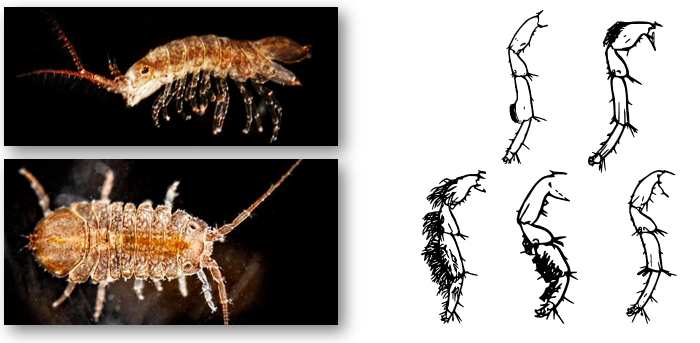
The Jaera albifrons species complex comprises five species that are reproductively isolated via subtle differences in male leg morphology and female preference for tactile stimulation by the male's legs during courtship.
My work aims to examine genome-wide sequence variation among the species to understand the evolutionary history and the underlying genomic architecture of reproductive isolation within the species complex. A particular exciting focus is to identify candidate genes that are functionally involved in leg development and/or courtship behaviour and manipulate these genes in vivo to generate novel species diversity.
2.2 Speciation genomics in beadlet anemones Actinia equina
Theme 3: The role of epitranscriptomic RNA modifications in ecology and evolution
3.1 The evolutionary history and ecological function of spliced leader mRNA trans-splicing
Spliced leader trans-splicing (SLTS) is a eukaryotic mRNA processing mechanism that attaches a short nucleotide sequence to the 5'-end of transcripts. This molecular tag may act as a facultative signal that affects transcription dynamics at a subset of genes, or as a mandatory part of processing polycistronic pre-mRNA derived from eukaryotic operons. This curious mechanism exists in a broad range of invertebrate taxa, but its importance for low-level phenotype expression and high-level ecological and evolutionary processes is poorly understood.
My work focusses on developing novel computational and statistical methods for identifying and comparing SLTS among a broad range of invertebrate taxa. These methods enable us to illuminate the evolutionary history of the molecular components of the SLTS machinery, and to detect differences in SLTS dynamics in organisms undergoing ecological change. The ultimate goal of this research is to elucidate the role of SLTS in shaping short-term and long-term phenotypic responses to ecological processes and thus in affecting evolutionary change.
Supervision
My current supervision areas are: Biological and Environmental Sciences.
Rosalin Simpson, QUADRAT DTP: "Harnessing Comparative and Functional Genomics to Explore Adaptive Potential in Predatory and Pest Mite Species"
Anastasia Leligdowicz, EASTBIO DTP: "Using functional genomics and epigenetics to understand the molecular underpinnings of complex behaviour in non-neural organisms"
Anna Wawer, SUPER DTP: "Immunogenomic status of salmonids in Scotland"
- Teaching
-
Courses
Co-coordinator
Contributor
Contributor
Coordinator
Contributor
- Publications
-
Page 1 of 4 Results 1 to 10 of 34
Cap-adjacent 2′-O-ribose methylation of RNA in C. elegans is required for postembryonic growth and germline development in the presence of the decapping exonuclease EOL-1
Nucleic Acids Research, vol. 54, no. 8, gkag355Contributions to Journals: ArticlesEphemeral signatures of phylosymbiosis in dermal microbiomes within the requiem shark family (Carcharhinidae)
Access microbiology, vol. 8, no. 3, 001140Contributions to Journals: ArticlesNeurometabolic adaptations to intestinal inflammation in a mouse model of colitis
American journal of physiology. Gastrointestinal and liver physiology , vol. 330, no. 2, pp. G98-G109Contributions to Journals: ArticlesEphemeral signatures of phylosymbiosis in dermal microbiomes within the requiem shark family (Carcharhinidae)
Working Papers: Preprint Papers- [ONLINE] DOI: https://doi.org/10.1099/acmi.0.001140.v1
Cap-adjacent 2’-O-ribose methylation of RNA in C. elegans is required for postembryonic growth and germline development in the presence of the decapping exonuclease EOL-1
Working Papers: Preprint Papers- [ONLINE] DOI: https://doi.org/10.1101/2025.03.10.638824
A nematode-specific ribonucleoprotein complex mediates interactions between the major nematode spliced leader snRNP and its target pre-mRNAs
Nucleic Acids Research, vol. 52, no. 12, pp. 7245-7260Contributions to Journals: ArticlesMacroalgal eukaryotic microbiome composition indicates novel phylogenetic diversity and broad host spectrum of oomycete pathogens
Environmental Microbiology, vol. 26, no. 6, e16656Contributions to Journals: Articles- [ONLINE] DOI: https://doi.org/10.1111/1462-2920.16656
- [OPEN ACCESS] https://aura.abdn.ac.uk/bitstreams/5f30b0d2-4df0-461b-b992-eb43e8b2ba10/download
- [ONLINE] View publication in Scopus
Large effective population size masks population genetic structure in Hirondellea amphipods within the deepest marine ecosystem, the Mariana Trench
Molecular Ecology, vol. 32, no. 9, pp. 2206-2218Contributions to Journals: ArticlesThe transcriptomic signature of physiological trade-offs caused by larval overcrowding in Drosophila melanogaster
Insect Science, vol. 30, no. 2, pp. 539-554Contributions to Journals: Articles- [ONLINE] DOI: https://doi.org/10.1111/1744-7917.13113
- [ONLINE] View publication in Scopus
A novel, essential trans-splicing protein connects the nematode SL1 snRNP to the CBC-ARS2 complex
Nucleic Acids Research, vol. 50, no. 13, pp. 7591-7607Contributions to Journals: Articles


