

Lecturer
- About
-
- Email Address
- emilie.hollville@abdn.ac.uk
- Office Address
- School/Department
- School of Medicine, Medical Sciences and Nutrition
Biography
I graduated in Cellular Biology and Physiology from the University of Versailles, France, before receiving my PhD in Biochemistry, Molecular and Cellular Biology from the University of Paris-Saclay in 2009. Following my PhD, I obtained a postdoctoral research position at the Smurfit Institute of Genetics, Trinity College Dublin, Ireland. In 2015, I moved to North Carolina, USA, to further gain experience in neuroscience, working as a Research Associate at the Neuroscience Center of the University of North Carolina at Chapel Hill. I was appointed as a Lecturer in Aberdeen in 2022.
My research explores the molecular mechanisms that shape the development, organisation, and function of the nervous system. I am particularly interested in the non-canonical roles of caspases in the development and maintenance of neuronal structure, and in how atypical cullin ubiquitin ligases contribute to neurodevelopmental and neuropsychiatric conditions. Our work combines cellular and molecular neuroscience with neuronal models, microscopy, quantitative image analysis, biochemical approaches, and genetic manipulation to investigate these fundamental processes.
Recent funding
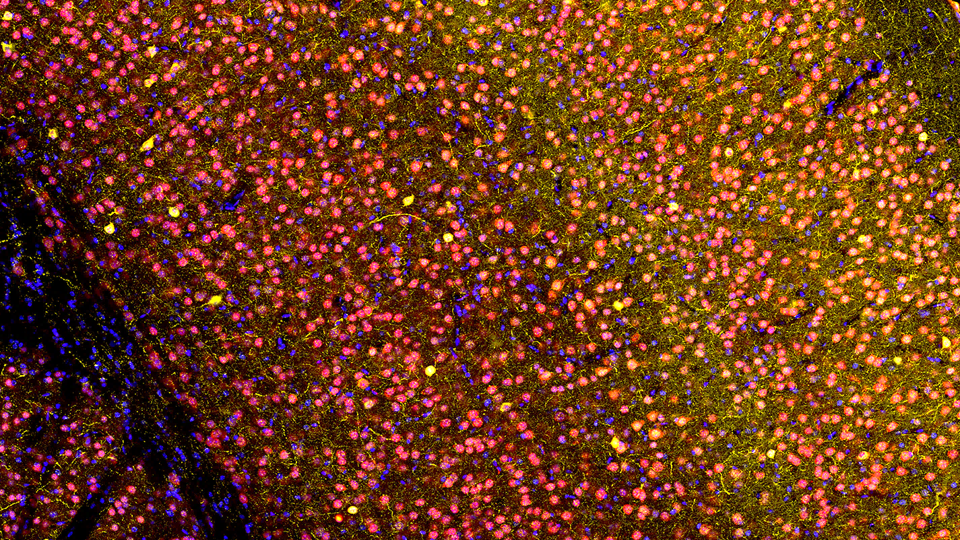
"A University of Aberdeen lecturer has been awarded £125,000 by a prestigious medical sciences body to carry out research on a newly identified gene related to schizophrenia."
Qualifications
- PhD Biochemistry, Molecular and Cellular Biology2009 - Université Paris-Saclay, France
- MSc Cell Biology and Cancer Genetics2004 - Université Paris-Saclay, France
- BSc Cellular Biology and Physiology2003 - Université de Versailles Saint-Quentin en Yvelines, France
Memberships and Affiliations
- Internal Memberships
-
- Neuroscience Theme at the Institute of Medical Sciences
- Smith Centre for Neurology and Neuroscience at the School of Medicine, Medical Sciences and Nutrition
- Institute of Medical Sciences, Equality, Diversity and Inclusion Committee
- School of Medicine, Medical Sciences and Nutrition, Laboratory Sustainability Working Group
- Personal Tutor to the School of Medicine, Medical Sciences and Nutrition undergraduate students
- External Memberships
-
- Editorial Advisory Board of the FEBS Journal
- Member of the British Neuroscience Association (BNA)
- Member of the Federation of European Neuroscience Societies (FENS)
- Member of the Scottish Neuroscience Group (SNG)
- Member of the British Society for Cell Biology (BSCB)
- Member of the ALBA Network
Latest Publications
Apoptosis signaling is activated as a transient pulse in neurons
Cell Death & Differentiation, vol. 32, pp. 521-529Contributions to Journals: ArticlesmiR-29 is an important driver of aging-related phenotypes
Communications Biology, vol. 7, 1055Contributions to Journals: ArticlesAberrant miR-29 is a predictive feature of severe phenotypes in pediatric Crohn’s disease
JCI Insight, vol. 9, no. 4, e168800Contributions to Journals: Articles- [ONLINE] DOI: https://doi.org/10.1172/jci.insight.168800
- [OPEN ACCESS] https://aura.abdn.ac.uk/bitstreams/8522bb0a-5057-4365-957a-5a882b277b27/download
- [ONLINE] View publication in Scopus
Discriminating Between Apoptosis, Necrosis, Necroptosis, and Ferroptosis by Microscopy and Flow Cytometry
Current Protocols, vol. 3, no. 12, e951Contributions to Journals: Articles- [ONLINE] DOI: https://doi.org/10.1002/cpz1.951
- [OPEN ACCESS] https://aura.abdn.ac.uk/bitstreams/7190d37b-9601-418c-9704-24f42f2c14c0/download
- [ONLINE] View publication in Scopus
Aberrant miR-29 is a predictive feature of severe phenotypes in pediatric Crohn’s disease
Working Papers: Preprint Papers
- Research
-
Research Overview
Mechanisms controlling brain maturation and sustaining brain health throughout life
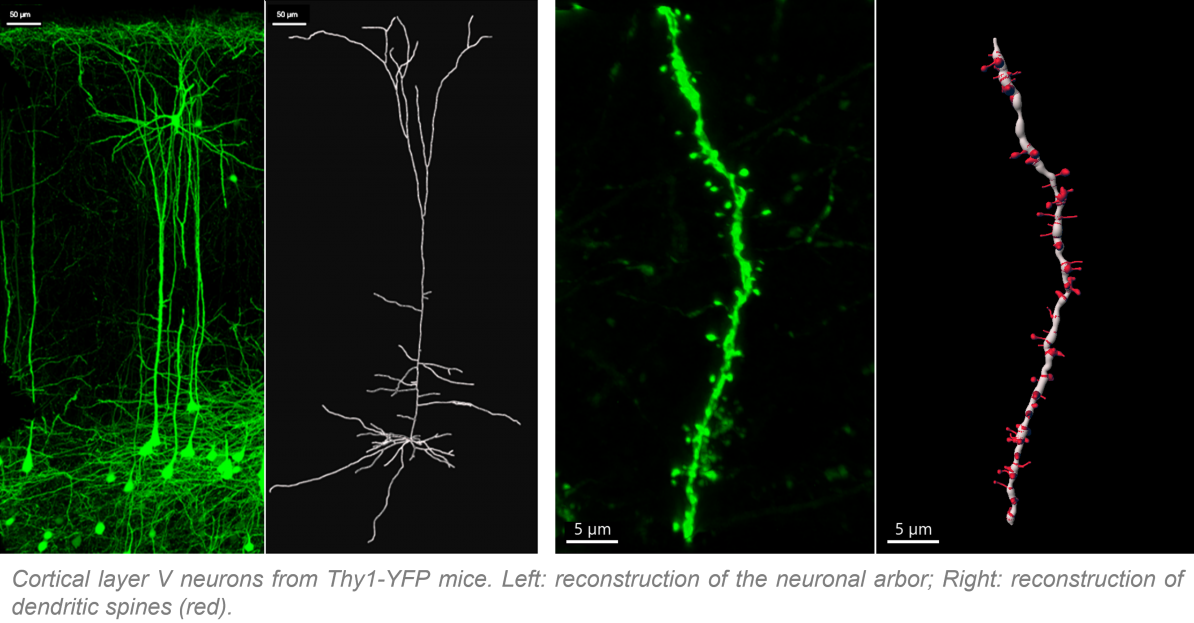
The postnatal programs that mature the nervous system are critical to refine neuronal circuits and connectivity for the emergence of individual behaviour. The genetic factors and pathways required for neuronal maturation (e.g. synaptic development and plasticity, neurite branching and arborization) are often found affected both in neurodevelopmental and neurodegenerative disorders.
My lab focuses on understanding the molecular and cellular pathways that support neuronal maturation and maintenance of lifelong neuronal health and survival. I am particularly interested in understanding the role played by ubiquitin ligases and programmed cell death regulators in these processes.
Relevant publications
- MicroRNA-29 is essential for brain maturation through regulation of CH methylation. Swahari V, Nakamura A, Hollville E, … , Anton ES, Greenberg ME, Deshmukh M. Cell Reports. 2021 Apr 6;35(1):108946. Link to publication
- Apoptotic Cell Death Controls in Neurons. Hollville E, Romero S, Deshmukh M. FEBS J. 2019 Sep;286(17):3276-3298. Link to publication
- Physiological functions of non-apoptotic caspase activity in the nervous system. Hollville E, Deshmukh M. Semin Cell Dev Biol. 2018 Oct;82:127-136. Link to publication
Mitochondrial quality control in neurodegenerative disorders
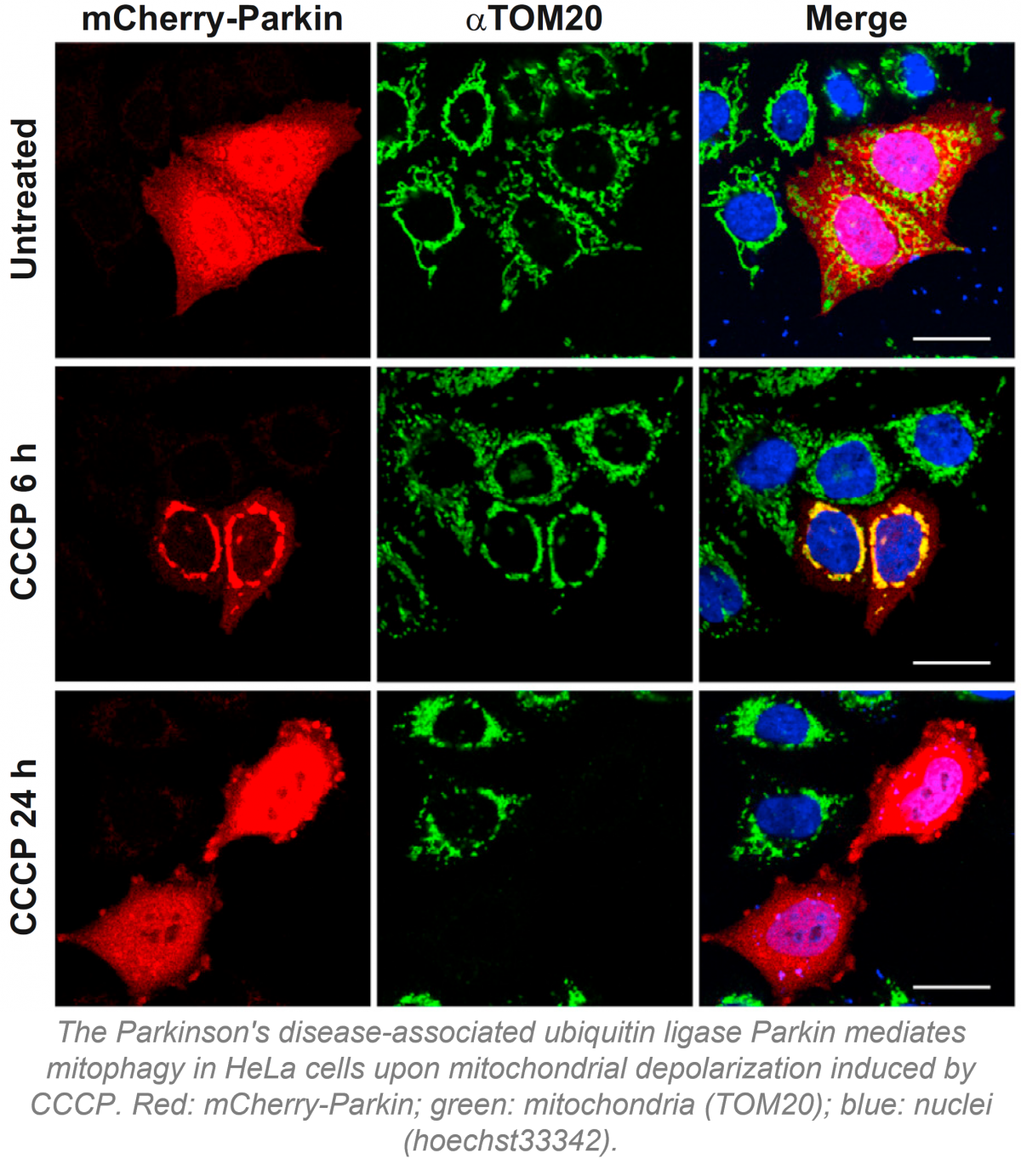
Age-related neurodegenerative disorders affect millions of people worldwide and are characterized by impairment in cognitive and/or motor functions. These disorders develop as a result of neuronal dysfunction in the brain or in the peripheral nervous system that eventually result in neuronal death. Common features of neurodegenerative disorders are mitochondrial function failure and defective clearance of damaged mitochondria.
Mitochondria are central hubs for metabolism, energy production, cytoplasmic calcium buffering, regulation of reactive oxygen species production and inflammation. High metabolic and calcium buffering activities, such as the ones required to sustain normal neuronal function, make mitochondria particularly prone to damage. Cells have developed a quality control mechanism for the targeted elimination of impaired mitochondria by autophagy, a process called mitophagy.
I am interested in understanding the interactions between neuronal activity and function and the mitochondrial quality control pathways.
Relevant publications
- Characterization of a Cul9 – Parkin double knockout mouse model for Parkinson’s disease. Hollville E, Joers V, Nakamura A, Swahari V, Tansey MG, Moy SS, Deshmukh M. Scientific Reports. 2020 Oct 9;10(1):16886. Link to publication
- Bcl-2 Family Proteins Participate in Mitochondrial Quality Control by Regulating Parkin/PINK1-Dependent Mitophagy. Hollville E, Carroll RG, Cullen SP, Martin SJ. Mol Cell. 2014 Aug 7;55(3):451-66. Link to publication
- Parkin Sensitizes Towards Apoptosis Induced by Mitochondrial Depolarization Through Promoting Degradation of Mcl-1. Carroll RG, Hollville E, Martin SJ. Cell Reports. 2014 Nov 20; 9(4):1538–1553. Link to publication
Research Areas
Accepting PhDs
I am currently accepting PhDs in Biomedical Sciences.
Please get in touch if you would like to discuss your research ideas further.
Research Specialisms
- Molecular Biology
- Cell Biology
- Neuroscience
- Biomedical Sciences
Our research specialisms are based on the Higher Education Classification of Subjects (HECoS) which is HESA open data, published under the Creative Commons Attribution 4.0 International licence.
Open Access Protocols & Reviews
Discriminating Between Apoptosis, Necrosis, Necroptosis, and Ferroptosis by Microscopy and Flow Cytometry
Costigan, A., Hollville, E., Martin, S. J.
Current Protocols, vol. 3, no. 12, e951Apoptotic cell death regulation in neurons
Hollville, E., Romero, S. E., Deshmukh, M.
FEBS Journal, vol. 286, no. 17, pp. 3276-3298Physiological functions of non-apoptotic caspase activity in the nervous system
Hollville, E., Deshmukh, M.
Seminars in Cell and Developmental Biology, vol. 82, pp. 127-136
Supervision
My current supervision areas are: Biomedical Sciences.
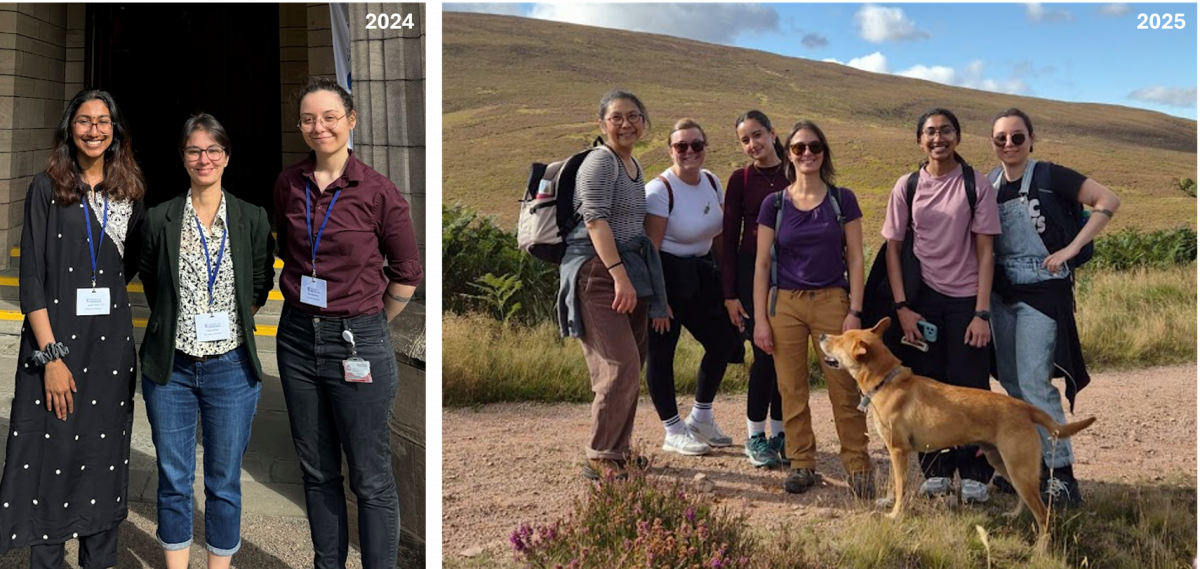
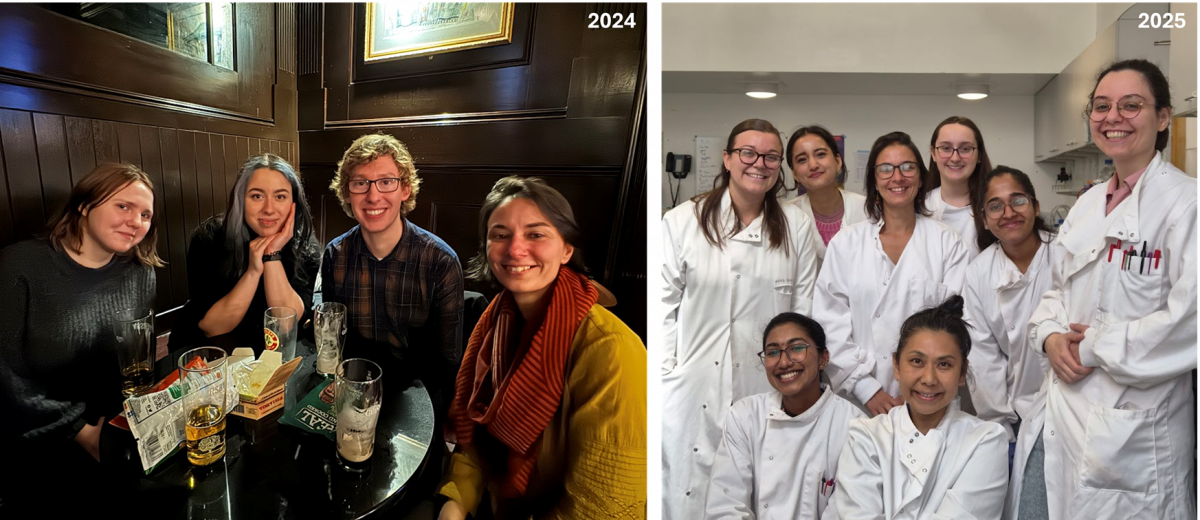
Current Lab members:
- Mx Paola Muscolino (PhD Student)
- Ms Sandra Maria Sajan (PhD Student)
- Ms Melissa Matos (PhD Student)
- Ms Satoko Murakami (Research Assistant)
- Ms Keira Hendry (Research Technician)
Past and present Undergraduate and Postgraduate students:
- June - August 2026: MSc students Lucia Alonso Lorenzo, Ronak Bhardwaj & Tiana Wainwright
- Oct 2025 - : BSc Neuroscience student Melisa Guzeloglu
- Oct 2025 - : MBChB Medicine students Althaia Skondra & Bruce Zhang
- July - August 2025: BSc student Tanisha Khera (Hotstart funded)
- June - August 2025: MSc students Rebecca Smith & Swathi Kodandarama
- June - August 2024: BSc student James O'Neill (Hotstart funded)
- January - March 2024: Honour students Iida Holappa, Jake Bell & Dana Zlateva
Funding and Grants
Grants:
- Biotechnology and Biological Sciences Research Council (BBSRC) - Mid-range equipment for biosciences research (2025/26)
"Advancing Bioscience Research in Northeast Scotland With A High-Content And High-Throughput Imaging Platform" - Academy of Medical Sciences - Springboard award (2024/26)
- The Royal Society - Research Grant (2023/24)
Studentships/Fellowships:
- UKRI BBSRC EASTBIO PhD Studentship (2023/27)
- Development Trust SCIO PhD Studentship (2023/27)
- Teaching
-
Teaching Responsibilities
- Medicine (MBChB) Year 1 Student Selective Component
- Medicine (MBChB) Year 2 Student Selective Component
- SM2501 - Research Skills for Medical Sciences
- BC3503 - Molecular control of cell function
- SM4501 - Medical Sciences Honours projects
- MB5518 - Master's Research Tutorials
- MB5904 - Master's Research Projects
- Course Coordinator of MB5904 - Master's Research Project


