
The University of Aberdeen will host a public lecture exploring the future of geothermal energy in the city.
Delivered in partnership with the European Association of Geoscientists and Engineers (EAGE) Local Chapter Aberdeen, the event will focus on the Aberdeen Geothermal Feasibility Pilot (AGFP), a University‑based research initiative looking at whether the geothermal heat beneath our feet could be used as a reliable, low‑carbon source of energy.
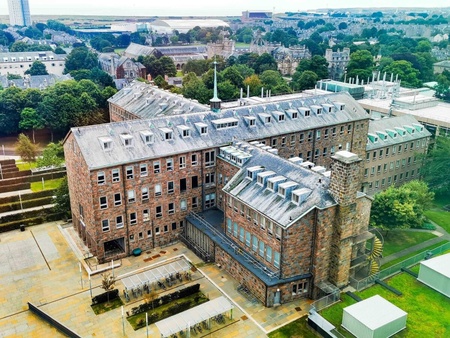
The lecture will take place on Tuesday 5 May at 6.00pm in Meston Lecture Theatre 1 on the University’s Old Aberdeen campus. The event is free to attend, open to the public and aims to increase awareness and understanding of geothermal energy and its potential role in Aberdeen’s transition to low‑carbon heating.
The AGFP brings together researchers, public bodies and industry partners to build the scientific evidence base needed to de‑risk future geothermal investment.
The project includes plans to drill a deep, instrumented research borehole on the University campus, alongside the development of a detailed 3D geological and temperature model of the subsurface beneath the city. By combining borehole data, seismic measurements and geological modelling, AGFP aims to better understand how heat flows through the rocks beneath Aberdeen and where geothermal resources may be most effectively accessed.
AGFP is also focused on openness and impact. Data generated by the project will be made openly available, supporting wider research and helping other cities assess their own geothermal potential, while contributing to Aberdeen’s net‑zero ambitions and just energy transition.
Dr Dave Cornwell, project co-lead and senior lecturer at the University’s School of Geosciences, said: “Geothermal energy has the potential to provide clean, dependable heat exactly where it is needed, but understanding what lies beneath our feet is crucial. This public lecture, delivered in partnership with EAGE, is an important opportunity to share our work with the wider community, discuss what we are learning so far, and explore how geothermal heat could play a role in Aberdeen’s future energy system.
“A key part of the feasibility pilot is engagement – not just with industry and policymakers, but with the people who live and work in the city. Events like this help demystify geothermal energy and show how world‑class research at the University of Aberdeen can directly support local solutions to global challenges.”
More information and details of how to register to attend the lecture can be found here.